


I used to think I knew exactly what to expect from a business hotel: beige corridors, a functional desk, a mattress you tolerate rather than enjoy, and a lobby you hurry through on the way to a meeting. Then I started staying at Westin properties on work trips. I still checked in with a laptop bag and a calendar full of calls, but the experience felt distinctly unlike the buttoned‑up, purely transactional business hotels I was used to. It was softer, more sensory, and unexpectedly focused on how I slept, moved, and felt rather than just how fast I could check out.
Get the latest updates straight to your inbox!
From “Place to Sleep” to “Place to Feel Better”
Traditional business hotels are built around efficiency and predictability. You see it in the low‑key lobbies lined with identical armchairs, the small fitness rooms tucked into basements, and the restaurant that seems designed to feed delegates rather than tempt anyone in from the street. The implicit promise is simple: we will not surprise you. For road warriors who remember the era of lumpy mattresses and noisy corridors, that used to be enough.
Westin’s entire pitch is that it is not enough anymore. Walk into many Westin properties and you immediately notice a different set of priorities: softer lighting in the lobby, a signature white tea scent that is intentionally calming, and staff talking as much about sleep and wellness as they do about Wi‑Fi speeds. The brand has codified this into wellness pillars such as Sleep Well, Eat Well and Move Well, framing a business stay not as a neutral intermission between flights but as a chance to feel measurably better by the time you leave.
This shift is not just clever branding. It changes dozens of small decisions that shape a stay: the type of mattress in your room, the food options after a late arrival, and whether the hotel encourages you to squeeze in a quick workout between calls. On paper these may sound like incremental tweaks. In practice, especially after a week of back‑to‑back meetings, they add up to a stay that feels less like a grind and more like a reset button.
I first noticed the difference after a three‑city work trip where I alternated between a generic city‑center conference hotel and a Westin. The meeting rooms and room rates were comparable, but my energy levels at the end of the Westin leg were markedly higher. I still hit every deadline. I just did it without the usual feeling that the hotel stay had drained me.
Heavenly Bed: When the Mattress Becomes the Main Event
Nothing illustrates Westin’s divergence from traditional business hotels more clearly than the Heavenly Bed. Introduced in the late 1990s, it was a deliberate attempt to make the bed the star of the room rather than an afterthought. Instead of a basic innerspring mattress with a thin topper, Westin worked with Simmons to create a plush pillow‑top mattress with supportive coils beneath, a combination designed to feel noticeably more luxurious than the average hotel bed while still standing up to heavy use.
Today, a queen‑size Heavenly Bed sold through Westin’s retail channels typically runs around the mid‑$2,000 range before box spring and delivery, roughly on par with high‑end consumer mattresses and pricier than what many mid‑tier business hotels put in their rooms. Guests noticed. Westin has long reported strong demand from travelers wanting to purchase the same mattress and bedding they slept on during their stay, to the point where the brand has maintained a dedicated retail operation around the bed and linens.
That emphasis on sleep spills into other touchpoints. Many Westin properties promote a Sleep Well menu in room service, with lighter dishes and ingredients chosen to be easier to digest late at night. Blackout curtains, layered duvets, and a choice of pillows round out an experience that, at its best, feels closer to a carefully curated bedroom than a generic room with a king bed pushed against a wall.
By contrast, plenty of traditional business hotels still treat the bed as one line item among many. Some have upgraded mattresses in recent years, but relatively few have built an entire identity around restorative sleep. When you are arriving from a late flight into Denver or London and facing a morning presentation, that difference is not theoretical. It is the difference between collapsing onto something merely adequate and sinking into a setup that has clearly been obsessed over.
Lobbies That Invite You to Linger, Not Just Pass Through
In a classic business hotel, the lobby is a corridor with seating. You pass through on the way to the elevator, maybe stopping at the front desk or the concierge. Most are designed to feel neutral enough that no one could possibly object to them, which is another way of saying they are instantly forgettable. The lighting is bright, the furniture practical, the soundscape a mix of rolling suitcases and clinking glassware from the bar.
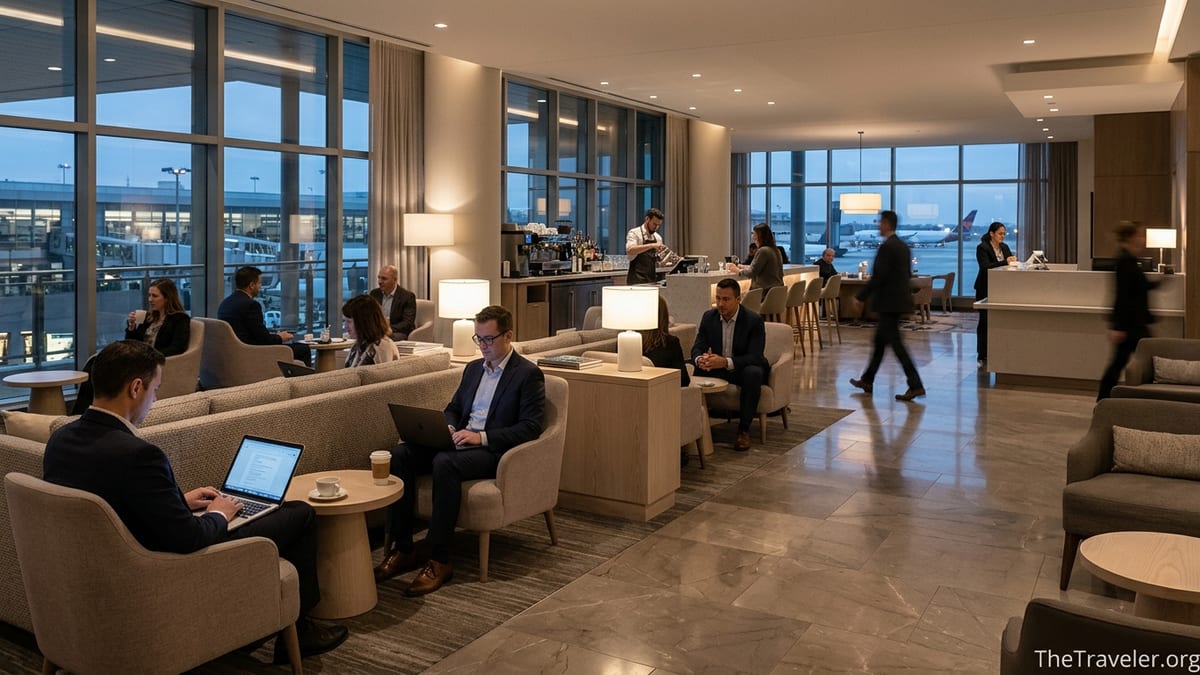
Westin lobbies aim to do something different. At many properties the first impression is driven by natural materials, diffused light, and that distinctive white tea signature scent that subtly signals you are in a specific place, not any place. Comfortable lounge chairs and sofas are arranged to encourage working, lingering with a coffee, or meeting a colleague, often backed by floor‑to‑ceiling windows rather than interior walls.
Consider the Westin Denver International Airport, a striking glass‑clad hotel integrated directly with the airport’s Jeppesen Terminal. Its wing‑shaped design, with sweeping views of the airfield and Colorado plains, means the lobby does not feel like an afterthought squeezed next to check‑in counters. Instead, it functions as a bright, airy living room for travelers waiting on flights, complete with bar seating where you see as many laptops open for video calls as people nursing a pre‑flight drink.
This matters because business travel increasingly blurs work and downtime. When your “office” is wherever your laptop opens, an inviting lobby or bar area is not just a design flourish. It is a functional extension of the hotel room and meeting space. Compared with many traditional business properties whose public spaces remain purely transactional, Westin lobbies tend to encourage you to stay, work, and socialize without feeling like you are loitering in a hallway.
Wellness Built Into the Stay, Not Bolted On
Most mid‑range business hotels have a fitness room. In many cases it is a small, windowless space housing a few treadmills and a rack of dumbbells that see sporadic use between conferences. The message is: here is a gym, if you insist. It rarely feels integrated into the broader hotel experience.
Westin, on the other hand, has built much of its branding around wellness. Under its wellness pillars, the chain talks explicitly about helping guests eat well, move well, and sleep well despite being on the road. That translates into fitness studios that are usually more substantial than the average business hotel offering, with modern cardio equipment, space for stretching, and often daylight rather than fluorescent overhead lighting.
Many properties offer gear‑lending programs for guests who did not pack workout shoes or apparel, making it easier to keep a routine intact on a short trip. Some Westins organize group runs or provide detailed jogging maps of the local area, a small but meaningful perk if you prefer to explore a new city at sunrise rather than from a taxi.
The difference becomes clear if you compare a stay at a generic highway‑adjacent conference hotel, where your only realistic options after a day of meetings are the bar or your bed, with a Westin in a similar corporate district. At Westin, the path of least resistance often includes a workout, a lighter meal option, or a moment of quiet in a wellness‑focused common area. That shift in default settings means your business trip can leave you feeling more balanced instead of depleted.
Design That Balances Calm With Character
Traditional business hotels chase a specific aesthetic: clean, inoffensive, and uniform enough that you could wake up in Dallas, Frankfurt or Singapore and barely tell the difference from the décor. There is comfort in that consistency, but there is also a creeping sense of dislocation. After a while, the sameness becomes disorienting, especially if you travel frequently.
Westin tries to strike a middle path. Rooms still follow a recognizable template, with the white‑on‑white bedding and the brand’s signature bed as the focal point. Yet many properties incorporate local materials or references that give a stronger sense of place without compromising on the calm, neutral palette business travelers often prefer. In mountain destinations you might see more wood and stone; in urban properties, glass and metal take the lead.
The Westin Tokyo, for example, wraps its rooms and public spaces in a classically European design language, with carved wood furnishings and rich fabrics that feel far from the ultra‑minimalist look common in many newer business hotels. Even though a large proportion of its guests are corporate travelers, the property feels like a grand city hotel first and a meeting venue second, which changes the psychological tone of a stay.
This approach stands out most strongly when you compare back‑to‑back stays. Spend two nights at a purely functional conference hotel on the edge of a business park, all grey carpet and overhead LEDs, then move to a Westin with warm wood tones, softer textures, and views that pull your eye outside. The meetings may be just as long in both places. The memory you take home will not be.
Airport & Urban Hubs That Redefine “Business Hotel” Convenience
Some of the clearest examples of Westin’s different approach are its airport and central business district properties. In theory, these should be the most utilitarian hotels of all: one‑night crash pads for people catching early flights or attending day‑long conferences. Instead, Westin has used them as showcases for how far you can push comfort and design without losing efficiency.
At Denver International Airport, for instance, the Westin’s position directly adjoining the main terminal means you can step from your gate to the front desk in a matter of minutes, a level of convenience business travelers crave. Yet once you are inside the room, the triple‑glazed windows and thoughtful acoustic design keep jet noise to a minimum, while views sweep across runways and plains rather than stopping at a parking garage. The building’s curved façade and dramatic plaza below turn what could have been a purely functional airport hotel into part of the airport’s architectural identity.
In dense city centers, Westin often takes advantage of historic or distinctive buildings that another chain might strip of character. The Westin San Jose, for example, occupies the landmark Sainte Claire Hotel building in downtown San Jose, preserving original details like ornate ceilings and a grand lobby while upgrading rooms with the brand’s signature bedding and modern bathrooms. The result is a hotel that serves the tech world’s conference traffic while still feeling like a piece of the city’s fabric rather than an interchangeable tower.
These choices reflect a broader belief that convenience no longer needs to come at the cost of comfort or personality. In a travel landscape where business and leisure often blend, being directly connected to a terminal or adjacent to a convention center is no longer an excuse for dull design and bare‑minimum amenities. Westin leans into the practical advantages of these locations while still asking: will you actually want to stay here, not just sleep here?
How the Experience Feels on a Real Business Trip
On paper, wellness pillars and design philosophies can sound abstract. The real test is how they play out when you are traveling for work, tired, and juggling time zones. That is where Westin’s differences from a traditional business hotel become clearest.
Imagine landing in Denver on a winter evening after a delayed connection. At a conventional airport hotel, your options might be a shuttle ride to a low‑rise building off the highway, a quick check‑in, and a serviceable meal at a brightly lit restaurant. At the Westin attached to the terminal, you roll your carry‑on directly from baggage claim into a glass‑walled lobby that feels more like a contemporary office atrium than a transit stop. You grab a light, late‑night option off a menu that nods to healthier choices, then head upstairs to a bed you know has been designed to feel indulgent.
The next morning, instead of fighting traffic or an airport shuttle schedule, you walk downstairs, pass through the terminal, and are at your gate within minutes. If your meeting is downtown, you step onto the airport train in the plaza below the hotel. Those few saved steps and minutes might not sound like much, but if you repeat the pattern over a year’s worth of travel, the reduction in friction is substantial.
On urban trips the contrast can be just as stark. In a generic business tower hotel, you might finish the day in a bar filled with televisions, order a heavy entree because it is the easiest thing on the menu, and call it a night. In many Westin properties you are more likely to find a lobby bar with natural light, a short list of lighter dishes, and spaces designed to double as informal meeting spots. You might answer a few emails from a lounge chair, take a short walk using the hotel’s jogging map, and then head upstairs, where the lighting and bedding seem tuned to shutting your brain down rather than keeping it humming.
That cumulative effect is why frequent travelers sometimes develop strong brand loyalties. Once you have experienced a few trips where your hotel seemed to actively support your well‑being instead of simply accommodating your schedule, it becomes harder to go back to properties that view your stay as a sequence of check‑ins and checkouts.
The Takeaway
Westin did not invent the idea of a comfortable business hotel, but it did push the sector to take sleep, design, and wellness seriously at a time when many competitors were still swapping out carpets and calling it a renovation. By centering its offering on the Heavenly Bed, sensory details like scent and lighting, and wellness‑focused public spaces, the brand has created an experience that feels tangibly different from the buttoned‑down business hotels of old.
For travelers, the distinction comes down to how you feel leaving the property. After a stay at a traditional business hotel, you may remember a smooth check‑in or a well‑run conference, but you are unlikely to remember the room itself. After a solid night in a Heavenly Bed, a quick workout in a naturally lit fitness studio, and a coffee answered over emails in an inviting lobby, you leave a Westin with the sense that your hotel did more than host your meetings. It quietly improved the way you moved through a demanding trip.
That, ultimately, is why Westin can feel so different. In an industry built on efficiency and scale, it gives itself permission to care about how you sleep, eat, and decompress. When you are far from home, living out of a carry‑on, and chasing time zones, that difference is not a luxury. It is the part of the trip you will still be thinking about on the flight back.
FAQ
Q1. Is Westin considered a luxury hotel brand or a business hotel brand?
Westin sits in the upscale segment, serving a mix of business and leisure travelers. It competes with higher‑end business hotels but leans more into wellness and design than many purely corporate‑focused chains.
Q2. What makes the Westin Heavenly Bed different from a typical business hotel mattress?
The Heavenly Bed is a plush pillow‑top mattress with supportive coils, layered bedding, and branded linens designed around comfort and restorative sleep rather than basic durability alone.
Q3. Do all Westin hotels have the Heavenly Bed?
The Heavenly Bed has been widely rolled out across the Westin portfolio, and it is a core part of the brand identity, though age of bedding and exact feel may vary slightly by property.
Q4. Are Westin hotels more expensive than standard business hotels?
Rates vary by city and season, but Westin typically prices above basic corporate hotels and below many full luxury brands, reflecting its focus on added comfort and wellness.
Q5. Is Westin a good choice for conferences and meetings?
Yes. Many Westin properties feature sizable meeting space, business‑friendly services, and airport or central locations, while offering a more wellness‑oriented environment than traditional conference hotels.
Q6. How do Westin fitness centers compare to those in typical business hotels?
Westin gyms are usually larger and better equipped than the average business hotel fitness room, often with more natural light, modern machines, and space for stretching or functional training.
Q7. Can I buy the same mattress and bedding I sleep on at a Westin?
Westin sells versions of its Heavenly Bed mattresses and bedding through dedicated retail channels, allowing guests to recreate much of the sleep experience at home.
Q8. Are Westin hotels mainly for business travelers, or are they suitable for families and couples too?
While many guests travel for work, Westin actively courts leisure guests as well, and its focus on comfortable rooms and wellness amenities makes it appealing for couples and families.
Q9. How does staying at a Westin airport hotel differ from a typical airport business hotel?
Westin airport properties often combine direct terminal access with more thoughtful design, quieter rooms, and better wellness amenities than many purely utilitarian airport hotels.
Q10. If I value predictability, will Westin still feel consistent from city to city?
You will find consistent core elements such as the Heavenly Bed and wellness focus, but individual Westins tend to reflect their locations more than many standard business chains, so each stay retains a sense of place.