


More news on this day
Rail passengers in Britain are being urged to avoid non essential journeys on Wednesday 24 and Thursday 25 June, as industrial action and knock on disruption trigger widespread timetable cuts and service cancellations across the network.
Get the latest news straight to your inbox!
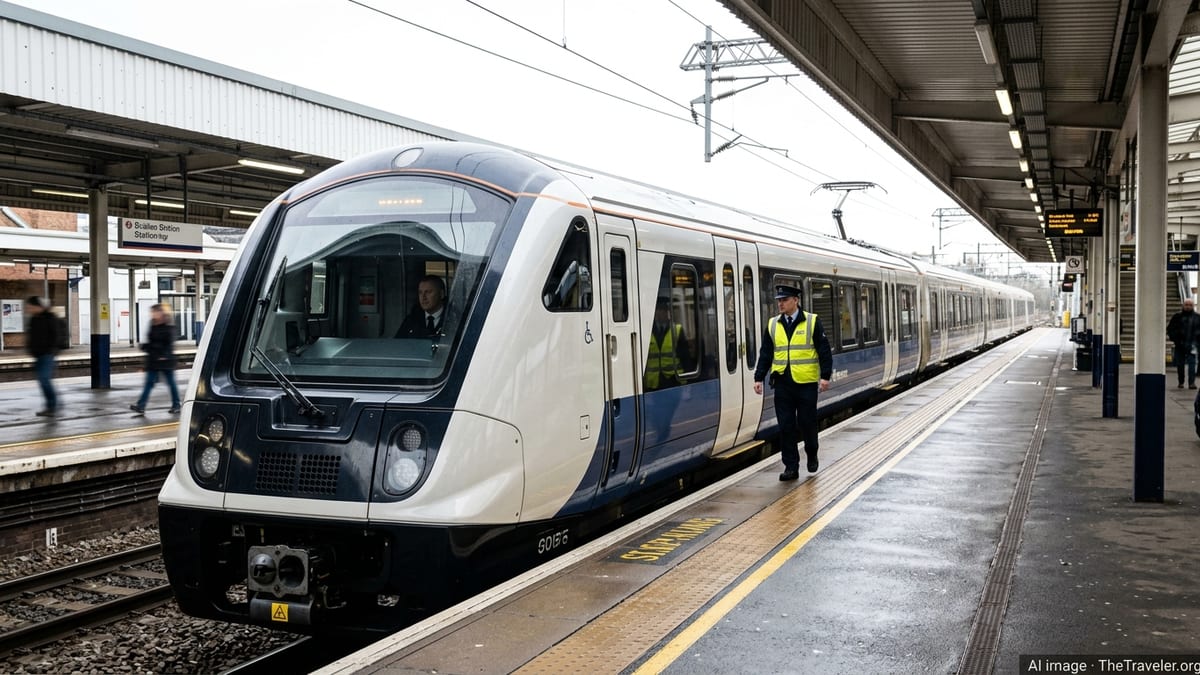
Industrial action drives fresh wave of disruption
The latest warnings for Wednesday 24 and Thursday 25 June follow a series of national walkouts by members of the Rail, Maritime and Transport union at Network Rail and multiple train operators. Publicly available information from operators indicates that strike days on Tuesday 21, Thursday 23 and Saturday 25 June are severely limiting the number of trains that can run, with rolling consequences for services on the intervening days.
Network Rail has confirmed that signal boxes and other critical infrastructure are staffed at reduced levels during the industrial action periods. That means trains are being concentrated on a small number of core routes, typically running only during daytime hours and at a much lower frequency than normal. The subsequent need to reposition trains and crews is creating additional gaps in the timetable on non strike days.
With resources focused on maintaining a skeleton operation on strike dates themselves, operators report that they cannot offer a normal first and last train pattern on Wednesday 24 and Thursday 25 June. Services are expected to start later than usual, finish earlier in the evening and be subject to short notice changes.
Operators advise customers not to travel
Several major train companies are advising customers not to travel at all if they can avoid it, extending that guidance beyond the official strike days. Northern has stated in published updates that it is asking passengers not to use its services between 21 and 26 June, highlighting that the whole network is affected and that only a very limited timetable is possible on routes that remain open.
ScotRail has issued similar messages, warning of “significant disruption” on the days after each strike as signalling and maintenance staff return to duty on a phased basis. The operator’s latest industrial action briefing notes that reduced staffing and displaced rolling stock will limit capacity and make it difficult to run early morning trains on Wednesday 24 and Thursday 25 June to the usual schedule.
In southern England, communications from South Western Railway and other regional operators also stress that passengers should only travel if absolutely necessary during the week of strike activity. Previous rounds of action have shown that even when some trains are running, crowding can be intense and connections unreliable, particularly at key interchanges and in commuter corridors into London.
Limited routes and late starting services
Timetable information published so far indicates that rail services on 24 and 25 June will be heavily restricted in both geography and hours of operation. On strike days, half of Britain’s rail routes are expected to have no trains at all, and only a small number of intercity, suburban and commuter lines will see any service. The reduced availability of trains and crews then carries over into the following mornings.
On some networks, first departures on non strike days are not expected to leave until after 07:30, and in certain areas much later. This late start pattern is likely to affect commuters heading into major cities, as well as travellers making early connections to airports and ports. Evening services are also due to finish earlier in many regions, increasing the risk of passengers being unable to complete return journeys.
Replacement buses are generally not being offered on the affected main lines, with operators indicating that it would not be possible to source enough vehicles and drivers to cover the extent of the disruption. Where rail replacement is provided for separate engineering works, capacity is expected to be limited and may not match usual demand.
Knock on effects for commuters and long distance travel
The combination of strikes on 21, 23 and 25 June and constrained services on Wednesday 24 and Thursday 25 June is expected to reshape travel patterns throughout the week. Surveys carried out during earlier rounds of industrial action suggest that many regular rail users switch to working from home or rearrange meetings, while others rebook for different days or cancel trips altogether.
Business groups have previously warned that repeated “do not travel” notices can have a wider economic impact, particularly on hospitality and retail in city centres that depend on rail commuters and visitors. For longer distance passengers, including those with onward connections by air or international rail, the advice to avoid travel is prompting rebookings, additional overnight stays and higher costs as people try to safeguard essential journeys.
Road networks around major cities may also see increased pressure as travellers transfer to cars, buses and coaches. Transport planning bodies note that earlier industrial action has coincided with heavier road congestion at peak times, especially on radial routes into London, Manchester, Birmingham and Glasgow.
Advice for passengers with essential journeys
Passengers who cannot avoid travel on Wednesday 24 or Thursday 25 June are being advised to plan carefully and to be prepared for last minute changes. Train companies are encouraging customers to check journey planners shortly before setting out, as timetables may be updated at short notice in response to staffing levels and operational constraints.
Operators also indicate that tickets dated for the worst affected days are generally being made more flexible, with options to travel on alternative dates, reroute via different operators, or claim refunds where journeys are no longer possible. Specific compensation arrangements vary by company and ticket type, and passengers are being directed to operator channels for the latest detail.
Travel bodies recommend allowing significant extra time for essential trips, carrying water and basic supplies in case of extended waits, and having a back up plan such as local bus routes or the ability to break a journey overnight. With warnings that trains that do run are likely to be very busy, those who have flexibility are being encouraged to shift non urgent journeys to weeks that are not affected by industrial action.