


I thought I understood midscale hotels. I booked them on autopilot, scrolling past names like Holiday Inn Express, Best Western, La Quinta, and Ramada, assuming that once you were in the 2.5 to 3-star range, the differences were marginal. Then I spent a night at a Ramada by Wyndham that completely rewired how I compare midscale chains, from pricing and location to breakfast, reviews, and loyalty value.
Get the latest updates straight to your inbox!
The Stay: A Ramada Night That Felt Different
The Ramada that changed my thinking was not a resort or a boutique one-off. It was a fairly typical U.S. freeway-adjacent property on the edge of a mid-sized city, advertised at around 130 dollars plus tax for a midweek night. That put it squarely in the national midscale range, where many U.S. hotels now run roughly 70 to 180 dollars per night depending on city and season, with midscale often landing in the lower half of that band. I booked it mainly because it was 20 dollars cheaper than a nearby Holiday Inn Express and 15 dollars cheaper than a Best Western.
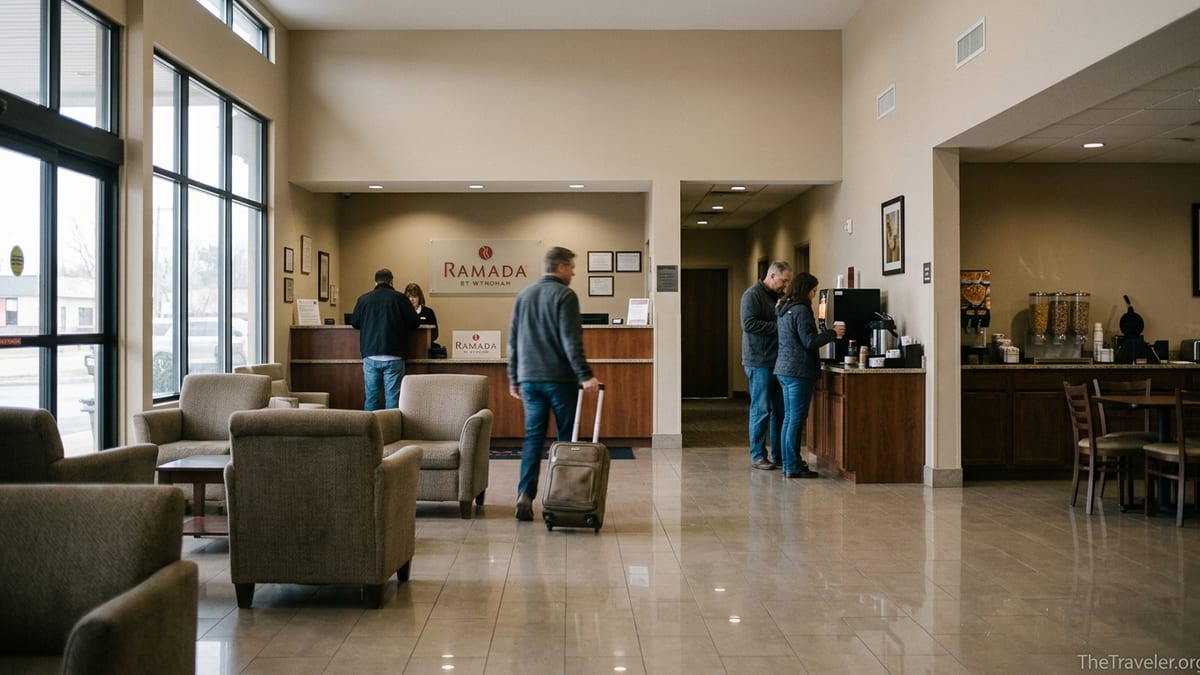
Walking in, it felt like countless midscale properties I have stayed in: a modest lobby with a check-in desk, a small seating area, and the familiar rack of local brochures. But small details stood out. Free parking was clearly signed, the front desk staff actually mentioned the Wi-Fi speed and breakfast hours without prompting, and housekeeping had left the room looking freshly turned rather than just “reset.” None of this was luxury, but it was also not the bare-minimum experience some travelers now fear when they see prices climb faster than quality.
The room itself was textbook midscale: a king bed, a desk, mini-fridge, microwave, and a bathroom with standard fixtures. What surprised me was how thoughtfully the basics had been handled. There were plenty of outlets near the bed, the blackout curtains actually blocked the parking lot lights, and the air-conditioning could run on a low constant fan instead of the sleep-shattering on-off cycle. After a decade of road trips, I have stayed in more expensive rooms that ignored these fundamentals.
By the time I went down to breakfast the next morning, I realized this otherwise unremarkable Ramada was quietly exposing how inconsistent midscale chains can be in practice. The rate was solid, the sleep quality was excellent, and the inclusions were more generous than I expected. It forced me to rethink how I evaluate every mainstream nameplate in this price band.
What “Midscale” Really Means in 2026
On paper, Ramada sits in the classic midscale category within Wyndham’s portfolio, alongside other familiar midscale names under different umbrellas like La Quinta, Wingate, Best Western, Comfort Inn, and Holiday Inn Express. Industry guides routinely group brands such as La Quinta by Wyndham and Holiday Inn Express into the “upper midscale” slice, while Ramada is described as a traditional midscale brand focused on core comforts rather than upscale design.
In real terms, midscale today usually means a 2.5 to 3-star hotel with interior corridors, private bathrooms, in-room climate control, and a predictable set of amenities: Wi-Fi, some kind of breakfast, perhaps a small gym or pool, and parking that is often free outside city centers. Nightly rates are typically lower than full-service downtown hotels but higher than true budget roadside motels. For many U.S. travelers in 2026, that means paying somewhere around 90 to 150 dollars per night in smaller markets, and often 140 to 190 dollars or more in busy urban or coastal areas.
The reality, though, is that “midscale” hides a wide spectrum of experiences. One Ramada may come with a year-round heated pool, hot breakfast, and landscaped grounds that feel close to a modest resort, while another might lean more toward a basic freeway stop. The same is true for competitors: a Holiday Inn Express in a new-build suburban park can feel significantly nicer than an older property clinging to the same brand flag, and a Best Western managed by a hands-on local owner can easily outperform more expensive corporate siblings.
That Ramada stay made me realize that I had been using brand labels as a lazy proxy for quality. In a world where midscale chains routinely overlap on pricing and advertised features, the differences that matter are now much more granular: how consistently a property delivers on its promises, how recently it has been renovated, and how well it is maintained day to day.
The Value Equation: Rate, Inclusions, and Hidden Costs
Before that Ramada night, my mental math for midscale chains was primitive. I compared the base rate and maybe glanced at whether breakfast was included. Afterward, I started calculating the fuller cost of a stay: room rate plus taxes, parking, breakfast, and the likely need to pay for extras like coffee or snacks. Once I did that, Ramada’s position in the midscale pack shifted.
At this particular Ramada, parking was free, Wi-Fi was included, and breakfast covered enough hot and cold items to replace a 10 to 15 dollar per-person morning run to a cafe. In many U.S. markets, hotels that charge 25 to 40 dollars per night for self-parking or 15 to 20 dollars per person for breakfast can effectively turn a 150 dollar room into a 200 dollar stay for a couple. In contrast, a 130 dollar midscale hotel that folds those amenities into the rate can suddenly become the better value even if the room itself looks plainer.
Comparing rates across other midscale chains in the same city, I saw a familiar pattern. A nearby Holiday Inn Express was hovering around 150 dollars for the same night, advertising a well-regarded hot breakfast and strong business-traveler appeal. A La Quinta by Wyndham a few exits away, also targeting the midscale to upper-midscale segment with hot breakfast and a pet-friendly stance at many properties, priced in close to 145 dollars. A Best Western off the same interstate exit as my Ramada wanted 155 dollars and added an outdoor pool and free breakfast to the mix.
When I tallied the actual cost including parking and breakfast, the 130 dollar Ramada held its ground. Had I been traveling with a family of four, the free parking and breakfast alone would likely have saved 40 to 60 dollars compared to a slightly pricier competitor that charged for one or both. That was the moment I stopped fixating on brand rankings and started looking for the specific combination of rate, inclusions, and realistic savings each property offered.
Amenities in the Real World: Breakfast, Wi-Fi, and the Basics
Across its system, Ramada’s positioning emphasizes midscale and upper-midscale full-service and limited-service properties that deliver what most road warriors now consider nonnegotiable: Wi-Fi, some form of breakfast, and at least a basic fitness or pool setup at many locations. In practice, that means a decidedly non-glamorous but highly functional infrastructure of pancake makers, cereal dispensers, lobby coffee, and compact gyms with a few treadmills and free weights. You will find nearly identical lineups at competitors like La Quinta, Comfort Inn, and Best Western.
At the Ramada I stayed in, breakfast leaned toward what the industry likes to call a “deluxe continental” spread: made-to-order pancakes or waffles, hardboiled eggs, yogurt, fresh fruit, pastries, hot and cold cereals, bagels with cream cheese, and the usual array of coffee and juices. It was not a restaurant meal, but it was ample enough that most guests left without needing a second breakfast stop. A property in Santa Barbara under the same flag, for example, offers a similar style of breakfast with a rotating selection of items, underscoring how this formula has become a signature of midscale competitiveness rather than a luxury perk.
Where midscale chains diverge is in the attention to detail. At my Ramada, the breakfast room was clean, food was replenished promptly, and the welcome felt genuine. I have stayed in other midscale hotels, including reputable brands, where the free breakfast meant lukewarm coffee, empty trays, and a staff member who looked irritated when you walked in at 9 a.m. The brand on the sign matters less than whether management treats breakfast as an afterthought or a core value proposition.
The same goes for Wi-Fi, which many travelers now treat as electricity rather than an amenity. Some Ramada properties, like their competitors, tie faster Wi-Fi access to loyalty membership tiers, but many still offer respectable speeds for general guests. I now read reviews carefully for any mention of Wi-Fi performance, because nothing torpedoes midscale value faster than a 130 dollar room whose internet cannot handle a video call or a movie stream.
Location and Use Case: Airport Hubs, Highway Stops, and City Edges
One underappreciated reason Ramada reshaped my comparisons is the brand’s footprint. Within Wyndham’s family, Ramada is one of the brands with the strongest presence at airports and transit hubs. If you have ever booked a quick overnight near a major U.S. or international airport, there is a good chance a Ramada appeared among the options, often competing directly with Courtyard by Marriott, Hilton Garden Inn, and Holiday Inn for those one-night stays.
In that context, the midscale label becomes contextual rather than absolute. A Ramada attached to an airport shuttle circuit or sitting beside a convention center may price much higher than a rural or highway property, but it can still be a relative value when compared to full-service neighbors that charge more for similar rooms and amenities. An airport Ramada that throws in breakfast and Wi-Fi at 180 dollars can genuinely beat a 220 dollar competitor that charges for both on top of parking fees, especially for solo business travelers on tight budgets or companies that cap nightly expense allowances.
On long road trips, brands like Ramada, La Quinta, Best Western, and Comfort Inn end up playing a different role. Rather than offering premium experiences, they are the predictable safe harbors between stretches of interstate. Here, consistency matters more than brand prestige. If a particular Ramada off Interstate 40 has strong recent reviews, good lighting in the parking lot, and a reputation for cleanliness, it might be worth choosing over a cheaper but more questionable budget option even if the star rating is similar.
That is how my Ramada night shifted my habits. Instead of defaulting to my previous favorites, I now ask: for this particular trip, what type of midscale property do I need? An airport overnight where a 24-hour shuttle and reliable wake-up call matter more than pool amenities? A multi-night base for exploring a city, where walkability and noise levels are critical? Or a quiet highway stop where free parking and a quick breakfast trump everything else?
Loyalty and Points: When Midscale Chains Punch Above Their Weight
Another lesson from that stay was just how much loyalty programs can tilt the scales between midscale chains. Many travelers focus on the big three or four programs tied to higher-end brands, but midscale-focused programs like Wyndham Rewards can be surprisingly powerful when your real-world travel is dominated by freeway exits and secondary cities instead of glass towers.
With Wyndham, a single midscale night at a Ramada earns points that can later be redeemed at a wide range of properties, from budget-friendly Days Inn locations to more upscale brands like Wyndham Grand and Dolce in resort or city-center settings. Other midscale players offer similar leverage: Best Western Rewards can pair an ordinary roadside stay with a future weekend at a nicer Best Western Premier, and IHG One Rewards allows a few nights at midscale Holiday Inn Express locations to morph into a discount on an InterContinental or Kimpton in a major city.
My Ramada stay highlighted this tradeoff. I had been tempted by an independent local motel that was 10 to 15 dollars cheaper but offered no loyalty earning or redemption opportunities and had patchy online reviews. By choosing the Ramada, I effectively spent a bit more upfront but banked points toward a future trip where hotel prices might be substantially higher. In an era when average hotel room rates in many U.S. cities have risen notably compared with the pre-pandemic years, that forward-looking value matters.
Of course, loyalty math only works if you travel often enough and concentrate stays within a few families. If your travel is sporadic, a clean, well-reviewed independent inn may still beat a midscale chain on both price and character. But if, like many budget-conscious business and leisure travelers, you find yourself cycling through the same highway corridors and secondary airports, it is worth comparing not just nightly rates but the long-term return from each chain’s loyalty program.
How I Now Compare Ramada to Other Midscale Brands
Before that Ramada night, my short list of go-to midscale brands in the United States leaned heavily toward Holiday Inn Express, La Quinta by Wyndham, and Best Western. I saw Ramada as a slightly older, less consistent cousin. After seeing how well one property executed the fundamentals, I became more willing to consider Ramada alongside those names rather than below them.
When I scout options today, I start by pulling up a cluster of comparable hotels within a few miles: one or two Ramadas, perhaps a Holiday Inn Express or Candlewood Suites, a La Quinta, and a Best Western or Comfort Inn. I look at the nightly rate, then immediately factor in whether breakfast, Wi-Fi, and parking are included. If a Ramada and a Holiday Inn Express are within 10 dollars of each other but the Ramada has free parking in a city that usually charges handsomely for it, the numbers start to favor Ramada. If the Best Western is 15 dollars more but has significantly newer rooms and a higher review score, I may lean that way instead.
Crucially, I no longer treat brand as a guarantee of experience. Instead, I scan recent guest photos and reviews for specific details: cleanliness, water pressure, noise levels, and staff attitude. If a Ramada off a major interstate has reviews praising quiet rooms and friendly staff, I may choose it over a slightly fancier-branded rival with complaints about thin walls and sluggish Wi-Fi. The midscale segment has matured to the point where small operational differences can outweigh marketing positioning.
In this new framework, Ramada often lands as a “value-first” choice: not always the shiniest property in the area, but frequently one of the most practical when you account for parking, breakfast, and points. It competes directly with La Quinta, Best Western, and Comfort-branded hotels, and can occasionally undercut upper-midscale names when those properties chase higher rates in peak season or during major events.
The Takeaway
One ordinary stay at a Ramada by Wyndham did not turn me into a brand loyalist, but it did fundamentally change how I compare midscale hotel chains. It reminded me that in 2026, labels like “midscale” and “upper midscale” are starting points, not conclusions. Actual value lives in the details: whether breakfast and parking are included, how well the Wi-Fi performs, how recently the rooms have been refreshed, and how consistently a specific property delivers clean, quiet nights.
Today, when I scroll through search results filled with familiar midscale names, Ramada is no longer the brand I skip past. Instead, it is one of several contenders I weigh carefully against Holiday Inn Express, La Quinta, Best Western, and others. I look at the total cost of the stay, the inclusions, the reviews, and the loyalty earning potential. Sometimes Ramada wins. Sometimes it does not. But that one stay ensured it is always in the conversation, which might be the clearest sign that the midscale segment has become more competitive, and more nuanced, than ever.
FAQ
Q1. Are Ramada hotels generally considered good quality in the midscale category?
Ramada by Wyndham sits in the classic midscale space, and quality varies by property. Many locations deliver solid value with clean rooms, free Wi-Fi, and breakfast, but, as with other midscale chains, it is important to check recent reviews and photos for each specific hotel.
Q2. How does Ramada typically compare to Holiday Inn Express or La Quinta?
In many U.S. markets, Ramada competes directly with brands like Holiday Inn Express and La Quinta on price and amenities. Holiday Inn Express and La Quinta are often marketed as slightly more “upper midscale,” but a well-run Ramada can match them on essentials such as breakfast, Wi-Fi, and comfortable rooms, sometimes at a lower nightly rate.
Q3. What kind of breakfast can I usually expect at a Ramada?
Most Ramada properties in North America offer a complimentary breakfast that ranges from continental to hot buffet, often including items like waffles or pancakes, cereals, yogurt, fruit, pastries, and coffee. Exact offerings vary by hotel, so it is worth reading the amenity details and recent guest comments.
Q4. Is Ramada a good choice for airport stays and quick overnights?
Yes, Ramada has a strong presence near airports and major highways, making it a practical option for one-night stays. If an individual property offers a free airport shuttle, free parking, and breakfast, it can be a very efficient choice for early flights or quick stopovers.
Q5. Are Ramada hotels usually cheaper than other midscale brands?
Ramada is often competitively priced and can be a few dollars per night cheaper than some rivals in the same area, but pricing changes with demand, season, and location. In some markets, a Ramada may be the budget-friendly midscale option, while in others it may price similarly to or even above comparable brands.
Q6. How important are loyalty points when choosing a Ramada over another chain?
Loyalty points can matter a lot if you travel frequently. Staying at Ramada earns Wyndham Rewards points, which can later be used at a wide range of hotels in the Wyndham portfolio, from budget brands to higher-end properties. If you regularly stay within one family of brands, the long-term value of points can outweigh small nightly rate differences.
Q7. Do all Ramada hotels offer free parking and free Wi-Fi?
Free Wi-Fi is widely available at Ramada properties, though in rare cases faster tiers may be tied to loyalty membership. Parking is often free at suburban and highway locations but may carry a fee at airport or city-center hotels. Always check the individual property’s policies before booking.
Q8. How can I tell if a specific Ramada will be clean and well-maintained?
The best indicators are recent guest reviews and photos on major booking platforms. Look for comments about cleanliness, odors, worn furniture, and bathroom condition, and pay attention to reviews from the past few months, as management and maintenance can change over time.
Q9. Is Ramada a good option for families on road trips?
Ramada can be an excellent choice for families, especially when a property offers free breakfast, free parking, and a pool. These inclusions can reduce daily costs and keep kids entertained, turning an otherwise basic overnight stop into a more comfortable break in the drive.
Q10. When should I choose another midscale chain instead of Ramada?
You might choose a different brand if another hotel in the same price range has significantly newer rooms, better reviews, or a location that suits your plans more closely. For example, if a nearby Holiday Inn Express or Best Western has a higher cleanliness score and only a slightly higher rate, that could be the better overall value for that particular trip.