


Like many frequent travelers, I long treated Ramada as the definition of “it’ll do for a night” lodging. The logo blended into highway exits and airport strips, a midscale brand I associated with conference carpets and forgettable breakfasts. Yet on recent trips, a handful of Ramada by Wyndham properties around the world challenged that assumption. Some still matched the budget expectations. Others felt comfortably above their station, offering design, service and small luxuries that could easily belong to a higher tier. The result was a brand experience that proved far more uneven and, at times, far more rewarding than I expected.
Get the latest updates straight to your inbox!
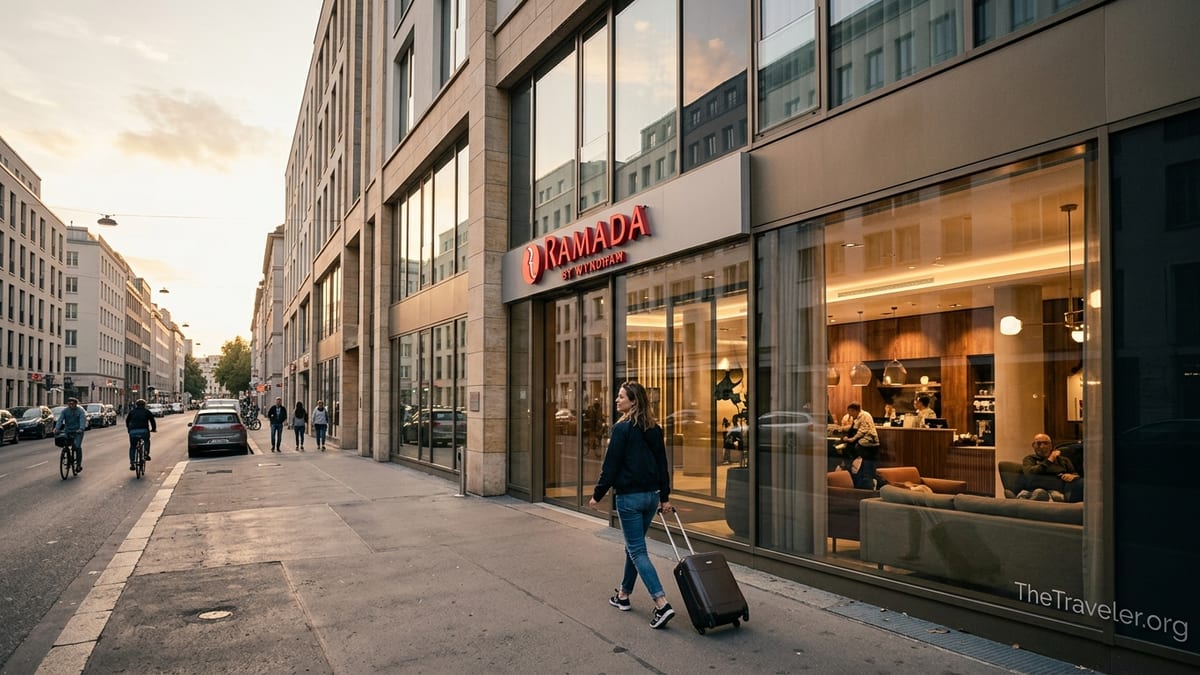
Ramada’s Reputation: The Classic Midscale Wild Card
Ramada sits in the broad middle of the hotel landscape, officially positioned as a classic midscale brand under the Wyndham umbrella. The brand spans roadside hotels in small American towns, business-focused towers in the Middle East, and resort-style properties in Asia and Europe. That breadth is part of the challenge. In practice, a “Ramada” sign can mean anything from a tired former conference hotel with aging carpets to a smartly renovated city property with a polished lobby and solid amenities. For many travelers, that inconsistency has cemented Ramada’s image as an average, even forgettable option.
Yet Ramada’s own brand materials describe a guest profile looking for a “better experience” in the mid and upper-midscale space, and many franchise owners are investing to meet that ambition. In markets where competition is fierce and guests can easily compare options, some Ramada properties have been upgraded with refreshed rooms, contemporary decor, and better food and beverage offerings. If you only know the brand from an older suburban property you stayed in a decade ago, the gap between expectation and reality at some of these newer or renovated hotels can be surprisingly wide.
For travelers, the lesson is simple but important. You cannot safely assume that every Ramada will be exactly the same, for better or worse. The name gives you a general price band and service level, but the actual experience depends heavily on the specific property, its age, its ownership, and how recently it has been renovated. Researching individual hotels matters more with Ramada than with some tightly standardized chains.
When “Just a Ramada” Feels Better Than the Price Tag
On a recent visit to Dubai, I booked Ramada by Wyndham Dubai Deira largely on price. Nightly rates in early 2026 often dip into the equivalent of around 90 to 120 US dollars for standard rooms, significantly undercutting newer international brands closer to Downtown or the Marina. I expected a perfectly serviceable bed, a functional shower, and maybe a somewhat dated room. Instead, I checked into a property that had undergone a multi-million-dirham renovation, with refreshed rooms, a contemporary lobby, and updated public areas that felt modern and bright rather than tired and dim.
The hotel’s location in Deira, a historic district across Dubai Creek from the glitzier new developments, certainly keeps costs down. Yet for a visitor who wants easy public transport, the setting can be a real asset rather than a compromise. The hotel sits along Salahuddin Street, a short walk from a metro station that links directly to the airport and major sights, and just across from shopping at places like Al Ghurair Centre. That combination of reasonable rates, decent renovations, and very practical positioning delivered far more value than I expected when I clicked “book” on what I assumed would be a generic midscale stay.
What struck me most was how the basics were handled. The standard room offered a comfortable bed, fast Wi-Fi included in the room rate, and a breakfast buffet that leaned more toward “solid city four-star” than “free carb spread.” The rooftop pool, while compact, provided a welcome break in the late afternoon heat. It was not a resort experience and it did not pretend to be one. But when I compared my nightly rate to neighboring four- and five-star competitors, especially during busy trade fair weeks, the hotel felt like a quiet bargain hiding behind a familiar name.
Where Ramada Still Lives Up to Its Average Stereotype
Not every property under the Ramada banner tells a happy story. Because many hotels are independently owned and operated under franchise, the degree of care and reinvestment varies widely. In the same city that produced a pleasantly updated Ramada, you might find an older property with worn furniture, aging bathrooms, and patchwork maintenance. In some North American roadside locations, guest photos and reviews still show sagging mattresses, dated floral bedspreads, and public spaces that appear barely changed since the early 2000s.
Traveler feedback for several Ramada hotels around the world reveals recurring complaints that can quickly pull the brand back toward the “average” stereotype. Guests sometimes mention musty odors in hallways, noisy air-conditioning units, or housekeeping that seems stretched too thin. At the far end of the spectrum, some reviews for older urban Ramada hotels describe maintenance issues like stained carpets, chipped tiles, or inconsistent hot water and heating. When you stay at one of these properties after experiencing a well-kept Ramada elsewhere, the contrast is especially jarring.
This unevenness is not unique to Ramada. Other large midscale brands also struggle with aging portfolios and a patchwork of renovation timelines. But because Ramada has such broad global reach and a long history, the gap between its best and worst properties can feel particularly wide. The same red script sign that greeted you at a sleek, business-ready hotel in Asia might also sit above a half-vacant conference complex in the American Midwest that is waiting for either a full refresh or a new life under a different flag.
Standout Surprises: Properties That Overdeliver
Some Ramada hotels, particularly in competitive international markets, have quietly stepped up their game. In parts of the Middle East and Asia, where guests have no shortage of midscale and upper-midscale options, several Ramada by Wyndham properties have invested in full renovations, expanded amenities and more polished service. The result can feel closer to a business-class four-star hotel, with rates that remain anchored in the midscale range.
Returning to the example of Ramada by Wyndham Dubai Deira, the hotel’s positioning in a historic commercial area encourages it to compete on more than price. Guests arriving for trade fairs or brief stopovers expect fast check-in, efficient airport transfers, and a reliable breakfast. Many recent reviewers comment on helpful staff handling early-morning arrivals or late-night departures, and specific team members in the restaurant and housekeeping earn repeated mentions. That pattern suggests a service culture that goes beyond the bare minimum you might expect at this price level.
Elsewhere, Ramada Plaza and Ramada Encore sub-brands can signal a further step up in ambition. While not every Plaza or Encore hotel hits the mark, some have embraced a sleeker, more design-forward approach. In several European cities, for instance, you will find Ramada Plaza properties with contemporary lobbies, on-site gyms that feel more like boutique fitness studios than converted meeting rooms, and restaurants that draw local diners as well as hotel guests. Booked at the right time, nightly rates can be only modestly higher than older, more basic Ramada hotels in the same city, creating a sweet spot for travelers who value aesthetics and atmosphere but do not want to pay full upscale prices.
There are also smaller, destination-focused Ramada properties that surprise by leaning into local character. In resort-adjacent towns, some hotels have introduced family rooms with bunk beds, kids’ play areas, or outdoor pools framed by local landscaping rather than generic concrete decks. These are not luxury resorts, and they will not match the amenity set of a beachfront five-star property, but they can deliver more vacation feeling than you might assume from a brand sometimes reduced to a highway-exit stereotype.
How to Tell if a Specific Ramada Will Delight or Disappoint
Because the Ramada name itself tells only part of the story, your pre-booking research plays an outsized role in shaping your experience. Start with the renovation timeline whenever you can find it. Hotel descriptions, press announcements, and even guest reviews often mention if a property has been “recently renovated” or “undergoing refurbishment.” A Ramada that has completed a full renovation within the last five to seven years is far more likely to feel fresh than a hotel that has not seen major investment since the late 2010s.
Next, pay attention to where the property sits within its city or region. In markets like Dubai, Bangkok, or Istanbul, Ramada hotels located in central business districts or just off major transport links often position themselves to compete with global brands for business travelers. Those hotels tend to prioritize reliable Wi-Fi, decent desks, strong air conditioning or heating, and early breakfast hours. In contrast, a Ramada on the edge of a small town or in a low-competition corridor off an interstate may lean more heavily on the brand name and loyalty program without significantly upgrading its physical product.
Guest photos and recent reviews remain invaluable. Look beyond star ratings to what people actually describe. Do they praise the cleanliness and mention specific staff members, as many do for the better-run Ramada by Wyndham Dubai Deira? Or do they dwell on peeling paint, worn furniture, and indifferent service? If multiple reviewers reference the same issue within the last six to twelve months, whether that is street noise, thin walls, or slow check-in, you can safely treat it as a current pattern rather than a one-off complaint.
Finally, compare Ramada rates to those of nearby competitors in the same category. If a Ramada is significantly cheaper than comparable midscale chains on your dates, ask yourself why. It might be a genuine value play, especially in a city with a large supply of rooms, or it might signal that the property is older, more basic, or struggling with guest satisfaction scores. Conversely, if a Ramada’s rate nudges toward upscale territory in a particular market, check whether the hotel really delivers extra amenities or a stronger location that justifies that premium.
Getting the Most Value from an “Average” Brand
Approaching Ramada with calibrated expectations can turn a once-maligned brand into a reliable tool in your travel planning kit. Rather than assuming every property is forgettable, treat the brand as a broad canvas on which individual owners paint very different pictures. In some cities, particularly those with robust competition and active tourism boards, Ramada hotels may be among the most aggressively priced options that still offer international-standard service and amenities. In others, they may simply keep pace with older local chains and independent motels.
One effective strategy is to pair Ramada with flexible booking channels and loyalty points. Because Ramada belongs to the larger Wyndham family, you can sometimes use points or “cash plus points” redemptions to bring nightly costs down even further. This can make sense in markets where room rates spike during major events but point prices remain relatively stable. If a newly renovated Ramada Plaza in a European city center is going for a high cash rate during a festival, for instance, a points redemption might transform an otherwise unaffordable stay into a comfortable bargain.
Another tactic is to match the type of trip with the type of property. For a one-night stopover near an airport or along a driving route, you may be perfectly happy with a simple, older Ramada that offers free parking, a quiet room, and a basic breakfast. On a leisure-focused city break, you might seek out a Ramada Encore or Plaza with strong public transport links, a fitness center, and a more contemporary design. Thinking in terms of trip purpose, rather than defaulting to or away from a brand, helps you uncover those instances where Ramada quietly overperforms.
Most importantly, remain realistic. A renovated Ramada that surprises you with great service and modern rooms is still a midscale hotel, not a luxury property in disguise. You should not expect personalized concierges, expansive spas, or cutting-edge fine dining. What you can reasonably hope for, when you choose carefully, is a clean, comfortable, and often well-located base that costs noticeably less than some of its sleeker competitors next door.
The Takeaway
Ramada’s biggest weakness and greatest strength is its variability. Walk into the wrong property at the wrong moment and you may find every negative stereotype confirmed: worn carpeting, dated decor, and a sense that the hotel is trading mostly on a familiar logo. Walk into one of the better-run, recently renovated hotels in a competitive market, and you may catch yourself thinking that this feels more like a modern four-star than the modest midscale brand you expected.
For travelers who are willing to do a small amount of homework, that unpredictability can be harnessed in your favor. Look for recent renovations, study guest reviews, and scrutinize photos before you book. Pay attention to location and rate positioning within the local market. When those factors line up, as they do at properties such as Ramada by Wyndham Dubai Deira and some Ramada Plaza and Encore hotels in major cities, you can end up with a stay that feels quietly upscale at a pleasantly downscale price.
In the end, Ramada is not a brand to write off reflexively, nor is it one to trust blindly. It is a label that invites a closer look at each individual property. Do that work, and you may find yourself, as I did, standing in a bright, modern lobby under a familiar red sign and realizing that sometimes “just a Ramada” is exactly where you want to be.
FAQ
Q1. Is Ramada considered a budget or midscale hotel brand?
Ramada is generally positioned as a midscale to upper-midscale brand. Prices can feel budget-friendly in some markets, but the brand aims to deliver a step above basic economy hotels.
Q2. Why do Ramada hotels feel so different from one property to another?
Most Ramada properties are franchised, with different owners responsible for renovation and upkeep. That leads to significant variation in age, design, and service quality from one hotel to the next.
Q3. How can I tell if a specific Ramada has been recently renovated?
Check the hotel’s official description for renovation notes, scan recent guest reviews for mentions of new rooms or updated decor, and look closely at traveler photos, which often reveal whether furnishings are modern or dated.
Q4. Are Ramada hotels good for business travelers?
Many city-center and airport Ramada properties target business guests with reliable Wi-Fi, work desks, and early breakfast hours. However, some older hotels may lack enough outlets, quiet workspace, or modern meeting rooms, so it is wise to verify amenities before booking.
Q5. Is Ramada by Wyndham Dubai Deira a good example of a better-than-expected property?
Yes. The hotel has invested in renovations, offers a practical location near the metro and shopping, and often prices rooms below some newer competitors, which together can create a strong value proposition for short stays.
Q6. What is the difference between Ramada, Ramada Plaza, and Ramada Encore?
Ramada is the core brand, while Ramada Plaza typically signals a fuller-service, often more upscale-feeling property, and Ramada Encore tends to emphasize modern, streamlined design aimed at younger or more design-conscious travelers.
Q7. Are Ramada hotels suitable for families on vacation?
Some Ramada properties, especially in resort areas or near major attractions, offer family rooms, pools, and kid-friendly dining. Others are more business-focused. Reading recent reviews and checking room types will help you identify which locations suit families best.
Q8. How do Ramada prices usually compare to other chains?
Ramada rates often sit in the middle of the pack, sometimes undercutting similar midscale chains in competitive cities. In less competitive areas or during peak events, prices can creep higher, so it is important to compare options on your specific dates.
Q9. Can I earn or use points when staying at Ramada?
Yes. Ramada participates in Wyndham’s loyalty program, which allows you to earn points on eligible stays and redeem them for free nights or discounted rates at many Wyndham-affiliated properties worldwide.
Q10. What should I look for in reviews before booking a Ramada?
Focus on mentions of cleanliness, noise levels, staff attitude, and the age or condition of rooms. Consistent comments about recent renovations, friendly service, and solid housekeeping are positive signs, while repeated notes about odors, worn furnishings, or maintenance issues suggest caution.