


Travelers often come home raving about a museum that surprised them. Sometimes it is a quiet national collection in a grand palace. Other times it is an open air museum where history lives outdoors, with wooden farmhouses, costumed guides and the smell of woodsmoke in the air. Both promise culture, but the experiences feel very different. So as you plan a trip, which offers the more rewarding cultural encounter: an open air museum or a traditional indoor museum?
Get the latest updates straight to your inbox!
What Actually Is an Open Air Museum vs a Traditional Museum?
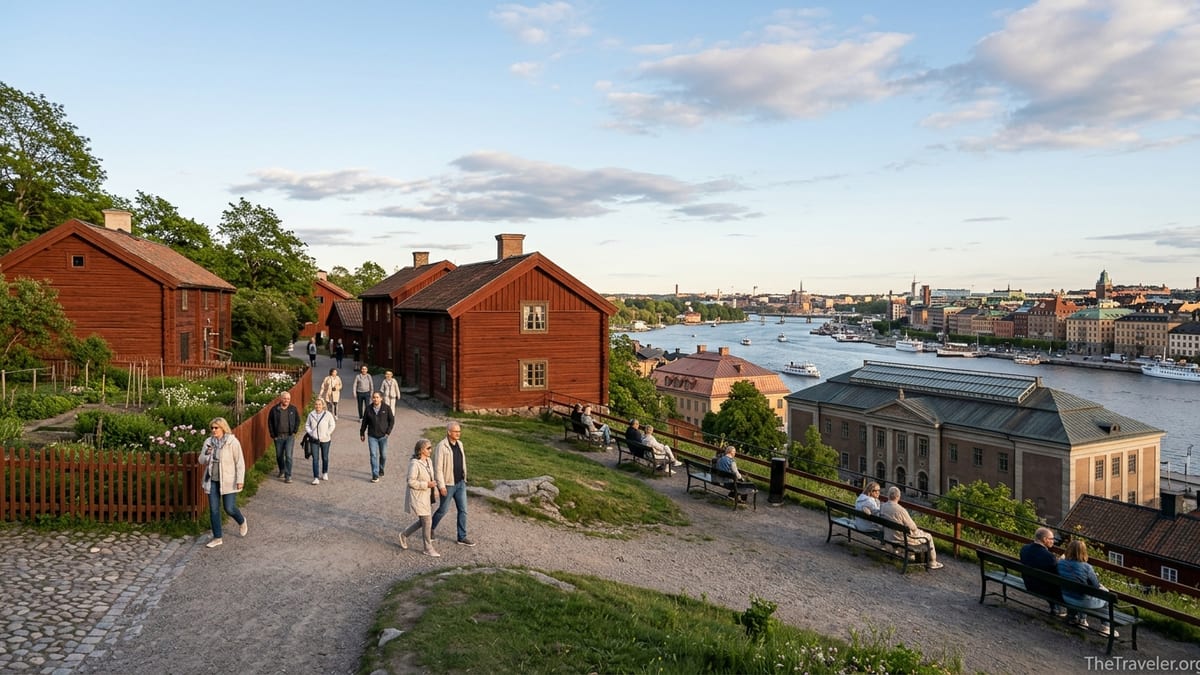
Open air museums place historic buildings and everyday objects in an outdoor setting that feels like a living village or landscape. Instead of walking through galleries, you stroll between old farmsteads, townhouses and workshops that have often been moved from their original locations and rebuilt piece by piece. At Skansen in Stockholm, widely regarded as the world’s first open air museum, around 150 historic buildings from all over Sweden stand on a hill above the city, from 18th century manor houses to Sami camps and rural farms. Costumed staff demonstrate crafts, baking and seasonal traditions as you wander from house to house.
Traditional museums, by contrast, bring the world into a controlled indoor space. They collect, conserve and interpret objects under carefully managed light and climate. The National Museum of Denmark in Copenhagen, for example, occupies about 14,000 square metres inside a former royal palace. Visitors move from Stone Age artifacts to Viking treasures to modern Danish design through a sequence of galleries, with labels, multimedia displays and often carefully arranged lighting to highlight individual objects.
Many cities offer both types of museum side by side. In Alsace in eastern France, the Écomusée d’Alsace near Ungersheim recreates a rural village outdoors, with half timbered houses relocated from across the region, while more conventional museums in Colmar and Mulhouse display fine art and industrial history indoors. Understanding the basic difference in how these institutions are set up helps you choose the experience that best fits your interests, your energy level and even the day’s weather.
At the simplest level, an open air museum tries to place you inside a historic environment, while a traditional museum asks you to contemplate objects that have been removed from their original context. Each approach has strengths and weaknesses, and which one “feels better” will depend on what you want from your cultural day out.
Immersion and Atmosphere: Stepping Into the Past
If your idea of a meaningful cultural experience involves feeling physically transported, open air museums often have the edge. The landscape, the sounds and even the smells around you become part of the story. At Old World Wisconsin, an open air museum near Eagle in the United States, visitors walk through forest and prairie between farmsteads built by German, Polish, Norwegian and other immigrant communities. Chickens cluck in the yard, interpreters in period dress split fence posts or bake in wood fired ovens, and you may find yourself holding heirloom garden seeds in your hands rather than just reading about them.
In Alsace, the Écomusée d’Alsace stretches across fields and gardens threaded by lanes and a small river. Traditional half timbered houses, a village school, a lavoir where laundry was once beaten clean, and small plots of crops and medicinal plants evoke the rhythms of rural life. On a spring day you might hear frogs in the ponds and see storks nesting on the rooftops, powerful reminders that past ways of life were tightly linked to the land. The environment itself becomes a primary exhibit.
By comparison, the atmosphere of an indoor museum is shaped by architecture and design rather than weather and landscape. The National Museum of Denmark creates a sense of immersion through theatrical lighting, reconstructed rooms and soundscapes. In one gallery, Viking ships sit under low, dramatic lighting; in another, a reconstructed 18th century Copenhagen townhouse invites you to peek into furnished rooms. The building’s high atrium, glazed roof and quiet café provide a reflective break between sections, with views across Copenhagen’s city center when the sun streams in.
Neither approach is inherently superior, but they feel distinct. Open air museums tend to offer a more casual, wandering immersion where you absorb culture almost incidentally while enjoying views and fresh air. Traditional museums deliver a more curated and often quieter environment, where the atmosphere invites contemplation and careful looking. Travelers who are easily moved by landscapes often find that open air museums leave the stronger sensory memory, while those who love architecture and gallery design may prefer the layered spaces of indoor institutions.
Learning Styles: Hands On Encounters vs Deep Object Focus
How you prefer to learn should weigh heavily in your choice. Open air museums excel at hands on, conversational learning. At Skansen in Stockholm, for instance, staff in historic costume regularly demonstrate everything from glassblowing and shoemaking to traditional Swedish baking. Visitors can watch blacksmiths hammering iron, listen to stories about how families survived long winters, or ask questions about the layout of a farmhouse kitchen. Children often remember milking demonstrations or old fashioned school lessons long after they have forgotten the dates on a wall panel.
Open air museums in Europe and North America increasingly schedule thematic days that match school holidays or seasonal festivals. The Écomusée d’Alsace publishes an annual calendar of events that might include traditional harvest celebrations, demonstrations of horse drawn ploughing or workshops on bread baking in communal village ovens. For travelers, timing a visit to coincide with these events can turn a pleasant stroll into a deeply engaging cultural encounter. It also means that no two visits feel quite the same, since the program changes with the seasons.
Traditional museums, in contrast, shine when it comes to detailed, object based learning. The National Museum of Denmark can display delicate archaeological finds, manuscripts and textiles that would quickly deteriorate outdoors. Temperature controlled cases and low light levels allow visitors to study tiny gold bracteates, Viking jewelry or medieval tapestries up close. Audio guides and multilingual labels provide context that would be difficult to deliver in an open air setting, where weather and noise compete for attention.
For some travelers, this intense focus on rare artifacts provides a deeper sense of connection than any outdoor demonstration. Sitting in front of a single carved stone or a Bronze Age sword, knowing it survived thousands of years, can be a profoundly moving experience. If you enjoy reading labels, comparing styles across centuries and letting your imagination do the rest, the traditional museum format may offer a more satisfying intellectual immersion.
Weather, Practicalities and Comfort
Open air museums are heavily shaped by weather and season, which can dramatically influence how enjoyable the visit feels. In Scandinavia, Skansen’s character changes completely between a bright midsummer day and a snowy December afternoon. In June, travelers might join thousands of Stockholmers at Skansen’s Midsummer celebrations, dancing around the maypole on lawns with sweeping views of the city’s waterways. In winter, the same hilltop hosts Christmas markets with lanterns, mulled drinks and fires in the hearths of wooden houses. On a wet, windy day in November, however, much of the magic depends on your tolerance for cold and damp paths.
Because of this, many open air museums adjust opening hours or close some buildings in low season. The Écomusée d’Alsace, for example, typically opens throughout the year but with reduced access to certain parts during the quietest winter months, and a program of special events concentrated in spring, summer and early autumn. It is always worth checking current schedules shortly before your visit and remembering that a flexible day is an advantage. If the forecast looks wet, an indoor museum day in the nearest city may be a better choice.
Traditional museums tend to be less weather dependent. In Copenhagen, the National Museum of Denmark is a classic rainy day refuge, with cloakrooms, elevators, baby changing facilities and a modern atrium café serving open sandwiches and hot coffee. Typical main courses in the café cost in the region of 95 to 155 Danish kroner, which, while not cheap, is reasonable for central Copenhagen. Visitors can spend several hours moving between galleries without ever stepping outside, making it a comfortable choice during winter or heatwaves.
Accessibility and mobility also matter. Open air museums often involve uneven paths, slopes and longer walking distances between buildings. At Old World Wisconsin, distances between farmsteads can be significant, and on hot summer days shade may be limited. Some sites offer shuttle buses or horse drawn wagons, but visitors with limited mobility may still find an indoor museum easier to navigate. Traditional museums in major cities are more likely to provide lifts, ramps and detailed accessibility information ahead of time.
Social Energy, Crowds and Mood
The emotional tone of your day will differ markedly between the two formats. Open air museums feel more like parks or villages, with a relaxed, social energy. Families picnic on the grass at Skansen, teenagers take photos with Nordic animals at the onsite zoo, and Stockholm residents use annual passes to drop in for a couple of hours after work. The environment encourages conversation, wandering and unplanned stops, whether it is a folk dance performance starting on the main stage or a chance encounter with a guide demonstrating spinning at a farmhouse.
This social, event filled atmosphere can be exhilarating but also overwhelming if you prefer quiet contemplation. On peak days, such as Midsummer at Skansen or major festivals at the Écomusée d’Alsace, crowds build quickly and popular demonstrations can feel busy. For some travelers the collective energy of singing, dancing and shared meals is exactly the “real culture” they seek. For others, the noise and movement make it harder to process what they are seeing.
Traditional museums usually cultivate a calmer, more introspective mood, though popular exhibitions can still attract large numbers. The architecture of the National Museum of Denmark, with its high ceilings and echoing stone floors, naturally encourages lower voices and slower movement. Visitors stand quietly absorbed in front of display cases, and the museum becomes almost library like during weekday mornings. Temporary exhibitions may introduce more interaction and sound, but the building’s design maintains an overall atmosphere of focus.
Think about your own social needs when planning. If you are traveling with a group of friends or children who need to move and talk, open air museums provide ample space and sensory variety. If you are jet lagged, introverted or seeking a single inspiring object to contemplate, a traditional museum may feel more restorative. Many destinations allow you to balance both over a couple of days: a lively, outdoor history day followed by a quieter, gallery based morning.
Budget, Time and Location: Making It Fit Your Trip
Practical logistics are often the deciding factor. Open air museums are frequently located outside city centers, on generous tracts of land. Old World Wisconsin sits in rural Waukesha County, reachable most easily by car from Milwaukee or Madison. Travelers must consider fuel, parking and often full day tickets to make the trip worthwhile. The Écomusée d’Alsace lies between Colmar and Mulhouse, with regional buses or self drive rental cars the most convenient options. Once there, food and drink choices may be limited to onsite cafés and seasonal stands.
Traditional museums, by contrast, tend to occupy central urban sites. In Copenhagen, the National Museum of Denmark stands within walking distance of Tivoli Gardens, the City Hall and the main train station. Travelers staying near the old town can combine a half day in the museum with lunch in a nearby café and an afternoon stroll along the canals. Public transport passes often cover the short journeys, so there is no need to rent a car or plan a long excursion.
Ticket prices vary widely by country and institution, but there are some patterns. Large open air museums often price themselves similarly to major city museums, with adult tickets commonly somewhere in the range that travelers expect for a significant attraction. In Sweden, a visit to Skansen will usually cost in the same broad band as other headline Stockholm sights like the Vasa Museum, though exact prices shift with season and special events. Many traditional museums, especially national collections in Europe, remain free or reduced price for certain age groups or at specific times.
Time is another key factor. Open air museums reward slow exploration; it is easy to spend five or six hours at Skansen or Old World Wisconsin without repeating experiences. Traditional museums can be more flexible. You might spend a full day at a major collection, but you can also visit for an hour or two, focusing on one period or gallery. If your itinerary in a city is packed and your energy limited, an indoor museum that you can dip in and out of may fit better than a long journey to a countryside site.
So Which Cultural Experience Feels Better?
When travelers compare notes after a trip, they rarely agree unanimously on whether open air or traditional museums feel “better.” Instead, their stories reveal different priorities and moods. One couple may recall Skansen as the highlight of their Stockholm visit because they happened to arrive on a crisp autumn day, watch glassblowers at work and share cinnamon buns outside a wooden café. Another might favor the quiet intensity of the Danish National Museum, where a single room of Viking artifacts reshaped their understanding of Scandinavian history.
What is clear is that each format excels at particular types of cultural experience. Open air museums are unbeatable for vivid, multi sensory encounters with everyday life in the past: how people cooked, how villages were laid out, how festivals felt when everyone gathered in the square. They are especially strong for family travel and for visitors who learn best by doing, watching and moving. Traditional museums are strongest when it comes to depth, rarity and chronological overview, placing priceless objects from different eras side by side so you can see how a culture changed over centuries.
Rather than asking which is universally better, it helps to ask which is better for you, right now, on this trip. Are you seeking open skies and human contact after days in conference rooms, or a quiet sequence of galleries where you can move at your own pace? Is the weather inviting you outside, or is it sleeting sideways? Do you want to understand how a region’s people lived and worked, or to see its most iconic masterpieces protected behind glass?
In destinations that offer both options, one of the most rewarding strategies is to pair them. In Stockholm, for instance, you might spend a morning at the Vasa Museum contemplating a single 17th century warship preserved indoors, then cross the island of Djurgården to Skansen for an afternoon of wandering through Sweden in miniature. The contrast between the two will sharpen your sense of what makes each format powerful, and you may find that together they tell a fuller story than either could alone.
The Takeaway
Open air museums and traditional museums are not rivals so much as complementary lenses on culture. One surrounds you with reconstructed villages, farmyards and working crafts under the shifting light of real weather. The other frames the most fragile and significant objects a society has chosen to preserve, under carefully controlled conditions. Both can offer profound encounters with the past and present, and both reward a little advance thought about your own preferences and the realities of your trip.
If you value movement, conversation and sensory richness, and the forecast looks kind, an open air museum like Skansen, Old World Wisconsin or the Écomusée d’Alsace may well feel like the most satisfying cultural day of your journey. If you are drawn to rare artifacts, detailed interpretation and comfortable facilities in the heart of a city, then a traditional institution such as the National Museum of Denmark will likely leave the deeper impression.
In the end, the “better” cultural experience is the one that aligns with your mood, your companions and your curiosity on a specific day. As you plan, look at a map, the season, the event calendar and your own energy levels. Build in variety when you can. Over the course of several trips, you may discover that your most treasured memories come not from choosing one type of museum forever, but from embracing both ways of meeting the stories that shape a place.
FAQ
Q1. Are open air museums suitable to visit in winter?
Many open air museums remain open in winter, often with reduced hours or closed sections. Experiences can be magical during Christmas markets or snow covered days, but you will need warm clothing, good footwear and flexibility if weather affects demonstrations.
Q2. Which type of museum is better for families with young children?
Open air museums tend to be more engaging for young children because they can move freely, see animals, watch crafts and join seasonal activities. However, many traditional museums now provide child friendly exhibits and hands on zones, so checking specific offerings is important.
Q3. Do open air museums offer the same level of historical accuracy as traditional museums?
Reputable open air museums work with historians, architects and curators to reconstruct buildings accurately and base activities on solid research. While some storytelling is necessarily simplified, the physical layouts and many techniques shown are grounded in serious scholarship.
Q4. How long should I plan for a visit to an open air museum?
Plan at least half a day for a major open air museum, and a full day if you enjoy lingering at demonstrations or walking between distant farmsteads. Distances, seasonal events and café breaks all add time compared with a compact indoor museum.
Q5. Are traditional museums always indoors and static?
Most traditional museums are indoors, but many now include immersive installations, reconstructed rooms and temporary exhibitions that change regularly. Some also run outdoor events, guided walks or collaborations with nearby historic sites.
Q6. Which option is usually more budget friendly for travelers?
Costs vary by country. City museums sometimes offer free or discounted entry on certain days, which can be more budget friendly than an open air museum that requires full price tickets and travel costs. Checking local passes and combined tickets can help reduce expenses for both types.
Q7. Can I visit both an open air museum and a traditional museum in one day?
In some destinations, yes, especially when they are located close together. For example, museums clustered on the same island or within the same city district can often be combined, though you may want to prioritize one to avoid museum fatigue.
Q8. How accessible are open air museums for visitors with limited mobility?
Accessibility varies widely. Many open air museums work to provide step free routes, accessible toilets and shuttle options, but old buildings, cobblestones and uneven paths can pose challenges. It is wise to review accessibility information or contact the museum in advance.
Q9. Do I need to book tickets in advance?
Booking ahead is increasingly common for both types of museum during peak seasons or special events. Some open air museums limit numbers for major festivals, and popular indoor exhibitions may use timed entry slots, so advance reservations can save time and disappointment.
Q10. How can I decide quickly which type of museum suits me on a given day?
Check the weather, your energy level and your location. If it is a pleasant day and you crave space and movement, choose an open air museum. If it is hot, cold or rainy, or you feel like a quieter, shorter visit, an indoor traditional museum in the city center is often the better match.