


More news on this day
Hundreds of passengers arriving at Orlando International Airport faced hours of disruption after a major breakdown in the baggage handling process left luggage stalled, carousels jammed and families stranded in the terminal late into the night.
Get the latest news straight to your inbox!
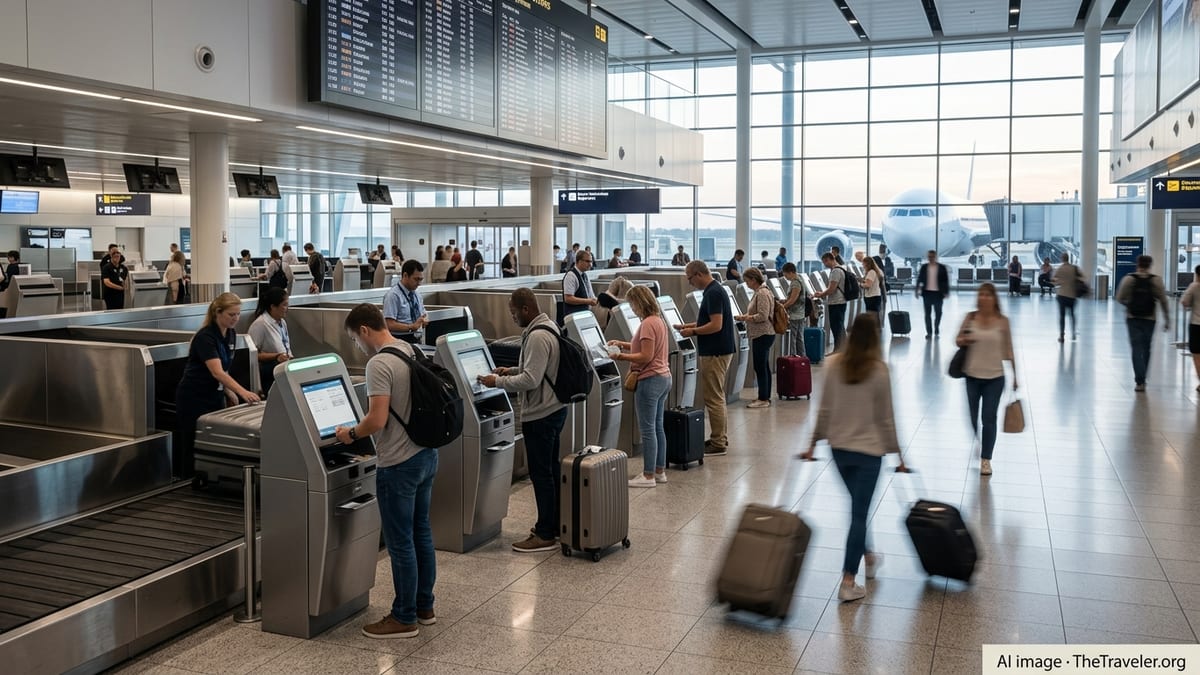
Hours of Waiting as Bags Fail to Arrive
Publicly available reports indicate that around 800 passengers were caught in a rolling backlog when the baggage handling system serving several international arrivals at Orlando International Airport struggled to process luggage. Travelers arriving on evening and late-night flights described remaining in the terminal for several hours after landing, watching carousels stop and start while suitcases failed to appear.
Local broadcast and newspaper coverage describes long lines forming around the baggage belts as airport staff attempted to clear mounting piles of luggage by hand. Some passengers reported waiting three to five hours to be reunited with their bags, with families sitting on the floor near motionless carousels as children slept on suitcases and trolleys.
Accounts shared in local media and on social platforms suggest that the disruption was not limited to a single flight. Instead, the problem appears to have cascaded across multiple international arrivals in a short time frame, leaving hundreds of travelers uncertain whether to keep waiting or leave the airport and attempt to track down their luggage later.
Images circulated by passengers showed rows of unclaimed suitcases lined up beside static belts, reinforcing the sense that the automated system had given way to an improvised, manual recovery effort that struggled to match the scale of the evening’s arrivals.
What Went Wrong With Orlando’s Baggage Handling
While detailed technical explanations have not been published, available information points to a collapse in the normal flow of luggage through Orlando’s complex baggage network. Orlando International Airport operates a high-capacity system that transfers thousands of bags per hour between check-in, security screening areas, sorting halls and aircraft stands. When a component of that chain slows or stops, bags can queue deep inside the system, often invisible to passengers watching empty carousels.
Recent operational documents and planning reports for the airport highlight how baggage handling depends on a combination of automated conveyors and airline ground staff who must offload holds, clear choke points and feed luggage to specific belts on a tight schedule. When irregular operations, staffing gaps or equipment problems hit at peak arrival times, the system has limited margin before passenger-facing delays begin to appear.
In this incident, traveler accounts suggest that luggage from multiple flights arrived in bursts or not at all, a pattern consistent with backups in screening halls or sortation areas that forced handlers to move baggage in waves. Some passengers described bags from later flights emerging on carousels before luggage from earlier arrivals, indicating that staff may have been rerouting loads to whichever part of the network was still functioning.
The episode follows a broader pattern seen at major hubs worldwide in recent years, where surging demand, complex security requirements and aging equipment have combined to create points of failure in baggage operations. Industry analyses note that even a brief stoppage in part of a system during peak periods can take hours to unwind, particularly at airports that routinely operate close to capacity.
Stranded Passengers Face Difficult Choices
For the roughly 800 passengers caught in the Orlando baggage backlog, the operational failure quickly turned into a personal and financial headache. Families described missing ground transportation, cruise departures and hotel check-in windows as they debated whether to abandon their bags and leave or keep waiting in hope that the system would clear.
Some passengers told local media that they were reluctant to exit the secure baggage claim area without their suitcases, uncertain how easy it would be to recover items such as medication, baby supplies or essential documents if they walked away. Others chose to depart after several hours, later navigating online claim forms, call centers and return trips to the airport to reunite with their belongings.
Travel advocates point out that incidents like this can quickly escalate costs for affected passengers, who may need to cover extra nights of accommodation, replacement clothing and missed connections while luggage is located. For international travelers arriving in Orlando for time-sensitive vacations, the disruption can effectively erase precious days from already expensive trips.
The situation also underscores how little visibility passengers often have into baggage operations. While flight-tracking tools can show aircraft location and gate changes, similar real-time information rarely exists for checked bags, leaving travelers dependent on sporadic announcements and information boards when problems arise.
Systemic Pressure Points at a High-Volume Tourism Hub
Orlando International Airport ranks among the busiest airports in the United States, serving tens of millions of passengers each year and acting as a primary gateway to central Florida’s theme parks, convention centers and cruise terminals. That role as a tourism hub means that traffic patterns are heavily concentrated around weekends, holidays and school breaks, which can leave ground operations stretched.
Recent coverage of disruptions at the airport has highlighted repeated strain on both flight operations and baggage handling during weather events, airline scheduling meltdowns and system outages. Each episode adds pressure to facilities that must already move large numbers of bags for families staying a week or more, often with oversized and special items headed to resorts or ships.
Planning documents show that the Greater Orlando Aviation Authority has been working on terminal expansions and upgrades, including new facilities and equipment intended to modernize baggage operations over time. However, the latest incident illustrates how even as infrastructure improves, the combination of high passenger volumes, airline staffing challenges and tight turnaround schedules can still expose vulnerabilities.
Industry observers note that Orlando’s experience mirrors issues at other major leisure airports worldwide, where intense peak loads and complex connecting ground transport networks mean that a breakdown in one part of the system rapidly ripples across the entire passenger journey.
What Travelers Can Do When Baggage Systems Fail
While passengers have little control over airport machinery or airline staffing, travel specialists suggest several practical steps that can reduce the impact when baggage systems falter. Keeping essential medication, a change of clothes, important documents and valuables in carry-on bags remains one of the most effective safeguards against checked luggage disruptions.
Publicly available guidance from airlines and consumer groups also recommends filing a detailed baggage irregularity report at the airport before leaving, including descriptions and photos of each missing bag. Retaining boarding passes, bag tag numbers and any receipts for emergency purchases can help support later reimbursement requests where policies allow.
Travel insurers increasingly highlight baggage delay and loss coverage in their policies, and experts advise passengers to review limits, documentation requirements and waiting periods before travel. In complex incidents affecting hundreds of travelers at once, claims processes can take time, making thorough records important.
For Orlando-bound travelers, recent events serve as a reminder to build extra buffer time into arrival plans, especially when connecting to cruises, tours or events with fixed departure times. As airports and airlines work to reinforce baggage systems and staffing, passengers are likely to continue facing occasional disruptions, making preparation and realistic scheduling an important part of any itinerary through one of the United States’ busiest vacation gateways.