


More news on this day
Passengers across Asia faced widespread disruption over the weekend as more than 90 flights were reportedly canceled or heavily delayed on routes linking Malaysia, Indonesia, Hong Kong, Taiwan and key international cities including San Francisco, Taipei, Macau, Singapore, Bangkok, Melbourne and Chennai.
Get the latest news straight to your inbox!
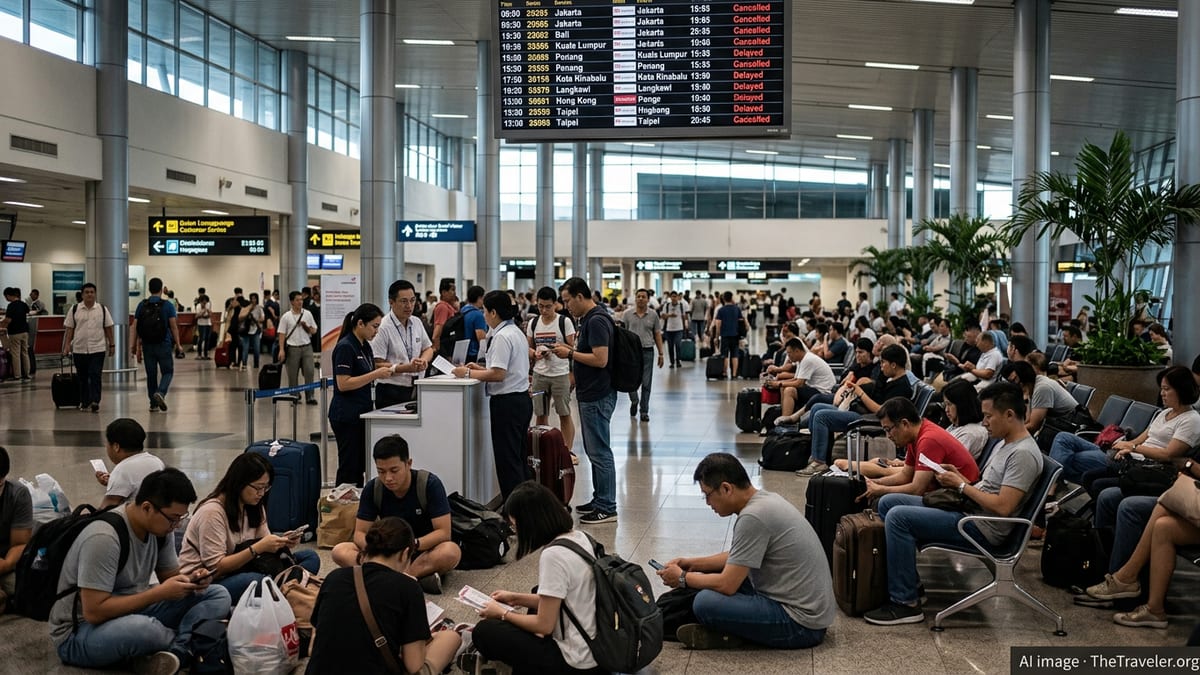
Regional Hubs From Kuala Lumpur to Hong Kong Hit by Cancellations
Published coverage and live flight tracking data indicate a fresh wave of disruption at major Asian hubs, with low cost and full service carriers alike trimming or canceling departures. AirAsia, Batik Air and Malaysia Airlines feature prominently among operators adjusting schedules, alongside other regional and flag carriers serving the same corridors.
In Malaysia, Kuala Lumpur International Airport continues to see irregular operations after a series of schedule changes that have built up through early 2026. Consumer reports and travel forums point to repeated short notice cancellations and rolling delays on popular leisure and migrant worker routes, especially those connecting Kuala Lumpur with Bangkok, Singapore, Taiwan and Australia.
Hong Kong and Macau have also emerged as pressure points. Real time trackers show select services between Macau and Bangkok on Thai AirAsia marked as canceled, with passengers advised to seek rebooking options or refunds via airline channels. Similar disruption has been reported on routes linking Hong Kong with Manila and other Southeast Asian gateways, compounding congestion at already busy terminals.
In Taiwan, travelers using Taipei Taoyuan and other airports have been affected less by outright cancellations and more by prolonged delays. Flight status tools show some departures from Kuala Lumpur to Taipei operating significantly behind schedule, contributing to missed connections onward to Japan, North America and Southeast Asia.
Knock-on Effects for Long Haul Links to the United States and Australia
The latest disruption has not been confined to regional routes. Publicly accessible airport and schedule data show ripple effects on long haul services that connect Asian hubs with North America and Australia, particularly from Kuala Lumpur, Singapore and Hong Kong.
San Francisco features among the cities indirectly affected, as reductions and cancellations on regional feeder flights cut off onward options for travelers planning to connect from secondary Asian cities into transpacific services. At Manila’s Ninoy Aquino International Airport, for example, a recent terminal reshuffle placed multiple international airlines, including Malaysia-based operators, under tighter capacity constraints, making recovery from cancellations more challenging when irregular operations occur.
Australian cities, including Melbourne and Sydney, have experienced periods of reduced capacity and occasional last minute changes on flights from Southeast Asia. Travel industry reports note that carriers from Malaysia and Indonesia have trimmed some frequencies into Australia this year, meaning that any single cancellation can leave fewer immediate alternatives, especially on weekend and school holiday dates when demand is strongest.
In India, Chennai and other southern gateways are also feeling the strain. Route adjustments and pauses on some Thailand and Malaysia links are reportedly forcing passengers onto multi-stop itineraries that rely on precisely timed connections through Singapore, Kuala Lumpur or Bangkok. When a regional leg is canceled or significantly delayed, entire long haul journeys to Europe, Australia or the United States can unravel.
AirAsia, Batik Air and Malaysia Airlines Under Scrutiny
Among the airlines most frequently cited in recent disruption reports are AirAsia, Batik Air and Malaysia Airlines, reflecting their heavy exposure to cross border traffic in Southeast and North Asia. AirAsia’s network of low cost operations based in Malaysia, Indonesia, Thailand and the Philippines has been particularly visible, as even a small percentage of canceled flights translates into large numbers of affected passengers.
Travelers have shared accounts of repeated rescheduling on AirAsia itineraries involving Melbourne, Bangkok and various secondary cities in mainland Southeast Asia. Some passengers describe booking months in advance only to find that departure times have been pushed back, aircraft types changed or entire sectors removed as airlines rebalance capacity.
Batik Air and Malaysia Airlines, which both maintain significant operations out of Kuala Lumpur, have also adjusted selected services amid broader cost pressures and fleet planning changes. Industry analysis from regional aviation publications notes that multiple Asia Pacific airlines have cut a small share of planned flights for the northern summer season, leaving less slack in the system when operational issues or weather disruption occur.
While some of the more than 90 cancellations reported in recent days appear tied to specific operational problems on individual flights, others reflect a structural recalibration of schedules designed to match aircraft and crew resources more closely with demand.
Travelers Face Long Queues, Rebooking Challenges and Unclear Options
For passengers on the ground, the pattern of cancellations and rolling delays has translated into long queues at airline service desks, crowded customer contact channels and, in some cases, overnight stays near airports. Reports from major hubs such as Kuala Lumpur, Bangkok and Singapore describe travelers lining up to request meal vouchers, hotel accommodation or alternative routings after learning that their flights to Taipei, Macau or regional Indonesian cities would not operate as planned.
Many travelers rely on airline mobile apps and third party booking sites to manage disrupted trips, but some have found that updates on schedule changes are reaching them late or not at all. Travel forums contain detailed accounts of passengers only discovering a cancellation after arriving at the airport several hours before departure, a situation that can be especially disruptive for those connecting onward to long haul flights.
Rebooking options are often limited on the same day, particularly on constrained routes such as Macau to Bangkok, or between smaller Malaysian cities and major hubs like Singapore or Hong Kong. Some passengers have turned to alternative carriers such as Singapore Airlines, Cathay Pacific or regional low cost competitors, accepting higher last minute fares in exchange for a more certain itinerary.
The uneven nature of the disruption means that some flights on the same route operate normally while others are canceled, creating a sense of unpredictability for travelers trying to plan ahead. This variability has fueled frustration among passengers who feel they cannot rely on schedules, even during what should be relatively stable shoulder season travel periods.
Airlines Cite Operational Pressures as Analysts Warn of Continued Volatility
Although public statements vary by carrier, published commentary from aviation analysts points to a combination of factors behind the rising number of cancellations across Asia. These include tight aircraft availability, ongoing maintenance backlogs, high fuel prices, and airspace or routing constraints related to geopolitical tensions and weather.
Some Asia Pacific airlines are still rebuilding networks and fleets after the pandemic era, leaving them more exposed when a single aircraft goes out of service or when demand patterns shift unexpectedly. Comparative data from regional consumer reports show that low cost operators tend to register higher cancellation and delay rates than full service airlines, in part because they operate aircraft more intensively and with less spare capacity.
Industry observers suggest that travelers should expect intermittent disruption through the remainder of 2026, especially on routes that depend on a small number of daily frequencies or that involve carriers currently restructuring their networks. They also note that large multi hub systems, such as those centered on Kuala Lumpur, Singapore and Bangkok, can amplify the impact of a single cancellation as missed connections cascade through the network.
For now, passengers booked on routes involving Malaysia, Indonesia, Hong Kong, Taiwan and major destinations such as San Francisco, Singapore, Bangkok, Melbourne and Chennai are being advised by publicly available travel guidance to monitor flight status closely, allow generous connection times and consider flexible tickets where possible, as Asia’s aviation sector navigates another period of turbulence.