


More news on this day
As summer travel intensifies, overnight airport delays are stranding thousands of passengers in terminals worldwide, raising a pressing question for many travelers: when can meals and hotel stays be claimed from the airline, and when are extra costs left to the passenger?
Get the latest news straight to your inbox!
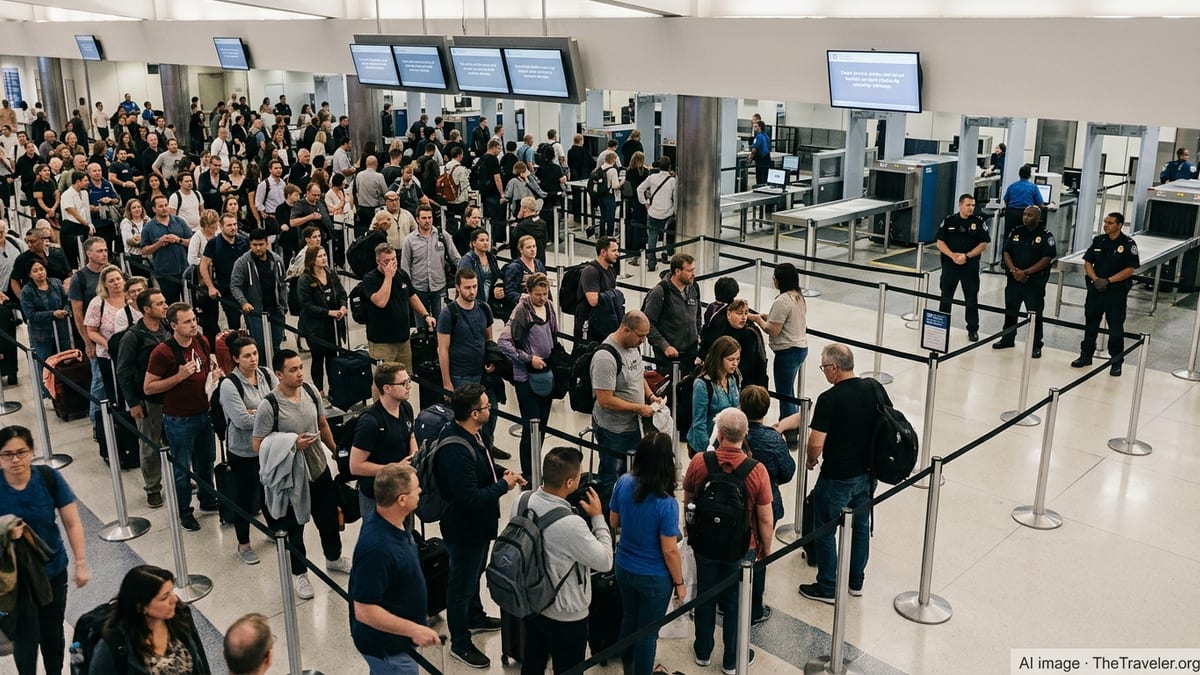
United States: Hotel Stays Often Depend on Airline Policy
In the United States, there is still no nationwide legal right to meal vouchers or hotel rooms when a flight is heavily delayed but not cancelled. Instead, assistance during overnight disruptions generally rests on each carrier’s customer service commitments, which are set out in their contracts of carriage and publicly listed service pledges. These documents typically distinguish between disruptions within the airline’s control, such as crew scheduling or maintenance, and those attributed to weather or air traffic control.
Recent rulemaking by the U.S. Department of Transportation has focused on clarifying refund rights rather than mandating meal or hotel coverage. A refund is now guaranteed when an airline cancels a flight or makes a significant schedule change and the passenger chooses not to travel, with minimum delay thresholds defined in federal regulation. For long delays that remain within the airline’s control, many large carriers voluntarily promise meal vouchers after several hours and hotel accommodation if an unexpected overnight stay is required, but these benefits are policy-based rather than statutory.
Publicly available information from the Department of Transportation notes that several major U.S. airlines now commit to providing hotel rooms for overnight delays they cause, along with ground transport to and from the hotel. However, these commitments may not apply if the delay stems from weather, air traffic restrictions or other events the carrier classifies as outside its control. Travelers affected by overnight delays are often advised by consumer advocates to check the airline’s written customer service plan and to document the reason for the disruption, since that classification can determine whether meal and hotel coverage is offered.
For passengers who end up paying for their own overnight stay during an extended delay, reimbursement is not guaranteed under federal law. Some travelers choose to submit receipts and request goodwill compensation, and others pursue claims through credit card travel protections or independent travel insurance, which in some cases provide fixed allowances for lodging and meals after multi-hour delays.
European Union: Strong “Right to Care” for Overnight Delays
In the European Union, air passenger protections go further, and the right to care during long delays is firmly established. Under Regulation 261/2004, travelers departing from an EU airport, or flying into the EU on an EU carrier, are entitled to meals, refreshments and communication assistance when delays pass certain thresholds based on flight distance. If the revised departure time moves to the following day, the regulation grants a clear right to hotel accommodation and transport between the hotel and the airport where an overnight stay becomes necessary.
Official guidance on EU air passenger rights emphasizes that this duty of care applies even when a delay is caused by extraordinary circumstances beyond the airline’s control, such as severe weather or airspace closures. While such events can relieve carriers from paying monetary compensation for time lost, they do not remove the obligation to provide meals and, where needed, overnight accommodation. As a result, an EU passenger stranded overnight due to a storm is still entitled to a hotel and basic subsistence, even if compensation for inconvenience is not due.
Recent European policy developments point to an effort to standardize and strengthen these care obligations. A June 2026 political agreement between EU lawmakers on updated passenger rights rules described more precise benchmarks, such as defined times for when meals must be offered and clear expectations that hotel rooms will be provided whenever a necessary overnight stay results from a disruption. While the detailed text still needs to pass final legislative steps before implementation, the direction of travel suggests airlines operating in the EU will face more explicit obligations to organize and pay for hotels during overnight delays.
Consumer organizations in Europe advise passengers to insist that airlines arrange the hotel directly whenever possible, rather than paying out of pocket, to avoid later disputes. If travelers do need to front the cost of accommodation or meals when assistance is not provided on the spot, receipts and records of the delay are crucial to support reimbursement claims under EU rules.
United Kingdom: Rights Continue After EU Exit
Following its departure from the European Union, the United Kingdom retained a version of the EU’s air passenger protections, now set out in UK law. Guidance from the UK Civil Aviation Authority explains that passengers departing from UK airports, or flying into the UK on UK or EU carriers, have rights to care during long delays that closely mirror the pre-existing European framework. That includes food and drink in proportion to the waiting time, access to communications, and, where an overnight stay becomes necessary, hotel accommodation and transport between the airport and the hotel.
The UK regime similarly distinguishes between assistance and monetary compensation. Airlines must provide meals and, if required, overnight accommodation regardless of fault, but they are not required to pay compensation when the delay is due to extraordinary circumstances outside their control. The Civil Aviation Authority’s public information stresses that these assistance rights apply even when bad weather or air traffic control issues are involved, as long as the passenger is eligible under route and carrier criteria.
Reports indicate that UK enforcement authorities encourage airlines to make practical arrangements for stranded passengers, such as booking hotel blocks and providing meal vouchers. However, travelers sometimes find that hotels are scarce during large-scale disruptions, leaving them to arrange their own stay. In those situations, passengers are generally advised to keep receipts and submit claims afterward, though success may depend on the specific facts and the airline’s assessment of what was “reasonable” under the circumstances.
For UK travelers with connecting itineraries that involve multiple separate tickets, the protection is more limited. The right to care and to accommodation typically applies only to the disrupted flight covered by the regulation, and not to missed onward connections booked separately, which can leave gaps in coverage for complex journeys.
Practical Steps for Travelers Facing Overnight Delays
Across jurisdictions, one consistent theme emerges: passengers who understand the distinctions between refunds, compensation and care have a clearer path to recovering costs when an overnight delay hits. Refunds in the United States are now more clearly defined for cancellations and significant schedule changes, but they generally do not cover hotel bills when a traveler chooses to continue the journey. In contrast, EU and UK rules explicitly treat meals and accommodation as part of the airline’s duty of care during disruptions, even without a separate refund or compensation payment.
Travel experts routinely recommend that passengers first confirm the cause of the delay as recorded by the airline, since classifications such as “controllable” or “extraordinary” can determine what is offered. In the United States, an overnight delay categorized as within the airline’s control may unlock hotel coverage promised under a carrier’s customer service plan, while the same length of delay attributed to weather might only lead to rebooking. Within the EU and UK, the cause affects compensation but not the basic right to care.
Documentation remains essential in any region. Boarding passes, written disruption notices, screenshots of revised departure and arrival times and detailed receipts for food, transport and accommodation provide an evidentiary trail for later claims. Where airlines decline to reimburse costs that passengers believe were owed, complaints can be escalated to national enforcement bodies, dispute resolution schemes or, in some cases, small claims courts, depending on the country.
Many consumer advocates also point out the growing role of travel insurance and credit card protections. Some policies offer fixed allowances for delays exceeding a set number of hours, regardless of airline fault, which can provide a financial backstop where statutory entitlements fall short. As overnight airport disruptions become a regular feature of crowded air travel networks, understanding when meals and hotel stays can be claimed from airlines, regulators or insurers is increasingly central to planning and budgeting every long-distance trip.