


More news on this day
Overnight airport delays are becoming a familiar headache for travelers, but whether an airline must pick up the bill for meals and a hotel depends on a complex patchwork of national and regional rules.
Get the latest news straight to your inbox!
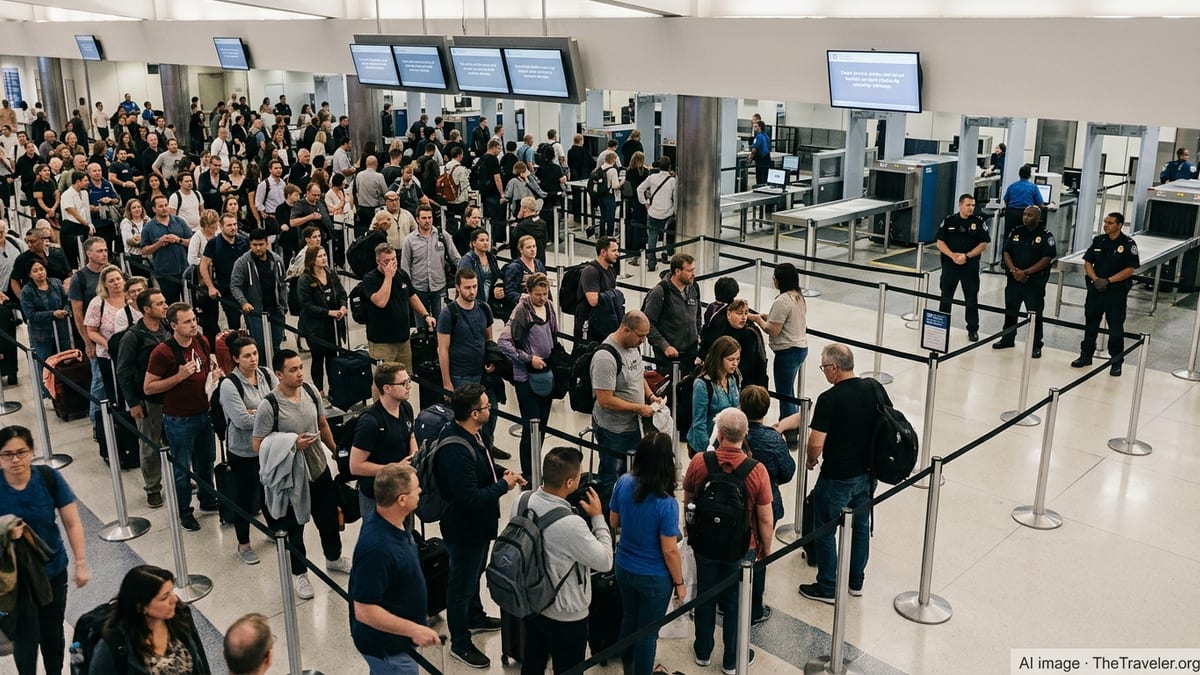
Different Rules Across Regions Shape What Passengers Can Claim
Travelers facing an unexpected night at the airport quickly discover that their rights vary widely depending on whether they are in the European Union, the United Kingdom, Canada or the United States. While some jurisdictions spell out clear obligations for airlines to provide food, refreshments and hotel accommodation during long delays, others rely more on voluntary commitments or contract terms.
In the European Union, Regulation 261/2004 has for years set a common standard for assistance when flights are heavily delayed, cancelled or boarding is denied. Under that framework, passengers on covered flights are entitled to meals, refreshments and communication support once a delay passes certain thresholds, and to hotel accommodation plus transport between the airport and the hotel if the delay requires an overnight stay. The rules apply to flights departing from an EU airport on any airline, and to flights arriving in the EU on an EU carrier.
The United Kingdom, after leaving the EU, retained almost identical protections in its own version of the regulation, commonly referred to as UK261. Guidance from the UK Civil Aviation Authority explains that when a significant delay keeps passengers overnight, airlines are expected to arrange a hotel and ground transport in addition to offering meals and drinks considered reasonable in relation to the waiting time.
By contrast, in the United States there is no federal statute that universally obliges airlines to pay for hotel rooms or meals after long delays or cancellations. Instead, coverage is largely determined by individual carrier policies set out in contracts of carriage, and by more recent voluntary commitments promoted by the U.S. Department of Transportation through its customer service dashboard.
EU and UK: Strong “Duty of Care” Including Overnight Hotels
Within Europe and the UK, the concept of a carrier’s “duty of care” is central to understanding what can be claimed during an overnight delay. Once a delay crosses specific time thresholds linked to flight distance, airlines are required to provide assistance in kind, which typically includes meal vouchers, access to refreshments, and, where needed, overnight accommodation and transfers.
European Commission guidance and summaries of Regulation 261 explain that if a new departure time is at least the following day, airlines must offer hotel accommodation and transport between the airport and the place of stay, irrespective of the cause of the disruption. This obligation applies even in circumstances considered extraordinary, such as severe weather or airspace closures, although in those cases separate cash compensation may not be owed.
In the UK, the Civil Aviation Authority sets out a similar position for flights departing from UK airports or arriving on UK or EU carriers. Publicly available information indicates that airlines should provide vouchers for food and drink during lengthy delays and arrange accommodation and transport where a stay overnight becomes necessary. The authority also notes that what counts as “reasonable” will be interpreted in context, meaning passengers can normally expect mid-range hotels and standard meals rather than luxury options.
These rules do not require airlines to reimburse travelers for every self-booked expense at any price point. However, if assistance is not offered at the airport, passengers are often advised by consumer groups to keep receipts for reasonable spending on meals and lodging and later submit a claim to the airline, arguing that the costs fall under the duty of care when the delay met the relevant thresholds.
Canada: Defined Standards for Food, Drinks and Accommodation
Canada’s Air Passenger Protection Regulations create another detailed framework for when meals and hotels must be provided. For delays and cancellations within an airline’s control, or within its control for safety-related reasons, the rules require carriers to offer “standards of treatment” once travelers have waited beyond set time periods. These standards include food and drink in reasonable quantities, access to communication and, when an overnight stay becomes necessary, hotel or comparable accommodation together with transport to and from that accommodation.
Regulatory guidance and the legal text specify that if an airline expects a passenger will have to wait overnight for an original or alternative flight, it must arrange hotel or similar accommodation at no cost to the traveler. This obligation applies particularly to larger carriers and depends on the category of disruption, but it is framed as a duty to provide assistance rather than a discretionary gesture of goodwill.
The Canadian rules also distinguish between compensation for inconvenience, which is a cash payment linked to the length of the arrival delay, and the separate obligation to provide meals and accommodation. Passengers may therefore receive both a hotel stay and meal vouchers during the disruption, and potentially a monetary payment later, provided the delay falls under the categories covered by the regulations and is not solely due to events beyond the airline’s control such as severe weather.
As in Europe and the UK, the Canadian framework focuses on what is considered reasonable given the situation, meaning that while a basic hotel room and standard meals are envisaged, premium properties or high-end restaurant bills may not be fully reimbursed if they significantly exceed typical costs near the airport.
United States: Limited Legal Rights, Reliance on Airline Policies
In the United States, the legal backdrop is more limited for passengers hoping to claim meals and accommodation during overnight delays. Federal rules address specific scenarios such as tarmac delays, where airlines must provide food, water and access to lavatories after aircraft sit on the runway beyond certain time limits, but there is no nationwide requirement that carriers pay for hotel rooms or meals when flights are significantly delayed or cancelled.
Instead, entitlements generally stem from each carrier’s contract of carriage and customer service commitments. Following a series of high-profile operational breakdowns and cancellations, the U.S. Department of Transportation has promoted a public dashboard comparing airline promises, including whether they provide meal vouchers or hotel accommodations for delays and cancellations under their control. Many major carriers now publicly commit to offering at least meal vouchers, and in some cases hotel stays, when disruptions are not caused by weather or air traffic control constraints.
However, these commitments remain policy choices rather than statutory rights, and they can differ by carrier and fare type. Travelers who book basic economy fares or use certain discount airlines may find that official policies are more restrictive, offering limited or no coverage for overnight accommodation during delays. As a result, passengers in the United States often rely on travel insurance, credit card protections or goodwill gestures from airlines to recover out-of-pocket expenses.
Consumer advocates note that while passengers can request reimbursement for hotels and meals when airline-caused disruptions occur, especially if the carrier’s public statements promise such support, outcomes are not guaranteed. Documentation of the cause of delay and retention of itemized receipts are frequently recommended to strengthen any reimbursement claim.
Key Factors: Cause of Delay, Flight Location and Passenger Action
Across all jurisdictions, several recurring factors determine whether travelers can successfully claim meals and accommodation during an overnight delay. The first is the cause of the disruption. Rules in Europe, the UK and Canada typically apply most strongly when delays or cancellations are within the airline’s control, such as technical issues or crew resourcing, although duty-of-care obligations for assistance can sometimes extend to extraordinary events even when cash compensation does not.
The second factor is where the flight departs and which airline operates it. A traveler flying from an EU airport on a non-European carrier benefits from EU duty-of-care rules, while another on a similar route from a U.S. airport may have to rely solely on the operating airline’s policy. Similarly, passengers on flights to, from or within Canada may be covered by the Air Passenger Protection Regulations, whereas a comparable itinerary elsewhere in North America could be governed only by contractual terms and voluntary commitments.
A third factor is how passengers respond at the time of disruption. When airlines visibly organize hotel transfers and distribute meal vouchers, travelers are usually expected to use those arrangements. If assistance is not forthcoming, guidance from regulators and consumer bodies commonly advises passengers to approach the airline’s desk, request written confirmation of the reason for delay, and keep detailed receipts for essential expenses. These records often form the basis of later claims when carriers review whether meals and accommodation should be reimbursed in line with applicable rules or their own policies.
With flight schedules under pressure from staffing constraints, weather events and airspace disruptions, observers note that overnight delays are likely to remain a feature of modern air travel. Understanding the different regional regimes can help passengers assess quickly whether they can expect airline-funded meals and a hotel, or whether alternative arrangements and insurance coverage may be needed.