

More news on this day
An overnight SEPTA Regional Rail derailment at a critical North Philadelphia junction early Wednesday has thrown the network into disarray, suspending several lines, shortening key routes into Center City, and forcing thousands of commuters to scramble for alternative ways to travel.
Get the latest news straight to your inbox!
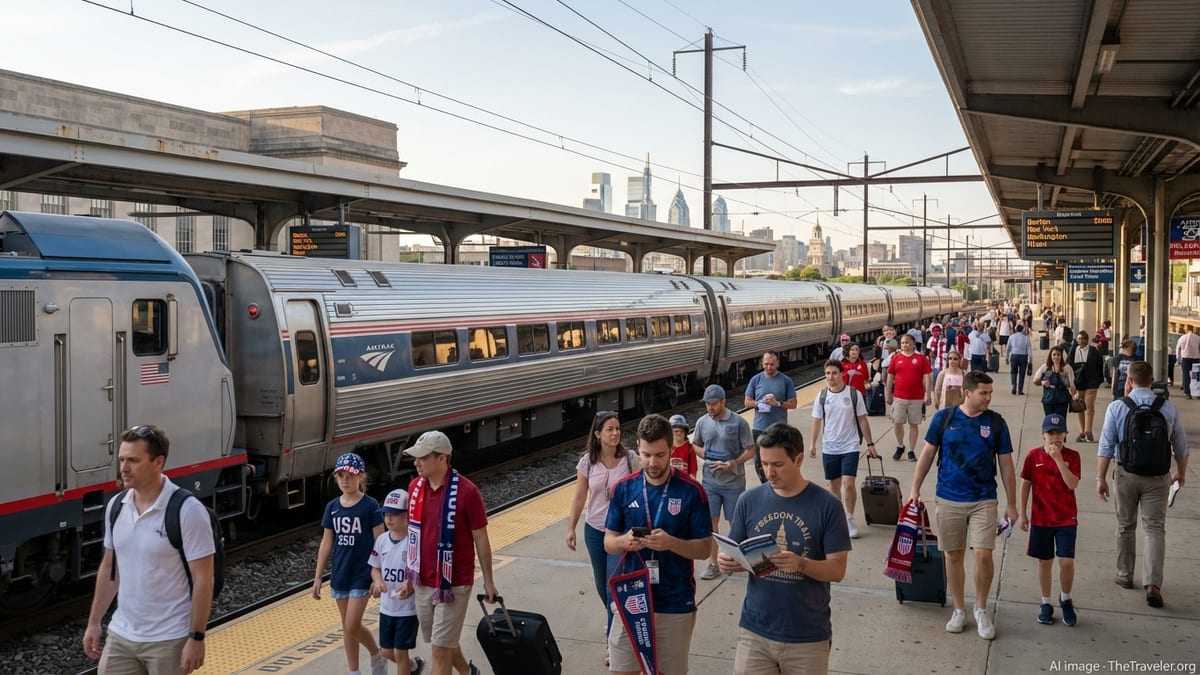
Derailment at North Philadelphia Junction Snarls Morning Commute
Published coverage indicates that a SEPTA Regional Rail train left the tracks shortly after midnight at a major junction just north of Center City, a tangle of tracks that funnels trains between North Philadelphia, Center City, and the western suburbs. The incident disabled an interlocking where several lines converge, effectively choking off one of the most heavily used choke points in the system.
Initial reports describe the derailment as occurring on or near the Manayunk/Norristown alignment as it threads through North Philadelphia, an area shared by multiple Regional Rail routes and in close proximity to freight and intercity corridors. Aerial images circulating in local media show at least one tilted passenger car and maintenance crews assessing track damage under floodlights.
Early information suggests there were no life threatening injuries, but the position of the derailed equipment and the complexity of the track layout mean that full repairs are expected to take most of the day. Rail specialists note that even relatively minor infrastructure damage at such a junction can have outsized effects on capacity, as each track taken out of service removes routing options for trains attempting to pass through.
The timing, at the start of the midweek rush, magnified the impact. Regional riders arriving at neighborhood stations before dawn encountered sparse or contradictory information on platforms and display boards as SEPTA adjusted service plans in real time.
Lines Suspended, Routes Cut Back, Center City Access Reduced
Public alerts from SEPTA and local outlets show that three Regional Rail lines are fully suspended: Manayunk/Norristown, West Trenton, and Fox Chase. Trains scheduled on those routes are not operating beyond limited shuttle arrangements, leaving many communities along the Schuylkill River corridor and in Bucks County without direct rail service into Philadelphia.
Other lines are operating on shortened routes and altered patterns. Coverage from multiple stations indicates that the Airport, Paoli/Thorndale, Trenton, Wilmington/Newark, Media/Wawa, and Chestnut Hill West lines are running only as far as Suburban Station in Center City. Those trains are bypassing Jefferson Station, a core stop for office workers and visitors, reshaping the usual flows through the downtown rail tunnel.
Riders who normally board at Jefferson are being told to reroute via Suburban Station and connect to the Market Frankford Line or Broad Street Line for short hops across Center City. Some reports describe conductors announcing last minute changes on board and advising passengers to remain on trains longer than usual to reach Suburban Station instead of transferring earlier in the trip.
Farther north, rail service on still operating lines is threading around the damaged junction by diverting through alternative tracks and interlockings, creating a ripple of delays across the entire Regional Rail network. Trains that would normally reverse or dwell at outlying terminals are instead being staged at intermediate points to manage congestion, further altering regular timetables.
Bus Bridges and Subway Connections Strain Under Added Demand
To keep passengers moving, SEPTA has directed riders to the Broad Street Line at Fern Rock Transit Center and to key Market Frankford Line hubs as an unofficial backbone for the disrupted system. Local coverage describes transit staff at Fern Rock directing Regional Rail passengers down to the subway, effectively turning the station into a mass transfer point between the paralyzed rail network and the still operating rapid transit lines.
In corridors served by the suspended Manayunk/Norristown and West Trenton lines, riders are turning to bus routes and rideshare options. Observers report crowded buses along Ridge Avenue and through the northwest neighborhoods as commuters attempt to stitch together trips that would normally be a single train ride. Shuttle buses have been deployed in limited fashion near Wayne Junction and other nodes, but capacity is constrained compared with a full length Regional Rail train.
Within Center City, the sudden concentration of trains at Suburban Station is creating platform crowding and longer waits as operations personnel meter arriving and departing trains through the constrained tunnel. Passengers who rely on the direct Jefferson Station stop to access hospitals, offices, and retail destinations in the core are walking several extra blocks or transferring to trolleys to complete their journeys.
Travelers heading to and from Philadelphia International Airport face particular challenges. With the Airport Line limited to Suburban Station, visitors unfamiliar with the network are being funneled onto subway links at 15th Street and City Hall, increasing pressure on those transfer points and lengthening overall journey times during what is already a busy summer travel period.
Derailment Follows Separate Freight Incident in Region
The overnight passenger derailment comes less than a day after a separate freight train incident in Bensalem, in Bucks County, where several cars left the tracks near the Neshaminy Falls area. That event prompted temporary shelter in place guidance on Tuesday and led to a suspension of Regional Rail service on the West Trenton Line while assessment and cleanup were under way.
Although the two derailments occurred on different parts of the broader rail network, the back to back disruptions are intensifying scrutiny of regional rail infrastructure as temperatures climb and train traffic remains heavy. Commenters and riders in public forums have linked the events to broader concerns about aging track, signaling equipment, and the resilience of shared passenger and freight corridors.
Publicly available information from SEPTA in recent months points to significant planned capital spending on rail infrastructure, including new Regional Rail schedules and projects slated to begin in early July. The latest incidents highlight how susceptible the system remains to unexpected failures at single points of congestion, particularly at complex junctions close to Center City.
Transport analysts note that while full investigations will take time, even derailments that do not cause mass casualties can erode rider confidence, especially when they coincide with major schedule changes or other network adjustments. For a system that carries hundreds of thousands of daily passengers across city and suburbs, reliability can be as critical to ridership as raw capacity.
Ripple Effects for Travelers Across the Philadelphia Region
For commuters, students, and visitors, Wednesday’s derailment translates into missed connections, late arrivals, and reworked itineraries that stretch what is normally a 30 minute ride into journeys of an hour or more. Social media posts from early morning show packed platforms at outlying stations, with some riders opting to turn back and work from home rather than navigate the evolving service plan.
For travelers coming from outside the region, especially those relying on Regional Rail to connect between Amtrak, the airport, and hotels in Center City, the disruption underscores the importance of checking local transit advisories in real time. Hotels, meeting venues, and universities located along affected lines are adjusting start times and circulating alternative routing suggestions to staff and guests.
The derailment is also a stark reminder of how dependent regional tourism and business travel have become on seamless connections across multiple rail operators. The North Philadelphia junction sits amid a dense web of Amtrak, SEPTA, and freight tracks that collectively support everything from daily commuting to long distance travel up and down the Northeast Corridor.
By midday, SEPTA was cautioning riders that repairs and service adjustments could last throughout the day and potentially into the evening rush, with further updates expected as crews clear the derailed equipment and inspect nearby tracks. For travelers planning trips into, out of, or through Philadelphia, flexibility, extra travel time, and willingness to shift between Regional Rail, subway lines, and bus routes may be essential until the damaged junction returns to full operation.