

More news on this day
The World Travel & Tourism Council is calling for a coordinated response across European institutions, member states and the aviation sector to tackle mounting delays linked to the European Union’s new Entry/Exit System, warning that hours-long queues at airports risk undermining tourism at the height of the summer peak.
Get the latest news straight to your inbox!
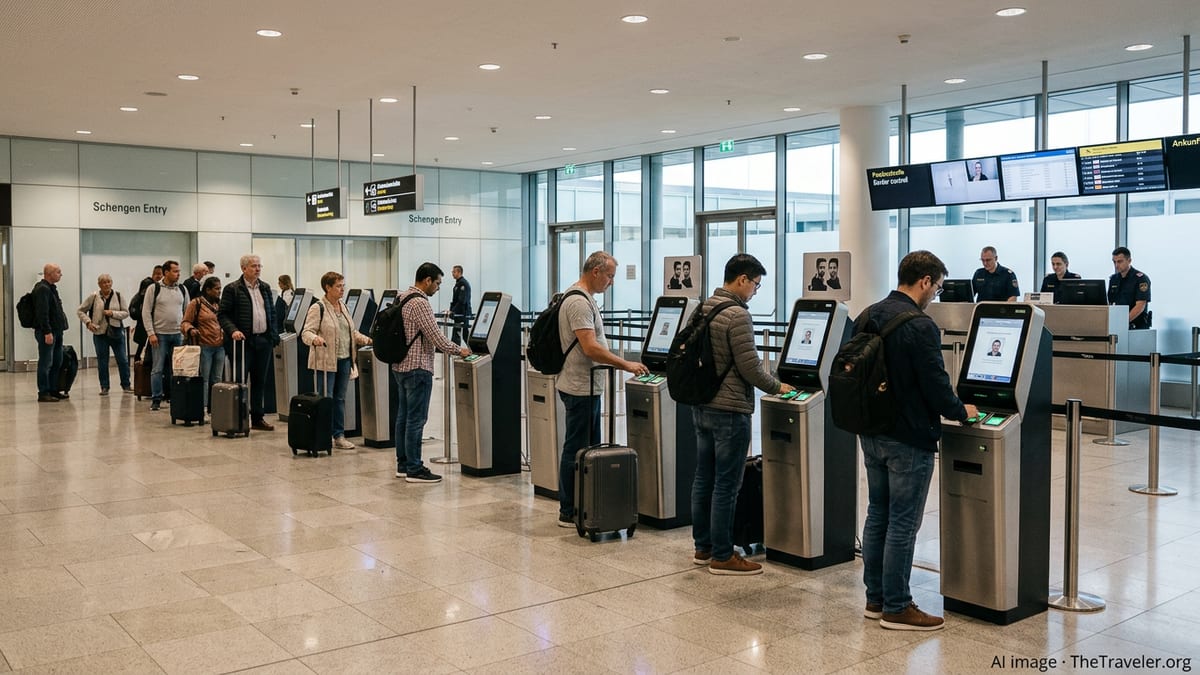
Border queues put EU’s new biometric system under pressure
The EU’s biometric Entry/Exit System, designed to strengthen external border controls for non-EU nationals entering the Schengen Area, has rapidly come under strain as rollout has expanded ahead of the busiest travel months. Reports from industry groups and travel media indicate that processing times at some airports have risen sharply as first-time registrations of fingerprints and facial images are captured at new kiosks and manual booths.
Airport and airline associations have highlighted repeated episodes of congestion at border control, with waiting times frequently stretching beyond two hours at busy hubs and, in some instances, approaching three or more. Published accounts describe passengers missing flights, crowded arrival halls and staff struggling to guide travelers through unfamiliar procedures, particularly when large numbers of holidaymakers arrive simultaneously.
Sector bodies argue that the situation has exposed chronic weaknesses that predate the new system, including staffing shortages at border police desks, uneven deployment of automated gates and technical glitches affecting biometric equipment. As a result, EES has become a focal point for wider concerns about whether Europe’s border infrastructure can cope with peak-season traffic while implementing more complex checks.
WTTC warns of tourism and economic fallout
Against this backdrop, the World Travel & Tourism Council has stepped up its messaging on the risks that unmanaged EES delays pose to Europe’s visitor economy. Research highlighted in recent coverage shows that long queues at border control are already influencing traveler sentiment in key long-haul markets, with a significant share of surveyed visitors from the United Kingdom, United States, Canada and Australia saying that waits of three to four hours would make them much less likely to return to the Schengen Area.
WTTC’s analysis suggests that if such conditions persist through the peak summer period, they could suppress demand for European destinations, reducing both arrivals and spending at a time when many countries are relying on tourism to support jobs and regional economies. Industry-facing reports note that outbound operators, airlines and destination marketing bodies are increasingly concerned that negative word-of-mouth about airport bottlenecks could erode hard-won recovery gains since the pandemic.
The council has framed EES as a potentially positive innovation for security and seamless travel over the longer term, while stressing that the current implementation phase carries substantial reputational risks. By positioning its intervention around economic impacts and traveler behavior, WTTC is seeking to move the debate beyond technical border management and into the broader policy space of competitiveness for European tourism.
Call for coordinated contingency measures and clear communication
Central to WTTC’s latest stance is a call for coordinated action to prevent operational issues from spilling over into systemic disruption during July and August. In line with recommendations cited in recent trade coverage, the council is urging EU institutions, national authorities, airports and airlines to agree common contingency measures where bottlenecks are most acute.
Among the steps highlighted in public reporting are temporary flexibilities at peak times, such as dynamic staffing of border posts, priority channels for vulnerable passengers, and the option to ease the pace of new registrations when queues exceed agreed thresholds. WTTC is also promoting wider use of existing tools, including a dedicated pre-registration app that allows travelers to complete part of the EES process before arrival, with the aim of shortening the time spent at kiosks.
The organization is additionally encouraging a coordinated communication campaign so that travelers receive consistent guidance from airlines, airports, tour operators and tourism boards. Suggested measures include clearer pre-departure information about expected procedures, recommended arrival times at airports and practical advice on documentation and biometrics. Proponents argue that better preparation can reduce confusion at border control, supporting both throughput and traveler satisfaction.
Aviation sector aligns in seeking flexibility on EES
WTTC’s intervention comes as airports, airlines and aviation associations across Europe intensify their own appeals for flexibility around the Entry/Exit System. In an open letter referenced in multiple outlets, groups representing airports and carriers have warned that, without rapid adjustments, waiting times could rise to four or five hours at the busiest border crossings, particularly on peak summer weekends.
These organizations are pressing the European Commission and national governments to consider targeted suspensions or scaling back of EES obligations during the most congested periods, arguing that the priority should be to keep passenger flows moving while technical and staffing issues are resolved. Some national industry bodies have already backed calls to delay aspects of the rollout until after the main holiday season, pointing to early signs of strain at key hubs and tourist gateways.
While positions vary between member states depending on local preparedness and infrastructure, there is a broad convergence within the aviation sector that the current phase is a critical test for EES. WTTC’s emphasis on coordination aligns with this push, reflecting a shared view that piecemeal responses at individual airports will not be sufficient to manage a system that affects the entire Schengen external border.
Balancing smarter borders with seamless travel
The debate over EES is increasingly framed as a balancing act between the EU’s objective of strengthening external border controls and the travel industry’s need to preserve a seamless experience for legitimate visitors. Reports underline that both policymakers and industry stakeholders see long-term value in biometric systems that can eventually speed up border crossings, reduce fraud and support more accurate entry and exit records.
For now, however, WTTC and other industry voices are focused on ensuring that the path to that future does not entail repeated episodes of gridlock at airports. The council’s call for a calm, coordinated and traveler-focused approach reflects concerns that a disorderly rollout could damage public confidence in digital border systems more broadly, complicating future initiatives aimed at modernizing travel.
How quickly authorities and industry partners respond to these concerns is likely to shape traveler perceptions over the remainder of the summer season. With passenger numbers expected to match or exceed pre-pandemic levels on many European routes, the effectiveness of measures taken in the coming weeks will be closely watched across the global travel and tourism community.