


More news on this day
On the surface, the Maldives is enjoying another blockbuster year: flights are full, resort islands are heavily booked and social media feeds are crowded with images of packed beaches and overwater villas. Behind the postcard scenes, however, a more complicated economic picture is emerging, in which the very success of mass tourism is colliding with rising fiscal pressures, climate risks and concerns about how far the boom really reaches Maldivian households and workers.
Get the latest news straight to your inbox!
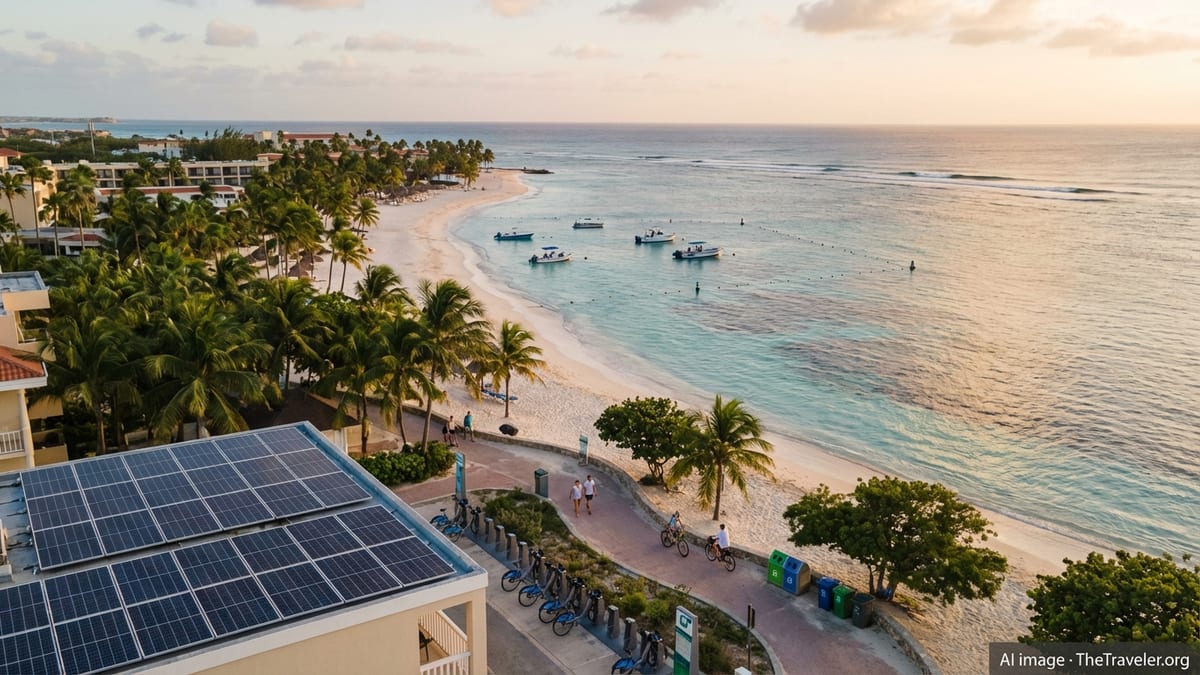
Tourism Numbers Surge as Resorts Fill to Capacity
Recent arrivals data and government promotional material indicate that the Maldives continues to draw record visitor numbers, with more than 2 million tourist arrivals reported in 2024 and growth continuing into 2025. Resorts and guesthouses across popular atolls report high occupancy during peak periods, and aviation statistics show intense traffic through Velana International Airport and domestic seaplane hubs as travelers fan out across the archipelago.
Economic assessments by international institutions describe tourism as the dominant engine of growth, accounting for a substantial share of gross domestic product and foreign exchange earnings. Official updates point to real GDP growth of around 5 to 6 percent in 2024, driven largely by tourism and related services such as air transport, construction and trade. In effect, every additional planeload of visitors on crowded beaches feeds into a wider value chain of resorts, transport operators and suppliers.
This concentration has helped the Maldives stage a rapid recovery from the pandemic-era collapse in travel. Visitor flows from key markets in Europe, Asia and the Middle East have returned or surpassed pre-2020 levels, and premium properties continue to command high nightly rates even as mid-market guesthouses and local-island stays bring in a broader demographic of travelers. To the casual visitor, the sight of busy lagoons and sold-out villas suggests an economy firmly on the upswing.
Yet policymakers and analysts increasingly highlight that this crowded high season does not automatically translate into long-term resilience. The same packed beaches that fuel current revenues are part of a narrowly based economic model that leaves the country exposed to external shocks and under pressure to keep expanding tourism infrastructure.
A Tourism Powerhouse Built on Narrow Foundations
Publicly available economic profiles describe the Maldives as one of the most tourism-dependent countries in the world, with travel and tourism estimated to contribute well over a quarter of national GDP and a majority share of export earnings. World Bank and International Monetary Fund reports emphasize that air transport, resort development and related services support a large portion of total output and employment.
This dependence has benefits in the form of foreign exchange inflows and jobs, but it also creates structural vulnerabilities. When global demand is strong, the government can collect significant revenue from tourism taxes, resort lease rents and import duties linked to visitor consumption. However, the pandemic showed how quickly that revenue can evaporate when international travel slows. Even now, economic updates point to elevated public debt levels and a large share of government spending devoted to wages, subsidies and capital projects connected in some way to the tourism economy.
The reliance on tourism also shapes how growth is distributed geographically. Investment has been heavily concentrated on resort islands and in the capital region, while outer atolls depend indirectly on employment opportunities and procurement from the tourism sector. As more resorts open or expand to satisfy high-season demand, the country adds both new jobs and new long-term fiscal obligations, including infrastructure, utilities and environmental management.
Analysts note that this model leaves the Maldives sensitive to shifts in source markets, airline capacity and global economic conditions. A downturn in a major sending country, a sharp rise in fuel prices or new travel restrictions could quickly alter arrival patterns, even if beaches appear busy today. Beyond the headline visitor numbers, the sustainability of the current expansion remains an open question.
Behind the Luxury Facade: Labor and Cost Pressures
While guests arriving at crowded beaches encounter seamless service and polished hospitality, the labor dynamics behind the scenes are more complex. Government reports and academic research highlight that the tourism industry relies heavily on a mix of Maldivian and migrant workers, many of whom live on separate staff islands or in dedicated compounds with conditions that can vary widely between properties.
Regulatory briefs from international labor organizations describe a framework that has gradually introduced minimum wage policies, rules on working hours and protections against abusive recruitment practices. At the same time, human rights reporting and local commentary point to ongoing concerns over long working days, contract disputes, irregular payments and limited bargaining power for lower-skilled workers. Complaints data from oversight bodies show a steady flow of grievances related to salary issues, service charge distribution and accommodation standards.
Service charge is a particularly sensitive topic. High-end resorts frequently publicize substantial monthly payouts during peak months, creating the perception of generous earnings throughout the sector. However, wage studies and worker testimonies suggest a more uneven reality, where income depends heavily on resort category, seasonality and whether employees are directly hired or working through contractors. For some roles, especially among migrant staff, the cost of recruitment and the need to support families back home can erode the apparent benefits of employment in a booming tourism hub.
These tensions matter for the broader economy because tourism employment is one of the main channels through which the boom can translate into improved living standards. If a significant share of workers experience precarious conditions even as resorts operate near capacity, questions arise about how inclusive the current growth pattern really is.
Climate Threats, Infrastructure Strain and Hidden Costs
Beyond fiscal and labor pressures, the Maldives faces mounting environmental and climate-related costs that are closely intertwined with the tourism boom. Environmental assessments and national climate plans repeatedly stress that the country is one of the world’s most low-lying nations, with resort islands and coastal infrastructure especially vulnerable to sea-level rise, storm surges and coastal erosion. Adaptation studies point to the risk of increased damage to tourism assets and higher insurance premiums as climate impacts intensify.
Government and international reports on the tourism sector describe growing needs for investment in coastal protection, waste management and freshwater supply. Managing the environmental footprint of millions of visitors each year involves treating wastewater, disposing of solid waste and preventing pollution on fragile coral reefs and beaches. Official climate action plans estimate significant costs for upgrading resort and island waste systems, improving water security and retrofitting infrastructure to withstand more extreme weather events.
At the same time, the sheer concentration of visitors in popular atolls places stress on local ecosystems. Studies of reef health and coastal environments warn that uncontrolled development, combined with crowding on beaches and in lagoons, could undermine the very natural assets that draw tourists. Meeting visitor expectations for comfort and connectivity requires energy-intensive operations, much of it still powered by imported fossil fuels, which further adds to the country’s import bill and climate vulnerability.
These environmental and infrastructural pressures do not always appear in the price of a week on a crowded beach, but they are increasingly prominent in fiscal projections and development plans. The more tourism expands to meet high-season demand, the more the Maldives must invest in adaptation and mitigation to keep the sector viable.
Shifting Policy Debates in a Packed-Season Future
The contrast between full resorts and an economy still classified as high-risk by many analysts is shaping the policy debate in Malé and among international partners. Development updates from multilateral institutions emphasize the need for fiscal consolidation, diversification beyond tourism and more targeted social spending, even as the sector continues to deliver short-term growth. Rising public debt levels and large infrastructure commitments limit the government’s room to maneuver if tourism receipts falter.
Policymakers are also under pressure to translate crowded beaches into broader gains for citizens. Proposals under discussion in recent years include strengthening labor inspection, refining minimum wage coverage, and ensuring fairer allocation of service charges and other benefits within resorts. Some strategies focus on expanding local tourism on inhabited islands, in an effort to spread opportunities more evenly and encourage linkages with fisheries, agriculture and small businesses.
For visitors, these underlying dynamics are mostly invisible. Travelers arriving this season will encounter the familiar image of turquoise lagoons, busy buffets and fully booked excursions. Yet the economic reality behind the scenes is far more intricate, hinging on a finely balanced tourism machine that must support public finances, protect vulnerable workers and fund climate adaptation in one of the world’s most exposed nations.
As the Maldives looks ahead to future high seasons, the tension between short-term success and long-term sustainability is likely to intensify. The country’s challenge will be to ensure that the crowded beaches of today are not masking structural weaknesses that could leave both the economy and its famed resorts more fragile than they appear.