


More news on this day
Travelers moving through Palm Beach International Airport on Saturday faced mounting disruption as a cluster of ten cancellations and 43 delays involving major U.S. carriers rippled across key routes to Dallas, New York, Atlanta, Orlando and Marsh Harbour.
Get the latest news straight to your inbox!
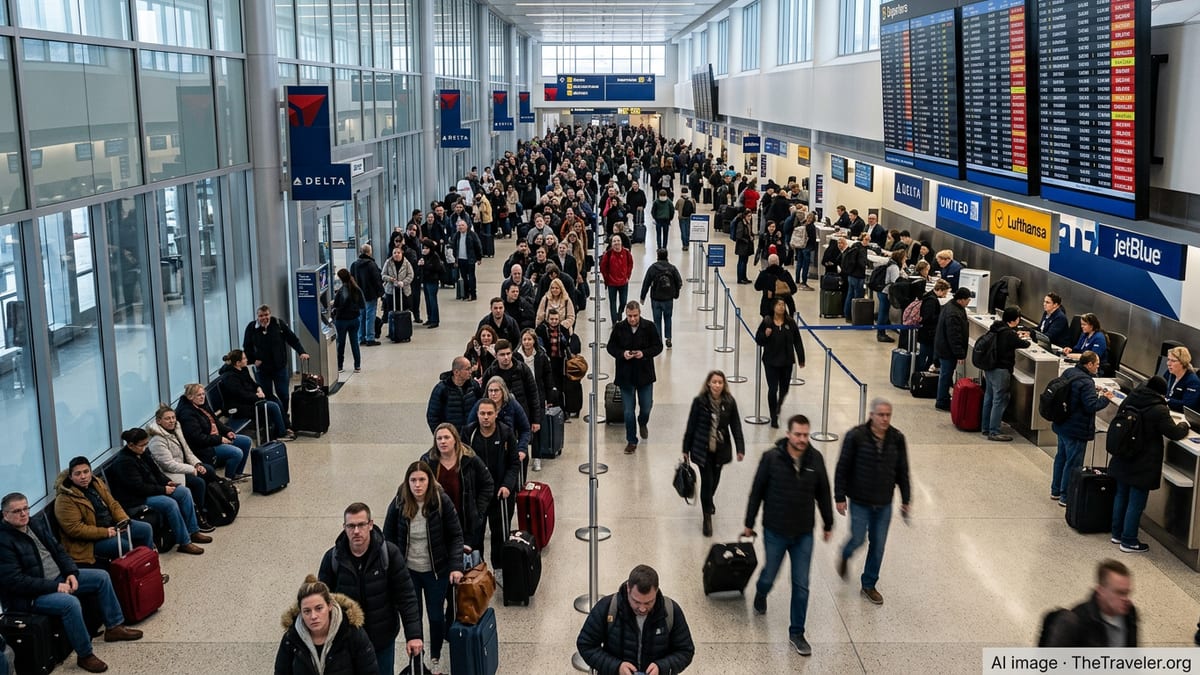
Operational Strain Hits Major U.S. Carriers at PBI
Publicly available tracking data for Palm Beach International Airport shows a sharp spike in disrupted operations affecting Republic Airways, Delta Air Lines, JetBlue, American Airlines and United. The pattern of ten cancellations and 43 delays concentrated around the middle of the day into the evening, affecting both departures from and arrivals into West Palm Beach.
The disruptions involved a mix of domestic trunk routes and regional connections, with Dallas, New York, Atlanta and Orlando emerging as key pressure points. Flights linking Palm Beach with Marsh Harbour in the Bahamas were also affected, creating knock-on challenges for travelers moving between Florida and the Out Islands.
While each carrier’s network is different, the combination of mainline flights and regional operations, including services operated by Republic under major-brand codes, meant that delays in one part of the system quickly cascaded across multiple hubs. Passengers faced extended time on the ground, missed connections and rebookings onto later services as the day progressed.
The spike at Palm Beach occurred against a backdrop of elevated disruption levels reported across the U.S. aviation system this year, with federal consumer reports showing persistent pressure from weather, congestion and airline scheduling decisions.
Key Hubs Affected: Dallas, New York, Atlanta, Orlando and Marsh Harbour
According to live schedules and status boards, Dallas Fort Worth, New York area airports, Atlanta and Orlando all featured prominently among destinations linked to the affected Palm Beach flights. These airports serve as critical connecting points for American, Delta, JetBlue and United, meaning localized issues can scale quickly into broader network challenges.
Services between Atlanta and Palm Beach, an important corridor for Delta, showed a mix of late departures and extended arrival times, adding to connection risk for travelers heading onward to other domestic and international destinations. Delays on New York routes, shared among Delta, JetBlue, American and United, further reduced schedule flexibility for rebooked passengers.
Orlando, a heavily trafficked leisure gateway, also experienced pressure tied to the Palm Beach disruptions, particularly for passengers attempting short intra-Florida hops or onward connections to other U.S. cities. Any schedule variation on these dense corridors can quickly translate into congested gate areas and longer-than-anticipated dwell times.
Links between Palm Beach and Marsh Harbour were affected as well, a sensitive route for visitors heading to the Bahamas and for local residents relying on timely connections to South Florida. Even a small number of cancellations in this market can significantly constrain options, particularly late in the day.
Weather, Congestion and Airline Scheduling Under Scrutiny
Although no single dominant cause for the Palm Beach disruptions has been identified, recent patterns in U.S. aviation suggest a mix of contributing factors. Government data and industry analysis highlight weather-related constraints, airspace congestion, crew and aircraft positioning, and high load factors as frequent drivers of cancellations and delays.
Reports indicate that even brief storms or low-visibility periods at major hubs such as Atlanta, New York or Orlando can trigger ground delays, compression programs and reroutes, which then flow into secondary airports like Palm Beach. When these conditions coincide with tight aircraft rotation schedules, carriers often have little operational slack to recover quickly.
Regional operators such as Republic, which fly under the banners of multiple major airlines, can be particularly exposed when there is pressure on both ends of a route. Disruption on one leg may strand aircraft and crews, leading to cancellations or rolling delays on subsequent flights carrying American, Delta or United flight numbers.
At the same time, airlines across the industry have been working to adjust schedules and fleet plans following several years of volatile demand and staffing constraints. Public data shows that even as traffic through mid-sized airports like Palm Beach has grown, operational resilience has not always kept pace with peak-period demand.
Impact on Travelers and What Passengers Can Expect
For passengers at Palm Beach International, the immediate impact of ten cancellations and 43 delays was felt in longer check-in and security lines, congested departure lounges and scrambled itineraries. Travelers on affected flights to Dallas, New York, Atlanta and Orlando often faced the additional uncertainty of whether connecting services would be held, rebooked or missed altogether.
Publicly available information from flight-tracking platforms suggests that some delayed services ultimately departed and arrived within manageable windows, while others experienced more significant hold times on the ground. Canceled flights forced travelers onto later departures, different routings through alternative hubs or, in some cases, overnight stays when same-day options were exhausted.
Experienced flyers increasingly anticipate such disruptions by building longer connection buffers, monitoring live status feeds and considering travel insurance or flexible tickets. However, occasional travelers and vacationers heading to or from South Florida and the Bahamas can find the sudden loss of a non-stop option particularly disruptive, especially when traveling with families or on tightly timed trips.
As airlines worked through backlogs, passengers were advised through public channels to keep boarding passes and notifications handy, watch for gate changes and, where possible, manage rebookings via airline apps or customer service desks rather than relying solely on departure boards.
Palm Beach International’s Role in a Stressed National Network
The day’s disruptions also underscored Palm Beach International Airport’s evolving position within the U.S. air travel network. Traffic reports show that the airport has continued to build passenger volumes with a roster of major carriers including Delta, JetBlue, American, United and regional affiliates, serving both leisure and business markets.
As a popular alternative to the larger hubs in Miami and Fort Lauderdale, Palm Beach has attracted travelers seeking shorter lines and easier access to northern Palm Beach County and the Treasure Coast. That growth, however, means the airport is increasingly bound into the complex web of national airline schedules, where problems at distant hubs can quickly manifest on local departures and arrivals.
The cluster of cancellations and delays involving Republic, Delta, JetBlue, American and United highlighted how reliant mid-sized airports have become on the smooth functioning of tightly integrated networks. When those networks come under strain, secondary airports like Palm Beach can experience outsized disruption despite relatively modest local weather or infrastructure issues.
As the busy summer travel period approaches, the episode at Palm Beach International serves as another reminder that travelers across the United States remain exposed to a range of operational risks. For those flying through Dallas, New York, Atlanta, Orlando, Marsh Harbour and other connected hubs, close monitoring of flight status and flexible planning remain essential parts of navigating today’s air travel environment.