


More news on this day
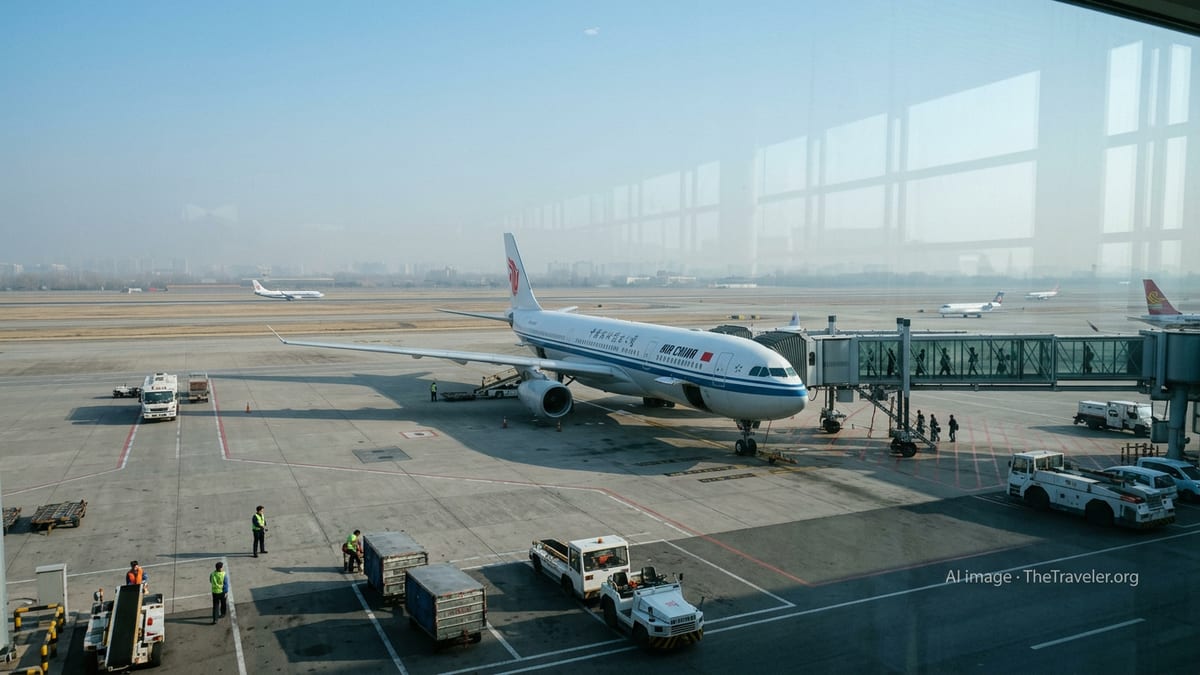
Operations at Beijing Daxing International Airport came under renewed pressure this weekend after publicly available tracking data showed 21 flight cancellations and 173 delays, disrupting services on key routes operated by China Eastern, Air China, China Southern and XiamenAir between mainland China and major hubs in South Korea, Japan, Taiwan, Hong Kong and Thailand.
Get the latest news straight to your inbox!
Disruptions Concentrated on Regional Asian Networks
Initial data from flight-tracking and airport information platforms indicates that the latest round of operational disruption at Beijing Daxing is concentrated on short and medium-haul services that tie the capital region to nearby Asian markets. Routes linking Beijing with Seoul and other South Korean cities, multiple destinations in Japan, as well as Taiwan, Hong Kong and leisure points in Thailand appear among the most affected, with knock-on delays reported through the day on June 13.
Public dashboards show that China Eastern, Air China, China Southern and XiamenAir all experienced a mix of cancellations and extended ground holds from Daxing, feeding into already dense summer schedules across Northeast and Southeast Asia. Although several flights to domestic cities such as Wuhan and Sanya remained listed as on time or only slightly delayed, regional departures toward Tokyo, Hong Kong and popular Thai gateways were more likely to face schedule changes and rolling departure-time revisions.
Analysts following the region’s aviation recovery note that the Daxing disruptions come at a time when carriers are ramping up capacity across the Beijing to Hong Kong, Taipei and Bangkok corridors after several seasons of constrained operations. As airlines have added frequencies, any concentration of delays at a major hub quickly feeds through to onward connections, particularly where aircraft are scheduled to operate multiple legs in a single day.
For passengers, this meant longer waits at departure gates, missed connections and, in some cases, same-day rebookings proving difficult on already busy regional services. Travel forums and social channels on Saturday included multiple accounts of extended queues at check-in and transfer counters as airline staff worked through cascading changes to the day’s operation.
Major Chinese Carriers Face Network Strain
China Southern and China Eastern, both key tenants at Beijing Daxing, were among the airlines most visible in the disruption statistics. Published schedule data shows that the two carriers had already increased frequencies on cross-border routes into South Korea, Japan and Thailand for the northern summer season, positioning Daxing as a growing hub for regional connections alongside the more established Beijing Capital Airport.
XiamenAir, another significant operator at Daxing with services to cities across East and Southeast Asia, also appeared in the delay tallies, together with flights marketed by Air China on selected routes. In several cases, aircraft arriving late from earlier sectors into Beijing created a ripple effect, pushing back departure times by an hour or more and complicating slot coordination during the airport’s evening peak.
Publicly available filings and timetable updates over recent months highlight how aggressively Chinese carriers have been rebuilding international capacity, particularly toward nearby tourism and business markets. New or reinstated Daxing links into Hong Kong, Taipei, Seoul and Tokyo have been marketed heavily to both domestic and regional travelers seeking more non-stop options and competitive fares after years of constrained connectivity.
Industry watchers suggest that this fast-paced expansion has left limited buffer in some parts of the network. When weather, congestion or technical issues strike at a hub like Daxing, aircraft and crew rotations can quickly fall out of sync, leading to clusters of cancellations and delays such as those recorded on June 13.
Weather and Congestion Add to Operational Challenges
While no single cause was immediately identified for all 21 cancellations and 173 delays, recent weather patterns across East Asia appear to have played a role. Thunderstorms have periodically disrupted operations at major airports in the region, including Taipei Songshan earlier this month, and have contributed to tighter air traffic control spacing and temporary ground stops along busy corridors linking northern China with Taiwan, Japan and South Korea.
Beijing itself is entering a period when convective weather becomes more frequent, particularly in the late afternoon and evening, coinciding with some of Daxing’s busiest departure banks. Travel data providers note that even short ground holds for passing cells can quickly accumulate into longer delays when runway and taxiway throughput is already near capacity, as appears to have been the case on Saturday.
Congestion in nearby airspace adds another layer of complexity. As more carriers restore and add flights across the wider region, crowded approach and departure routes around Beijing, Seoul, Tokyo and key Taiwanese and Hong Kong airports increase the likelihood of flow-control measures that slow traffic into and out of Daxing. These constraints can require airlines to re-sequence departures or reassign aircraft, with some flights ultimately removed from the schedule when recovery becomes impractical.
Operational bulletins published by airports and aviation authorities in recent weeks have repeatedly highlighted the challenge of balancing growing demand with finite runway capacity and airspace structures. The latest disruptions at Daxing fit within that pattern, illustrating how incremental pressure on the system can translate swiftly into visible impacts for travelers.
Passenger Flows Between China and Neighboring Markets Disrupted
The cancellations and delays at Beijing Daxing had an outsized effect on cross-border passenger flows because many of the affected flights serve as key links between China and neighboring economies. Routes to Seoul and other South Korean cities funnel both leisure travelers heading to nearby resorts and business passengers moving between the two countries’ manufacturing and technology hubs.
Similarly, services connecting Beijing with Tokyo and other Japanese cities are a critical part of the Northeast Asia travel network. With Japan remaining a top outbound destination for Chinese tourists and a major partner for trade and investment, any concentrated disruption on these flights can reverberate through hotel bookings, meetings and tour itineraries on both sides of the East China Sea.
Flights to Taiwan and Hong Kong from Daxing also remain strategically important. Carriers use these routes to feed onward connections across wider Asia and beyond, so delays or cancellations on the Beijing legs can cause missed long-haul departures from hubs such as Hong Kong and Taipei. For travelers bound for Southeast Asia, including Thailand’s resort destinations, Beijing often serves as the first link in a multi-sector journey, magnifying the impact of schedule instability at the origin.
On June 13, passengers reported re-routing through alternative mainland gateways or shifting to services from Beijing Capital Airport where space permitted, but capacity constraints limited the options for same-day recovery in many cases. Travel advisers recommend that passengers with upcoming trips through Daxing build in longer connection times and monitor schedules closely during this period of heightened operational volatility.
Outlook for Summer Travel Through Beijing Daxing
The latest wave of cancellations and delays at Beijing Daxing arrives just as airlines and airports across Asia prepare for one of the busiest summer travel seasons since international restrictions eased. Forecasts from tourism bodies and airline associations point to strong demand on China’s routes to South Korea, Japan, Taiwan, Hong Kong and Thailand, driven by both pent-up leisure travel and a rebound in corporate trips.
Carriers are working to adjust schedules, add backup aircraft and refine crew planning to improve resilience, but observers caution that the mix of rapid capacity growth, weather risks and airspace congestion means further operational pressures are likely in the coming weeks. Beijing Daxing’s role as a relatively new but fast-growing hub for large Chinese airlines makes it a focal point for both opportunity and strain in this environment.
For travelers, the events of June 13 serve as a reminder to plan conservatively when transiting major Asian hubs. Flexible tickets, comprehensive travel insurance and willingness to consider alternative routings via other mainland or regional airports may help mitigate the consequences of sudden schedule changes.
As airlines continue to refine their summer timetables and operational strategies, industry analysts will watch closely whether disruption indicators at Daxing trend downward or whether clusters of cancellations and delays remain a recurring feature of the airport’s peak season performance.