


More news on this day
The decision to abandon Tamil Nadu’s Parandur greenfield airport project has triggered fresh concern over the state’s long-term growth trajectory, with political leader K Annamalai warning that delays in finalising an alternative site for Chennai’s second airport could push back the state’s development by as much as 10 years.
Get the latest news straight to your inbox!
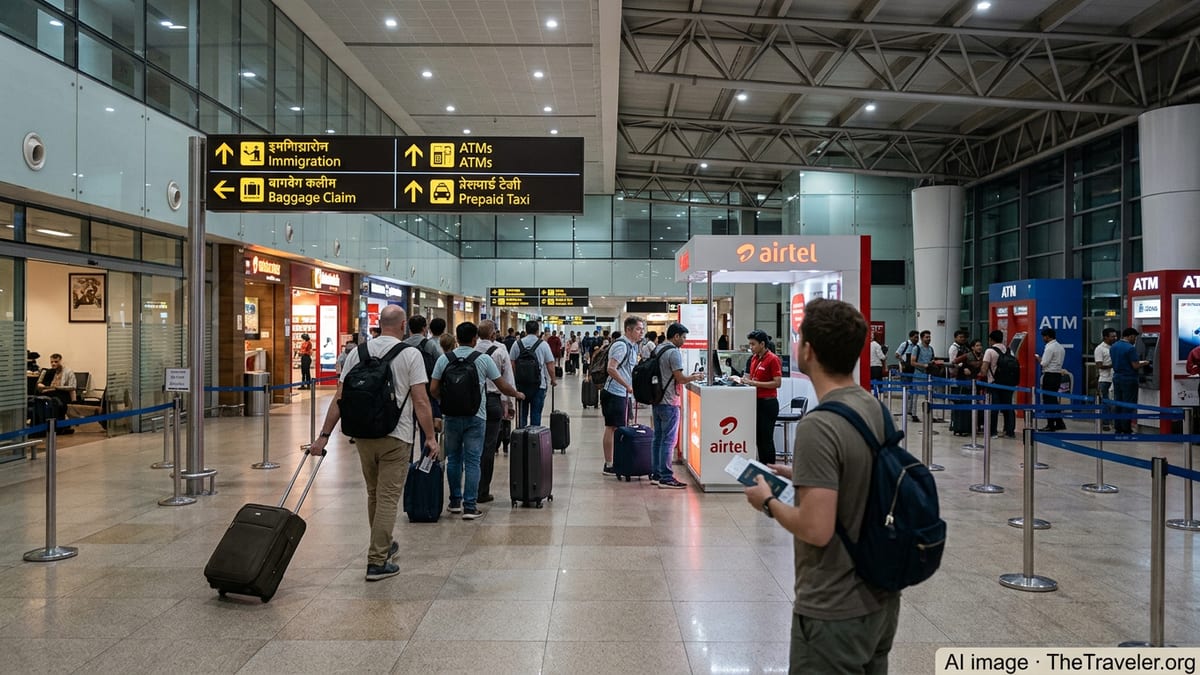
Parandur project formally dropped as government turns to new sites
The Parandur greenfield airport plan, conceived as a second major gateway for Chennai, has now been officially shelved. In an announcement in the Tamil Nadu Legislative Assembly, Chief Minister C. Joseph Vijay stated that measures to establish the airport at Parandur would be abandoned, citing the project’s impact on agricultural land and residential settlements. According to published coverage, the government has committed to studying alternative locations for a new airport to serve the Chennai region.
The Parandur proposal had been in the works for several years, with the state government earlier securing site clearance from the Union government’s steering committee and moving ahead with land acquisition and compensation packages. Reports indicate that more than 1,700 acres were notified for the project and classified as a special project to ease consolidation and acquisition. The decision to reverse course has therefore marked a significant policy pivot in Tamil Nadu’s infrastructure planning.
Local resistance played a major role in the project’s trajectory. Farmers and residents in and around Parandur had opposed the acquisition of fertile land and raised concerns over the area’s waterbodies, arguing that the project would alter local ecology and livelihoods. Over nearly seven years, the protests expanded from a village-level agitation to a high-profile campaign, influencing public debate on how large infrastructure schemes are balanced against environmental and social impacts.
With the project now scrapped, questions have emerged over what will happen to already acquired or frozen land parcels and how quickly the government can move toward identifying a viable replacement site for Chennai’s second airport.
Annamalai’s warning: a decade-long setback risk for Tamil Nadu
It is the uncertainty over that replacement site which underpins K Annamalai’s warning. According to recent reports in Tamil and English media, the We The Leaders founder and former BJP leader has argued that Tamil Nadu cannot afford a prolonged hiatus in its airport expansion plans. He contends that if the state delays the selection of an alternative site, preparation of feasibility studies, land acquisition and statutory clearances, the resulting gap could hold back overall development for up to a decade.
Publicly available coverage of his remarks notes that Annamalai has framed the issue as a macroeconomic risk rather than a single-project setback. In his view, airport infrastructure acts as a multiplier for investment, trade, tourism and high-value services. With rival southern hubs such as Bengaluru and Hyderabad already operating large, modern greenfield airports, any prolonged delay in Chennai’s expansion could, he argues, erode Tamil Nadu’s relative competitiveness in attracting capital and talent.
Reports further indicate that Annamalai has linked the timeline risk to practical bottlenecks that typically accompany new airport projects. Processes such as site identification, union and state-level approvals, environmental and social impact studies, bidding, construction and licensing can easily stretch close to a decade even under favourable conditions. According to these accounts, he has cautioned that starting from scratch now could mean Tamil Nadu sees a new large-capacity airport only in the mid-2030s if decisions are not taken swiftly.
His comments align with a broader strain of opinion visible in public debates and commentary, where a section of stakeholders argues that after earlier plans near Sriperumbudur failed to materialise, Tamil Nadu risks repeating a pattern of delay that could cumulatively impact growth.
Capacity stress at Chennai airport and regional growth stakes
The warning over a 10-year development setback is closely tied to capacity constraints at the existing Chennai International Airport. Published analyses describe the airport as operating near saturation on both passenger handling and airside operations, despite recent upgrades. Industry watchers have frequently compared Chennai unfavourably with newer greenfield hubs that offer more room for expansion, integrated cargo infrastructure and better connectivity to industrial clusters.
Central government documents and earlier project literature indicated that Parandur was selected after a multi-site evaluation aimed at supporting long-term traffic growth around Chennai and northern Tamil Nadu. The airport was envisaged as part of a wider strategy that also included proposals in Hosur and Rameswaram to distribute aviation-linked development. Reports from early 2026 suggested that, had it gone ahead, Parandur would have reinforced Tamil Nadu’s standing among India’s top aviation markets.
Business and investor commentary gathered in recent months suggests that the state’s strong manufacturing base in sectors such as automobiles, electronics and textiles depends increasingly on reliable global connectivity. Cargo capacity, direct international routes and efficient passenger handling are often cited as critical factors in location decisions. The concern now, as reflected in opinion pieces and online discussions, is that a prolonged period without a clear second airport plan could lead companies to consider alternative hubs elsewhere in the region.
For travellers, the implications are more immediate: without a new airport, congestion, limited slots and constrained route expansion at the current facility are likely to persist. Travel industry observers have warned that this can affect both tourism growth and the state’s image as a modern, globally connected destination.
Political and public debate over development versus local impact
The fallout from the Parandur decision has quickly become part of a broader political debate in Tamil Nadu. According to recent coverage, former Chief Minister M. K. Stalin has described the cancellation as a potential “irreversible setback,” arguing that restarting the process at a new site could weaken Tamil Nadu’s growth trajectory and reduce its appeal as an investment magnet. His remarks add to a chorus of voices stressing the strategic importance of large-scale infrastructure for the state’s economic ambitions.
At the same time, the move to drop Parandur has been welcomed by sections of local communities and environmental advocates who campaigned against the project. Reporting from the region details long-running sit-ins and protests which framed the airport plan as a threat to agriculture, water security and traditional livelihoods. For these groups, the announcement is seen as a validation of community-led resistance and a signal that development priorities can be recalibrated to account for local concerns.
The divide has sharpened discussions around how Tamil Nadu should balance rapid industrialisation and urbanisation with land, water and social impacts. Commentaries in regional media highlight that similar tensions have emerged around earlier site proposals near Sriperumbudur and other corridors, where industrial and infrastructure plans collided with existing settlements and farmlands.
Observers note that the Parandur episode could become a reference point for future large projects in the state, setting expectations on consultation, transparency and environmental due diligence. At the same time, it may also prompt calls for clearer long-term spatial planning so that location conflicts can be anticipated and resolved earlier in the policy cycle.
Next steps: search for a new site and the ticking clock
With Parandur off the table, the focus has shifted to how quickly Tamil Nadu can identify and secure a new site for Chennai’s second airport. According to official statements reported in national and regional outlets, the state government has committed to exploring alternative locations while reiterating its support for industrial development and improved air connectivity.
Infrastructure experts quoted in recent analyses point out that any new site search will have to revisit many of the same challenges faced at Parandur. Large tracts of contiguous land close to Chennai’s industrial and urban corridors are scarce, and most viable parcels involve some combination of agricultural fields, waterbodies or inhabited villages. This makes trade-offs unavoidable and raises the prospect of renewed land and environmental debates unless the process is handled with greater consensus-building.
It is this context that underlies Annamalai’s 10-year warning. Publicly available commentary on his remarks underscores that the clock has effectively been reset on a project that was already several years into planning. If Tamil Nadu is to avoid the long delays he cautions against, analysts argue that the site selection, consultation, and clearance processes for a new airport will need to be more streamlined, transparent and time-bound than past efforts.
For now, travellers, businesses and residents across Tamil Nadu are watching for signals of how quickly the state can convert its stated commitment to a new airport into a concrete, time-lined plan. The answer could shape not only Chennai’s connectivity but also the state’s broader development curve over the next decade.
Parandur airport project dropped; alternative sites to be explored, says CM Vijay
Annamalai warns scrapping Parandur airport could delay new hub by a decade
Analysis: Scrapping Parandur airport and the risk of a 10-year setback for Tamil Nadu