


More news on this day
Royal Caribbean is extending its kid-tracking wristband technology to a second cruise ship, offering parents real-time location updates for younger travelers as the line steps up its family-focused offerings.
Get the latest news straight to your inbox!
New Wearable Tech Expands Beyond Pilot Ship
Royal Caribbean first introduced its “Find My Kid” feature as a trial on the family-focused Star of the Seas, pairing an RFID-style wristband with location tools inside the Royal Caribbean mobile app. The company is now rolling the same program to a second vessel in its fleet, giving more families access to shipwide tracking for children.
According to published coverage of the rollout, the feature is currently limited to select ships and to children within a defined age bracket, typically between three and twelve years old. Kids enrolled in the program receive a branded Adventure Ocean WOW Band that communicates with shipboard receivers and the cruise line’s app.
Publicly available information indicates that the second ship to receive the technology is another of Royal Caribbean’s newest, high-capacity vessels aimed squarely at families and multigenerational groups. The move places the line in closer step with rivals that already use wearable tech to support navigation, payments and family location services at sea.
The initial reaction from cruisers documented in independent blogs and forums suggests that the expansion is being closely watched by parents who welcome added peace of mind, as well as by privacy-conscious guests who are paying attention to how the data is handled.
How the ‘Find My Kid’ System Works On Board
The system centers on a lightweight wristband that children wear while moving around the ship. The band communicates with an onboard network so that, when linked to a family’s reservation in the Royal Caribbean app, parents can see their child’s approximate position on a digital deck map.
Reports indicate that the feature is designed for use in public areas and near cabins, rather than within kids’ clubs or crew-only sections. Parents access the information through the same app that already supports digital boarding passes, daily schedules and on-board messaging, consolidating several tools in one place.
The wearable itself builds on Royal Caribbean’s earlier WOW Band concept, which has been used on multiple ships as an alternative to the traditional SeaPass card. The new version adds dedicated family-tracking capabilities tailored to younger guests who may be too small to carry a phone but old enough to move about certain spaces independently.
Available descriptions suggest that the bands are issued and activated through the Adventure Ocean youth program, with staff assigning devices to children who are registered for onboard activities. Parents then authorize tracking through the app under their own profiles.
What Families Can See – and What They Cannot
Royal Caribbean’s implementation appears to focus on simplifying everyday coordination rather than providing granular surveillance. Parents can typically see which deck and zone their child is in, such as a water play area, arcade or corridor near the cabin, but not detailed path histories or private-room interiors.
This approach mirrors how location tools have been implemented by other cruise brands and in land-based resorts, where broad area awareness is seen as sufficient for reunions while limiting the sensitivity of the data being collected. For many families, knowing that a child is at the splash area instead of the dining room is enough to avoid anxious searches.
Some cruisers posting on discussion boards have contrasted the new system with consumer devices like Bluetooth tags, which can struggle to provide accurate indoor positioning across multiple decks. Because the Royal Caribbean bands interact with the ship’s own network, the system can use fixed reference points around the vessel to improve precision.
At the same time, public descriptions of the feature emphasize that it is an optional add-on for families rather than a shipwide mandate. Adults and teens outside the eligible age ranges continue to rely on the mobile app’s chat, prearranged meeting spots and traditional methods such as cabin notes to stay in contact.
Part of a Broader Tech Push for Families
The expansion of kid tracking to a second ship fits within a broader trend across the cruise sector, in which lines are racing to add digital conveniences aimed at families. Competitors already use wearable tokens and upgraded apps to unlock staterooms, pay for purchases, reserve activities and find traveling companions.
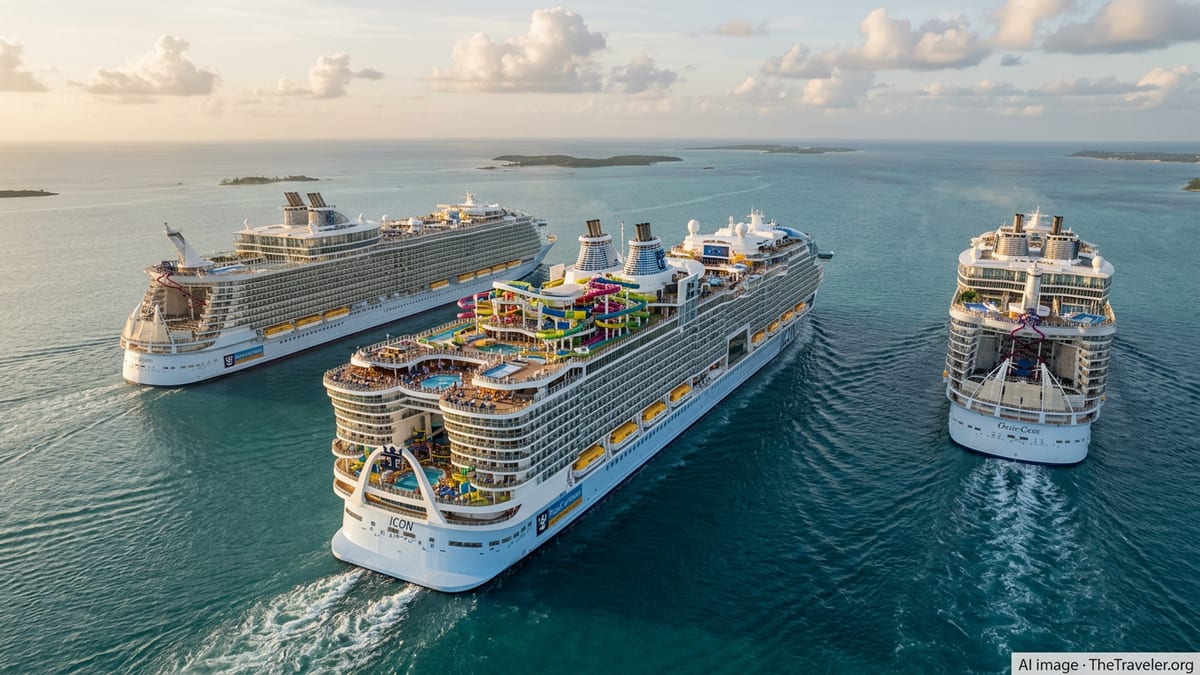
Royal Caribbean has been incrementally upgrading its own technology stack on newer vessels, where high passenger counts and complex entertainment offerings can make wayfinding and coordination challenging. Flagship ships such as Icon of the Seas and Utopia of the Seas have been marketed heavily to families, with dedicated neighborhoods, water parks and youth spaces that span multiple decks.
Industry observers note that such large-scale hardware and software projects typically move from pilot programs on one ship to a gradual rollout across sister ships once reliability and guest response have been evaluated. The decision to place the kid-tracking system on a second vessel suggests that Royal Caribbean sees continued demand for a digital safety net tailored to younger guests.
As other lines highlight their own family-friendly innovations, Royal Caribbean’s move helps position the brand as an early adopter of wearable-based child location tools at sea, not only in response to parental expectations but also as part of a competitive technology narrative.
Balancing Convenience, Safety and Privacy at Sea
The use of location-tracking wearables inevitably raises questions about data collection and privacy, particularly in confined environments such as cruise ships. Royal Caribbean’s general data and wearable-use policies already describe how guest information may be processed when digital credentials and devices are used on board.
Privacy advocates typically focus on issues such as how long movement data is stored, who within the company can access it, and whether it is used solely for real-time safety and operational purposes or analyzed more broadly. Parents considering enrolling their children in the program may look to these public policy documents to understand how their family’s information will be managed.
On the safety side, family travelers often see location tools as a complement to, not a substitute for, more traditional cruise safety practices. These include reviewing muster-station wristbands, walking children through escape routes and emergency signals, and setting firm rules about where kids can and cannot go without an adult.
Travel industry commentators suggest that, as wearable technologies continue to filter into more corners of the vacation experience, cruise lines will need to keep refining their messaging around consent, age-appropriate use and data transparency. For now, Royal Caribbean’s decision to bring kid tracking to a second ship signals that many families are ready to embrace the extra digital reassurance when heading to sea.