


More news on this day
Passengers across Europe are facing another difficult travel day as more than 1,900 flights have been delayed and 86 cancelled, with disruption radiating from airports in Austria, Norway, Denmark and several other countries and affecting major carriers including British Airways, Finnair and Eurowings on routes through Paris, Oslo and additional hubs.
Get the latest news straight to your inbox!
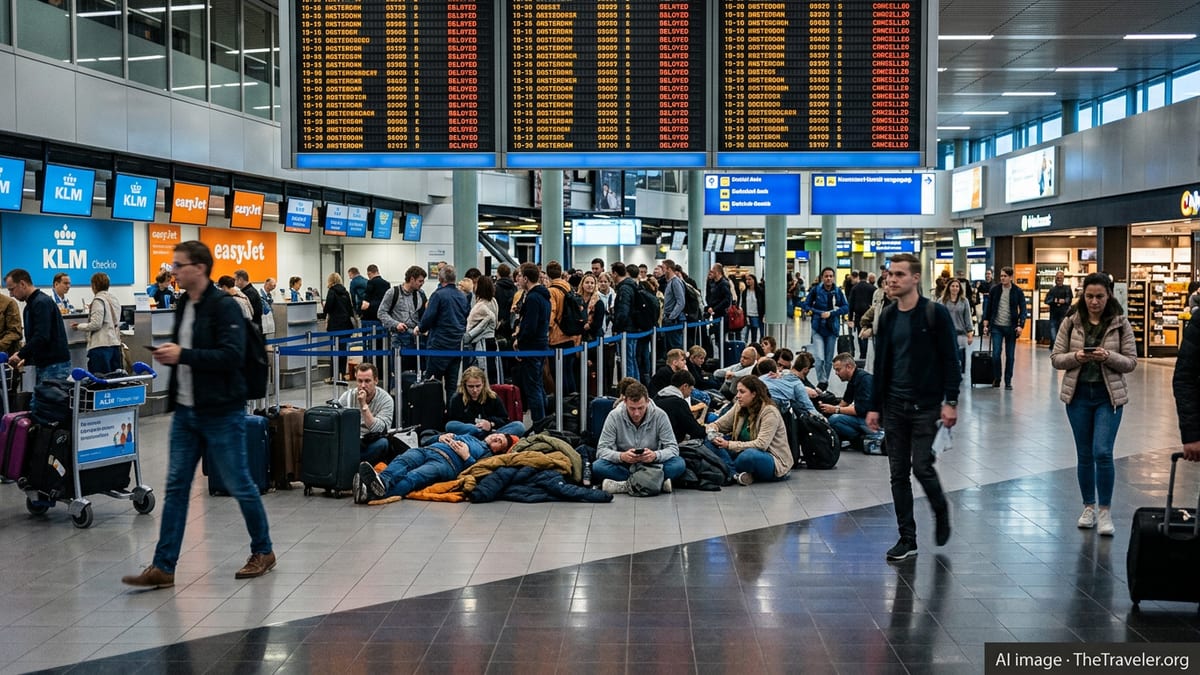
Ripple effects across key northern and central European hubs
Recent operational data compiled from flight tracking platforms and airport departure boards shows that delays and cancellations are clustered around a series of busy northern and central European gateways. Airports in Austria, Norway and Denmark are among those reporting elevated disruption, with Vienna, Oslo Gardermoen and Copenhagen acting as focal points in the latest wave of schedule problems.
Although no single weather system or technical failure appears solely responsible, a combination of local bottlenecks, staffing constraints and knock on scheduling issues has pushed delay totals above 1,900 flights for the current disruption window. The pattern reflects what aviation analysts describe as a fragile operating environment during Europe’s peak summer travel period, where even short local slowdowns can cascade across the network.
Airports including Paris Charles de Gaulle and Oslo Gardermoen are experiencing some of the sharpest pressure, with aircraft arriving late from other parts of the continent and then departing behind schedule once again. This dynamic has pulled additional airports into the disruption zone as the day has progressed, including hubs in the UK, Germany and the wider Nordic region.
Data from previous disruption episodes this season indicates that once daily delay numbers pass the low thousands across Europe, onward impacts can remain visible for at least 24 hours, even if conditions at the original problem airports improve. Travellers booked on early morning services the following day often find that aircraft and crews are still out of position from the prior evening.
British Airways, Finnair, Eurowings and others adjust schedules
Publicly available schedules and live tracking feeds indicate that a broad mix of European and international airlines have been drawn into the latest disruption. British Airways, Finnair and Eurowings feature prominently among carriers reporting late running services and a share of the 86 cancellations linked to the current wave of problems, alongside other operators with dense intra European networks.
For British Airways, the knock on impact is being felt on routes connecting London with major continental hubs such as Paris and Vienna, as late arriving aircraft reduce turnaround times and compress already tight schedules. In some cases, services have been merged or retimed to create space in the system, while a limited number of rotations have been cancelled outright when recovery within the planned operating day is no longer feasible.
Finnair has been working through its own challenges following earlier disruption tied to industrial action and regional weather this season, and the latest irregularities in Austria, Norway and Denmark further complicate its interconnected network of flights through northern Europe. Eurowings, with a large footprint in Germany and nearby markets, is also seeing extended delays as aircraft arriving from affected airports are forced to wait for slots at congested hubs.
The picture is similar for several other European carriers with strong presence at Oslo, Copenhagen and Vienna. Where delays exceed crew duty limits or create operational conflicts with subsequent rotations, some airlines have opted to pre empt selected flights from their schedules. While this approach can reduce last minute gate side cancellations, it also concentrates disruption for certain passenger groups on specific routes.
Paris, Oslo and other hubs struggle with congestion
Among individual airports, Paris Charles de Gaulle and Oslo Gardermoen stand out as significant pressure points, with a combination of arriving and departing delays rippling across both domestic and international services. Reports from live airport information feeds highlight holding patterns in the air and queueing aircraft on the ground as traffic flows are regulated to manage available capacity.
In Paris, the high volume of transfer traffic magnifies the effect of each late arrival, with passengers missing planned connections and needing rebooking onto already full later services. This has led to crowded customer service desks and longer waiting times at rebooking counters as carriers attempt to re accommodate affected travellers on alternative flights through the evening and into the following day.
Oslo is experiencing its own set of complications, with recent disruptions in Norway feeding into the current situation. Cancellations to and from Oslo create gaps in the network, while delayed departures send aircraft onward to other European cities behind schedule. Because many of the airlines involved operate tight point to point and hub and spoke rotations, each cancelled or significantly delayed flight can affect multiple subsequent sectors.
Other hubs, including Vienna and Copenhagen, are dealing with similar capacity and staffing constraints while handling peak season passenger numbers. Operational briefings published in recent weeks have warned that airports across the continent are operating with limited margin, meaning that air traffic control restrictions, thunderstorms or ground handling backlogs in just one region can quickly translate into a continent wide pattern of disruption.
Passenger impact and what travellers can do next
For passengers, the immediate impact of the latest disruption is visible in long queues at check in and security, crowded departure lounges and a higher incidence of last minute gate changes. Travellers on British Airways, Finnair, Eurowings and other affected carriers have reported receiving notifications of delays only shortly before departure, with some learning of cancellations at the airport after arriving to check in.
Consumer advisory organisations recommend that passengers traveling today and over the next 24 hours monitor their flight status frequently through airline apps and airport information screens, and avoid relying solely on original printed or emailed itineraries. Because many of the disruptions stem from aircraft and crews being out of position, schedules can change rapidly as airlines seek to rebuild their rotations.
Public guidance also emphasises that under European and UK air passenger rights regulations, travellers may be entitled to assistance, rebooking or in some cases financial compensation, depending on the cause and length of delay, the distance of the flight and the operating carrier. However, eligibility can vary significantly based on whether the disruption is considered within the airline’s control or the result of external factors such as severe weather or air traffic control restrictions.
Passengers who experience cancellations or very long delays are generally advised to keep receipts for meals, accommodation and ground transport arranged as a result of the disruption, and to submit claims directly to the airline once travel is complete. Independent claim services and national consumer agencies also provide guidance on documentation and timelines for cases where travellers encounter difficulties securing a response.
Outlook for the coming days of Europe’s peak summer season
The latest wave of delays and cancellations comes during one of the busiest travel periods of the year for European aviation, with schools on holiday in several countries and demand pushed close to or above pre pandemic levels. Historical data from similar episodes earlier in 2026 suggests that once a significant backlog of delayed aircraft and displaced crews has built up, normal operations may take more than a day to fully stabilise.
Airlines are expected to continue making rolling schedule adjustments as they work to reposition aircraft and crews, prioritising routes with the highest passenger loads and limited alternative transport options. This can result in seemingly random cancellations on otherwise popular city pairs when an aircraft or crew set is required elsewhere in the network to prevent even wider disruption.
Aviation industry observers note that the combination of tight staffing, aging infrastructure and growing sensitivity to weather and air traffic control constraints has created a system where relatively small operational shocks can trigger continent wide disturbances. Without additional spare capacity in both airport and airline operations, similar waves of disruption are likely to recur through the remainder of the summer season.
For now, travellers planning to fly through Paris, Oslo, Vienna, Copenhagen or other major European hubs are being encouraged by travel agencies and consumer advocates to build additional time into itineraries, travel earlier in the day where possible and consider flexible booking options that allow changes without heavy penalties if further irregular operations arise.