


More news on this day
Paris Charles de Gaulle and Orly airports processed around 27 million passengers in the opening months of 2026, as traffic continued to grow despite Middle East airspace rerouting and renewed disruption risks in April.
Get the latest news straight to your inbox!
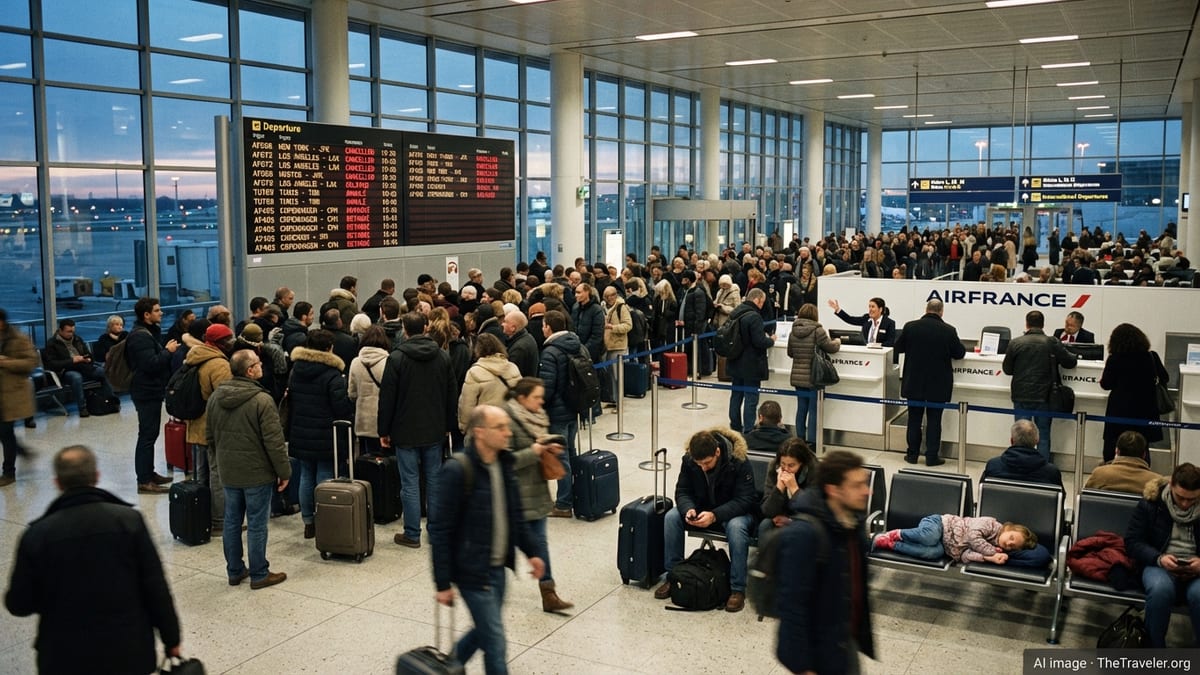
Traffic Growth Holds Firm in Early 2026
Public traffic data for Groupe ADP, the operator of Paris Charles de Gaulle and Orly, indicates that Paris Aéroport handled just over 23.5 million passengers between January and March 2026, rising to around 32.7 million by the end of April. This places throughput in the vicinity of 27 million passengers in late March, underscoring the capital’s continued recovery from the pandemic while maintaining operations near pre‑crisis levels.
The March 2026 figures show Paris Aéroport at roughly 8.3 million passengers for the month, a modest year‑on‑year increase. The four‑month total of 32.7 million passengers reflects steady but not explosive growth, as airlines, regulators and air navigation providers continue to adjust routing and capacity in response to geopolitical tensions and changing travel patterns.
Within the Paris system, Charles de Gaulle remains the primary long‑haul hub, with more than 15.9 million passengers reported in the first quarter of 2026, while Orly, which has a stronger short‑ and medium‑haul profile, handled over 7.6 million passengers over the same period. Together, the two airports account for the bulk of Groupe ADP’s French traffic, with Paris continuing to function as one of Europe’s key gateways for intercontinental flows.
Recovery rates compared with 2019 remain uneven but broadly positive. The group’s published metrics show Paris Aéroport tracking just under full pre‑crisis volumes in early 2026, with recovery indicators for some segments exceeding 100 percent, reflecting strong demand on specific leisure and visiting‑friends‑and‑relatives markets.
Middle East Airspace Rerouting Reshapes Long‑Haul Networks
The early‑2026 traffic data has been recorded against a backdrop of significant rerouting across Middle East airspace. Airlines serving Paris have adjusted flight paths to avoid certain conflict‑adjacent routes, particularly on services linking Europe with the Gulf, South Asia and parts of East Africa. Publicly available flight‑tracking information shows longer routings in some cases, increasing block times and fuel burn.
These changes follow periods of heightened regional tension that have affected overflight permissions and risk assessments for carriers. While many flights continue to operate, operators have recalibrated schedules and crew planning to reflect longer great‑circle alternatives, sometimes threading more northerly or southerly corridors to maintain safety margins and comply with national advisories.
For Paris, which relies heavily on long‑haul connectivity to North America, Africa, the Middle East and Asia‑Pacific, the rerouting trend has been more operational than structural so far. Networks remain broadly intact, but schedules have been fine‑tuned to absorb longer airborne times, with some airlines trimming marginal frequencies or re‑timing departures to preserve onward connections at Charles de Gaulle.
Capacity decisions around wide‑body deployment are closely linked to these airspace dynamics. Industry reports indicate that carriers are prioritizing high‑yield markets such as North America and key African gateways, while selectively consolidating frequencies in parts of the Middle East and South Asia where rerouting adds the greatest operational cost.
April Disruptions Add Pressure to a Busy Travel Calendar
April has traditionally been a sensitive month for French aviation, combining school holidays and early‑summer travel with a history of industrial action across transport sectors. In 2024 and 2025, Paris airports faced episodes of disruption linked to labor disputes, staffing constraints and air traffic control issues, occasionally resulting in schedule reductions and longer passenger processing times.
In April 2026, traffic data points to a slight year‑on‑year decline in total passengers at Paris Aéroport, with the group reporting around 9.2 million travelers for the month. That modest dip contrasts with growth over the January to March period and suggests that operational constraints, including airspace rerouting and localized disruption risks, weighed on capacity and punctuality.
Reports in French and international media have highlighted the cumulative effect of intermittent strikes, weather events and airspace restrictions on the broader European network. For Paris, even limited reductions in daily movements can ripple through the tightly scheduled hub system, affecting connection windows and onward services to regional French cities and European capitals.
Despite these pressures, April 2026 still marked a busy period for the Paris platform, with overall volumes remaining close to or above pre‑pandemic levels on several short‑ and medium‑haul routes. The data indicate that demand remained robust, even as operators balanced slot usage, crew availability and contingency buffers to protect the most commercially important flights.
Regional Mix Shifts as Asia Rebounds and Middle East Softens
Published breakdowns of Paris Aéroport traffic show that regional demand patterns are evolving alongside geopolitical tensions. In earlier datasets, the share of passengers traveling to or from the Middle East registered slight declines compared with prior years, while routes to North America, Africa and Asia‑Pacific generally recorded stronger year‑on‑year gains.
Asia‑Pacific demand in particular has been rebuilding as border restrictions and testing regimes have eased. This has supported the restoration of frequencies to major Asian hubs from Charles de Gaulle, even when flight paths are lengthened by airspace constraints over parts of Russia and the Middle East. Longer stage lengths and higher average fares on these sectors have helped sustain the economics of the routes.
Traffic to and from Africa has remained a cornerstone of the Paris network, reflecting historical, linguistic and economic ties. Increased capacity to North and West Africa has supported overall volumes, with some airlines adding seasonal services or upgauging aircraft during peak travel periods to accommodate demand from diaspora communities and tourism flows.
Within Europe, Schengen and non‑Schengen markets continue to account for the largest single share of Paris Aéroport passengers. Low‑cost and hybrid carriers operating from Orly and secondary terminals have played a significant role in sustaining volumes, with dense frequencies on leisure routes to southern Europe offsetting softer performance in certain business‑heavy markets.
Operational Resilience and Outlook Ahead of Major Events
The ability of Paris airports to move roughly 27 million passengers in the early months of 2026, amid rerouting and disruption risks, highlights an ongoing focus on operational resilience. Investments in digital passenger flows, biometrics and upgraded security lanes have aimed to reduce processing times and limit the impact of peak‑time surges, particularly at Charles de Gaulle’s main international terminals.
Groupe ADP has also continued a multi‑year program of airside and landside improvements, including terminal refurbishments, apron reconfigurations and enhanced public transport links. These projects are designed to expand capacity and improve punctuality in the medium term, even as short‑term challenges such as airspace restrictions and labor negotiations persist.
Looking ahead, Paris faces a dense calendar of major events, trade fairs and tourism peaks, which will test the robustness of current operating plans. Airlines are expected to refine schedules further, with particular attention to block times on routes affected by Middle East and Russian airspace constraints and to maintaining reliable bank structures for connecting traffic at Charles de Gaulle.
For passengers, the published data and recent experience at Paris airports suggest a system that is busy and occasionally strained but largely functional. While rerouting and April‑style disruptions can still translate into delays and isolated cancellations, the overall traffic trajectory remains upward, reinforcing Paris’s role as a central hub in the global air transport network.