


More news on this day
Two trains collided in western Poland near the village of Białośliwie on June 25, disrupting regional rail traffic and injuring several people in the latest in a series of European rail incidents drawing attention to network safety and resilience.
Get the latest news straight to your inbox!
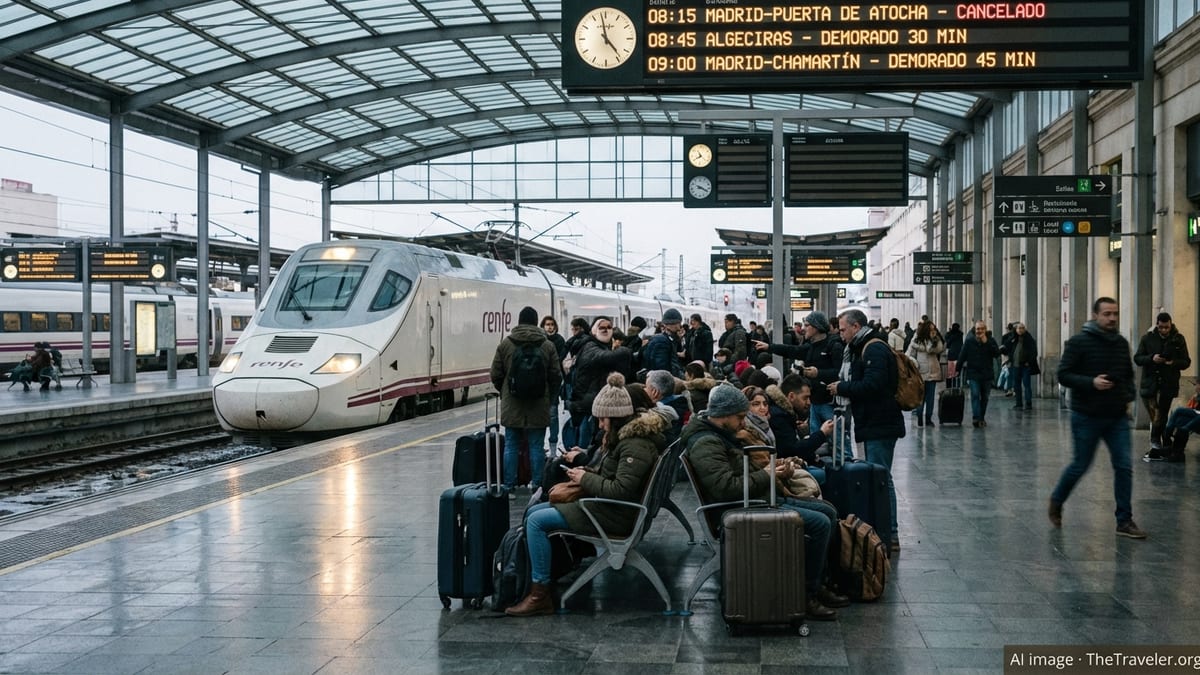
Collision in Białośliwie injures passengers and crew
According to publicly available information from regional media in Poland, a passenger train and a freight train collided on Thursday, June 25, near Białośliwie in Piła County in the Greater Poland region. Reports indicate the impact occurred on a section of line used by regional services linking smaller communities with the larger hub of Piła.
Initial coverage from Polish outlets and international news wires indicates that at least two people were injured in the collision, including members of the passenger train crew. Local broadcasters reported that more than a dozen fire and rescue units were dispatched to the scene, underscoring concerns about potential further casualties or hazards at the site.
Images and video shared by regional news platforms show at least one carriage of the passenger train stopped abruptly behind a freight consist, with visible damage to the leading section of the train. The freight train reportedly remained largely upright, while the passenger units showed signs of crushing at the point of contact.
Publicly available information suggests that while the crash was serious, there were no immediate reports of fatalities. Regional health services indicated that those injured were transported to nearby hospitals for assessment, and some passengers were treated on site for shock and minor wounds.
Emergency response and disruption to regional rail traffic
Media coverage from Polish radio and online news platforms describes an extensive emergency response that quickly closed the affected stretch of track. Fire and rescue teams, medical services and railway technical staff worked in parallel, focusing first on evacuating passengers and then on securing the damaged rolling stock.
Rail services through the Białośliwie area were suspended as specialist teams examined track integrity and overhead equipment. Replacement road transport was organized on short notice for stranded passengers on nearby lines, with announcements from regional operators warning of extended delays and modified timetables throughout Thursday evening.
By late Thursday and early Friday, published updates from local media suggested that limited traffic could resume once the damaged units were removed and basic safety checks completed. However, rail passengers in the Greater Poland region were advised to prepare for residual delays, especially on routes passing through or around Piła, as engineers continued inspections.
The incident added pressure to an already busy summer timetable in Poland, with cross country and regional services carrying holiday traffic. Travel planners recommended that visitors relying on trains in western and northwestern Poland monitor operator advisories closely before setting out.
Early questions over cause and safety procedures
While it is too early for definitive findings, publicly available reporting in Poland has begun highlighting potential lines of inquiry into how a passenger service came to collide with a freight train on the same route. Commentators have pointed to signalling, train separation, and operational communication as key areas likely to be examined by rail safety specialists.
Analysts drawing on previous European rail accidents note that rear end collisions between passenger and freight services are often linked to a combination of technical failures, human error, and complex traffic patterns on mixed use lines. In the Białośliwie crash, investigators are expected to review data from onboard recorders, signalling logs and radio communications between drivers and dispatchers.
Public discussion in Polish media also touches on broader questions of infrastructure investment and modernization. Several outlets have referenced recent European rail collisions, suggesting that even in network segments with comparatively strong safety records, high traffic density and aging infrastructure can expose vulnerabilities, particularly on secondary corridors that carry both freight and passenger trains.
Any official findings from Poland’s rail accident investigation bodies are likely to feed into wider debates on how quickly safety upgrades, such as advanced automatic train protection systems, can be expanded beyond mainline corridors to regional stretches like the one near Białośliwie.
Impact on travelers and Poland’s summer rail season
For travelers currently in Poland or planning trips that rely on regional rail services, the collision near Białośliwie serves as a reminder of the importance of flexible itineraries. Trip planning platforms and journey planners from rail operators indicated delays and diversions across parts of the Greater Poland region following the incident, with some services shortened or rerouted.
Tourism to nearby regions is not expected to be significantly reduced, but visitors moving between northern and western parts of the country may face longer journey times in the short term. Travel reports note that buses and alternative rail routes are generally available, though peak summer demand can mean crowded conditions when a main route is temporarily constrained.
Travel advisers recommend that visitors build in extra time for transfers, consider earlier departures on days with critical connections, and verify platform and service changes at stations. For those booking long distance trains that intersect with the affected corridor, monitoring day of travel updates from rail operators remains essential.
Despite the disruption, publicly available statistics show that rail remains one of the safest modes of transport in Poland and across Europe. The Białośliwie collision is likely to reinforce efforts among infrastructure managers and operators to maintain that reputation by accelerating safety reviews on busy mixed traffic lines.
Broader European context of recent rail incidents
The crash in western Poland comes amid heightened attention to rail safety in Europe following a series of recent passenger train collisions in other countries. High profile accidents in the United Kingdom and other European states have sparked renewed scrutiny of signalling systems, staff training, and emergency preparedness across the continent.
Transport commentators have observed that while these incidents differ in scale and circumstances, they collectively highlight the challenges of running dense passenger timetables alongside freight services. As more travelers choose rail for environmental and convenience reasons, infrastructure managers face pressure to expand capacity while upholding strict safety margins.
For international travelers using Europe’s interconnected rail networks, the Polish collision underscores the value of real time information and contingency planning. Rail journeys often remain the fastest and most comfortable way to move between cities, but occasional disruptions can have knock on effects far from the original incident site, especially on popular cross border routes.
As formal investigations proceed in Poland, travel industry observers will be watching closely for any recommended changes to operating procedures or infrastructure that could influence future rail planning and passenger expectations both within the country and across the broader European network.