


More news on this day
A pedestrian was killed in Terrell after being struck by a train, according to early reports, in a collision that has drawn renewed attention to rail safety in the East Texas community.
Get the latest news straight to your inbox!
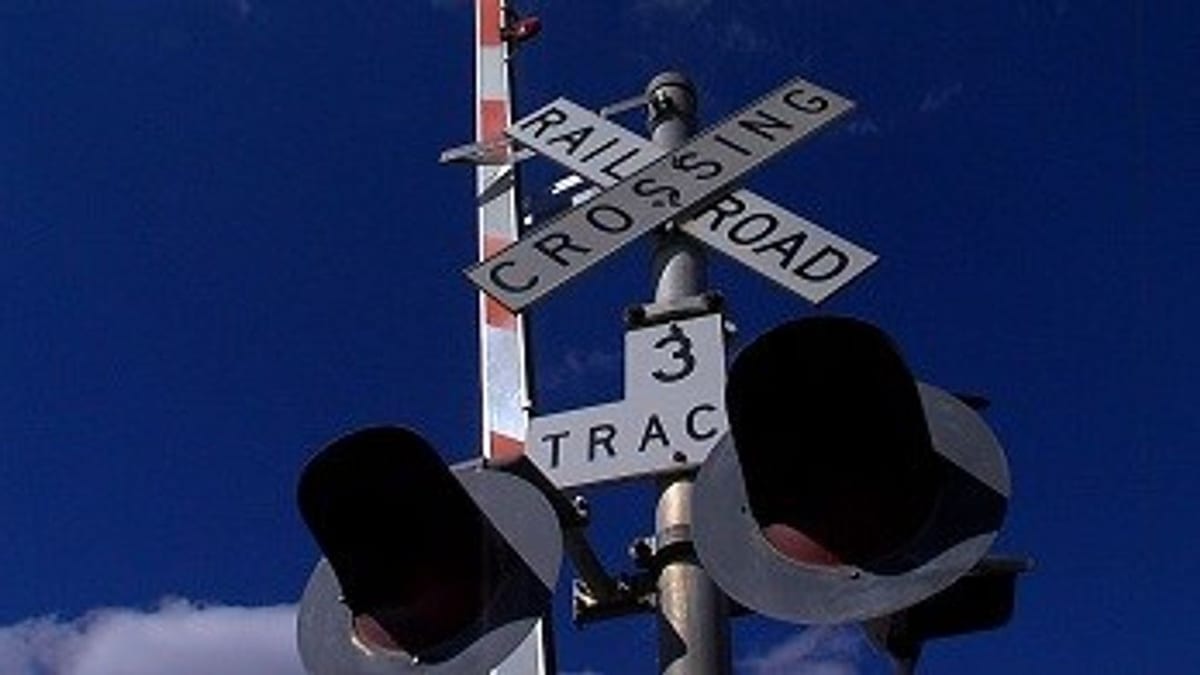
Initial Reports of the Terrell Train Fatality
Publicly available information indicates that the deadly collision occurred near a rail crossing in Terrell, a city roughly 35 miles east of Dallas. Early coverage suggests that the incident involved a freight train traveling through the area and a person on or near the tracks. The pedestrian did not survive the impact.
First details circulating through regional outlets describe a scene typical of serious rail incidents: trains brought to a halt on the line, traffic disruption around nearby crossings, and a lengthy on-site examination of the tracks and surrounding area. The identity of the person killed and their reason for being on or near the tracks had not been fully clarified in the earliest summaries.
Nearby roads were reported to be affected as the train remained stopped while the collision was documented and the pedestrian’s body was removed. Residents in adjacent neighborhoods experienced delays and detours as vehicles were rerouted around blocked intersections.
Location Context and Rail Activity in Terrell
Terrell sits along a busy rail corridor that carries both freight traffic and passenger services across North Texas. Past coverage of incidents in the area has highlighted how tracks run close to residential streets, commercial districts, and industrial zones, placing rail operations in close proximity to everyday activity.
Existing reports on previous rail crashes in and around Terrell and other Texas communities show that trains frequently move at considerable speed through towns where multiple at-grade crossings intersect with local streets. In such settings, pedestrians may attempt to cross outside designated areas or misjudge the distance and speed of an approaching train.
Terrell’s position within the broader Dallas region means that its rail lines support not only local freight movements but also traffic heading toward major hubs. That combination of regional connectivity and local accessibility has long raised questions about how to balance efficient rail operations with the safety needs of pedestrians, cyclists, and drivers who must cross the tracks as part of daily life.
Investigative Focus and Available Information
Following a fatal train collision, standard investigative practice typically centers on several key questions: the speed of the train, the functioning of warning devices where relevant, the pedestrian’s movements before impact, and any environmental factors such as visibility or weather. Publicly available descriptions of similar crashes elsewhere in Texas suggest that investigators often rely on train event recorders, camera footage from locomotives, and eyewitness accounts to reconstruct events.
In the Terrell case, information released so far indicates that an inquiry is underway to determine exactly how the pedestrian came into the path of the train. It was not immediately clear from early coverage whether the collision occurred at a marked crossing equipped with gates and lights, or along a stretch of open track where there is no formal pedestrian access.
Examinations of comparable incidents in other Texas cities show that findings can take days or weeks to be compiled and publicly summarized. These investigations may ultimately inform whether any changes are recommended for local infrastructure or operating procedures along the route that passes through Terrell.
Pedestrian Risk Around Rail Lines in Texas
Statewide data and prior reports on rail incidents in Texas illustrate that pedestrian encounters with trains, while less frequent than roadway collisions, are far more likely to result in death or serious injury. Trains require a long distance to stop, and pedestrians can underestimate both how fast a train is moving and how soon it will arrive at a crossing or curve.
Analyses of pedestrian crashes near rail and road corridors in other Texas cities, including studies of crash patterns at intersections and transit stops, emphasize recurring themes: limited visibility, distractions, nighttime conditions, and informal crossing paths created over time by local foot traffic. These factors often combine to place individuals unexpectedly close to moving trains.
In response to such patterns, safety campaigns commonly stress avoiding walking on or beside tracks, using designated crossings, and remaining behind protective gates and signals whenever they are active. While it is not yet known which specific circumstances led to the Terrell death, the incident aligns with a broader concern about how pedestrians interact with rail infrastructure in rapidly growing communities.
Community Impact and Rail Safety Discussions
The fatal collision in Terrell has added another case to a series of recent train and pedestrian incidents reported across the United States, drawing attention from residents who live and work near tracks. For individuals in Terrell, the crash serves as a stark reminder of the hazards that can exist along familiar routes to schools, workplaces, and shopping areas when those routes intersect with active rail lines.
Local conversations that typically follow such events often focus on whether additional safety measures might be warranted, such as extended fencing along certain stretches of track, improved lighting, or updated warning systems at busy crossings. Some communities have also examined options like grade separation projects, which place rail lines above or below roadways, though such changes require significant investment and long-term planning.
As further details emerge about the circumstances of the Terrell collision, transportation planners, rail operators, and residents are likely to monitor the findings closely. The outcome of the investigation may inform ongoing debates about how best to manage the interface between trains and pedestrians, particularly in smaller cities that sit along heavily used freight and passenger corridors.