


More news on this day
Pennsylvania is moving ahead with a long-anticipated expansion of intercity passenger rail, confirming that a second daily Pennsylvanian train will begin running between Pittsburgh and New York City via Harrisburg and Philadelphia in mid-November, significantly increasing travel options across the state’s east–west corridor.
Get the latest news straight to your inbox!
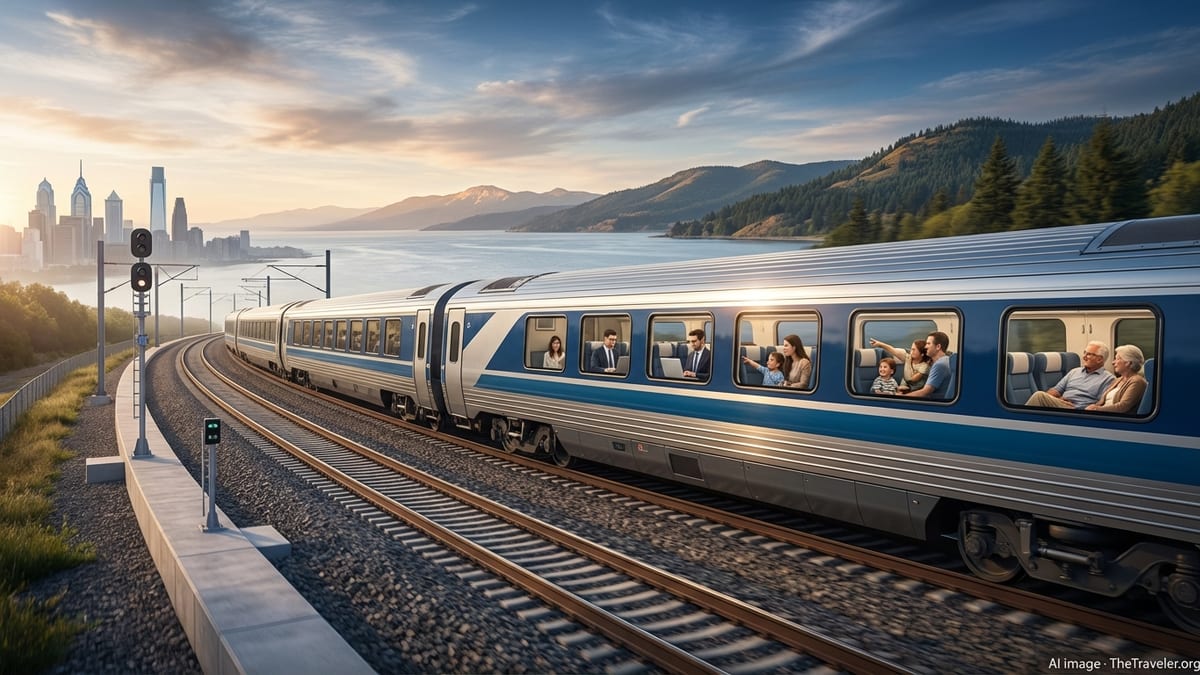
New Frequency Connects Western Pennsylvania to the Northeast Corridor
According to publicly available information from the Commonwealth of Pennsylvania, the additional Pennsylvanian frequency will operate between Pittsburgh and New York City with intermediate stops including Altoona, Johnstown, Harrisburg, Lancaster and Philadelphia, mirroring the existing route. The expansion will create two daily round trips over the corridor, where only one currently operates, giving travelers from western and central Pennsylvania more flexibility to reach the Northeast Corridor by rail.
The new train is expected to begin service in mid-November 2026, with ticket sales projected to open in October. Reports indicate the added frequency is the product of multi-year coordination among the Pennsylvania Department of Transportation (PennDOT), Amtrak and freight railroad Norfolk Southern, which owns much of the infrastructure west of Harrisburg. The agreement follows earlier planning work and funding commitments that identified added Pennsylvanian service as a key early win for intercity rail expansion in the state.
Current schedules show the existing Pennsylvanian providing one daytime round trip between Pittsburgh and New York City, typically leaving Pittsburgh in the morning and arriving in New York in the late afternoon. Published coverage suggests the second train will be timed to offer additional daylight options and better connectivity for both long-distance and shorter regional trips along the route.
State fact sheets and route descriptions show that the Pennsylvanian already serves as an important spine across Pennsylvania, linking smaller communities in the Allegheny Mountains with major hubs such as Harrisburg and Philadelphia before reaching New York. Doubling service frequency is expected to make that spine more useful for both leisure and business travelers who previously faced limited departure times.
Stronger Links Through Harrisburg and Philadelphia
The expanded Pennsylvanian will slot into an already busy rail corridor between Harrisburg and Philadelphia, where Amtrak’s Keystone Service operates multiple daily round trips under a partnership with PennDOT. Amtrak route information indicates that, on a typical weekday, more than a dozen Keystone trains connect Harrisburg with Philadelphia and New York City, forming a high-frequency spine in eastern Pennsylvania.
By extending an additional Pennsylvanian frequency over the same electrified Keystone Corridor between Harrisburg, Philadelphia and New York, Pennsylvania is effectively adding a new through service that links western communities directly into the higher-frequency eastern network. Travelers in Pittsburgh, Altoona or Johnstown will gain more one-seat rides not only to New York City, but also to intermediate destinations such as Harrisburg and Philadelphia, where they can connect with additional services along the Northeast Corridor.
Publicly available information from Amtrak notes that the Pennsylvanian already offers features such as bike carriage at select stations including Pittsburgh, Harrisburg, Lancaster, Philadelphia and New York, enabling multimodal trips that combine rail travel with local cycling. The new departure is expected to carry similar amenities, further broadening the corridor’s appeal for travelers who might otherwise opt to drive along the parallel Interstate 76 and Interstate 80 highway routes.
Regional tourism and business groups have long pointed to the Harrisburg–Philadelphia segment as a critical link, given its role in connecting state government, education centers and major employers. The added Pennsylvanian is set to layer another through train on top of the Keystone schedule, offering more timing choices for passengers moving between the state capital, its largest city and New York City.
Infrastructure Investments Underpin Service Growth
Behind the schedule change are significant infrastructure and planning efforts supported by federal and state rail funding programs. Federal Railroad Administration materials on the Federal State Partnership for Intercity Passenger Rail and related grant programs highlight investments targeted at improving reliability and adding capacity on corridors like the one between Philadelphia and Pittsburgh.
Earlier Amtrak announcements described a multiyear track renewal program on the Harrisburg Line between Lancaster and Harrisburg, with more than 100 million dollars allocated to replace rail, ties and ballast and modernize associated infrastructure. Public information from those projects notes that the work is intended to maintain and improve the performance of both Keystone Service and the Pennsylvanian, supporting higher speeds and more reliable schedules on one of the country’s busiest state-supported corridors.
On the western side of the state, planning documents and prior grant announcements reference negotiated improvements with Norfolk Southern to accommodate additional passenger trains between Pittsburgh and Harrisburg. Those improvements, funded in part through federal infrastructure programs, are designed to increase capacity on a corridor that also carries heavy freight traffic, allowing the second Pennsylvanian to operate without materially disrupting goods movement.
Nationally, Pennsylvania’s expansion fits into a broader push to grow intercity passenger rail. Federal program summaries show that recent grant rounds have identified upgrades to the Keystone Corridor among dozens of projects intended to expand frequencies, extend routes and lay the groundwork for future higher-speed connections across the United States.
Implications for Travelers and Regional Mobility
For travelers, the most immediate impact of the additional Pennsylvanian will be more flexible departure and arrival times. With only one daily train today, passengers often must plan entire trips around a single set of departure hours, which can limit rail’s usefulness for business meetings, same-day turnarounds or weekend getaways. A second daily round trip is expected to ease that constraint and make it simpler to integrate train travel into everyday plans.
Published coverage from regional outlets notes that advocates in western Pennsylvania have pushed for more passenger rail options for years, citing both economic development and climate goals. An extra daily train between Pittsburgh and the East Coast is viewed as a relatively fast way to deliver tangible benefits while longer-term corridor studies and higher-speed concepts continue in the background.
The stronger rail link may also help rebalance travel patterns in a state where highway and air options have historically dominated trips between Pittsburgh, Harrisburg, Philadelphia and New York. Rail travel offers city center to city center connections and can reduce the need for parking or rental cars, particularly in dense downtowns such as Philadelphia and Midtown Manhattan.
As the new schedule is finalized and tickets become available, passengers will be able to compare travel time and pricing options across the expanded rail services. Observers will be watching ridership data closely to see how quickly demand responds to the new frequency and whether additional expansions might be justified in the future.
Part of a Wider Rail Revival in Pennsylvania
The second daily Pennsylvanian is one element of a wider rail strategy emerging in Pennsylvania. State planning materials and recent announcements highlight separate efforts to restore intercity service between Scranton and New York City, examine new corridors such as Reading to Philadelphia and New York, and continue modernizing the Keystone Corridor infrastructure.
In this broader context, the added Pittsburgh to New York frequency functions as an early demonstration of how targeted partnerships and infrastructure investments can quickly translate into more trains on the ground. With federal grant programs emphasizing incremental but scalable improvements, Pennsylvania’s approach on the Pennsylvanian corridor may serve as a template for other states looking to enhance medium distance rail service.
For now, the focus is on the upcoming schedule change that will, for the first time in decades, give Pittsburgh two daily direct passenger rail links to New York City through Harrisburg and Philadelphia. The change signals a tangible shift in how the state and its partners are leveraging the existing rail network to create more options for residents, visitors and businesses along one of the country’s classic rail corridors.
Commonwealth of Pennsylvania: Expanded Pennsylvanian Train Service
Amtrak: PA by Train and Pennsylvanian Route Overview
Federal Railroad Administration: Federal State Partnership for Intercity Passenger Rail