


More news on this day
Perth Airport’s multi‑billion dollar terminal overhaul is gathering pace as Qantas joins Emirates, Singapore Airlines and Virgin Australia in expanding services through Western Australia, while technology provider DXC takes on the task of knitting together more than 70 critical systems to create a single, digitally unified “One Airport” hub by 2031.
Get the latest news straight to your inbox!
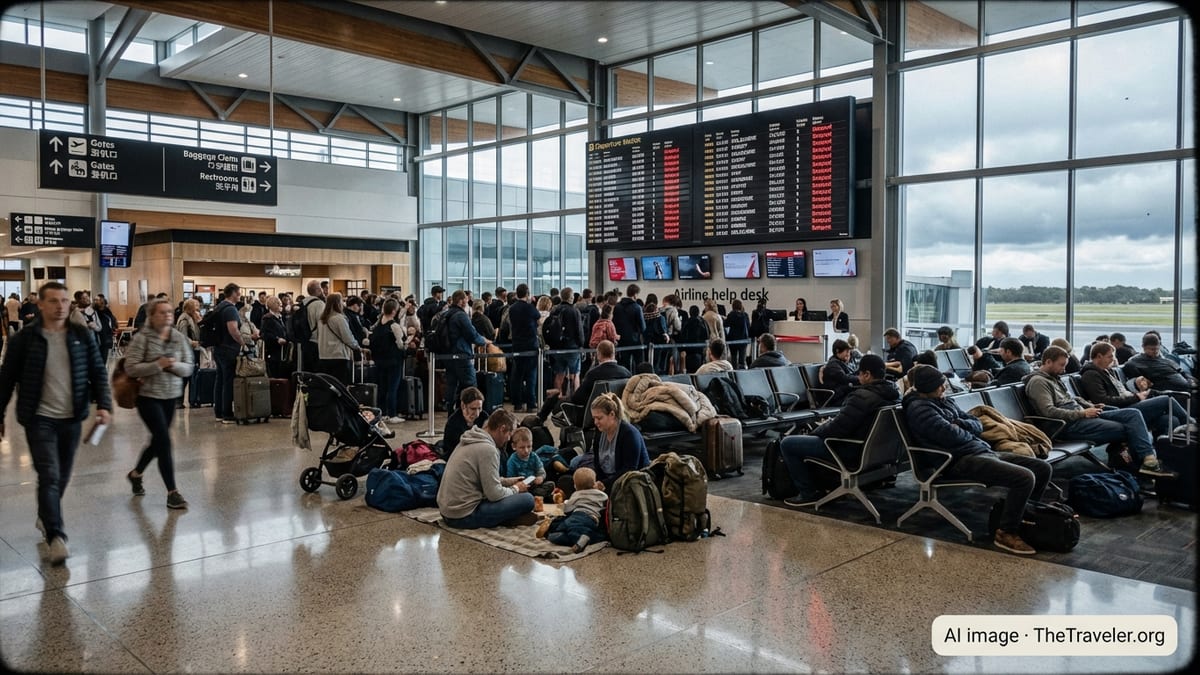
DXC Chosen to Orchestrate Perth’s ‘One Airport’ Vision
Perth Airport has appointed DXC Technology as master systems integrator for its new terminal development, a role that will see the global IT firm design, integrate and commission more than 70 operational and passenger‑facing systems across the precinct. Publicly available information indicates the agreement covers everything from core airport operations and baggage handling to security, retail, wayfinding and passenger self‑service platforms, all intended to function as a single, interoperable ecosystem.
The terminal program is a central pillar of Perth Airport’s “One Airport” strategy, which aims to consolidate all commercial airline activity into a single, central terminal campus. According to DXC’s description of the project, the new facilities are scheduled to open in 2031 and are framed as a response to sustained growth in both international and domestic traffic through Western Australia.
By appointing a single master integrator, Perth Airport is seeking to avoid the fragmented technology landscape that often develops when different systems are procured and deployed in isolation. Instead, the airport is positioning the new terminal as a digitally native environment, where flight operations, airline lounges, security, retail and ground transport share data in near real time to manage passenger flows and disruptions more efficiently.
The scope of work highlights how critical back‑end technology has become to the passenger experience. From biometric check‑in and smart security lanes to personalized retail offers and dynamic wayfinding, the integrated platform is expected to underpin many of the improvements travelers will see as new airline capacity comes online.
Qantas Builds Out Perth as a Europe and Asia Gateway
The technology overhaul coincides with a renewed strategic push by Qantas to use Perth as a western gateway for long‑haul travel. Australian media coverage in recent months has highlighted Qantas decisions to increase capacity on key Europe routes, particularly between Perth and Rome, where the carrier plans to add around 10,000 seats and extend the seasonal service window for 2026.
Qantas has also adjusted its flagship Perth to London service in response to airspace restrictions over parts of the Middle East, temporarily routing the ultra‑long‑haul via Singapore. Aviation industry reports note that this maintains the link while leveraging strong connectivity at Singapore Changi, where Qantas already operates multiple services and is rebuilding a cabin crew base as part of its broader international expansion.
At the same time, the airline is rolling out its new Economy Plus product across narrow‑body aircraft and, from mid‑2026, onto its Airbus A330 fleet, which flies many of the carrier’s Asia routes. Publicly available statements indicate this will give Perth‑based passengers more choice in pricing and comfort tiers on services into key Asian hubs, complementing the long‑haul growth to Europe.
Together, these moves reinforce Qantas’s positioning of Perth as a strategic platform in its network, sitting alongside Sydney and Melbourne but with a particular focus on nonstop and one‑stop links to Europe and emerging Asian markets.
Emirates, Singapore Airlines and Virgin Deepen Connectivity
Qantas’s push is occurring in parallel with renewed investment by key partner and rival carriers. Emirates has upgraded its Perth services with refurbished Airbus A380 aircraft featuring the airline’s Premium Economy cabin, bringing a fourth class of service to Western Australia for the first time. Aviation coverage notes that this follows strong growth in international traffic through Perth and is intended to capture demand for a product pitched between traditional economy and business class.
Singapore Airlines, which has long used Changi as a primary hub for Australia to Europe traffic, is reported to be benefiting from a surge in passengers seeking to avoid Middle East stopovers. Industry commentary suggests that higher frequencies between Australian cities and Singapore, including Perth, are feeding into dense onward networks to continental Europe, reinforcing Changi’s role as an alternative to Gulf hubs on the classic “kangaroo route.”
Virgin Australia is also stepping up its long‑haul ambitions through Perth. Following regulatory approval of its integrated alliance with Qatar Airways, Virgin is introducing wet‑leased services from Perth to Doha, providing West Australian travelers with one‑stop access to a wide range of destinations across Europe, the Middle East and Africa via Hamad International Airport. In parallel, the carrier is modernising its regional fleet around the Embraer E190‑E2, which is being based and maintained at Perth to serve intra‑Western Australia and nearby markets.
These developments mean that by the time Perth’s new terminal complex opens, passengers are expected to have a broader mix of full‑service and hybrid options into Europe, Asia and the Middle East, backed by alliance and codeshare connectivity that extends well beyond each airline’s own network.
Passenger Experience at the Heart of the Overhaul
While the headline focus is often on new routes and aircraft types, Perth Airport’s partnership with DXC underscores how much of the future passenger experience will be determined by what happens behind the scenes. The integration of more than 70 systems is forecast to cover areas such as flight information displays, check‑in kiosks, common‑use departure gates, baggage sortation, security screening equipment, building management and data analytics platforms.
Public documentation about the project indicates that the aim is to ensure these systems share information so that passengers move more smoothly through the terminal, with faster response to disruptions such as weather or airspace closures. Airlines expanding at Perth are likely to use the enhanced infrastructure to better coordinate passenger flows between regional, domestic and international flights within a single precinct.
The One Airport model is also expected to simplify transfers between carriers. With Qantas, Emirates, Singapore Airlines and Virgin Australia all growing services that touch Perth, consolidated check‑in halls, shared security zones and clearly linked piers could reduce the time and complexity involved when passengers move between different airlines and alliances.
The scale of the investment reflects confidence that Western Australia will sustain its role as a key gateway for tourism, resources sector travel and visiting‑friends‑and‑relatives traffic. Airport planning materials and airline announcements both point to continued growth in inbound tourism and outbound long‑haul demand, trends the new digital infrastructure is designed to absorb without recreating bottlenecks in a fragmented terminal layout.
Western Australian Hub Aims to Capture Long‑Term Growth
Perth Airport’s multi‑billion dollar redevelopment comes at a moment when global airline networks are being reshaped by geopolitical tensions, shifting leisure demand and the continuing recovery from the pandemic. The decision to consolidate operations into a single, high‑capacity campus reflects a view that growth will be best supported by a hub that can flex across different airline strategies, whether nonstop ultra‑long‑haul services, one‑stop links via Asia or partnerships with Gulf carriers.
For Qantas, the expanded Rome service, the reconfigured London routing and the planned enhancements to Asia‑facing fleets all support a model where Perth acts as both origin and transfer point for long‑haul traffic. For Emirates and Singapore Airlines, the upgraded cabins and higher frequencies position Perth as a valuable spoke feeding their own hub airports, while Virgin and Qatar’s alliance adds yet another path into global networks.
As DXC and Perth Airport progress the detailed systems design ahead of the 2031 opening target, the interplay between physical infrastructure and expanding airline capacity will be closely watched by industry observers. If the One Airport concept delivers on its promise, Western Australia’s capital could emerge not just as a regional gateway, but as one of the more efficient long‑haul connection points linking Australia with Europe, Asia and beyond.