


More news on this day
An American Airlines delay that stranded Ohio Republican Representative Max Miller and two of his colleagues on their way to Washington has escalated into a political flashpoint, after the lawmaker publicly denounced the carrier as “incompetent” and blamed the disruption for causing them to miss a series of House votes.
Get the latest news straight to your inbox!
A Stranded Flight and a Missed Night of Voting
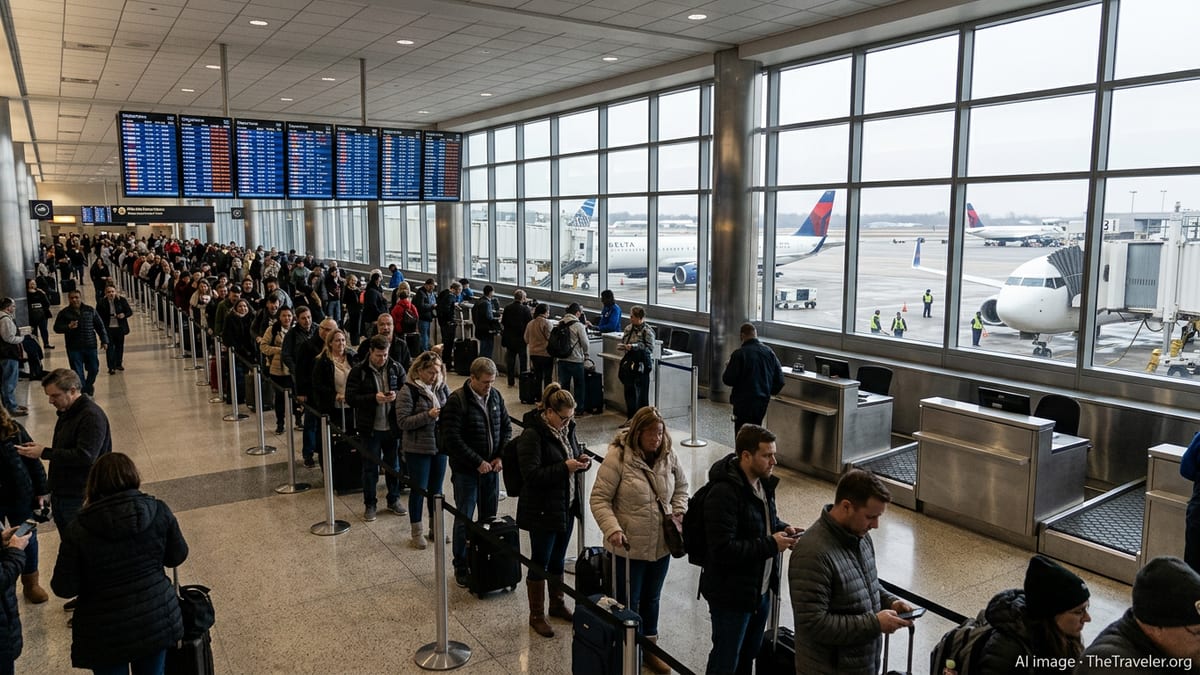
According to published coverage, Representative Max Miller was traveling to Washington, D.C., for a Monday evening voting session when his American Airlines flight was delayed for several hours. The delay reportedly left Miller and at least two other House members stuck on the ground and unable to reach the Capitol in time.
Reports indicate that the disruption meant the lawmakers missed multiple roll calls, including the final vote on the Kids Internet and Digital Safety Act, a high-profile bill addressing children’s exposure to harmful content and practices on digital platforms. The measure ultimately passed the House with a significant bipartisan margin, but with dozens of members recorded as not voting.
Miller responded in real time on social media, where he sharply criticized the airline’s operations. In a post that quickly drew attention, he wrote that “three members of Congress will miss votes tonight because of your incompetent airline,” channeling a broader public frustration over flight reliability during peak travel periods.
The missed votes have renewed debates in Washington about how dependent the work of Congress is on an increasingly strained commercial air system, particularly on busy Monday travel days when lawmakers are returning from their districts.
American Airlines Apologizes as Questions Swirl
In the wake of the public criticism, American Airlines issued a statement expressing regret over the disruption. According to news coverage of the incident, the carrier said it was “truly sorry” for the delay and emphasized that it understands the importance of passengers arriving on time, especially when travel is tied to government business.
Specific details about the operational causes of the holdup have not been fully disclosed in public reports. Airlines commonly cite a mix of factors for delays, including weather, air traffic control constraints, crew scheduling complications and aircraft maintenance requirements. In this case, available information suggests the hold-up extended long enough to erase any remaining buffer in the lawmakers’ schedules.
The airline’s apology has done little to quiet criticism from some travelers and commentators who see the episode as part of a broader pattern of unreliable performance. While disruptions are often driven by factors beyond a carrier’s control, the perception of poor communication and limited recovery options has become a recurring complaint, especially when delays cascade into missed events or work commitments.
American Airlines, one of the largest carriers serving Washington, is particularly exposed when irregular operations ripple across its network. The incident involving Miller and his colleagues highlights how even a single delayed flight can attract outsized scrutiny when it affects elected officials and legislative business.
Airline Reliability Under the Spotlight
The dispute arrives amid ongoing concern about the resilience of domestic air travel. Publicly available data from recent years show that U.S. carriers, including American Airlines, have struggled at times with on-time performance during periods of high demand, severe weather and staffing constraints across the aviation system.
For business travelers and frequent flyers, lengthy delays that lead to missed connections or events are not new. Consumer advocates have documented recurring complaints about communication lapses, rebooking hurdles and compensation policies, especially when disruptions are attributed to controllable factors such as crew scheduling or equipment issues rather than weather.
What sets the latest episode apart is the political dimension. Delays that routinely inconvenience ordinary travelers are now being linked directly to missed legislative work. For voters following the story, the incident reinforces a perception that air travel reliability is not simply a matter of personal inconvenience, but can have knock-on effects on public decision-making.
At the same time, some analysts note that lawmakers, like other passengers, shoulder part of the risk when they build tight itineraries around critical events. Flight delays remain an inherent possibility, and even a normally reliable operation can falter on a given day. The clash between those realities and rising expectations for punctuality continues to shape the public debate around airline performance.
Political and Policy Ripples in Washington
The missed votes have prompted discussion among observers about whether congressional travel routines or House voting procedures should be revisited. While there is no indication of immediate formal changes, the episode adds momentum to long-running conversations over how lawmakers balance district work with their responsibilities in Washington.
Some commentators have suggested that expanded use of remote participation tools or modified voting windows could provide modest safeguards against travel disruptions. Others caution that such steps could be difficult to implement, given longstanding institutional norms and concerns over security, transparency and debate on the House floor.
The incident also feeds into broader policy debates about passenger rights and airline accountability. In recent years, federal regulators and members of Congress from both parties have floated proposals aimed at improving transparency around delays and cancellations, strengthening refund obligations, and clarifying when compensation is owed for controllable disruptions.
Although the current dispute centers on a specific flight and a handful of missed votes, the public reaction underscores how closely air travel reliability and public trust are intertwined. As lawmakers examine the circumstances behind the delay that stranded their colleagues, pressure may grow for renewed scrutiny of airline operations and the protections available to all travelers, not just elected officials.
A Flashpoint in a Summer of Heavy Travel
The clash between Miller and American Airlines comes during a period of intense travel demand, when even small glitches can trigger system-wide ripple effects. Summer schedules are often tightly packed, leaving limited slack for recovering from storms, airspace restrictions or equipment rotations that do not go as planned.
Travel industry analysts note that airlines have adjusted capacity and staffing since the pandemic, attempting to balance cost control with the need to restore reliability. While performance metrics have improved in some areas, passengers continue to report disruptive experiences, particularly around peak holidays and high-traffic days.
For travelers watching the dispute unfold, the story serves as a reminder of the importance of planning buffers around critical commitments and understanding airline policies on rebooking and compensation. For American Airlines and other major carriers, it serves as another signal that episodes which might once have drawn only localized frustration can now quickly evolve into national talking points.
Whether the incident ultimately leads to concrete changes in airline practices, congressional travel planning, or passenger protections remains to be seen. What is clear is that a single delayed flight has once again thrown the complex relationship between airlines, policymakers and the traveling public into sharp relief.