


More news on this day
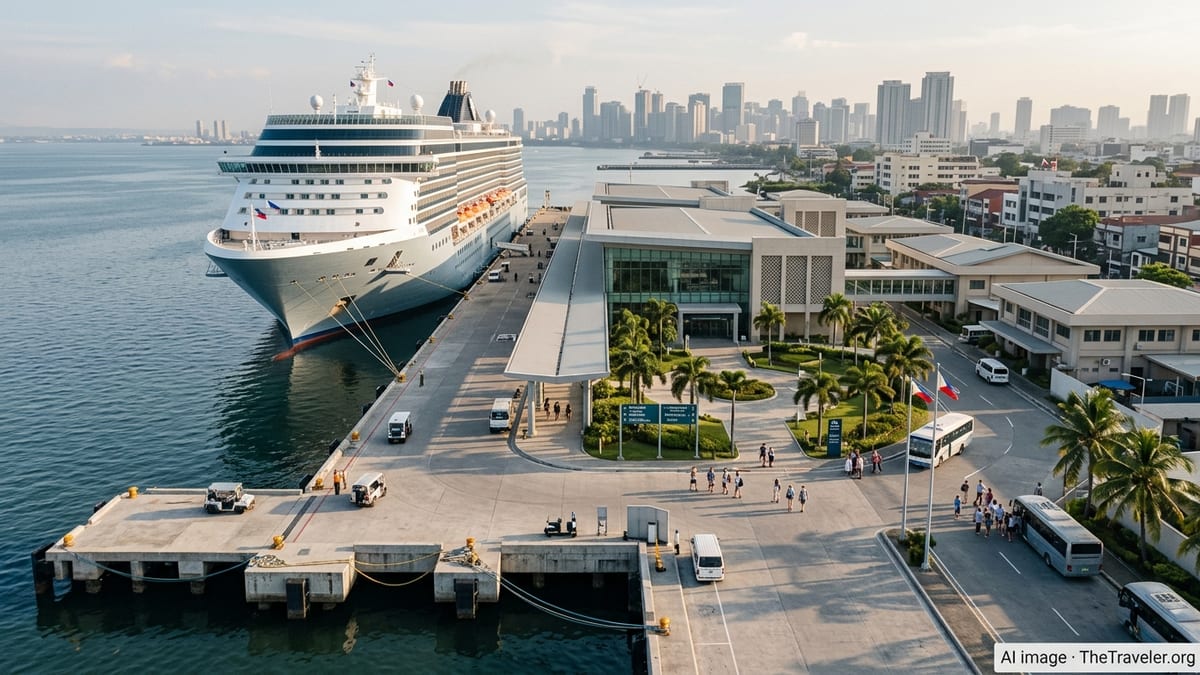
Cruise tourism in the Philippines is entering a new growth phase as Manila strengthens its position as a regional homeport and turnaround hub, sending rising numbers of visitors onward to ports across the archipelago.
Get the latest news straight to your inbox!
Passenger Numbers Rebound Beyond Pre-Pandemic Levels
Recent port statistics show that the Philippines has moved firmly into recovery mode for cruise travel, with volumes now exceeding pre-2020 levels. Publicly available data from the Philippine Ports Authority (PPA) indicate that cruise visitor arrivals climbed from about 88,000 passengers in 2023 to roughly 150,900 in 2024, before rising again to more than 226,000 in 2025, overtaking the country’s 2019 cruise tally of just over 213,000 passengers.
The PPA’s latest reporting on cruise tourism highlights a steady progression in ship calls alongside passenger growth. Earlier updates showed that 164 cruise ships with over 80,000 passengers visited in 2023, with expectations of more than 100,000 passengers aboard around 130 ships in 2024. Subsequent annual figures suggest that both ship calls and passenger loads continued to grow into 2025 as more international lines reintroduced Philippine calls into their Asian itineraries.
Separate data compiled through the Philippine government’s open statistics platforms and maritime reports also point to a broader rebound in sea-based travel, including cruise movements, as overall port passenger traffic recovered from pandemic lows. These trends support the view that cruise tourism has become a significant contributor within the country’s wider tourism restart, even if it still represents a relatively small segment compared with air arrivals.
Recognition from global industry platforms has reinforced this trajectory. According to published coverage summarizing the World Cruise Awards, the Philippines has been cited as one of Asia’s notable cruise destinations in recent years, a positioning that aligns with the upswing in port calls and the government’s focus on cruise infrastructure.
Manila’s Turnaround Growth Shifts Role From Transit Call to Homeport
The most recent PPA advisories and port updates underscore a clear trend: Manila is handling more turnaround operations, where passengers begin or end their voyages in the Philippine capital rather than simply visiting for a day call. Information released in early 2026 describes a rise in such operations at Manila South Harbor, described as an emerging cruise hub in Asia as activity remains steady and turnaround calls increase.
Previous port operator materials note that prior to the pandemic, the Eva Macapagal Cruise Terminal at Pier 15 in Manila already functioned as a dedicated homeport for international vessels, handling nearly 200,000 outbound passengers at its peak. After a multi-year hiatus, recent schedules show international ships again embarking and disembarking guests in Manila, with some using the city as a base for regional itineraries that include multi-stop Philippine routes.
Itineraries published by operators such as Resorts World Cruises have illustrated this homeport pattern, with voyages originally planned to sail round-trip from Manila to ports around Luzon and the Visayas. Although some deployments have been adjusted or rerouted, the marketing of Manila as a starting gateway for domestic and regional cruises reflects the city’s growing strategic role for lines targeting Southeast Asia.
This shift from predominantly transit calls to a mix that includes homeporting is significant for the local tourism economy. Turnaround operations typically drive higher spending on pre- and post-cruise stays, airport transfers, dining, and shopping within the metropolitan area, while also creating stronger links to domestic travel as visitors extend their trips beyond the cruise itself.
Island Ports See Wider Spread of Cruise Calls
While Manila consolidates its place as a homeport, a network of island ports is benefiting from the dispersal of cruise calls across the archipelago. PPA reports and regional government briefings highlight strong activity in Palawan, Bohol, and other island destinations. One example cited in 2024 coverage is the docking of the international vessel Vasco da Gama at multiple Philippine ports, including Coron and Puerto Princesa in Palawan and a final stop in Bohol, illustrating how a single cruise can spread visitors over several island economies.
In the Mimaropa region of Mindoro, Marinduque, Romblon, and Palawan, tourism briefings released in January 2024 outlined schedules for 37 cruise ship calls, with most allocated to Puerto Princesa City, Coron, El Nido, and the Balabac Islands. Officials in the region have framed these port calls as an opportunity to strengthen tour offerings that connect port visits with beaches, marine parks, and UNESCO-recognized sites.
Farther north, cruise lines are also using smaller gateways such as Salomague Port in Ilocos Sur. Reports from March 2024 noted the return of Oceania Cruises’ MS Insignia with around 500 passengers, following an earlier visit in 2023. These calls add coastal northern Luzon to the country’s cruise map and distribute spending among transport providers, local guides, and community-run tourism businesses.
Major inter-island ports including Cebu, Iloilo, and Puerto Princesa also continue to act as key transit and excursion points for sea travelers. Background information from port authorities shows that these hubs handle millions of domestic passengers annually, and their existing terminals, tour networks, and maritime services make them logical platforms for absorbing growing cruise volumes.
Infrastructure Investments Aim to Support Hub-and-Spoke Growth
To sustain the upward trend in cruise tourism, authorities have highlighted new and upgraded facilities at strategic locations. According to the PPA’s latest annual report on cruise tourism, the agency catered to 79 cruise ships in 2024 and has been rolling out improvements to dedicated terminals, positioning them as gateways that connect international cruise markets to local tourism offerings.
One recent development cited in PPA updates is the completion of the Jubang Port Cruise Ship Terminal in Dapa, Surigao del Norte in 2024. This facility in the Caraga region provides a new point of entry for itineraries that could link Siargao and nearby islands to Manila-based or foreign-homeported cruises, broadening the country’s geographical spread of cruise-ready ports.
Publicly available information from the Department of Tourism also points to ongoing efforts to align port upgrades with the National Tourism Development Plan for 2023 to 2028, which identifies cruise tourism as a segment with scope for expansion. This includes the development of “organized cruise hubs” that can efficiently manage passenger flows, shore excursions, and security while integrating nearby communities into the tourism value chain.
In parallel, long-established hubs such as Subic Bay and Batangas are being positioned in policy discussions and tourism promotions as potential homeport or partial-homeport sites, creating a possible hub-and-spoke system where Manila anchors deployment and neighboring ports provide embarkation, provisioning, or excursion functions.
Local Economies Leverage Spending Beyond the Pier
The geographic widening of cruise calls across Philippine island ports has translated into more localized economic opportunities, particularly in transport, guiding, and community-based tourism. Reports focusing on Palawan describe how each cruise ship docking is treated as a chance to extend services beyond immediate port operations, with tour providers, restaurants, and souvenir shops tailoring offers to short-stay visitors.
Regional media coverage and tourism agency briefings emphasize that the impact of a single cruise call can be significant for smaller communities, especially in destinations where the volume of overnight tourists remains modest. The arrival of hundreds or thousands of cruise passengers in a single day can create concentrated demand for boats, vans, cultural performances, and nature-based excursions.
At the same time, national and local planners are increasingly highlighting the need to balance this growth with environmental management. Many of the island ports attracting cruise calls are gateways to sensitive marine and coastal ecosystems, including coral reefs, mangroves, and protected landscapes. Recent policy discussions referenced in official reports stress that future cruise expansion should be aligned with carrying capacities and conservation priorities.
With Manila’s role as a homeport growing and island ports from Ilocos Sur to Surigao and Palawan stepping forward as regular cruise stops, the Philippines appears to be shaping a cruise tourism model that disperses visitors more widely across its islands. The direction of recent infrastructure projects and itinerary planning suggests that this hub-based but island-focused pattern is likely to define the country’s cruise market in the near term.
Philippine Ports Authority 2024 Annual Report – Cruise Tourism Section
Philippine Information Agency – Palawan leads tourist experience for Mimaropa's cruise calls
Philippine News Agency – Oceania cruise returns to Salomague Port