


More news on this day
Pittsburgh International Airport is turning to biometric identity checks and touchless screening technology as it braces for one of the busiest July Fourth travel periods in years, part of a broader U.S. push to keep holiday crowds moving while new federal security rules take hold.
Get the latest news straight to your inbox!
Biometric Screening Arrives as Holiday Crowds Build
Publicly available transportation forecasts indicate that U.S. airports are preparing for near record passenger volumes over the 2026 Independence Day period, with security authorities expecting more than 18 million people to pass through checkpoints nationwide in the surrounding week. Industry analyses suggest that holiday air travel demand has remained resilient despite higher fares and repeated episodes of congestion, putting renewed pressure on large and mid-sized hubs such as Pittsburgh.
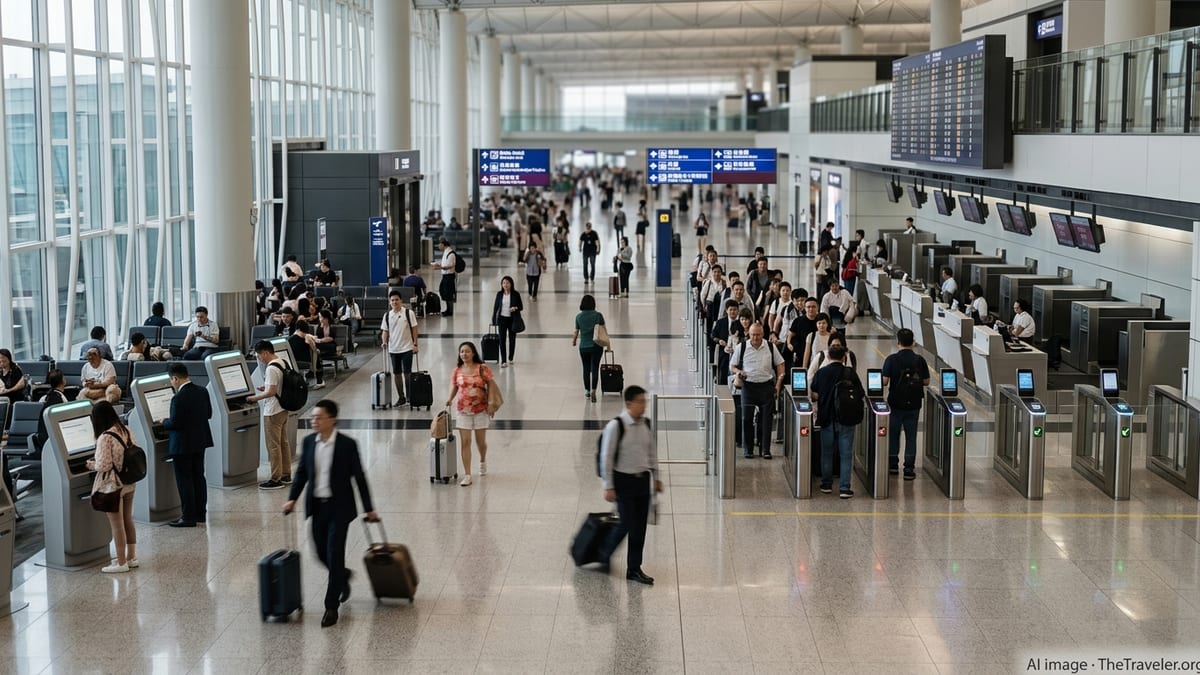
Pittsburgh International is responding by expanding its use of facial comparison and digital identity tools at security and border checkpoints. Airport information and aviation trade coverage describe a layered approach that combines traditional document checks with new cameras and software designed to verify a passenger’s identity without requiring repeated presentation of boarding passes or physical IDs. The objective is to move travelers through chokepoints more quickly while maintaining, and in some cases tightening, compliance with federal screening rules.
The rollout comes on the heels of several high-profile periods of disruption in the U.S. system, including spring break queues and scattered technology outages, which left many travelers wary of another round of holiday turmoil. By introducing biometric options before the July Fourth peak, Pittsburgh is positioning itself as an early adopter among medium hubs that are looking to replicate efficiency gains already seen at larger coastal gateways.
Airport officials have signaled through public planning documents and committee briefings that the technology push is part of a broader modernization program tied to the airport’s new terminal complex. With international services expanding and domestic peak periods becoming more intense, the emphasis has shifted from simply adding more lanes to rethinking how each passenger is processed from curb to gate.
How the New Touchless ID Systems Work
The biometric tools appearing at Pittsburgh International draw on systems that have been tested at dozens of U.S. airports over the past two years. According to industry briefings, participating travelers can store a digital version of their identity document in an approved wallet or opt in to facial comparison programs that link their live image to records already held by transportation security agencies or airlines.
At the checkpoint, those who choose the touchless route enter a designated lane where a camera captures their face and compares it with an encrypted template associated with their reservation. When the match is successful, the system signals that the identity check is complete, allowing the traveler to proceed directly to baggage and body screening without handing over a physical ID. For international arrivals, similar cameras can replace manual passport inspection in certain lanes, feeding information to customs systems in near real time.
Technical specifications published by vendors and airports stress that the biometric templates are designed to work even when lighting is imperfect or passengers are wearing common accessories such as glasses. The systems can flag mismatches for human review, a safeguard meant to prevent automation from overriding officer judgment. In practice, the technology aims to reduce the amount of time each person spends at the document podium, which has long been one of the most stubborn bottlenecks in the airport journey.
At Pittsburgh, the new tools are being layered on top of preexisting programs such as TSA PreCheck and Global Entry. Travelers who already hold those designations may find the lanes moving faster as facial comparison replaces manual checks, while standard lanes benefit indirectly when opted-in passengers are diverted to dedicated touchless queues. Airport planners argue in public materials that these incremental gains can translate into shorter peak waits during intense travel windows like July Fourth.
Managing the Risk of July Fourth Travel Turbulence
Holiday travel chaos typically emerges from a combination of heavy demand, weather disruptions, staffing gaps and infrastructure strain. Independence Day has become one of the busiest weeks of the year for U.S. aviation, and Pittsburgh sits at the intersection of several major domestic flows, including east coast leisure markets and connections to Midwest and southern destinations.
Forecasts from travel groups and security agencies indicate that passenger volumes are likely to meet or exceed last year’s July Fourth records, even as some carriers have adjusted schedules and trimmed capacity from smaller markets. Local business coverage recently highlighted changes in Pittsburgh’s airline mix, including the loss of certain low-cost routes, which could increase load factors on remaining flights and concentrate pressure on the security lanes that feed them.
Biometric enhancements are intended to serve as a form of shock absorber for that demand. By reducing average processing time at checkpoints and automating parts of the identity verification process, Pittsburgh’s system aims to preserve capacity even when lines suddenly swell, for example after a bank of early morning departures or following delays elsewhere in the network. Transportation analysts note that a modest reduction in seconds per passenger can translate into many fewer minutes of waiting when compounded across thousands of travelers.
However, the effectiveness of these tools depends on both technology performance and traveler behavior. Public advisories from airports and security agencies continue to urge passengers to arrive early, pack carefully and be prepared for additional screening if they decline biometric options or if systems flag anomalies. Pittsburgh’s strategy appears to focus on giving willing participants a faster path while keeping traditional processes available for those who prefer them.
Privacy Concerns and Passenger Choice
The expansion of biometric screening has drawn scrutiny from civil liberties advocates and privacy-focused travelers, including in online discussions specific to Pittsburgh. Commenters have raised questions about how facial images are stored, which agencies and companies can access them, and how long records are retained once a trip is complete.
Information released by security authorities and airport operators generally emphasizes that participation in many biometric programs is optional and that alternative procedures remain in place for those who opt out. In these scenarios, passengers can still present a physical ID and boarding pass and undergo the familiar manual review, though they may experience different wait times depending on lane configuration and crowd levels.
Technology providers involved in touchless ID initiatives state in public materials that biometric templates are encrypted and that images may be deleted after a defined period, particularly when used purely for identity verification rather than for law-enforcement databases. Independent experts continue to call for clear disclosures at the point of use, so that travelers understand what is happening when they step into a camera-equipped lane.
For Pittsburgh International, which has been investing heavily in a new terminal and upgraded international arrivals facilities, the balance between efficiency and privacy will be closely watched. The airport is joining a national trend in which biometrics are becoming a normal part of the travel experience, even as the broader public debate over surveillance, data protection and consent remains unsettled.
What July Fourth Travelers Can Expect at Pittsburgh
For passengers heading through Pittsburgh International around July Fourth, publicly available guidance suggests preparing for a system that is simultaneously more high-tech and more crowded than in previous years. Travelers can expect to see new signage pointing toward touchless ID or biometric lanes, along with familiar directions to standard security and pre-screening programs.
Those who choose to enroll or opt in ahead of time may experience faster movement through certain checkpoints, particularly during early morning and late afternoon peaks when the airport historically sees the heaviest lines. Passengers relying on traditional processes are still advised to build in extra time, especially if they are checking bags or traveling with children or large groups.
National transportation forecasts hint that weather and air traffic control constraints could again be a factor during the holiday week, which means that even the best-designed screening technology cannot eliminate all delays. What it can do is help ensure that local bottlenecks at the security checkpoint are less likely to compound problems originating elsewhere in the system.
As Pittsburgh International enters another peak travel season, its deployment of biometric screening and touchless ID tools positions the airport as a test case for how mid-sized hubs manage holiday surges under new federal identity rules. The performance of these systems over the July Fourth period is likely to influence how quickly similar technologies spread to other regional gateways across the country.