


On Cozumel’s quiet southwest coast, Playa Palancar is the classic low‑key beach that also happens to be one of the easiest independent gateways to world‑famous Palancar Reef. Unlike large all‑inclusive beach clubs, this stretch of sand stays relaxed, with a simple beach restaurant, shaded loungers and small boats shuttling snorkelers out to the reef. Understanding how Playa Palancar works as a base can help you avoid confusion, haggle effectively, and time your visit so you get clear water and minimal crowds.
Get the latest updates straight to your inbox!
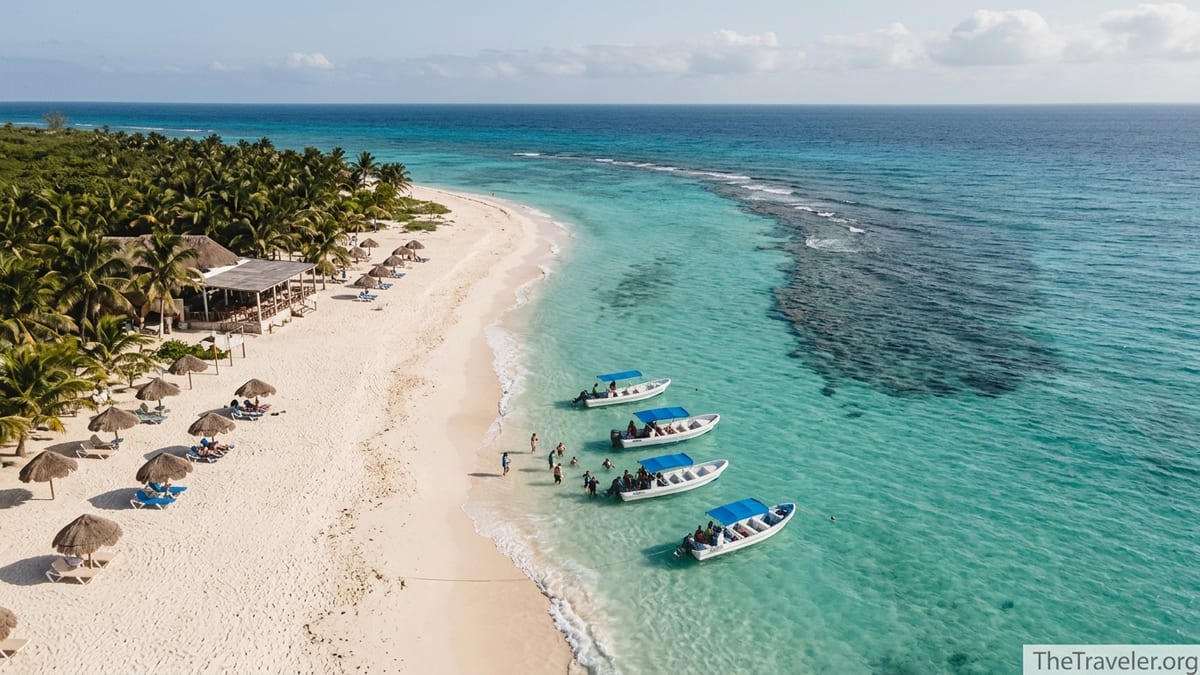
Playa Palancar as a Beach Base
Playa Palancar sits on Cozumel’s southwest coast, roughly 25 to 30 minutes by taxi from the main cruise piers and downtown San Miguel. The beach itself is public, with a modest beach club setup: open‑air restaurant, shaded palapa bar, rows of loungers, basic restrooms and outdoor showers. There is usually no fixed entrance fee, but staff expect you to rent chairs or order food and drinks if you want to use their facilities and hang around for the day. In practice, visitors often end up spending the equivalent of a typical beach club day pass once they add lunch, drinks and a boat trip.
Compared with bigger, more developed clubs closer to town, Playa Palancar feels sleepy and local. There are no water parks or loud pool games, and music tends to be background rather than nightclub‑level. The tradeoff is that facilities are simpler and service can feel more laid‑back. Many repeat visitors like that they can arrive by taxi, claim a couple of loungers under a palm tree, and then decide on the spot whether they want to snorkel, take a reef trip, or simply float in the calm, shallow water.
The key thing to understand is that Playa Palancar functions both as a beach for day‑trippers and as a small launch point for snorkel boats heading to Palancar Reef, Colombia Reef and sometimes El Cielo sandbar. Boat vendors and guides typically operate right off the sand in front of the main restaurant. There is no dock; passengers wade into knee‑deep water to board small covered pangas that idle just offshore.
Facilities are adequate for a full beach day. Expect plastic loungers with thin cushions, simple but tasty seafood plates like ceviche and fish tacos, and cold beers or margaritas served in plastic cups. You are unlikely to find imported wine, barista coffee or spa services. Electricity and mobile coverage are generally reliable, but Wi‑Fi can be hit or miss, which encourages most people to treat it as an unplugged beach escape rather than a remote work spot.
How Boat Trips from Playa Palancar Work
At Playa Palancar, reef trips are typically short, small‑boat excursions rather than big catamaran “party cruises.” You walk up to the beachside kiosk or directly to a boat captain, ask what is available that morning or afternoon, and they group you with other snorkelers until the minimum passenger count is met. Boats are usually open fiberglass pangas with a shade canopy, a ladder off the stern, and space for around 8 to 12 people, which keeps the groups manageable in the water.
Most boats from Playa Palancar run a standard loop: a first stop at one section of Palancar Reef, followed by a second stop at Colombia Reef or another nearby site, with optional third stop at El Cielo or El Cielito sandbar if sea conditions and permits allow. Typical time in the water at each reef is around 30 to 45 minutes, and whole trips often last 2 to 3 hours dock‑to‑dock. On calm days, the ride out to the reef can take as little as 10 to 15 minutes since Palancar Reef sits offshore from this part of the coast.
Pricing at the beach is more fluid than booking a set tour online. Many recent visitors report paying around 25 to 35 US dollars per person for a basic 2‑reef snorkel outing from Playa Palancar, including mask, snorkel, fins and a guide. Some operators quote around 45 dollars per person for a longer trip that adds El Cielo, particularly when demand is high among cruise passengers. Marine park fees for the national park that protects Palancar Reef are often collected separately in cash, and can add a few dollars per person, so it is smart to carry small bills.
Gear quality can vary from boat to boat. Newer operators may have fresh silicone masks and good fins, while others still use older rental sets. If you have a sensitive face or snorkel frequently, consider bringing your own mask and snorkel and just use the fins provided. Life jackets are typically mandatory to protect the reef, and guides tend to lead a relaxed drift snorkel over the coral while keeping an eye out for turtles, eagle rays and schools of grunts or snappers that are common around Palancar.
Costs, Payments and What to Expect to Spend
Understanding likely costs helps you plan whether Playa Palancar fits your budget compared with a packaged excursion. A taxi from the main Cozumel cruise piers to Playa Palancar has recently been running in the region of 300 to 350 Mexican pesos one way for a standard taxi, which is roughly 18 to 22 US dollars depending on exchange rates and party size. Independent cruisers sharing a cab often split that cost among three or four people, which keeps the per‑person transport cost reasonable. From downtown San Miguel, fares tend to be slightly lower than from the furthest southern cruise pier.
Once at the beach, chair and umbrella setups are sometimes included if you order food and drinks, and sometimes quoted as a separate rental. Reports commonly mention lounger packages around the equivalent of 10 to 15 US dollars per person in food and beverage, which you can easily hit with a plate of shrimp tacos and two beers. Expect main dishes at the restaurant to land around 200 to 350 pesos, and mixed drinks to cost as much as or slightly above a beer. Credit cards are occasionally accepted but you should not rely on it; several beachgoers note that cash in pesos or US dollars makes life simpler when paying for both meals and boat trips.
For snorkeling, small shared boats at Playa Palancar often undercut the price of organized cruise‑line excursions that visit similar reefs. If your group of four negotiates a 30 dollar per person 2‑reef trip and each tips the guide, you might spend around 140 dollars total for the boat portion, compared with 300 dollars or more for a ship‑run tour. On the other hand, you sacrifice the security of a ship‑sponsored excursion and must manage your schedule carefully. Private boats can be arranged as well, but prices climb quickly, with some independent outfits on the island quoting several hundred dollars for a half‑day private snorkel charter to Palancar Reef and El Cielo.
Hidden costs to remember include snorkel vest or wetsuit rental if you need extra flotation or warmth outside the hottest months, plus the marine park fee and tips for boat crew and servers. As a rough real‑world example, a couple arriving by taxi from a cruise pier, renting two loungers, sharing a plate of ceviche and a round of drinks, then taking a shared snorkel boat to two reefs, and tipping modestly, might find their total bill for a relaxed five‑hour visit landing in the 140 to 180 dollar range including taxi fares there and back.
Timing Your Visit and Conditions at Palancar Reef
Timing matters when using Playa Palancar as a base for Palancar Reef. The first boats of the day usually head out mid‑morning, often around 9:45 or 10:00, once a small group forms. Water tends to be clearest and the sun less harsh in those first hours, which many experienced snorkelers prefer. By late morning and early afternoon, more cruise passengers arrive and boats can become busier, especially on days when multiple large ships are in port. If you want a quieter experience, consider arriving at the beach close to opening time to grab shade and book an early boat.
Sea conditions around Palancar are generally calm in Cozumel’s dry season, with light wind and excellent visibility that often extends well beyond 20 meters. In the wetter, windier months, choppier seas can make surface swimming more tiring, especially for newer snorkelers. Boat operators at Playa Palancar often decide on the day’s exact reef stops based on wind, current and park regulations. If conditions at a particular section of Palancar Reef are not ideal, they may suggest Colombia Shallows or another nearby reef that offers easier snorkeling, which is worth listening to if you are not a strong swimmer.
Because Palancar Reef lies within a protected national park, there are occasional restrictions and temporary closures aimed at reef recovery. Operators that are permitted to enter the park are required to follow specific guidelines, such as mandatory use of life vests and bans on touching coral or standing on the bottom. Even when everything is fully open, there may be designated areas where snorkelers can drift and others reserved for divers. If your heart is set on a particular site like Palancar Gardens or Palancar Horseshoe, ask at the beach how likely those spots are on short shared trips from Playa Palancar, and keep expectations flexible.
Weather back‑up plans are simple but important. On days of high wind or poor visibility, captains at Playa Palancar may cancel or shorten trips, or confine snorkeling to more sheltered reefs. In those cases, some visitors opt to stay on the beach and enjoy the calm near‑shore swimming, then try for a reef trip another day. If you are in port only for a few hours on a cruise, it is wise to have a “plan B” activity, such as staying closer to town at a different beach club if you see whitecaps and heavy wind in the morning.
Getting to Playa Palancar: Taxis and Logistics
For most independent visitors, taxis are the simplest way to reach Playa Palancar. Cozumel’s taxi system works on published zone rates rather than meters, so you pay a fixed price based on where you start and where you are going. At cruise piers, dispatchers manage orderly lines. You can ask to see the current zone chart before you get into a cab, and confirm the price to Playa Palancar in pesos or dollars for your whole group. Because fares can fluctuate, it is smart to have a range in mind rather than a single exact figure, but many recent reports mention around 300 pesos one way for a standard taxi from downtown or the central piers.
From the taxi drop‑off, it is a short walk along a sandy track to the beach club entrance. There is usually no gate or turnstile, just staff greeting new arrivals and guiding them toward loungers, the restaurant or the boat kiosks. When you are ready to leave, taxis rarely wait inside the small parking lot for long, but it is common for new arrivals’ cabs to be available for departing guests. The beach staff can also call a taxi for you if no vehicles are present. Build a little extra time into your schedule in case you need to wait 10 or 15 minutes for a returning cab.
Some visitors rent scooters or cars in town and drive themselves. The coastal highway to Playa Palancar is straightforward, and the turnoff is signposted. Parking is usually on a dirt lot near the entrance, with no formal fee beyond perhaps a small tip for a local attendant. Self‑drive works best for overnight guests on the island who already feel comfortable navigating Cozumel’s roads and want the flexibility to explore multiple beaches in a single day. For cruise passengers or first‑time visitors, taxis remain the most hassle‑free option.
If you are staying at a southern hotel like Allegro Cozumel, Iberostar Cozumel, or the resorts in the area around Palancar, Playa Palancar may be only a short cab ride away, which keeps both transit time and cost low. Some dive and snorkel operators based closer to town will also pick up at hotel docks or meet you at southern marinas, in which case Playa Palancar becomes one of several potential pickup points rather than your only option for reaching Palancar Reef.
Cruise Passengers and Time Management
For cruise passengers, the central question is whether an independent trip from Playa Palancar to Palancar Reef fits safely within your port time. On a typical Cozumel call of 7 to 8 hours, many travelers do make it work comfortably, but you will need to be disciplined about the clock. Factor in about 30 minutes each way by taxi, some buffer to negotiate and wait for a boat group to fill, 2 to 3 hours for the reef trip itself, plus time to relax on the beach and get back to the pier with at least an hour to spare before all‑aboard.
In practical terms, cruisers who walk off the ship soon after clearance, head straight to the taxi stand, and arrive at Playa Palancar by mid‑morning have the most flexibility. They can often join a late‑morning boat, be back on shore early afternoon, have lunch, enjoy a short swim, and still be in a taxi north by mid‑afternoon. Those who disembark later in the day or on abbreviated port calls may find that by the time they reach Playa Palancar, the best boat slots are already gone or the beach is busier than they like.
One advantage of Playa Palancar for cruise passengers is that you are in control of your pace. You can skip the snorkel altogether if seas look rough and just treat it as a relaxed beach day. Alternatively, if you find on arrival that shared boat departures are not lining up with your schedule, you can ask about a small private boat at a higher price, which sometimes allows you to depart quickly and tailor the trip length as long as park rules and fuel costs are respected. Either way, make sure someone in your party is keeping a close eye on the time and leave the beach earlier than you think you need to.
Because this is an independent outing, your ship will not wait if you return late. Many experienced cruisers keep a simple mental rule: be back on the pier at least an hour before the posted all‑aboard. If your itinerary has a very short Cozumel stop, a late‑afternoon departure, or you are traveling with people who move slowly, consider either a ship excursion to Palancar Reef or a shorter independent plan closer to the port, and save the Playa Palancar experience for a future land‑based trip.
Should You Book Ahead or Arrange at the Beach?
Deciding whether to prebook a Palancar Reef trip or wait and arrange everything from the sand at Playa Palancar depends largely on your risk tolerance, travel dates and group size. Booking ahead with a licensed snorkel operator based in Cozumel gives you a confirmed departure time, clarity on inclusions like marine park fees and gear, and clear instructions on where to meet. These tours often use larger boats departing from marina docks rather than directly off the beach at Playa Palancar, but many still visit Palancar and Colombia reefs and sometimes El Cielo on 3‑reef itineraries.
By contrast, arranging a boat on arrival at Playa Palancar maximizes flexibility and often keeps costs lower, but you are at the mercy of that day’s crowd levels and weather. In low and shoulder seasons, some visitors report simply walking up late morning, finding only a handful of people waiting, and leaving within 20 minutes for a nearly private small‑group snorkel. During peak holiday weeks or on days when several large ships are in port, others describe having to wait for a group to assemble or accept a time that cuts into their planned beach schedule.
If you are on Cozumel for several days and can pick and choose your moment, arranging on the beach is usually fine and can be part of the fun, especially if you speak a little Spanish and enjoy low‑key bargaining. If you are a cruise passenger with only one shot at Palancar Reef, traveling with children, or visiting during a busy period, prebooking with a reputable island operator that clearly states Palancar Reef in its itinerary may offer peace of mind, even if it means meeting at a marina in town instead of directly at Playa Palancar.
One hybrid strategy some travelers use is to prebook a morning snorkel trip to Palancar Reef with a known operator that departs from a marina near the cruise piers or from a southern hotel dock, then spend the remaining hours of the day at a beach club of their choice, which might or might not be Playa Palancar. That way the reef experience is locked in, while the beach component stays flexible. As always, check cancellation policies and communication options in case your ship alters its arrival time or weather forces a schedule change.
The Takeaway
Playa Palancar is both a mellow beach hangout and a practical springboard to Palancar Reef. Its appeal lies in that balance: you can step out of a taxi, dig your toes into soft sand, and within an hour or so be drifting above coral formations that have put Cozumel on the world diving map. The setup is informal, though, which means first‑time visitors benefit from understanding how much taxis cost, what boat trips typically include, and how to time everything around cruise schedules or hotel plans.
If you are comfortable with a bit of improvisation, willing to carry cash and watch the clock, using Playa Palancar as your reef base can deliver excellent value and a more local feeling day than many packaged excursions. If you prefer everything prearranged and guaranteed, booking a Palancar Reef tour in advance and treating Playa Palancar as an optional add‑on beach stop may fit you better. Either way, knowing the practical details before you go lets you spend more of your day focusing on the water clarity, the fish and the simple pleasure of a quiet Cozumel shoreline.
FAQ
Q1. How long does it take to get from the Cozumel cruise piers to Playa Palancar?
The taxi ride from the main cruise piers to Playa Palancar is usually around 25 to 30 minutes each way in normal traffic, plus a few extra minutes to walk from the drop‑off area to the beach club entrance.
Q2. How much should I expect to pay for a taxi from town or the piers to Playa Palancar?
Recent visitors commonly report fares in the region of 300 to 350 Mexican pesos one way for a standard taxi from downtown or the main cruise piers, which roughly translates to around 18 to 22 US dollars for the vehicle, not per person.
Q3. What do shared snorkel trips from Playa Palancar to Palancar Reef typically cost?
Shared small‑boat snorkel outings to two reefs from Playa Palancar usually fall around 25 to 35 US dollars per person, with some longer trips that include El Cielo quoted closer to 45 dollars, plus a modest marine park fee and tips.
Q4. Do I need to book a Palancar Reef trip in advance or can I arrange it on the beach?
You can generally arrange a snorkel trip directly on the beach at Playa Palancar, especially in low and shoulder seasons, but prebooking with a licensed operator is advisable during busy holiday weeks or if you are on a tight cruise schedule and want a guaranteed departure time.
Q5. Is Playa Palancar suitable for young children or non‑swimmers?
The near‑shore water at Playa Palancar is shallow and usually calm, which works well for paddling children and non‑swimmers, but reef trips go into deeper water, where life vests are required and close supervision is essential for anyone who is not confident in the sea.
Q6. Are there good food and drink options at Playa Palancar?
Yes, there is a simple beachfront restaurant and bar serving typical Cozumel beach fare such as ceviche, fish tacos, burgers, nachos and cold beers or mixed drinks, with prices that are moderate by island beach‑club standards.
Q7. Can I pay by credit card at Playa Palancar and on the boats?
Some visitors report being able to use credit cards in the restaurant, but cash in pesos or US dollars is still the most reliable way to pay for loungers, boat trips, fees and tips, so you should not count on cards always working.
Q8. What should I bring for a day at Playa Palancar and Palancar Reef?
Bring swimwear, a towel, reef‑safe sunscreen, cash in small bills, a hat, sunglasses, and if possible your own mask and snorkel for comfort; boats normally provide fins and mandatory life vests as part of the trip price.
Q9. Is Playa Palancar less crowded than other Cozumel beach clubs closer to town?
In general Playa Palancar has a quieter, more low‑key atmosphere than some of the big, activity‑heavy clubs nearer to the cruise piers, though it can still get busy around midday on high cruise‑traffic days and during peak holiday periods.
Q10. Is it safe to visit Playa Palancar and Palancar Reef independently while on a cruise?
Many cruisers visit independently without issues, but it is crucial to track time carefully, build in extra buffer for taxis and boat schedules, and aim to be back at the cruise pier at least an hour before your ship’s all‑aboard time since the ship will not wait for independent travelers.