


Ask almost any local divemaster in Cozumel which reefs they love most, and Palancar and Colombia will come up within the first few minutes. Both sit inside the Arrecifes de Cozumel National Park on the island’s protected southwest coast, both are serviced daily by small dive and snorkel boats, and both deliver the kind of Caribbean visibility and coral scenery that made Cozumel famous. Yet the experience in the water can feel very different. This guide compares Palancar Reef and Colombia Reef in real-world terms so you can decide which is the better fit for your trip, your budget, and your comfort in the water.
Get the latest updates straight to your inbox!
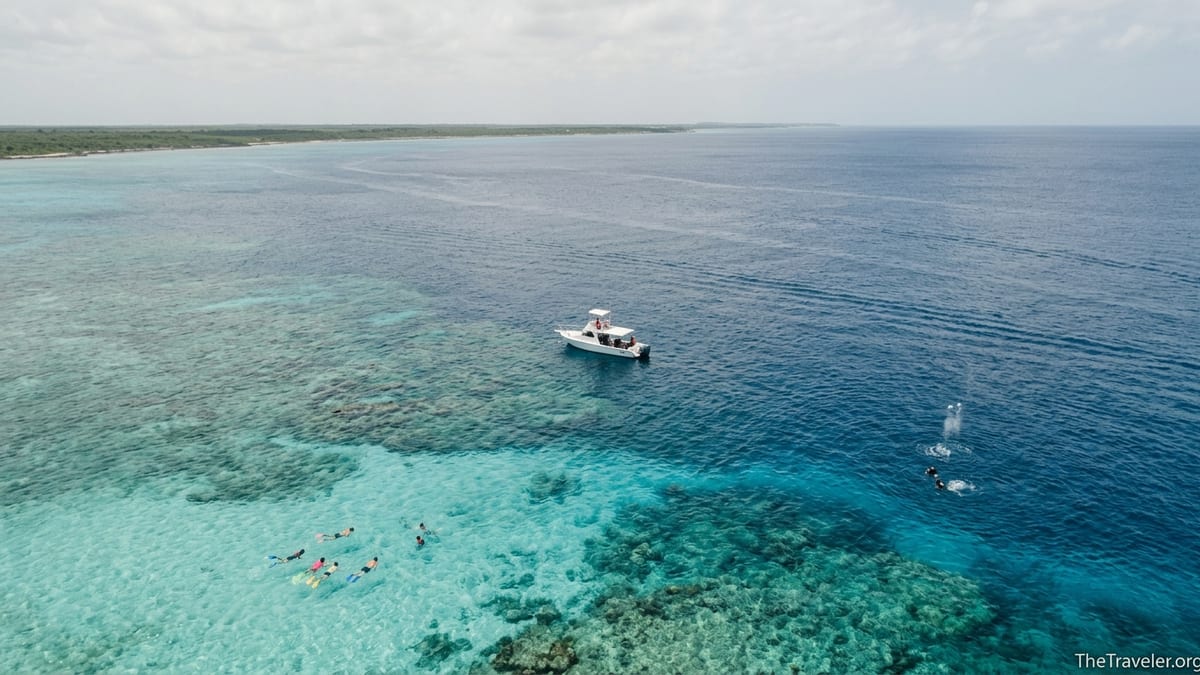
Palancar Reef and Colombia Reef at a Glance
Palancar Reef is a sprawling reef system on Cozumel’s southwest side, divided into sections such as Palancar Gardens, Caves, Bricks, and Horseshoe. Depth typically ranges from about 30 to 80 feet on the main dive profiles, with shallower sections of Palancar Gardens rising to within a few meters of the surface. Operators based at marinas near town and the hotel zone usually reach Palancar in 30 to 45 minutes by small boat, depending on weather and boat speed.
Colombia Reef lies a little farther south, roughly between Palancar and the famous El Cielo sandbar. It is usually broken into Colombia Deep and Colombia Shallows. Colombia Deep is a wall dive often running from about 50 to more than 100 feet, suitable for experienced divers, while Colombia Shallows is in the 20 to 35 foot range with big coral heads rising from white sand. Boats from San Miguel or the main hotel zone take around 40 to 55 minutes to get here, which is why it is more commonly visited on longer, two-tank trips.
In practice, a typical morning two-tank dive charter might pair Palancar Horseshoe or Palancar Caves as the first, deeper dive with Colombia Shallows as a second shallow profile. Snorkel tours that advertise “Palancar & Colombia” usually spend about 35 to 45 minutes at each site before finishing at El Cielo or a nearby sandbar. When you book, it is worth asking which specific sections of the reefs the operator actually plans to visit, because “Palancar” and “Colombia” cover a lot of ground and very different depth profiles.
From a cost perspective, there is usually no significant price difference between visiting Palancar or Colombia. Shared-boat snorkel trips that hit both reefs commonly run around 55 to 75 US dollars per person from Cozumel, including gear and park fees, while two-tank boat dives that include Palancar or Colombia often range from about 100 to 150 dollars per diver depending on tank type, equipment rental, and group size. The main decision is less about price and more about depth, current, and what you want to see underwater.
Snorkeling: Which Reef Feels Better From the Surface?
For pure snorkelers who are not joining divers, Colombia Shallows usually has a slight edge. The reef crest sits in roughly 20 to 30 feet of water, with huge coral heads rising up toward the surface and wide sandy channels between them. On a clear day, even a beginner with a basic mask and rental life jacket can look down and make out brain corals, waving purple sea fans, and schools of grunts and yellowtail snappers. Many local guides describe Colombia Shallows as their favorite shallow site for wide-angle snorkeling because the contrast between bright sand and dark coral makes fish and turtles easy to spot.
Palancar is a more mixed story for snorkelers because so much of the reef is deeper. Sections like Palancar Gardens can start in the 10 to 15 meter range, which means that while freedivers can drop down and weave between coral buttresses, casual snorkelers may feel they are looking at the reef from a distance through very clear water. Some tour operators manage this by running the boat along the shallowest parts of Palancar Gardens first, where coral heads rise closest to the surface, before moving over deeper sections where snorkelers mostly watch divers far below.
On mixed snorkel-and-dive boats, snorkelers sometimes report feeling sidelined at deeper sections of Palancar when visibility is excellent but the reef lies 40 or 50 feet below them. In contrast, at Colombia Shallows, the same passenger is often drifting over reef that feels almost within arm’s reach, with multiple chances to watch a hawksbill turtle grazing or a stingray cruising across the sandy channels. If you are choosing a private charter specifically to maximize snorkeling, asking the captain to spend extra time at Colombia Shallows and finish at a shallow sandbar such as El Cielo, rather than splitting time evenly with deeper Palancar, is often the better call.
Wave exposure is another small but real factor. Because both Palancar and Colombia lie on the open west side of Cozumel, surface chop can pick up on windy days. Snorkelers prone to seasickness often appreciate that Colombia Shallows is usually the last stop on three-hour tours, when you are already acclimated to the motion. Those who are most comfortable starting in calmer water might prefer itineraries that begin with Colombia Shallows before moving to deeper sections of Palancar where they can remain on the boat if they feel fatigued.
Diving Profiles, Depths, and Currents
For diving, Palancar has a long-standing reputation as Cozumel’s signature reef system. Palancar Gardens, often used as an introduction to Cozumel’s style of drift diving, typically runs in the 30 to 60 foot range, with impressive coral buttresses and gentle current that carries you along the reef at walking pace. Many local dive centers schedule Palancar Gardens for Open Water divers finishing their certification, with instructors easing students into the current while still staying shallower than 60 feet on the main part of the dive.
Palancar Horseshoe, Bricks, and Caves introduce more dramatic topography and slightly more demanding depth ranges. These sections can drop from 50 to 80 or 90 feet, often with large swim-throughs, overhangs, and canyons. Here, an Advanced Open Water card or equivalent experience is recommended if you plan to follow a guide through the larger tunnels. The current is usually moderate but can increase on certain days. Because Cozumel’s drift diving is predictable and the boats follow your bubbles, these conditions remain manageable for most reasonably experienced divers.
Colombia Deep offers similar depth to Palancar’s deeper sections but with a somewhat different feel. The wall and pinnacles here often start around 50 or 60 feet and plunge well beyond recreational limits, which creates a striking sense of blue water and vertical relief. Many divers describe a Colombia Deep profile as a relaxed glide along a sloping wall with big coral towers, barrel sponges, and frequent sightings of turtles and rays, often with fewer other groups around than at Palancar. However, currents at the deeper part of Colombia can be trickier, and operators often prefer that divers are at least comfortable at 80 to 100 feet.
Colombia Shallows, by contrast, is one of the best second-tank sites on the island for extended bottom time. With depths typically in the 20 to 35 foot range, it allows bottom times of 60 minutes or longer on air, depending on your consumption. The current is usually gentle to moderate, making it a favorite finishing dive after a deeper Palancar or Colombia Deep first tank. For divers, this means Palancar is often where you go for towering structures and swim-throughs, while Colombia Shallows is where you slow down, extend your dive, and focus on fish behavior and macro life in the shallower light.
Coral Scenery and Marine Life: What You Actually See
Palancar’s reputation comes largely from its architecture. Imagine towering coral columns rising like underwater cathedrals from the sand, with large swim-throughs and arches that divers can glide through one by one in the current. On a typical Palancar dive, you might cruise along a maze of coral buttresses, pass through short tunnels lit at each end, and emerge over drop-offs with open blue water to your side. Colors can be especially vivid in the 40 to 60 foot range, where sunlight still penetrates strongly, lighting up orange sponges, lavender sea fans, and yellow tube sponges.
Marine life at Palancar is varied but tends to be more about ambiance and mid-sized species than big schools of pelagics. Common sightings include queen angelfish, French angelfish, stoplight parrotfish, black grouper, and the endemic Cozumel splendid toadfish tucked into holes under ledges. On many dives you will also encounter one or two green or hawksbill turtles, sometimes right at eye level in the current. Nurse sharks often rest in the sandy patches or tucked into crevices, and eagle rays occasionally pass by in the blue, especially in cooler months.
Colombia Shallows, in contrast, delivers a brighter, more intimate reef experience. With a shallow sand bottom and sunlight pouring down, you get exceptional color and contrast in the corals themselves. Large mounds of brain coral and Elkhorn coral are dotted with schooling grunts and snappers, and it is common to see schools of blue tang and chubs cruising past. The layout of big coral heads separated by sand channels makes it easy for guides to point out stingrays buried in the sand or lobsters hiding in caves, and the shallower depth means colors pop without needing high-powered video lights.
At Colombia Deep, you see more of the big-picture wall: giant barrel sponges, huge sea fans, and long vertical stretches of reef. Large turtles, ocean triggerfish, and occasional eagle rays are typical. Many photographers enjoy mixing a deep first dive at Colombia with a long shallow second dive in the Shallows, using wide-angle lenses on the first to capture the wall and switching to macro at shallow depth for blennies, cleaner shrimp, and close-ups of coral texture.
Conditions, Crowds, and Overall Vibe
Conditions at both Palancar and Colombia are driven by the same northward-flowing current along Cozumel’s west side, so on most days, differences are more about site layout than about raw conditions. Visibility on both reefs is normally excellent, often around 80 to 100 feet or more. When the wind shifts and the water clouds up, it tends to affect both areas similarly. Where visitors notice a difference is in crowding and how busy the sites feel at the surface and underwater.
Palancar’s name recognition means it is almost always on the schedule for multiple operators each morning, especially when cruise ships are in port. It is common to see several boats moored or drifting nearby, with dive groups entering the water in intervals. Underwater, the current and the long spine of the reef tend to spread groups out, so it does not usually feel chaotic, but you are likely to see other bubbles in the distance and share swim-throughs with other divers.
Colombia, being a little farther south, often feels marginally quieter. Many operators that make the longer run do so when they have experienced divers on board, or when they want to combine Colombia Shallows with a stop at El Cielo for a more relaxed, full-morning outing. As a result, you may find yourself sharing the reef with fewer groups, especially in shoulder seasons or on days when fewer cruise ships are docked. For some visitors, that sense of being in a slightly less trafficked part of the marine park is part of Colombia’s charm.
Surface logistics also play a role in the perceived vibe. Because the ride to Palancar is a bit shorter, it is more commonly used for standard two-tank morning trips that aim to have you back at your hotel or cruise pier by early afternoon. Colombia is more frequent on itineraries marketed as “premium snorkeling” or “extended south reefs,” where the expectation is a longer boat ride and a more leisurely schedule. When you book, look closely at the advertised trip length. If maximizing bottom time and minimizing transit is your priority, Palancar-centric itineraries may suit you better; if you prefer a lingered day with a mix of reef and sandbar stops, Colombia often wins.
Matching Each Reef to Your Experience Level
For first-time snorkelers who are not strong swimmers, Colombia Shallows is usually the safer recommendation, but only with a reputable guide and proper safety gear. The combination of 20 to 30 foot depth, bright sand, and scattered coral heads makes it easy for guides to keep an eye on guests while still offering interesting scenery. Many operators bring along extra flotation devices, such as foam noodles or life rings, so that nervous swimmers can stay together near the guide. When booking, ask explicitly if your tour will visit Colombia Shallows and whether they provide guides in the water, not just a captain on the boat.
For newly certified divers or those who have not dived in a few years, Palancar Gardens or a shallow Palancar profile with a conservative maximum depth around 50 or 60 feet can be an ideal reintroduction to drift diving. The current typically feels like gently moving sidewalk speed, and the huge coral structures give obvious visual reference, which helps with buoyancy. Many dive shops in Cozumel build their refresher packages around an easy first shore dive followed by a boat dive at Palancar Gardens or a similar site the next day.
Intermediate divers who already have some drift experience will likely enjoy both Palancar’s more complex sections and a deeper dive at Colombia. The choice here comes down to whether you prefer dramatic swim-throughs and canyons (Palancar Caves and Horseshoe) or a long glide along a wall with big coral pinnacles and slightly fewer other divers (Colombia Deep). In both cases, it is wise to be honest about your comfort at depth and in current when you check in with the dive shop in the morning; many shops will adjust the site choice or depth based on who is on the boat that day.
Advanced divers, particularly those who enjoy photography and long, multi-day dive plans, often choose to do both reefs several times in different conditions. A common pattern is to schedule at least one day featuring a Palancar deep profile followed by Colombia Shallows, another day emphasizing different Palancar sections, and a third day mixing Colombia Deep with another southern site. This approach lets you see how light, current, and marine life shift day by day and avoids turning the question into a strict either-or choice.
Real-World Itineraries and Booking Tips
If you are docking for a single day on a cruise and want to see “the classic Cozumel reef” without overcomplicating things, a half-day snorkel excursion that includes Palancar and Colombia Shallows plus El Cielo is usually the most efficient choice. Expect roughly three hours dock to dock, with about 30 to 40 minutes in the water at each reef and a shorter stop at the sandbar. For a family of four, you might pay around 220 to 260 US dollars total with gear and marine park fees included, depending on whether transport from the cruise pier is bundled.
For a land-based traveler staying several days, consider alternating reef focus. One morning, book a two-tank dive where the operator suggests Palancar Gardens and Colombia Shallows. Another morning, ask for a deeper Palancar section combined with a different shallow site such as Paradise or Yucab, then finish your stay with a dedicated shallow day requesting an extended dive or snorkel at Colombia Shallows. This kind of variety makes the most of each reef’s strengths instead of revisiting the same profile repeatedly.
Private charters are increasingly popular among small groups and families who want flexibility. A private boat for up to 6 passengers might run roughly 450 to 650 US dollars for a half-day, including captain, guide, water, and basic snorkeling gear, with scuba tanks at additional cost. On such a charter, you can ask to focus on Colombia Shallows and nearby shallow spots if your group skews toward snorkelers, or to allocate more time to Palancar’s deeper formations if everyone is a diver. The trade-off is that you will need to communicate clearly with the operator in advance about your group’s certification levels and expectations.
Finally, pay close attention to marine park rules and local conservation practices. Both Palancar and Colombia sit inside a protected area where touching coral, chasing turtles or rays, or collecting shells is prohibited. Many operators provide reef-safe sunscreen or ask guests to apply sunscreen at least 30 minutes before boarding to reduce chemical runoff. Choosing companies that enforce these rules, limit group size, and avoid anchoring on the reef helps ensure that the corals you enjoy today remain healthy for your next visit.
The Takeaway
If you are mainly a snorkeler and want bright, shallow coral with a good chance of seeing turtles and rays up close, Colombia Shallows usually edges out Palancar as the better primary choice. Its 20 to 30 foot depths and big coral heads over white sand translate into vivid color and easy wildlife spotting from the surface. That said, adding a brief snorkel pass over the shallowest part of Palancar Gardens can still give you a taste of Cozumel’s most famous reef without committing your whole trip to deeper water.
If you are a diver looking for Cozumel’s classic big-structure drift dives, Palancar is hard to beat. Palancar Gardens provides an accessible introduction to the reef system, while Palancar Caves, Bricks, and Horseshoe offer more dramatic swim-throughs and wall sections. Colombia Deep complements that experience with quieter walls and large coral pinnacles, and Colombia Shallows delivers long, light-filled second dives that many divers remember just as fondly as the deeper profiles.
In the end, the better reef is the one that matches your comfort level and the conditions on the day you go out. For many travelers with two or more days on the water, the right answer is not Palancar versus Colombia, but Palancar and Colombia on different days or in different combinations. Talk honestly with your operator about your goals, ask which specific sections of the reefs they plan to visit, and choose, above all, the itinerary that lets you relax into the current and enjoy the underwater show.
FAQ
Q1. Is Palancar Reef or Colombia Reef better for first-time snorkelers?
Colombia Shallows is generally better for first-time snorkelers because the reef sits in shallower water, around 20 to 30 feet, making coral and marine life easier to see from the surface. Palancar can be stunning, but much of it is deeper, so beginners sometimes feel the action is farther away beneath them.
Q2. Which reef is more suitable for new divers with only basic certification?
Palancar Gardens is often recommended for newly certified divers because it combines moderate depth with gentle current and large, easy-to-follow coral structures. Dive shops frequently use it for first boat dives after training, although Colombia Shallows is also a good second-tank option once you are comfortable with drift diving.
Q3. Will I see more turtles and big marine life at Palancar or Colombia?
Both reefs offer regular turtle sightings, along with rays and nurse sharks, so there is no guaranteed winner. Some guides feel they see turtles slightly more often at Colombia Shallows, where turtles graze in the shallow coral gardens, while others report equally frequent encounters along Palancar’s walls. Your chances depend heavily on conditions and a bit of luck.
Q4. How strong are the currents at Palancar compared with Colombia?
Currents at both reefs are typically moderate, carrying you along at a relaxed drift. On some days Palancar can feel a bit faster, especially on deeper profiles, while Colombia Shallows is more often described as gentle. Conditions vary day to day, so the best approach is to discuss current strength with your operator on the morning of your trip.
Q5. Can non-swimmers or weak swimmers safely join tours to these reefs?
Non-swimmers and weak swimmers can join some tours if they wear life jackets and stay close to an in-water guide, but open-ocean conditions are not ideal for absolute beginners. If you are not comfortable in the water, consider starting with a shore-based snorkel at a protected beach club and then joining a boat trip that emphasizes Colombia Shallows only when you feel ready.
Q6. Are there big price differences between Palancar and Colombia tours?
Prices are usually similar, because most group trips visit both reefs on the same outing. Expect shared snorkel tours including Palancar and Colombia to cost in the 55 to 75 dollar range per person, and two-tank dive trips that feature these reefs to run around 100 to 150 dollars per diver, depending on gear rental and group size.
Q7. Is one reef less crowded than the other?
Palancar tends to be busier because it is more famous and slightly closer to town, so more operators visit it daily. Colombia, especially Colombia Shallows and Colombia Deep, often feels a bit quieter, partly because the longer boat ride makes it more common on extended or premium itineraries rather than every quick morning trip.
Q8. If I only have one day to dive in Cozumel, which reef should I choose?
If you have just one dive day, many divers pick a Palancar section such as Gardens or Horseshoe for the first tank and Colombia Shallows for the second. That combination gives you the classic big structures of Palancar plus the bright, shallow coral gardens of Colombia in a single outing.
Q9. What kind of camera setup works best at these reefs?
For divers, a wide-angle or fisheye lens is ideal at both Palancar and Colombia Deep to capture large coral formations and walls, while a simple action camera works well for snorkelers at Colombia Shallows. Because light is strong and clear in the shallows, many casual photographers get good results without strobes on Colombia Shallows, whereas deeper Palancar profiles benefit more from video lights or strobes.
Q10. Do I need to book in advance to visit Palancar or Colombia Reef?
In high season or when several large cruise ships are in port, it is wise to book at least a few days ahead, especially if you want a small-boat operator or a private charter. In quieter months, you may find last-minute space, but booking in advance allows you to request specific reefs and profiles, such as a focus on Colombia Shallows for snorkeling or a deeper Palancar section for experienced divers.