


Palancar Reef, off the southwest coast of Cozumel, is one of the Caribbean’s signature reef systems and a bucket list stop for snorkelers. It sits inside Cozumel Reefs National Marine Park, with clear, warm water, towering coral formations and regular sightings of turtles, rays and schools of tropical fish. This guide focuses on Palancar specifically: how to get there, what a typical boat tour looks like, how good the visibility really is, what beginners should know, and whether snorkeling from the beach is a realistic substitute for a dedicated reef trip.
Get the latest updates straight to your inbox!
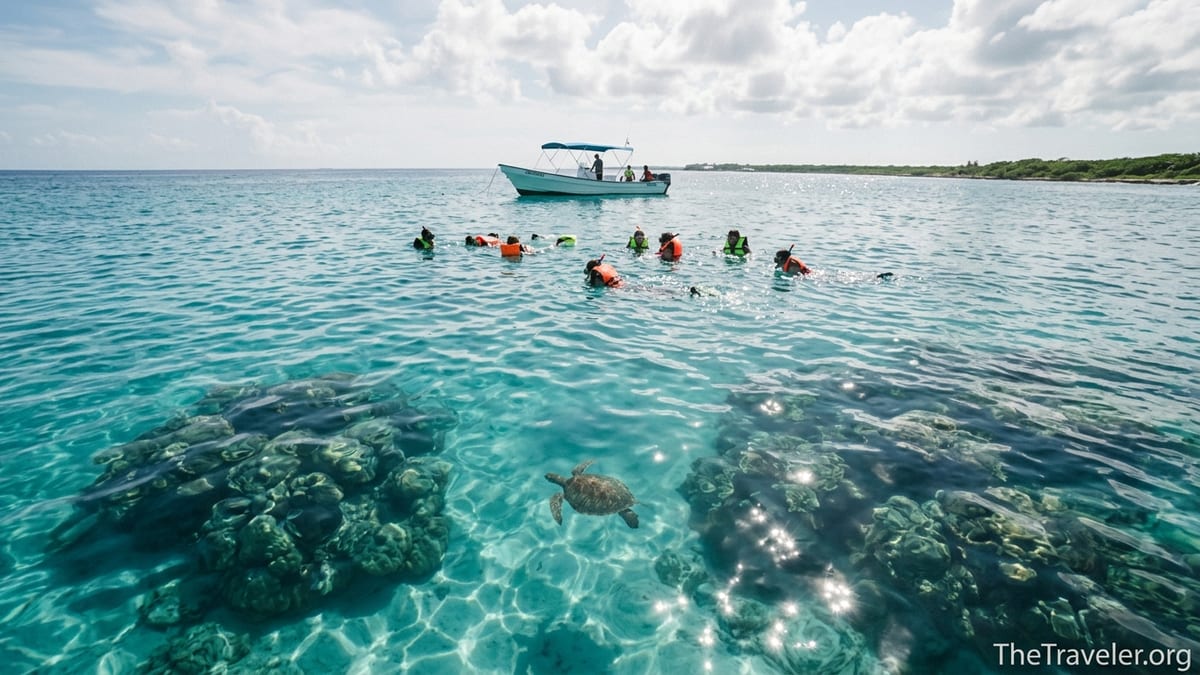
Understanding Palancar Reef and Conditions
Palancar Reef stretches for several kilometers along Cozumel’s protected southwest coast within the Cozumel Reefs National Marine Park. Locally it is divided into several zones, including Palancar Gardens, Palancar Caves, Palancar Bricks and Palancar Horseshoe, which differ slightly in depth and coral formations. Most snorkel tours visit the shallower parts of these sections, usually combined with neighboring reefs such as Columbia Shallows or the sandbar at El Cielo.
Water clarity is one of Palancar’s main draws. Visibility is often in the range of roughly 60 to 100 feet under normal conditions, and sometimes higher on calm, sunny days. The reef lies in warm Caribbean water, typically in the upper 70s to mid 80s Fahrenheit across much of the year, so most visitors are comfortable in standard swimwear, sometimes adding a thin rash guard for sun protection rather than for warmth.
Depth at the snorkel-friendly parts of Palancar usually starts around 15 to 25 feet beneath the surface and then slopes deeper. You are not snorkeling in a knee-deep lagoon here; instead you float over blue water and look down onto coral towers, sand channels and ledges. This is important for beginners who are nervous in deep water. Lifejackets or snorkel vests are typically mandatory on licensed tour boats inside the marine park, which helps non-confident swimmers enjoy the depth without feeling unsafe.
The entire reef lies inside a protected area with rules against touching coral, feeding fish, or using regular sunscreen. Guides increasingly insist on reef-safe or mineral-based products, and some tours ask guests to rinse off any conventional sunscreen before boarding. These regulations are not cosmetic; they are part of ongoing efforts to protect Palancar’s coral after years of hurricane damage and high visitor numbers.
Boat Tours: What to Expect and Typical Itineraries
For most visitors, a boat tour is the primary way to reach Palancar Reef. Boats depart from marinas and small piers along Cozumel’s west side, from downtown piers near San Miguel to beach clubs farther south. Common options include small-group panga boats carrying about 8 to 12 snorkelers, mid-size covered boats with 20 to 30 guests, and occasional glass-bottom boats that combine viewing through floor windows with in-water snorkeling stops.
A typical three-reef tour, often marketed to cruise passengers and day trippers, lasts around 3 to 4 hours. Many of these itineraries visit Palancar Reef first, then move on to Columbia Shallows and finish at El Cielo’s starfish sandbar or nearby shallow flats. In practice, this might mean 35 to 45 minutes of in-water time at Palancar, a similar session on a second reef, and then a more relaxed, shallower stop where you can stand in waist-deep turquoise water.
Prices vary with group size and boat style. As of 2026, shared-boat tours to Palancar commonly advertise rates in the ballpark of 45 to 70 US dollars per person from Cozumel itself, often including soft drinks, basic gear and a guide in the water. Cruise-line excursions that package transfers, drinks and a beach club visit can cost more, sometimes over 90 to 120 US dollars per person. Private boats for small groups, especially those arranged through boutique operators or hotel dive shops, generally run into the low hundreds of dollars for a half-day outing, depending on boat size and inclusions.
Concrete examples you are likely to see in Cozumel include small local operators selling three-reef Palancar, Columbia and El Cielo trips from kiosks near the International Pier, glass-bottom boats departing closer to downtown that offer Palancar and Columbia as headline stops, and beach clubs south of town that contract independent boat captains to collect guests directly from their pier for a Palancar-focused snorkel run. In each case, confirm in advance that Palancar itself is on the day’s plan and not substituted with a closer inshore reef in choppier weather.
Marine Life and What You Are Likely to See
Palancar Reef is known less for tiny macro creatures and more for classic Caribbean scenes: branching and boulder corals, sponges in oranges and purples, sand channels, and schools of colorful reef fish. Typical sightings for snorkelers include blue tangs, sergeant majors, yellowtail snappers and grunts congregating over coral heads. Nurse sharks sometimes rest under ledges, and eagle rays or southern stingrays may pass along the sandy bottom, usually at depths that you can easily see from the surface in clear water.
Cozumel’s waters support a healthy population of sea turtles, and Palancar and neighboring Columbia are frequent spots to see them. Green turtles and hawksbill turtles are the most common. On a standard mixed-reef tour, many visitors report at least one or two turtle encounters, and it is not unusual for a guide to point out a grazing turtle on almost every outing during peak season. These turtles are accustomed to boats and snorkelers but remain wild animals, so keeping a respectful distance and not attempting to touch or chase them is essential.
Snorkelers also have a fair chance of spotting larger fish such as groupers and barracuda gliding in the blue water off the reef edge. In shallower sandy areas closer to stops like El Cielo you will often see cushion sea stars scattered across the bottom, along with stingrays half-buried in the sand. Around the coral itself, look for parrotfish scraping algae from the surface, possibly accompanied by the crunching sound of their beaks, and small cleaner wrasse attending to bigger fish.
The variety of marine life you experience will depend on conditions and how attentive your guide is at pointing things out. Some tours are run by long-time local crews who specialize in snorkeling and are skilled at spotting camouflaged creatures such as lobsters under ledges or eels peeking from crevices. When comparing options, reviews that praise guides for staying in the water with guests and actively showing them marine life are a strong sign that you will get more value from your time at Palancar.
Beginner Suitability, Currents and Safety Practices
Palancar can be suitable for beginners, but it is not the same as wading off a calm beach. You will be snorkeling in open water off a boat, typically in depths of 20 feet or more, sometimes with a gentle to moderate current. For many first-timers, this is exciting rather than intimidating, especially with buoyancy aids. However, anyone who is very anxious in deep water, not comfortable wearing a mask and snorkel, or unable to swim short distances without panicking should approach Palancar with preparation and honesty about their comfort level.
Cozumel is known for drift conditions, where current moves you slowly along the reef while the boat tracks you from nearby. At Palancar the current is often manageable for beginners and intermediates, but it can vary. Reputable operators typically keep groups together, with a guide towing a surface marker float that everyone follows. Lifejackets or snorkel vests add a layer of security, and beginners may be invited to hold onto a life ring at the surface while still viewing the reef below.
Good safety practice starts before you ever leave the dock. On a well-run Palancar tour, staff should demonstrate how to use the gear, explain that you cannot stand on coral, outline hand signals, and describe what to do if you feel tired or anxious. Once at the site, guides will normally enter the water first, assess current and visibility, and then invite guests to follow. Children are usually welcome on these tours, but many operators impose a minimum age, often around 6 to 8 years old, and expect a parent or guardian to remain close in the water.
For your own preparation, it is wise to practice with a mask and snorkel in a pool or hotel beach area the day before heading to Palancar, especially if you are traveling with children or new swimmers. Test how it feels to float face-down with a lifejacket, clear water from the snorkel by exhaling strongly, and adjust your mask until it seals comfortably. Arriving at the reef already familiar with your equipment makes the first glimpse of Palancar’s coral and turtles far more enjoyable.
Gear: Rental, Bringing Your Own and What Actually Matters
Almost all Palancar tours include basic gear: mask, snorkel, fins and a required flotation device. Quality can vary from operator to operator, and the fit of mass-use equipment may not be ideal for every face or foot. If you are serious about snorkeling or have a smaller face, beard, or prescription lenses, bringing your own mask and snorkel can make a noticeable difference in comfort and enjoyment.
Travelers commonly pack a low-profile tempered-glass mask and a simple, non-purge, J-shaped snorkel with a splash guard. Brands widely available in dive shops and outdoor retailers, such as Cressi, Aqualung and Mares, all offer travel-friendly sets that fit in a carry-on. Fins are bulkier; many visitors rely on the operator’s open-heel fins but bring their own neoprene socks to prevent rubbing. If you prefer full-foot fins, check airline baggage limits since fins can be awkward in smaller luggage.
Reef-safe sun protection is increasingly important in Cozumel’s marine park. Packing a long-sleeve rash guard or thin surf-style top, along with a wide-brimmed hat for the boat ride and mineral-based sunscreen for exposed areas, is both more comfortable and more accepted by environmental rules than heavy applications of traditional sunscreen. Some tour companies provide fresh-water showers on board or at the pier so guests can rinse off before reapplying regular lotions after snorkeling.
If you rely on prescription glasses, consider a prescription mask from a dive shop at home, or at least stick-on corrective lenses designed for masks. While some Cozumel shops rent or sell corrected masks, availability and fit are hard to guarantee on the day. Having equipment sorted before arrival means you are not scrambling for a solution minutes before the boat leaves the marina.
Beach Snorkeling vs Palancar Boat Trips: How Much Is Shore Access Enough?
Cozumel’s west coast offers numerous beach clubs and shore-access spots with decent snorkeling straight from the sand or rocky entry points. Places south of town have reef structure close to shore, with fish life, occasional rays, and in some cases sea grass beds where turtles sometimes graze. Entry fees to these clubs often cover a chair or palapa, use of facilities, and water access, with optional snorkel gear rental and guide services for an additional charge.
However, there is an important distinction between beach snorkeling and a dedicated Palancar Reef boat trip. From shore you are generally limited to shallower fringing reef and artificial structures near the coastline. The coral may be interesting and fish life can be satisfying, especially for a relaxed day in and out of the water, but it is typically less dramatic than the tall coral columns, deep sand channels and expansive reefscape found offshore at Palancar and Columbia. On many stretches of coastline the best reef lies several hundred yards or more from the beach, which can be a demanding swim in current and is not recommended for casual visitors.
Some beach clubs on Cozumel’s south-west side offer a hybrid approach. You can spend the day using their facilities and then book a small local boat directly from their pier for a short trip out to Palancar. This can be appealing if you want flexibility: perhaps a morning snorkeling on the house reef, an early afternoon excursion to Palancar Reef itself, and then a relaxed late lunch back onshore. Prices in such cases often resemble town-based boat tours, but you save ground transfer time and can customize your schedule slightly.
For travelers with only one day on the island, especially cruise passengers, shore snorkeling alone can be enjoyable but will not fully replicate the Palancar experience. If your priority is to see classic Cozumel reef scenery and maximize chances of turtle and ray encounters, committing to at least one boat-based Palancar trip is worthwhile. Beach snorkeling is an excellent add-on, particularly for extra days on the island or for anyone wanting a low-pressure practice session before heading offshore.
Practical Planning: Timing, Booking and Environmental Considerations
Palancar Reef is accessible year-round, but conditions and crowds vary by season and time of day. The dry season from roughly late November through April tends to offer the most predictable weather, with many clear, calm days and slightly cooler water. Summer and early autumn bring warmer seas but also higher chances of afternoon thunderstorms and, in some years, tropical systems. Marine park access may be suspended temporarily when strong winds or storms make conditions unsafe, so it is wise to schedule your Palancar snorkel early in your stay rather than on your final afternoon.
Morning departures, often between 8:30 and 10:00, have several advantages. Winds are typically lighter, which helps keep surface chop and small whitecaps down. Sun angle is higher by the time you are over the reef, improving color and visibility. Morning boat traffic can still be busy during cruise ship peaks, but you may encounter fewer boats than in mid-afternoon. For families with children who tire easily, a morning tour followed by a relaxed lunch back in town or at a beach club tends to work well.
Booking options range from reserving in advance online with a dedicated snorkel operator to arranging a same-day tour from kiosks and harborside agents. During high-travel periods such as festive season, spring break and major cruise weeks, advance booking is recommended if Palancar is a priority. Outside of peak times, you will often find last-minute availability, but specific itineraries including both Palancar and El Cielo may still sell out.
Finally, remember that Palancar sits inside a protected national marine park. Your tour price often includes a small marine park fee collected on behalf of park authorities. Following the rules makes a real difference: avoid standing on any reef structure, keep fins away from coral, do not collect shells or starfish, and use only reef-conscious sun protection. Snorkelers collectively have a large impact; mindful behavior helps ensure Palancar remains healthy for future visits.
The Takeaway
Palancar Reef offers some of Cozumel’s most rewarding snorkeling, with clear water, rich marine life and sweeping coral formations that feel distinctly different from typical hotel-house reefs. For most travelers, reaching it by boat with a reputable operator, guide in the water, and appropriate safety practices is the best way to experience the site fully and comfortably.
Beginners can enjoy Palancar as long as they are honest about their swimming ability, practice with gear ahead of time and choose tours that emphasize small groups and strong in-water supervision. More confident snorkelers will appreciate the drift conditions and depth, which create the sensation of flying over underwater canyons and towers, often in the company of turtles and rays.
Beach snorkeling around Cozumel is absolutely worth doing and can provide satisfying reef encounters close to shore, particularly for extra days or relaxed afternoons. However, it is not a complete replacement for a dedicated Palancar Reef tour if your goal is to see the island’s offshore coral system at its most impressive. Treat shore access as a complement rather than an alternative, and you will leave Cozumel with a more rounded picture of its underwater world.
FAQ
Q1. Is Palancar Reef suitable for complete snorkeling beginners?
Palancar can work for first-timers if they are reasonably comfortable in the water, use flotation, and go with a tour that keeps group sizes small and a guide in the water. Nervous non-swimmers may prefer to practice at a hotel beach or calm shore spot before attempting an offshore reef like Palancar.
Q2. How long is the boat ride from Cozumel’s main pier to Palancar Reef?
From marinas and piers near downtown San Miguel, the ride to Palancar typically takes about 35 to 50 minutes on standard snorkel boats, depending on sea conditions and whether the operator stops at other reefs first.
Q3. Do I need to book a Palancar snorkel tour in advance?
In high season and on days with many cruise ships, it is wise to reserve at least a day or two ahead, especially if you want a specific itinerary that includes Palancar, Columbia and El Cielo. In quieter periods, same-day bookings are often possible, but you may have less choice of departure times.
Q4. What is the typical water visibility at Palancar Reef?
Visibility commonly ranges around 60 to 100 feet under normal conditions, sometimes more on calm, sunny mornings. After storms or strong winds, visibility can drop, and reputable operators may adjust sites or cancel if conditions are poor.
Q5. Can I reach Palancar Reef by swimming out from the beach?
Palancar itself lies offshore and is not realistically reachable for most visitors by swimming from the beach. Strong currents and distance make this unsafe. The usual and recommended way to snorkel Palancar is by boat with a licensed operator.
Q6. What marine life am I most likely to see while snorkeling Palancar?
Common sightings include sea turtles, schools of reef fish such as tangs and snappers, parrotfish, rays over the sandy bottom, and occasionally nurse sharks or larger fish like groupers and barracuda, along with a wide variety of corals and sponges.
Q7. Are lifejackets mandatory on Palancar snorkel tours?
Many licensed operators in Cozumel’s marine park require guests to wear lifejackets or snorkel vests at all times in the water, particularly on mixed-ability group tours. Even when not strictly required, flotation is strongly recommended for safety and comfort.
Q8. Is beach snorkeling in Cozumel enough if I skip Palancar?
Beach snorkeling can be enjoyable, with accessible reef and fish life near several shore spots, and it is an excellent low-pressure option. However, it usually lacks the dramatic coral formations and depth of color that you will find at Palancar and similar offshore reefs.
Q9. What should I wear for a Palancar snorkeling trip?
Most visitors are comfortable in a swimsuit plus a long-sleeve rash guard or light top for sun protection, along with reef-safe sunscreen on exposed areas. A hat, sunglasses and a lightweight cover-up are useful on the boat between snorkel stops.
Q10. Can children snorkel at Palancar Reef?
Yes, many families bring children, especially those who are already comfortable in the water. Most operators set a minimum age and require kids to wear flotation and stay close to a parent or guardian. Choosing a shorter, small-group tour and a calm morning departure usually works best for younger snorkelers.