


More news on this day
Prime Minister Narendra Modi delayed his departure from Delhi airport on June 21 to avoid adding to traffic congestion as students travelled across the capital for the high-stakes NEET-UG re-examination.
Get the latest news straight to your inbox!
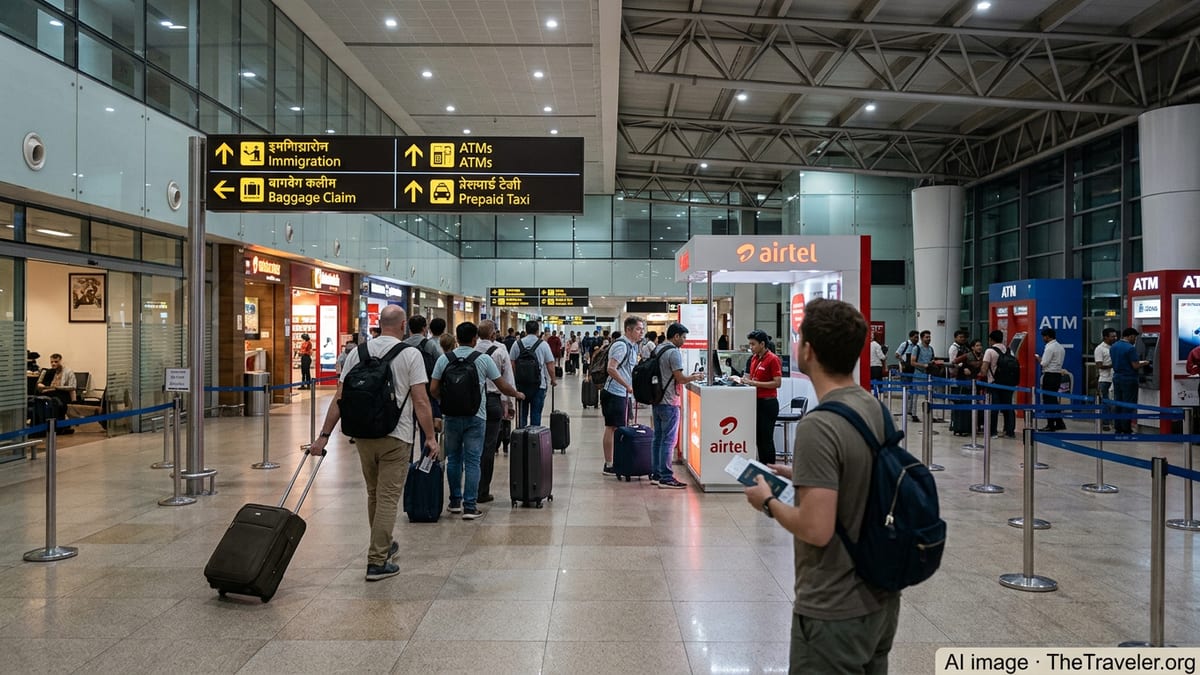
VVIP Movement Adjusted Around Exam Window
According to multiple Indian media reports, the prime minister’s aircraft landed in Delhi around 1:15 p.m. local time, just as last-minute flows of candidates and parents were heading toward examination centers for the National Eligibility cum Entrance Test for undergraduates, commonly known as NEET-UG. With gate closure for many centers scheduled shortly before the 2:00 p.m. start, any VVIP convoy along key arterial roads risked compounding congestion.
Publicly available coverage indicates that Narendra Modi remained at the airport for roughly 45 minutes instead of immediately proceeding to his official residence. The decision was presented as a traffic-management step designed to ensure that the security and traffic protocols associated with his movement did not slow down vehicles carrying exam candidates.
Television channels and online platforms highlighted images of heightened security at Delhi’s exam venues, alongside footage of the prime minister at the airport. The juxtaposition underscored how closely political scheduling had become intertwined with examination logistics on a day when millions of students were attempting to reach centers on time.
Social media discussion quickly amplified the episode, with some users treating it as a symbolic gesture toward anxious candidates and others questioning whether it would have had a practical impact given that many students had already reached their centers early.
NEET-UG Re-Examination After Paper Leak Allegations
The NEET-UG re-exam on June 21 followed weeks of uncertainty after the original test, conducted in early May, was cancelled amid allegations of question paper leaks and broader concerns about irregularities. Publicly available information from education-focused outlets notes that more than 22 lakh candidates had registered to sit the exam again, making it one of India’s largest single-day assessments.
The National Testing Agency scheduled the re-test in pen-and-paper format from 2:00 p.m. to 5:15 p.m. across hundreds of cities in India and a limited number of overseas locations. The afternoon timing, a common feature of NEET-UG, is intended in part to allow candidates from distant or congested areas additional travel time, though many still plan their journeys hours in advance to buffer against transport delays.
The decision to cancel and rerun the exam has carried major consequences for students preparing for entrance into medical, dental and allied health courses. Coaching centers, parents’ groups and student organizations have described the academic year as one of the most stressful in recent memory, with re-planned study schedules, travel costs and accommodation arrangements all needing to be repeated.
On the eve of the re-test, national media reported that the education ministry and testing agency were under significant pressure to demonstrate that the fresh exam would be free from malpractice and logistically smoother than the cancelled attempt.
Security, Surveillance and Transport Measures Tightened
In the lead-up to the re-examination, the National Testing Agency outlined a series of measures intended to protect the integrity of the test and reduce the risk of disruption. Coverage in Indian news outlets indicated that more than 5,000 exam centers were prepared nationwide, with well over 90,000 individual rooms brought under CCTV surveillance for the day.
Reports specified that over one lakh cameras and tens of thousands of signal jammers were deployed, supported by multi-layer monitoring from central and state control rooms. Authorities involved in exam administration emphasized the goal of creating a “candidate-friendly” yet tightly controlled environment, with particular scrutiny on the handling and movement of sealed question paper packets.
State governments, transport corporations and local administrations in several regions also announced steps to assist candidates’ travel. Measures reported in the Indian press included additional bus services on key routes, instructions to traffic police to prioritize exam-bound vehicles, and advisories urging families to leave home early to avoid peak congestion.
The decision to adjust the prime minister’s own movement in Delhi fit within this broader framework of efforts to minimize any avoidable obstacles. While such VVIP traffic management is not unprecedented on major exam days, it attracted heightened attention due to the political sensitivity surrounding the re-test.
Mixed Public Reactions Highlight Exam-Related Tensions
The reported delay in Narendra Modi’s departure sparked a wide range of reactions across social media platforms and discussion forums. Supporters of the move framed it as a considerate step that acknowledged the anxiety of exam candidates and the disruptions many had already endured because of the cancellation of the first NEET-UG attempt.
Critics, however, argued that symbolic gestures on exam day did little to address systemic issues in the conduct of high-stakes national tests. Commentaries in opinion columns and online discussions emphasized ongoing concerns over paper security, last-minute changes to admit cards and occasional mismatches in exam center allotments, including cases where candidates were reportedly assigned centers far from their home cities.
Several posts noted that, by early afternoon, many students were already inside examination campuses, having been instructed to arrive well before the scheduled start. From this perspective, some questioned how much additional congestion a VVIP convoy would in fact have created, and whether other structural improvements in exam administration might offer more meaningful relief to candidates.
The debate reflected broader public scrutiny of the examination ecosystem, where logistical mistakes, real or perceived unfairness and the enormous stakes of medical entrance testing combine to produce intense emotional responses from students and families.
Travel Lessons for Future National Exam Days
For families and students, the events surrounding the NEET-UG re-exam in Delhi provide a stark reminder of the importance of building generous travel buffers on critical test days. Traffic advisories circulated by local administrations repeatedly encouraged candidates to factor in both routine congestion and unexpected events when planning their journeys to centers.
From a broader travel management perspective, the adjustment of high-profile political movements on such days illustrates how urban mobility can be coordinated around mass examination events. Urban planners and transport agencies in India’s largest cities have increasingly treated nationwide exams as comparable to major festivals or sporting fixtures in terms of their impact on daily traffic patterns.
Observers of education and infrastructure policy note that as exam cohorts grow larger, coordination between testing agencies, city traffic police, public transport operators and even airport and rail authorities is likely to become more critical. The Delhi episode involving the prime minister’s delayed departure is expected to be cited in future discussions on how best to prioritize student movement on key academic dates.
For now, the spotlight remains on how smoothly the NEET-UG re-exam has unfolded and whether its conduct restores confidence among candidates who experienced disruption and uncertainty over the past two months.