


More news on this day
Snow and sleet sweeping across North Texas have triggered a ground stop at Dallas Fort Worth International Airport and significant delays at Dallas Love Field, disrupting hundreds of flights and stranding travelers across the region and beyond.
Get the latest news straight to your inbox!
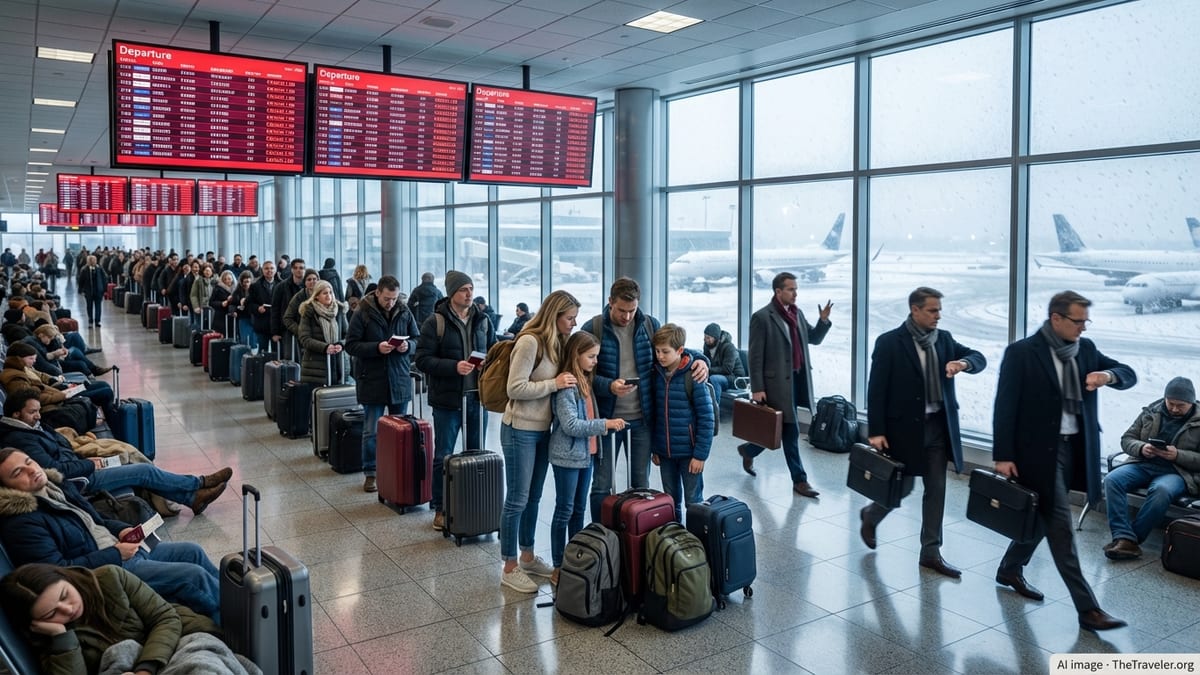
Wintry Mix Brings Operations to a Halt
As a band of winter weather moved over the Dallas Fort Worth area, publicly available aviation data showed inbound flights to Dallas Fort Worth International Airport placed under a ground stop while sleet and wet snow reduced visibility and complicated runway conditions. The temporary pause applied primarily to aircraft bound for DFW that had not yet departed their origin airports, a standard step used when conditions deteriorate rapidly.
Dallas Love Field, the smaller of the region’s two commercial airports, also reported widespread delays as the storm’s mix of frozen precipitation pushed through North Texas. Published coverage indicated that departures faced deicing requirements and longer taxi times, while some arrivals were held at origin airports to ease congestion on the ground.
Local and national flight-tracking dashboards reflected a sharp spike in delays across both airports as the system moved through. The combination of freezing temperatures, intermittent bursts of sleet and snow, and low clouds created a challenging window for keeping arrival and departure banks running on schedule.
North Texas sits on the southern edge of typical winter storm tracks, which means that even relatively modest accumulations of ice or wet snow can disrupt operations. Airport infrastructure and airline schedules in the region are optimized for heat and thunderstorms more than for prolonged wintry conditions, increasing the likelihood of cascading delays when a system like this passes through.
Ripple Effects for Passengers Across the Network
The decision to halt or slow arrivals into a major hub such as DFW has consequences far beyond North Texas. DFW serves as a critical connecting point for domestic and international itineraries, so a bottleneck caused by snow and sleet can quickly translate into missed connections and rolling delays at airports around the country.
According to real-time tracking data, aircraft scheduled to feed DFW’s afternoon and evening departure waves were among the first affected, with aircraft held at outstations to prevent gridlock on taxiways and gate areas. As these flights pushed into later slots, subsequent departures often had to wait for aircraft and crew, compounding the disruption.
At Dallas Love Field, where point-to-point service dominates, passengers faced a different pattern of disruption. Many flights were able to depart once deicing was complete and runways were confirmed clear, but turn times stretched and boarding processes slowed, causing delays to stack up through the day. Travelers on shorter regional hops in particular reported extended waits as aircraft cycled through congestion at both origin and destination airports.
Because the system hit during active travel periods, rebooking options became limited. Publicly available social media posts and traveler forums described long customer service lines and tight seat availability on later flights, especially on routes that depend heavily on DFW as a connecting hub.
Airlines Adjust Schedules and Ground Operations
Airlines serving DFW and Dallas Love Field responded by adjusting schedules, consolidating some flights, and in a number of cases preemptively canceling selected departures to protect the broader network. Published airline advisories pointed travelers toward flexible travel waivers, allowing customers booked into the region to move their trips to alternate days without standard change fees.
On the airfield, ground crews worked within the constraints of winter operating procedures that are less frequently used in North Texas than in colder climates. Deicing operations ramped up where needed, and priority was typically given to flights expected to connect large numbers of passengers or serve limited-frequency routes.
Gate availability emerged as a particular pressure point as arrivals bunching behind the ground stop began to reach the airport. When aircraft could not be brought to a gate immediately, some flights waited on taxiways for space to open, slowing the flow of both arriving and departing aircraft. That in turn affected crew duty times, with some flights ultimately canceled when crews approached regulatory time limits.
Publicly accessible airport dashboards and airline status pages showed that even after the most intense period of sleet and snow passed, residual delays remained significant, reflecting the time required to realign aircraft, crews, and gates after a disruptive weather event.
Advice for Travelers Navigating the Disruptions
With both DFW and Dallas Love Field coping with winter weather challenges, travel analysts recommended that passengers build extra time into their plans and rely on official airline and airport channels for status updates. Same-day itineraries involving tight connections through DFW were identified as particularly vulnerable to disruption as the network absorbed the impact of the ground stop and subsequent delays.
For travelers whose flights were canceled, published guidance from airlines indicated that digital self-service channels such as mobile apps and websites often provided the fastest path to rebooking, especially while phone and in-person support lines experienced heavy demand. Some carriers also pointed passengers toward alternate routings through other hubs less affected by the North Texas storm.
Those with flexibility in their plans were encouraged by widely shared travel tips to consider shifting trips by a day or more, particularly if their travel was discretionary. By spacing out demand and freeing up limited seats, such adjustments can help ease congestion for passengers who must travel immediately, including those connecting to international journeys or time-sensitive events.
Observers noted that winter storms in typically milder regions highlight the value of travel insurance and credit-card protections that can offset out-of-pocket costs for hotels, meals, and ground transportation during extended disruptions. Even when weather is the underlying cause, which generally limits automatic compensation, some policies provide partial reimbursement for unexpected expenses.
North Texas Weather Remains a Wild Card
The episode underscores how volatile winter weather in North Texas can be for air travel. While the region is far more accustomed to managing spring and summer thunderstorms, the relatively rare combination of freezing temperatures and mixed precipitation can be more disruptive than heavier snowfalls in cities better equipped for such conditions.
Historical analyses of winter events in the Dallas Fort Worth area have documented that shallow layers of cold air near the surface often produce ice and sleet instead of dry snow, creating slick surfaces and quickly degrading braking conditions on runways and taxiways. When that occurs at busy hubs, air traffic managers typically turn to ground stops and ground delay programs to keep the system orderly and safe.
Forecast discussions indicated that the latest storm system would move eastward after dropping its wintry mix over North Texas, with improving conditions expected once temperatures rise and precipitation shifts away. However, the broader U.S. network may continue to experience knock-on effects for several scheduling waves as aircraft and crews return to normal rotations.
For now, travelers bound to or through DFW and Dallas Love Field are being advised, through publicly available alerts and airline messaging, to monitor their itineraries closely and prepare for the possibility that winter’s grip on North Texas could alter their plans with little notice.