


Rome is one of those cities that can overwhelm first-time visitors in the best and worst ways at once. Ancient ruins outside your hotel, world-famous art in churches you just wander into, food that ruins you for your local pizza forever; but also confusing tickets, unpredictable crowds, and public transport that is not always intuitive. This guide is designed to help you plan a realistic, stress-light first visit to Rome with current, on-the-ground details for 2026.
Get the latest updates straight to your inbox!
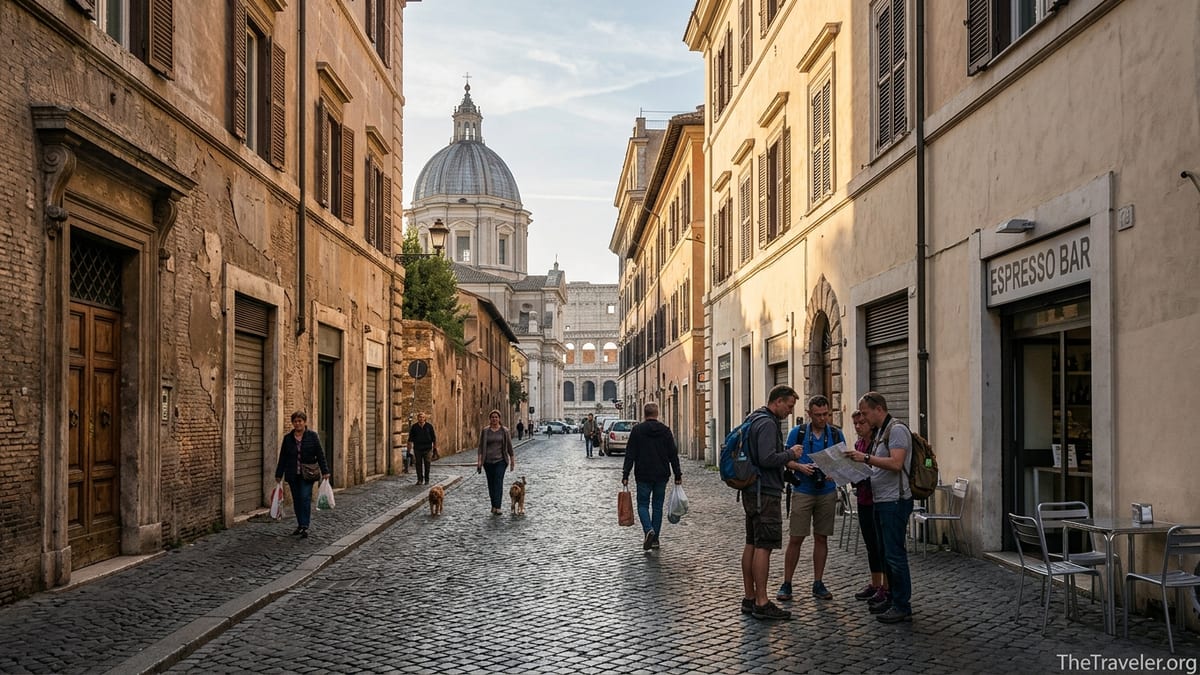
Choosing When to Go and Where to Stay
For a first trip to Rome, timing shapes almost everything about your experience. April to early June and late September to October generally offer the best compromise of pleasant temperatures, lighter humidity and manageable crowds. In July and August, daytime highs regularly climb above 32°C and pavements radiate heat, which can make climbing the Palatine Hill at midday a slog even for fit travelers. Winter from November to February is cooler and wetter but often cheaper, with shorter lines at major sights except during Christmas and New Year.
Accommodation prices fluctuate widely by season. A midrange three-star hotel near Termini might cost around 120 to 160 euros per night in March, jumping to 220 euros or more in May. On top of this, Rome charges a city tourist tax per person, per night, which in practice often falls between about 5 and 10 euros depending on the property class. Many hotels now write this clearly on booking confirmations, and it is usually paid in cash or by card at checkout, separate from your room rate, so it is worth setting aside a small budget line just for local taxes.
Picking the right neighborhood is more important than shaving a few euros off your nightly rate. For first-timers, the historic center between Piazza Navona, the Pantheon and Campo de’ Fiori is ideal if your budget allows it. You can walk to most major sites in 15 to 20 minutes and still find small alimentari grocery shops to buy water, fruit and snacks at local, not tourist, prices. Trastevere on the other side of the Tiber offers a slightly bohemian feel with cobbled lanes and a dense cluster of trattorie. It is lively at night, so guests who value quiet should ask for rear-facing rooms or choose streets a few blocks away from the main bar areas.
Termini, the main rail hub, often offers the best value and excellent transport connections, but streets immediately around the station can feel gritty, especially at night. Many first-time visitors choose a compromise by staying a ten-minute walk from Termini toward Piazza della Repubblica or Monti. Monti, the neighborhood just behind the Colosseum and Cavour metro stop, has become particularly popular with first-time visitors because it feels local but central. You might, for example, stay in a guesthouse near Via Panisperna where you can grab an early-morning espresso at a corner bar and then walk ten minutes straight to the Roman Forum entrance.
Essential Sights and How to See Them Smartly
Almost every first-time Rome itinerary includes the Colosseum, the Roman Forum, Palatine Hill, the Vatican Museums, St Peter’s Basilica, the Pantheon, Trevi Fountain and the Spanish Steps. The difficulty is rarely deciding what to see, but in what order and how to handle tickets so you spend more time exploring and less time queuing. For the Colosseum, the official Parco archeologico del Colosseo ticket site currently offers several main ticket types for 2026, including a standard 24-hour entry ticket at around 18 euros and various “Full Experience” options around the low 20s that add arena floor, underground or attic access. These official tickets include the Roman Forum and Palatine Hill within the same pass, which is why they are significantly cheaper than many reseller “skip the line” offers that can exceed 40 or 50 euros for similar entry.
As a practical strategy, many visitors book an early time slot, around 8:30 or 9:00 in the morning, to enter the Colosseum before the sun becomes strong. Afterward they continue directly into the Forum and then climb the Palatine Hill when the breeze has picked up and there is more shade. A common rookie mistake is to schedule the Colosseum and Vatican Museums on the same day. While it is technically possible, each site easily fills half a day when you factor in security lines, walking and recovery breaks. Most first-timers who attempt both in one day report that they remember little beyond being hot and tired.
For the Vatican Museums, the official site typically releases dated tickets with timed entry slots from early morning until late afternoon. Standard timed-entry tickets for 2026 generally run in the low to mid 20-euro range for adults. A popular pattern is to book a mid-morning visit, say 10:30, arrive 30 minutes early to clear security, spend two to three hours in the galleries and Sistine Chapel, then exit and walk around to St Peter’s Basilica. Entry to the basilica remains free, although you must pass through airport-style security and lines can extend across St Peter’s Square at midday. Many visitors find the climb to the dome, which has a small fee payable locally, worthwhile for panoramic views over Rome’s rooftops.
Smaller sites reward unstructured time. First-time visitors often remember ducking into Santa Maria della Vittoria to see Bernini’s Ecstasy of Saint Teresa or standing under the oculus of the Pantheon on a rainy day as vividly as their Colosseum photos. Because sites like the Pantheon, Trevi Fountain and Piazza Navona are outdoors and open access, you can plan to pass them more than once, at different times of day. Seeing Trevi Fountain at 7:30 in the morning when cleaners are still washing the travertine is a dramatically different experience from squeezing in at 10 p.m. when tour groups and gelato-holding crowds pack the square.
Getting Around: Metro, Buses, Walking and Taxis
Rome is more walkable than it looks on a map, and most first-time visitors end up walking between 15 000 and 25 000 steps per day without realizing it. That said, understanding local transport saves your legs and time. The integrated public transport ticket known as the BIT currently costs about 1.50 euros and is valid for 100 minutes from first validation, covering one metro ride plus unlimited bus and tram transfers within that time window. For a visitor who plans two or three transport journeys per day, this can be cost-effective, but tickets must be validated in the yellow or orange machines on buses or at metro turnstiles. Ticket inspectors conduct spot checks, especially on busy tourist routes, and on-the-spot fines for nonvalidated or missing tickets are substantially higher than the ticket cost.
For heavier days of sightseeing, 24-hour or multi-day passes can work out cheaper than multiple single BIT tickets. As a rough guide, a Roma 24H ticket is usually priced a little above the cost of five singles, while a 48-hour or 72-hour pass climbs proportionally, often appealing to visitors staying near a metro line who plan to cross the city several times per day. The city has also rolled out a Tap & Go system that allows contactless payment cards or phones to act like tickets at metro gates and on some buses. In practice, if you tap the same card repeatedly within 24 hours, the system caps your spend at the price of a day ticket, so a traveler making multiple hops between, say, Monti, Vatican City and Trastevere can simply tap their bank card without hunting for a ticket machine.
As of 2026, three metro lines operate: Line A (orange), Line B (blue) and Line C (green-ish). Line B connects Termini with Colosseo in just two stops and continues to Piramide for the Ostiense train station, handy if you are taking a regional train toward Ostia Antica or the coast. Line A runs to Ottaviano, the stop for the Vatican Museums and St Peter’s Basilica. Line C has been progressively extended and now offers an interchange with Line B near the Colosseum area, which simplifies crossing the city without backtracking to Termini. Buses and trams fill in gaps, especially for reaching Trastevere, Testaccio or the Appian Way. Google Maps or local apps often show real-time arrivals, but visitors quickly learn to treat them as estimates rather than promises.
Taxis in Rome are regulated and use meters. You can pick them up at marked taxi stands near major squares and stations or request one via phone or app. From central Rome to the Vatican area, a daytime ride might cost between 10 and 18 euros depending on traffic. From Termini to Trastevere, expect something in the 12 to 20 euro range. The city also maintains fixed fares from Fiumicino Airport to the historic center, which are usually posted inside licensed white taxis; drivers should not add extra charges for luggage within that zone. Ride-hailing services exist but often operate through local taxi cooperatives rather than independent fleets, so wait times during rush hours can be inconsistent.
Budgeting: Typical Costs, Tickets and Daily Expenses
For a first-timer, Rome is rarely a “cheap” city, but it can be good value if you know where typical costs sit. A realistic midrange daily budget per adult, excluding flights but including lodging, food, public transport, museum tickets and some gelato, might fall somewhere between 130 and 220 euros depending on your hotel category. At the lower end, you might share a simple guesthouse in San Giovanni and eat at neighborhood trattorie, while at the higher end you might stay in a boutique hotel near Piazza Navona and book a couple of guided tours.
Food is one area where expectations can clash with reality. A cappuccino at a neighborhood bar where locals stand at the counter might cost 1.40 to 1.80 euros. The same drink, if you sit at a table on Piazza Navona and order from a printed English menu, could easily run to 4 or 5 euros plus a service charge. A typical pizza at a modest sit-down pizzeria in Testaccio might cost 9 to 12 euros, with a liter of house wine for 8 to 12 euros shared between two people. By contrast, a view-heavy rooftop restaurant near the Spanish Steps can charge 18 to 25 euros for a similar style of pizza and 10 euros or more per glass of wine. Spotting the difference between places aimed at commuters on their lunch break and those designed for one-time visitors is one of the most valuable first-day skills you can develop.
Museum and attraction tickets add up quickly, so it helps to group sights by cost and proximity. If you are planning to visit the Colosseum/Forum/Palatine, the Vatican Museums, Galleria Borghese and one or two smaller paid sites like Castel Sant’Angelo, it is worth comparing the total against city passes such as Roma Pass or other combined cards. A typical 72-hour Roma Pass includes two free museum entries plus unlimited public transport for a price that often lands somewhere in the mid-50-euro range. For many first-timers who schedule their two most expensive sites within the validity period, this pass effectively covers transit and saves modestly on tickets, but it will not make sense for very short stays or extremely low-key itineraries.
Remember that some of Rome’s best experiences are free or almost free. Sitting on the steps outside Santa Maria in Trastevere listening to a busker, browsing market stalls at Campo de’ Fiori before they shut down around lunchtime, or watching kids play soccer in Piazza del Popolo costs little beyond perhaps a takeaway coffee or slice of pizza al taglio. On Sundays when Via dei Fori Imperiali is closed to much of the traffic, walking the avenue between Piazza Venezia and the Colosseum can feel like strolling through an open-air museum without ever scanning a ticket.
Eating and Drinking Like a Local
Roman food shines when it is simple. The classic quartet of pasta dishes you will see everywhere are cacio e pepe, carbonara, amatriciana and gricia. In a neighborhood trattoria in Testaccio or Garbatella, a plate of carbonara based on eggs, pecorino romano and guanciale might cost 11 to 15 euros and arrive still glossy from the emulsified sauce rather than heavy with cream. If you sit down and see carbonara listed with cream in the ingredients in English, that is usually a sign the place is more focused on tourists than on Roman tradition. For first-timers, one memorable evening might be built around a slow dinner of shared antipasti, two pastas and a carafe of house wine on a side street in Trastevere rather than on the main square where menus in five languages compete for your attention.
Eating hours differ slightly from many Anglo-American habits. Romans typically have lunch between 1 and 2:30 p.m. and dinner from 8 p.m. onward. Restaurants in highly touristed zones will seat earlier, but if you walk into a popular Monti trattoria at 7 p.m. and it is empty while the staff are still eating together, you are simply early. Many small places close one day per week, often Monday or Wednesday, and some shut between lunch and dinner. Planning at least a couple of reservation-backed dinners, especially on Friday and Saturday nights, can avoid the frustration of wandering hungry at 9 p.m. and finding every appealing spot fully booked.
Street food and informal snacks are part of the fun. Pizza al taglio, sold by weight from large rectangular trays, makes a quick lunch between the Vatican and Castel Sant’Angelo; you might point at a slice of potato and rosemary pizza, ask for “due euro,” and receive a paper-wrapped portion tailored to that price. Supplì, deep-fried rice balls usually filled with tomato and mozzarella, are a classic Roman snack that often cost around 2 to 3 euros in neighborhood pizzerias. For gelato, a good rule of thumb is to gravitate toward shops where flavors look natural rather than neon-bright and where pistachio is a muted green-brown instead of electric green. Paying 3 to 3.50 euros for a medium cone in 2026 is normal in central areas; prices far above that may signal a tourist trap.
Ordering coffee comes with its own etiquette. At a typical bar, locals pay first at the cassa, take the receipt to the counter, then order from the barista. Drinking your espresso standing at the counter costs less than sitting; some bars apply a separate “table service” price list. Asking for a “latte” will get you a glass of milk, so specify “caffè latte” or “cappuccino.” Italians generally avoid ordering cappuccino after late morning, though baristas in tourist areas will oblige without comment. Adopting a few of these habits, such as standing at the bar for your morning coffee and cornetto, quickly shifts you from feeling like an outsider to feeling like a temporary local.
Practical Tips: Safety, Scams and Local Etiquette
Rome is broadly safe, but petty crime targets the distracted, especially first-time visitors around Termini, on busy buses and near major attractions. Pickpocketing is more common than violent crime. On metro Line A between Termini and Ottaviano, you might feel a sudden press of people as the train doors close; experienced locals instinctively place a hand on zippers and bags at these moments. Wearing a small crossbody bag kept in front of you, avoiding back pockets for phones and wallets, and leaving passports and large sums of cash in your hotel safe reduce your risk significantly without requiring you to feel paranoid.
A handful of recurring scams catch new visitors. Around the Colosseum and Vatican, unofficial touts approach with laminated badges and lines like “The ticket office is closed, I help you skip line.” While some of these sellers represent genuine agencies, prices are often heavily marked up, and information can be misleading. For instance, many first-timers have been sold “skip-the-line” Colosseum tours at two or three times the official price under the suggestion that regular tickets are no longer available. In reality, official tickets may sell out for certain dates or time slots, but alternatives like different times or less in-demand ticket types often exist if you check directly through official outlets or reputable agencies.
Another common issue involves restaurant practices in high-traffic areas. While a coperto, or cover charge, of one or two euros per person is standard in many Italian regions, some tourist-zone restaurants in Rome layer on additional service fees or inflated charges for bread and table water. Before sitting, look at the menu for clear pricing and check whether service is included. If a server brings a large bottle of still water and a bread basket without asking, you can politely decline them if you prefer not to be charged. At the end of the meal, Italians commonly ask for the bill by saying “Il conto, per favore” rather than waiting indefinitely; in busy restaurants, the bill will not appear automatically the moment you put your fork down.
Respectful dress and behavior go a long way. In churches like St Peter’s Basilica or Santa Maria Maggiore, shoulders and knees should be covered; carrying a light scarf or shawl in summer makes this easy. Speaking quietly is appreciated in churches and on public transport. When entering small shops, greeting the staff with a simple “Buongiorno” or “Buonasera” and saying “Grazie” on your way out, even if you do not buy anything, fits local expectations of politeness more than anonymous browsing. At busy gelato counters or coffee bars, it is normal for the person who makes eye contact with the server first to order, rather than relying on strict queuing; watching locals for a minute or two before jumping in can clarify the rhythm.
Planning Your First Three Days in Rome
Putting all of this together, a simple three-day structure works well for many first-time visitors. On Day 1, after arrival and check-in, stay mostly outdoors to fight jet lag. Wander your neighborhood, locate the nearest supermarket for water and basic supplies, and aim for low-pressure sightseeing like the Spanish Steps, Trevi Fountain and the Pantheon. Many travelers enjoy an early walk from Piazza del Popolo down Via del Corso as shops start to close, ending with a casual dinner in a side street trattoria and an early night. This first afternoon is also a good time to buy public transport tickets or test the Tap & Go system on a short metro ride.
Day 2 can focus on Ancient Rome. Book a timed-entry Colosseum ticket for early morning. After exploring the arena and upper levels if included in your ticket, continue into the Roman Forum and then up to the Palatine Hill, finding a shaded bench with a view of the Circus Maximus or the dome-filled skyline for a picnic lunch bought from a nearby bakery. In the cooler late afternoon, you might walk down to the Tiber and across to Trastevere, exploring alleys around Piazza di Santa Maria in Trastevere, before sitting down for a dinner of Roman specialties like cacio e pepe and carciofi alla romana.
Day 3 is often devoted to the Vatican. With a timed-entry ticket to the Vatican Museums in the morning, you can move at your own pace through the galleries, Sistine Chapel and courtyard, pausing for a coffee break at the cafeteria if needed. Exiting toward St Peter’s Basilica, you can queue for security, step inside the vast nave, and decide whether to climb the dome. Afterward, cross the river via Ponte Sant’Angelo, whose statues glow in late-afternoon light, and meander back toward the historic center through Piazza Navona or Campo de’ Fiori. If you have a fourth day, this can be reserved for Galleria Borghese, the Appian Way by rented bicycle or e-bike, or a half-day trip to Ostia Antica to wander remarkably intact ancient streets at a slower pace.
Throughout these days, build in small margins for rest and unplanned discoveries. Allow an extra 15 minutes for metro changes, embrace the occasional bus delay as an excuse to study daily life around you, and accept that you may not see everything on a single trip. Many travelers find that their first visit to Rome is as much about learning how they like to travel as it is about ticking off a checklist of famous sites. Leaving a museum or neighborhood “for next time” is not a failure but a reason to return.
FAQ
Q1. How many days should a first-time visitor spend in Rome?
Most first-time visitors find that three full days on the ground is the minimum to see major sights without rushing, while four or five days allows time for neighborhoods, smaller churches and perhaps a short side trip.
Q2. Do I need to book Colosseum tickets in advance?
Yes, for most of the year it is smart to book Colosseum tickets in advance, especially popular options like Full Experience or underground tours, which can sell out days or weeks ahead for peak dates.
Q3. Is the Roma Pass worth it for a first visit?
Roma Pass can be good value if you plan to use public transport daily and visit at least two of the more expensive sites within 48 or 72 hours, such as the Colosseum complex and Galleria Borghese, but it is less useful for very short or very relaxed itineraries.
Q4. What is a reasonable daily budget for Rome?
A typical midrange traveler might budget between 130 and 220 euros per person per day in 2026, including accommodation, food, local transport, attraction tickets and small extras, but excluding flights.
Q5. Is tap water safe to drink in Rome?
Yes, tap water in Rome is generally safe to drink, and the city’s stone drinking fountains, known as nasoni, provide continuously flowing potable water, which helps reduce spending on bottled water.
Q6. How should I get from Fiumicino Airport to the city center?
From Fiumicino you can choose between the express train to Termini, regional trains to stations like Trastevere, airport buses that take a bit longer but cost less, or fixed-fare licensed taxis directly to central hotels.
Q7. What should I wear to visit churches like St Peter’s Basilica?
Dress codes require shoulders and knees to be covered for both men and women, so carrying a light scarf or shawl and avoiding very short shorts makes it easy to enter major churches without issue.
Q8. Are credit cards widely accepted in Rome?
Credit and debit cards are widely accepted in hotels, main restaurants and larger shops, and contactless payments are common, but it is still wise to carry some cash for small bars, market stalls and occasional minimum-spend policies.
Q9. Is Rome safe to walk around at night?
Central neighborhoods like the historic center, Trastevere and Monti are usually lively and feel safe into the evening, though you should use normal city awareness, avoid unlit side streets and keep valuables secured against pickpockets.
Q10. Do I need to speak Italian to get around?
No, you can get by with basic English in most tourist-facing situations, but learning a handful of Italian phrases such as greetings, please and thank you is appreciated and often leads to warmer interactions.