


More news on this day
British police and emergency services are responding to reports of a collision involving two trains in the Bedford area north of London, prompting major disruption on rail links serving the capital and nearby Luton Airport.
Get the latest news straight to your inbox!
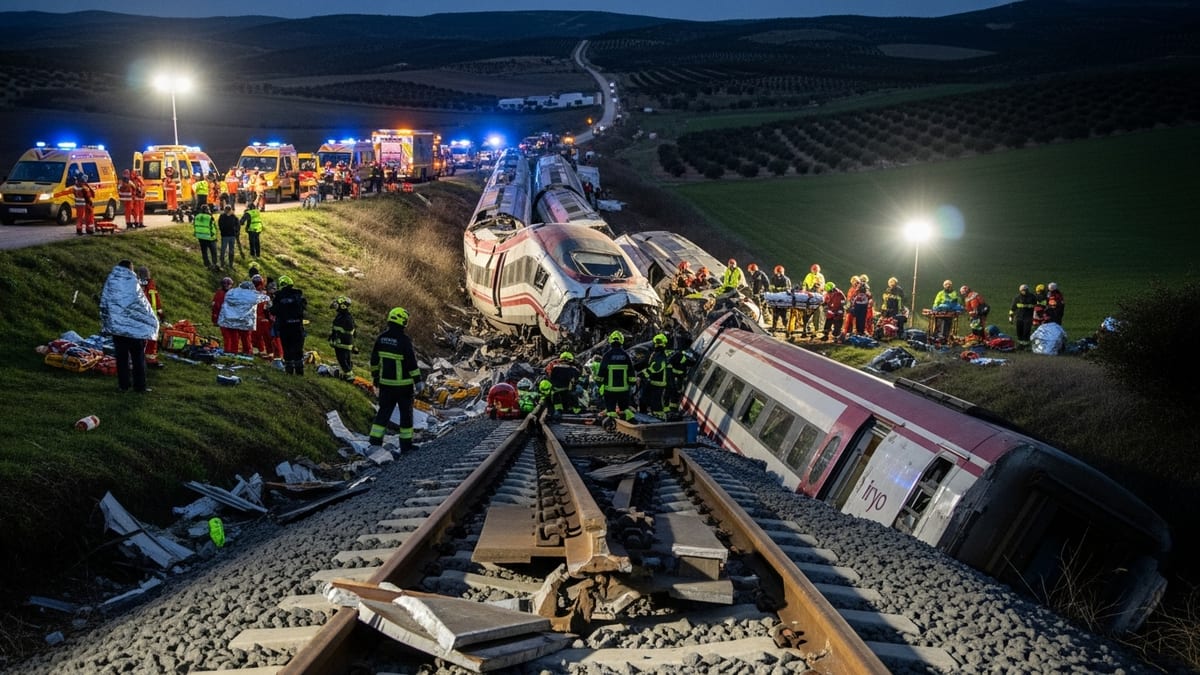
Early reports of collision on busy northbound route
Initial information from publicly available coverage indicates that the incident was reported early Friday evening in the Bedford area, a key stretch of line on the route between London St Pancras and the English Midlands. Rail operators and transport alerts describe it as a collision involving two trains, with one identified in reports as a Luton Airport Express service.
Bedfordshire emergency services were deployed shortly after the first calls, with fire and rescue crews, police and medical responders all described as attending the scene. Coverage indicates the incident was reported around 6:45 p.m. local time, suggesting that many passengers may have been traveling at the height of the evening commute or heading to and from Luton Airport.
Images and video circulating on social media, referenced in multiple news reports, appear to show at least one damaged train upright on the tracks and a number of people seated or standing in an adjacent field. The material suggests that passengers were led from the trains to a safe area while responders assessed the situation.
At the time of writing, publicly available reports focus primarily on the scale of the operational response and the disruption to rail services, with few verified details yet on the full sequence of events leading up to the collision.
Disruption to Luton Airport links and Midland mainline services
The affected section of track is part of the mainline linking London St Pancras with key destinations to the north including Bedford and Leicester. According to rail operator statements cited in news coverage, services were suspended or severely reduced while the route was closed to allow emergency access and initial safety checks.
Passengers heading to and from Luton Airport are among those experiencing immediate disruption. The Luton Airport Express connects the capital with the airport’s parkway station, and any interruption to that corridor can quickly affect airline passengers planning tight connections between train arrivals and flight departures.
Journey planners and rail information feeds referenced in early reports advise travelers not to attempt to travel through the affected area and to expect extended journey times, diversions, or last-minute cancellations on services that normally use the line. Some operators have indicated that ticket acceptance has been broadened on alternative routes, although capacity on diversionary lines is limited at peak times.
For rail users across the wider network, the incident adds strain to a corridor already operating near capacity on a typical weekday evening, increasing the likelihood of knock-on delays well beyond the immediate area of the collision.
Visible scene response and passenger evacuation
Footage and images shared publicly show a substantial on-the-ground presence, with multiple emergency vehicles positioned near the line and responders working alongside the tracks. Passengers visible in these images appear calm but shaken, seated on the grass or standing in small groups while awaiting further instructions.
Based on these visuals and media descriptions, passengers were evacuated from at least one of the trains and guided to a nearby field, a standard precautionary measure to keep people at a safe distance from the track while assessments are carried out. Rail incidents involving collisions or suspected damage to rolling stock typically require checks for fuel leaks, electrical hazards and structural instability before anyone is allowed to reboard or pass close to the trains.
Information emerging so far has not detailed the full scale of any injuries. Some reports suggest that medical personnel have assessed individuals at the scene, but comprehensive figures on those requiring treatment or hospital transfer have not yet been consolidated in publicly available sources.
Rail safety specialists note that even lower-speed collisions can lead to a range of injuries, from minor impact-related issues to more serious trauma, particularly in standing-room areas or at doors and vestibules. The priority in the early phase is to identify anyone in urgent need of care while ensuring that the site remains safe for both responders and passengers.
Investigation likely to focus on signalling and train movements
While it remains too early for any definitive account of the cause, previous investigations into rail collisions in the United Kingdom suggest that attention is likely to focus on signalling systems, train movements and communication protocols. Historically, serious incidents have prompted detailed examination of whether signals were correctly displayed and observed, whether control instructions were properly followed and whether any technical faults or human errors played a role.
Published records from past British rail accidents have led to significant changes in safety systems, including the wider adoption of automatic warning and train protection technology designed to reduce the risk of collisions on busy main lines. In many cases, investigators have highlighted the importance of built-in redundancies intended to prevent a single error from leading to a serious incident.
In the present case, specialist teams from relevant rail and safety bodies are expected, according to standard practice, to secure data from onboard recording systems, signalling logs and communications. They typically combine this technical information with witness accounts and physical examination of track, trains and surrounding infrastructure to build a comprehensive timeline of events.
Any interim findings, once available, are usually shared through official channels, with full reports often taking months to finalize. These documents can lead to recommendations on infrastructure upgrades, training, maintenance procedures or operational rules designed to further reduce collision risk.
Travel advice and broader implications for rail safety
For travelers, immediate guidance from rail operators and transport information platforms continues to emphasize checking live updates before setting out, allowing more time for journeys and considering alternative routes where available. Passengers with time-sensitive connections, such as flights from Luton Airport or onward long-distance rail and coach services, are being advised through public channels to explore rebooking options and to stay alert to changing conditions on the line.
From a wider perspective, the incident is likely to fuel renewed discussion around capacity and resilience on key rail corridors north of London. With increasing reliance on rail as a lower-carbon mode of travel, any collision that forces an extended closure highlights the vulnerability of routes that lack robust diversion options or spare capacity during peak travel periods.
Transport analysts frequently point out that maintaining and modernizing signalling systems, managing congestion and ensuring sufficient recovery options after incidents are critical to both safety performance and passenger confidence. Even when injuries are limited, high-profile disruptions can influence traveler perceptions and spur calls for faster implementation of safety technology and infrastructure upgrades.
As more detailed information emerges in the coming hours and days, travelers and residents in the affected area will be watching closely for updates on the condition of those involved, the status of the rail line and any early indications of the underlying causes. For now, publicly available reports portray a serious operational incident that has drawn a significant emergency response and brought one of the capital’s most important rail arteries to an abrupt halt.