


More news on this day
Port Canaveral has achieved Green Marine environmental certification for the 10th consecutive year, underscoring the central Florida cruise hub’s long-running effort to pair rapid growth with measurable sustainability performance.
Get the latest news straight to your inbox!
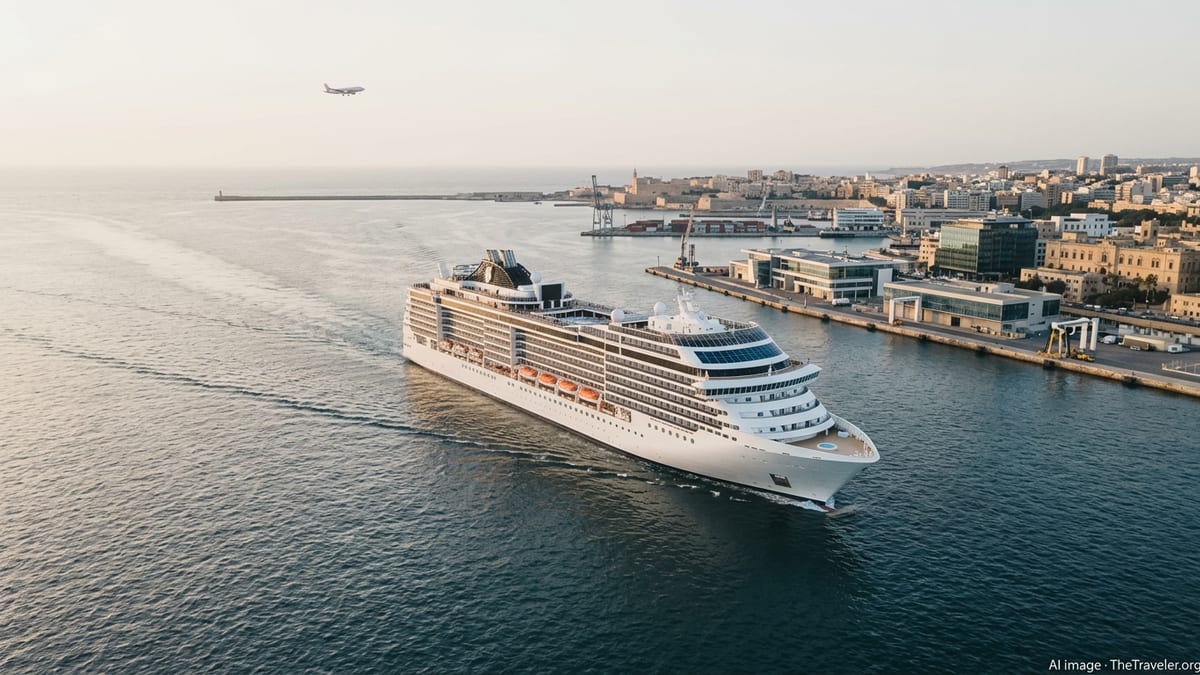
A Decade of Certified Environmental Performance
Publicly available information indicates that Port Canaveral first joined the Green Marine environmental certification program in 2015, becoming one of the early U.S. ports to sign on to the voluntary initiative targeting reduced environmental impact. Since then, the port has maintained its participation annually, and the latest recertification marks a full decade of continuous compliance with Green Marine’s evolving performance indicators.
Green Marine is a North American environmental certification program created specifically for the marine industry. It assesses ports, terminals, shipyards and ship operators on issues that include air emissions, greenhouse gases, spill prevention, waste management, community impacts and habitat protection. Participants commit to going beyond regulatory minimums and are graded on a scale that encourages year-over-year improvement rather than simple pass or fail status.
For Port Canaveral, the 10th consecutive certification comes at a time when its overall activity is expanding. Recent public reports show the port handled a record 8.6 million cruise passenger movements in fiscal 2025 and has been recognized as the world’s busiest cruise port by passenger volume. Sustaining Green Marine standards amid that growth has become a key part of the port’s public narrative around responsible expansion.
The achievement also places Port Canaveral within a relatively small group of large-scale cruise homeports that can point to a decade-long track record of third-party environmental benchmarking. As competition intensifies among Florida cruise ports, the combination of volume leadership and recurring certification has become a differentiating factor in how the port presents itself to cruise lines and travelers.
What Green Marine Certification Requires
According to Green Marine program documents, participating ports undergo a structured self-evaluation each year against a detailed set of environmental performance indicators. Those results are then subject to independent verification on a regular cycle, and scores are published by the program to promote transparency and comparison among participants.
The performance indicators cover a spectrum of operational impacts. On the air side, ports are evaluated on measures related to greenhouse gas emissions, other air pollutants and energy efficiency initiatives. For water and soil, the program looks at stormwater management, spill prevention and control, and practices designed to limit contamination during cargo handling and vessel operations.
Additional indicators target community relations and biodiversity, areas that have taken on greater prominence as cruise and cargo activity has intensified near populated coastal areas. Noise management, traffic impacts, light pollution and engagement with surrounding communities can all affect how ports are scored under the program’s criteria.
The escalating nature of the Green Marine scale means that maintaining the same level of certification over a 10-year period typically requires new or upgraded initiatives, not simply preserving the status quo. For Port Canaveral, successive recertifications suggest that internal policies, capital projects and day-to-day practices are being adjusted over time to meet higher benchmarks as they are introduced.
Key Environmental Initiatives at Port Canaveral
Port Canaveral’s own environmental materials highlight a portfolio of initiatives that align closely with Green Marine’s focus areas. The port emphasizes stormwater controls, shoreline and habitat conservation, and measures aimed at minimizing the impact of heavy cruise and cargo traffic on the surrounding Indian River Lagoon and nearby coastal ecosystems.
Recent reporting on the port’s activities points to technology-driven projects such as smart stormwater ponds, which use sensors and automated controls to manage water levels and improve treatment performance ahead of major rainfall events. Those systems are intended to reduce pollutant loading into adjacent waterways, a critical issue for a region that relies heavily on both tourism and coastal biodiversity.
The port has also invested in more efficient cargo and cruise infrastructure, including upgraded berths and handling equipment that can support modern vessels with lower emissions profiles. While shore power for cruise ships has not yet been widely deployed at Florida ports, planning and design work cited in public documents indicates that Port Canaveral is evaluating electrical and fueling options to accommodate changing ship technologies, including liquefied natural gas propulsion.
On the landside, parking expansions and transportation improvements are being framed in part as environmental projects, with an emphasis on smoother traffic flows, reduced idling and better integration with regional road networks. These efforts are increasingly relevant as the port’s record cruise volumes translate into more vehicle movements on peak embarkation and debarkation days.
Implications for Cruise Travelers and the Region
For cruise passengers sailing from Port Canaveral, Green Marine certification is largely invisible in day-to-day trip planning. However, the port’s decade-long tenure in the program is becoming part of its broader marketing message, particularly as travelers and cruise brands place more weight on environmental credentials when comparing homeports.
The certification also carries weight with cruise lines that are expanding fleets of LNG-fueled and more energy-efficient vessels. Ports that can demonstrate a structured approach to environmental management may be better positioned to attract next-generation ships seeking partners that align with their own emissions-reduction strategies and public commitments.
For the surrounding region, continued participation in Green Marine provides an external framework for tracking how one of Florida’s most economically significant ports manages its environmental footprint. Local residents and businesses, who experience both the benefits and the pressures of increased cruise and cargo traffic, gain an additional reference point beyond general sustainability statements.
At the state level, Port Canaveral’s performance feeds into a wider conversation about how Florida’s seaports balance growth with coastal resilience and ecosystem protection. As climate impacts, sea-level rise and water quality concerns intensify along the Atlantic coast, ports that can demonstrate verified, long-term progress on environmental indicators are likely to play a larger role in regional planning and policy discussions.
A Benchmark for Other Cruise Homeports
Port Canaveral’s 10th consecutive Green Marine certification positions the port as a benchmark for other cruise-focused gateways in North America that are contemplating or expanding their participation in environmental rating systems. While several ports and terminals have joined Green Marine in recent years, relatively few cruise-heavy homeports combine top-tier passenger volumes with such a long run of verified performance.
The achievement comes as Port Canaveral continues to collect industry recognition for its operational success, including recent rankings that place it at or near the top of North American homeport lists. The ability to pair those accolades with consistent environmental certification supports the port’s efforts to present itself as both a commercial leader and a sustainability-focused operator.
For the cruise sector more broadly, the milestone underscores how voluntary programs like Green Marine are becoming part of the competitive landscape. Ports now face pressure not only to add capacity and streamline embarkation, but also to show measurable progress on climate, water quality and community impacts. Port Canaveral’s decade-long record within the program illustrates how environmental performance is increasingly woven into the business case for major homeports.
As more ports consider similar pathways, Port Canaveral’s experience over the last 10 years is likely to be watched closely, both for the specific technologies and policies it adopts and for how those choices resonate with cruise lines, regulators and travelers.