


More news on this day
Scoot is preparing to scale back capacity on its Tokyo Narita to Singapore route from 2027, with the service expected to operate six times per week instead of its current daily schedule, reflecting a recalibration of the low cost carrier’s Japan network as new services and shifting travel patterns reshape demand.
Get the latest news straight to your inbox!
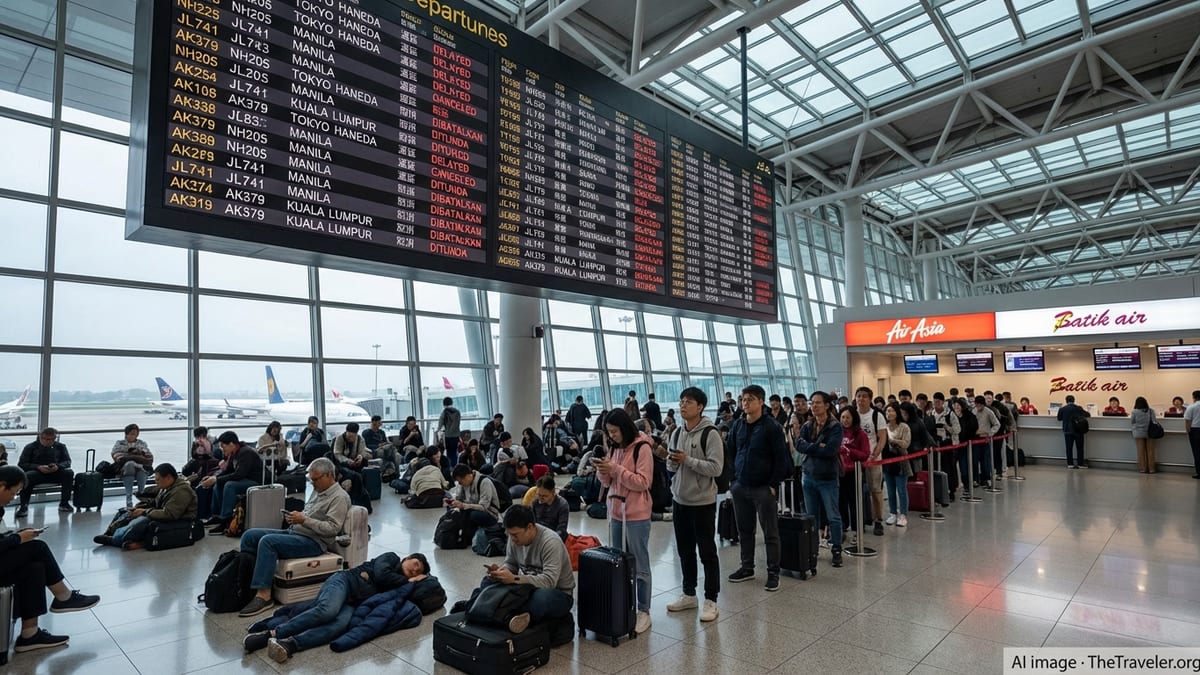
Shift From Narita As Scoot Builds Presence At Tokyo Haneda
The reduction in Tokyo Narita to Singapore frequencies from 2027 comes against the backdrop of Scoot’s broader move to strengthen its position at Tokyo Haneda, a more centrally located airport that is often preferred by business and leisure travelers seeking easier access to downtown Tokyo. Publicly available information in recent years has highlighted Scoot’s launch of direct Singapore–Tokyo Haneda services and the progressive build-up of that route as part of the airline’s post‑pandemic recovery strategy.
Industry schedule data and prior network announcements show that Scoot’s Japan coverage has been shifting from a Narita‑centric model to a more diversified footprint across Haneda, Sapporo and Okinawa, as well as existing Narita services routed via Taipei. Against this backdrop, trimming Narita to six weekly services appears aligned with an emphasis on yield management and better aircraft utilization, rather than a simple withdrawal from the Tokyo market.
The adjustment also mirrors a wider trend in the region where airlines recalibrate capacity between Tokyo’s two main airports, balancing higher operating costs and limited slots at Haneda with the strong passenger preference it commands. For Scoot, a measured reduction at Narita while sustaining new capacity at Haneda points to a portfolio approach to Tokyo, rather than reliance on a single gateway.
For travelers, this may result in more choice over which Tokyo airport to use, but slightly reduced flexibility on specific days for those who prefer Narita, especially during peak holiday periods when remaining seats on the six weekly flights could tighten.
Network Optimisation And Fleet Planning Behind The Cut
The planned step down to six weekly Narita services from 2027 also fits into Scoot’s ongoing fleet and network optimisation. Recent public disclosures from the Singapore Airlines Group, Scoot’s parent company, outline fresh orders for Airbus A320neo family aircraft alongside continued deployment of Boeing 787s on higher‑demand routes. These fleet decisions influence how many long‑haul rotations Scoot can support and which markets receive the most capacity.
By 2027, Scoot is expected to be operating a leaner and more fuel‑efficient fleet, with growth directed to markets where load factors and yields are strongest. Japan remains a strategic market, but competition from full‑service and low cost rivals, as well as new and expanding routes to cities such as Sapporo and Okinawa, means capacity at Narita must be weighed against other opportunities in North Asia and Southeast Asia.
Industry analysts note that trimming one weekly rotation on a long‑haul narrowbody or widebody route can free up an aircraft for additional short‑haul sectors or new seasonal services, potentially improving overall profitability. Applying this logic, a six‑weekly Narita schedule may reflect a decision to redeploy a weekly aircraft cycle to other high‑growth destinations while preserving Scoot’s visibility in the Tokyo market.
From an operational standpoint, fewer weekly Narita departures can simplify crew rostering and maintenance planning, especially if Scoot continues to ramp up flying elsewhere in its network around the same time. The move is therefore likely part of a broader scheduling exercise rather than an isolated cut.
Passenger Demand, Competition And Pricing Dynamics
The shift to six weekly services will subtly reshape supply and demand on the Narita–Singapore corridor. With one fewer weekly flight, total seat capacity on the route is expected to decline, which may support firmer pricing if demand remains resilient. Historical patterns show that leisure traffic between Japan and Southeast Asia can be highly seasonal, peaking during school holidays and major travel periods, while off‑peak months can be more challenging for low cost carriers to fill widebody aircraft at sustainable fares.
Other carriers, including full‑service airlines operating from both Narita and Haneda, continue to provide one‑stop and non‑stop options between Tokyo and Singapore. As a result, Scoot’s reduced frequency does not equate to a loss of connectivity on the city pair, but it may narrow choices for price‑sensitive travelers who rely on the carrier’s lower base fares and unbundled pricing model.
Competitive pressure from rival low cost and hybrid airlines in the wider North Asia market also plays a role. As more carriers deploy capacity on routes linking Japan with Southeast Asia, Scoot faces a decision on where its aircraft can earn the best returns. Pulling back slightly at Narita while sustaining a strong Tokyo presence overall can be viewed as an attempt to fine‑tune this balance ahead of anticipated shifts in regional travel flows later in the decade.
For passengers, the change underscores the importance of early booking for preferred travel days, especially around major holidays in Japan and Singapore when the six weekly pattern may leave limited flexibility for last‑minute itinerary changes.
Implications For Changi Hub Connectivity
Singapore’s Changi Airport functions as the core hub for both Scoot and Singapore Airlines, with many travelers using Tokyo–Singapore flights as part of longer itineraries to Southeast Asia, Australia or Europe. A move from daily to six weekly Narita services could slightly reduce same‑day connection options on certain city pairs, depending on how Scoot times the revised departures.
Published information on the Singapore Airlines Group’s network strategy indicates a continued focus on feeding long‑haul services through Changi with a mix of full‑service and low cost capacity. Within that framework, Scoot’s Narita flights are just one component of a broader connecting network that includes Haneda and other Japanese cities. Any loss of one weekly Narita rotation may therefore be offset by additional capacity or better‑timed flights at other points in the system.
Travel agents and online booking platforms are likely to adjust their default routings once the six weekly pattern is loaded into global reservation systems. Some connecting passengers who previously used Narita as their Tokyo gateway may find that Haneda or other Japanese airports now appear more prominently in suggested itineraries, in line with Scoot’s shifting capacity footprint.
Changi Airport’s overall connectivity between Singapore and Tokyo is expected to remain strong, supported by a mix of carriers and airport pairs. However, the specific reduction at Narita highlights how individual route decisions can subtly reshape hub flows and the competitive landscape for transfer traffic.
What Travelers Should Expect From 2027
For travelers planning Japan trips from 2027 onward, the change means that Scoot’s Narita flights are likely to operate six days per week, with one day lacking a direct Scoot service between Tokyo Narita and Singapore. The exact day of the week and timetable will depend on how the airline finalizes its schedule closer to the effective date, but passengers can expect a more compressed set of options for departure and return combinations if they insist on using Narita with Scoot.
Those with flexible plans may opt to mix and match airports, for example arriving at Haneda and departing from Narita or vice versa, using ground transport links between the two Tokyo gateways. Others may consider flying Scoot into another Japanese city and using domestic rail or air connections to reach Tokyo, particularly if promotional fares emerge on alternative routes.
Given that airlines often adjust schedules in response to market conditions, the six weekly pattern at Narita could still be fine‑tuned closer to 2027, including potential seasonal increases during peak holiday periods. Travelers are therefore advised to monitor schedules as they are loaded for sale and to secure preferred flights early once their travel dates are set.
Overall, the planned reduction in Scoot’s Tokyo Narita–Singapore frequencies reflects an evolving network strategy rather than a retreat from Japan. With Haneda and other Japanese destinations gaining prominence in the carrier’s portfolio, Narita’s new six weekly pattern from 2027 will sit within a broader tapestry of options linking Singapore and Japan for both point‑to‑point and connecting passengers.