


More news on this day
United Airlines flight 2003 from Bozeman, Montana to Newark, New Jersey diverted to Cleveland on August 9 after disruption on the Bozeman Newark route, underscoring how summer operational pressures continue to affect long domestic sectors into the busy New York airspace.
Get the latest news straight to your inbox!
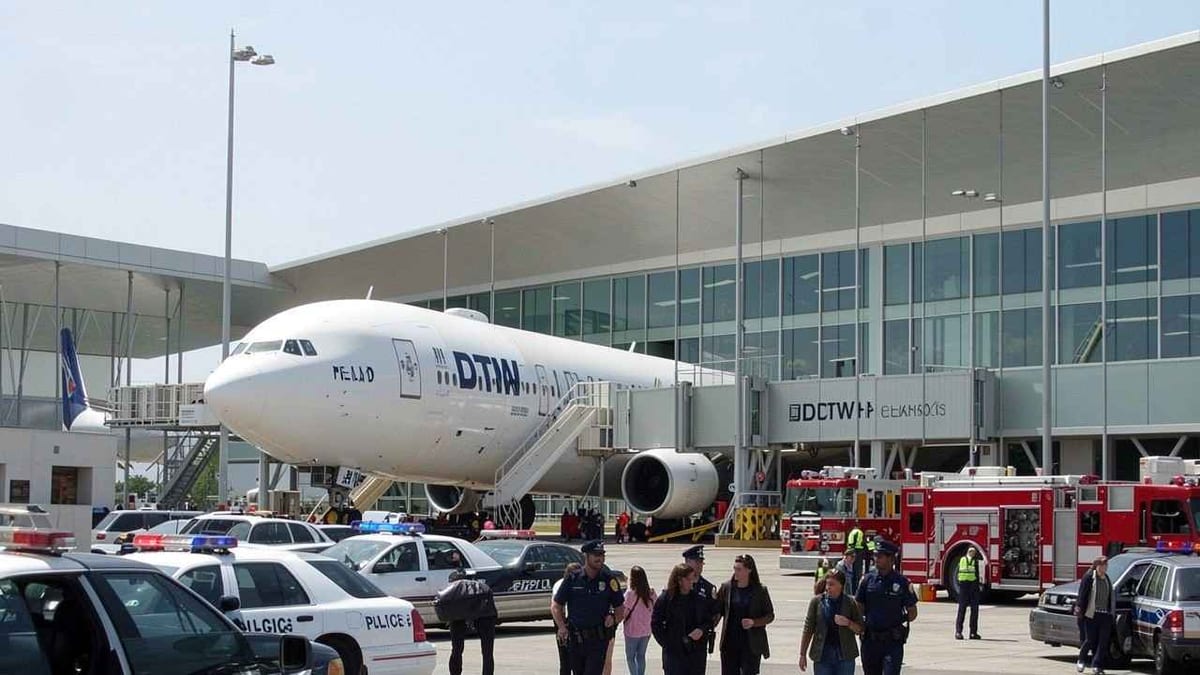
Bozeman Newark Service Hit By Midjourney Disruption
Publicly available schedule data for Bozeman Yellowstone International Airport shows United Airlines flight 2003 operating as an afternoon departure from Bozeman to Newark on August 9. Instead of completing the roughly four hour transcontinental leg to New Jersey, the flight was rerouted to Cleveland, Ohio, interrupting nonstop service on one of Bozeman’s key links to the New York metropolitan area.
Initial indications suggest the diversion occurred after the aircraft had already progressed eastbound, placing Cleveland as a practical alternate for refueling and operational handling. The change meant passengers bound for Newark were briefly routed through a nonregular stop, a scenario that can complicate both crew scheduling and onward connections.
While precise technical details of the diversion were not immediately available, the event fits a broader pattern of disruptions on flights heading into Newark during periods of constrained airspace and unsettled weather in the Northeast. Data and anecdotal reports over recent weeks have described multiple United services diverting or holding as traffic volume, thunderstorms and ramp congestion interact.
The Bozeman Newark route itself has become an important seasonal corridor, linking Montana’s growing tourism and outdoor recreation market with one of United’s largest hubs. Any disruption on this nonstop pairing can quickly ripple across itineraries for both leisure visitors and residents using Newark as a gateway to other domestic and international destinations.
Cleveland Serves As Strategic Alternate For Eastbound Traffic
The decision to divert United flight 2003 to Cleveland reflects the strategic role that midcontinent hubs can play when New York area operations are constrained. Cleveland, positioned between the Upper Midwest and the East Coast, offers runway capacity, ground handling and airspace access that can ease pressure on oversubscribed Northeast airports.
Operational histories on other recent United flights indicate that Cleveland is frequently used as a diversion point for transcontinental services when weather, air traffic control restrictions or ramp saturation affect destinations further east. In such cases, aircraft may land to take on additional fuel, await improved conditions or be repositioned onto alternative routings while crews and passengers are reassigned.
For travelers on flight 2003, the Cleveland diversion likely meant additional ground time and a revised arrival window into the New York region. Depending on aircraft availability and crew duty limitations, passengers may have continued to Newark either on the same aircraft once conditions permitted or via a different United service after rebooking. These decisions are typically influenced by network constraints and the need to keep both aircraft and crews synchronized across multiple hubs.
From a network standpoint, the use of Cleveland as an alternate underlines how modern airline operations rely on a mesh of potential recovery points rather than a simple point to point model. Even flights marketed as nonstop can, in practice, pass through intermediate facilities when safety, regulatory or capacity considerations dictate.
Newark Disruptions Continue During Active Summer Weather
The diversion of the Bozeman Newark service comes during an especially active summer period for weather related disruption in the New York area. According to published coverage and passenger reports, thunderstorms and low visibility episodes around early August have repeatedly constrained arrivals and departures at Newark Liberty International, with knock on effects for connecting traffic across the United network.
Travel waivers issued for New York airports during the first week of August allowed customers to adjust itineraries without change fees during forecast storms, a sign that airlines anticipated ongoing volatility across the region. Even with such waivers, aircraft and crews must still be positioned to meet demand, creating challenges when multiple days of convective weather affect a major hub.
Recent examples of United flights into Newark diverting to intermediate airports, including Cleveland and other Midwest cities, illustrate how quickly schedules can be rewritten on the day of operation. In some cases, flights have been routed to alternate fields because of ramp congestion and lack of parking positions at Newark, rather than weather at the airfield itself.
For passengers traveling from smaller markets such as Bozeman, such disruptions can feel particularly acute. With a limited number of daily departures and heavy seasonal demand, the loss or diversion of a single mainline flight into Newark can mean missed connections, longer total travel times and a scramble to secure remaining seats on later departures.
Passenger Experience and Rebooking Challenges
Traveler accounts from other recent Newark related diversions suggest that the passenger experience can vary widely depending on timing, staffing and gate availability at the diversion airport. When an aircraft lands at a city like Cleveland on short notice, airlines must quickly coordinate ground handling, catering, crew duty time and, in some cases, customs or security considerations before any onward movement.
For those on United flight 2003, the primary concerns would likely have centered on making onward connections from Newark, rebooking missed international flights and arranging overnight accommodation if onward options were limited. Public commentary around similar events often highlights uncertainty at the gate and the importance of timely communication through mobile apps and airport displays.
Industry studies show that diversions and extended delays can significantly increase total journey times and strain airport resources, particularly at smaller or mid sized facilities that may not routinely handle wide bodies or full planeloads of connecting passengers. Even when safety is not in question, the logistical complexity of moving hundreds of travelers through an unplanned stop is considerable.
At the same time, diversions can help avoid even more disruptive outcomes such as cancellations, crew mispairings or extended ground holds at congested hubs. For airlines, maintaining schedule integrity on as many flights as possible often means accepting tactical diversions on a subset of services when bottlenecks develop in the system.
What the Diversion Means for Bozeman Travelers
The interruption to United flight 2003 underlines both the value and vulnerability of Bozeman’s long haul connections. The city’s links to major coastal hubs like Newark support tourism to Yellowstone and Big Sky, while also giving local residents one stop access to Europe, the Caribbean and Latin America via onward connections.
When disruptions affect those nonstop routes, alternatives can be limited. Passengers may be rebooked through Denver, Chicago or other hubs, sometimes involving additional stops and longer travel days. For visitors on tight vacation schedules, a diversion like the one involving flight 2003 can eat into already short stays in Montana or on the East Coast.
Travel experts often recommend building additional buffer time into itineraries that rely on summer flights into the New York region, particularly in July and August when thunderstorms and high traffic volumes are most common. Early morning departures, flexible ticketing and travel insurance are among the strategies frequently suggested to mitigate the impact of unexpected changes.
As airlines and airports across the United States continue to navigate fluctuating demand, evolving weather patterns and air traffic control constraints, events like the diversion of United’s Bozeman Newark service to Cleveland highlight the tight margins under which the system currently operates. For Bozeman and other regional airports, maintaining reliable links to coastal hubs will remain a key priority even as carriers balance schedule resilience with operational cost.