


More news on this day
The Bahamas is experiencing one of the strongest tourism booms in its history, with new data showing record-breaking visitor numbers driven largely by the United States and reinforced by rising demand from other major international markets.
Get the latest news straight to your inbox!
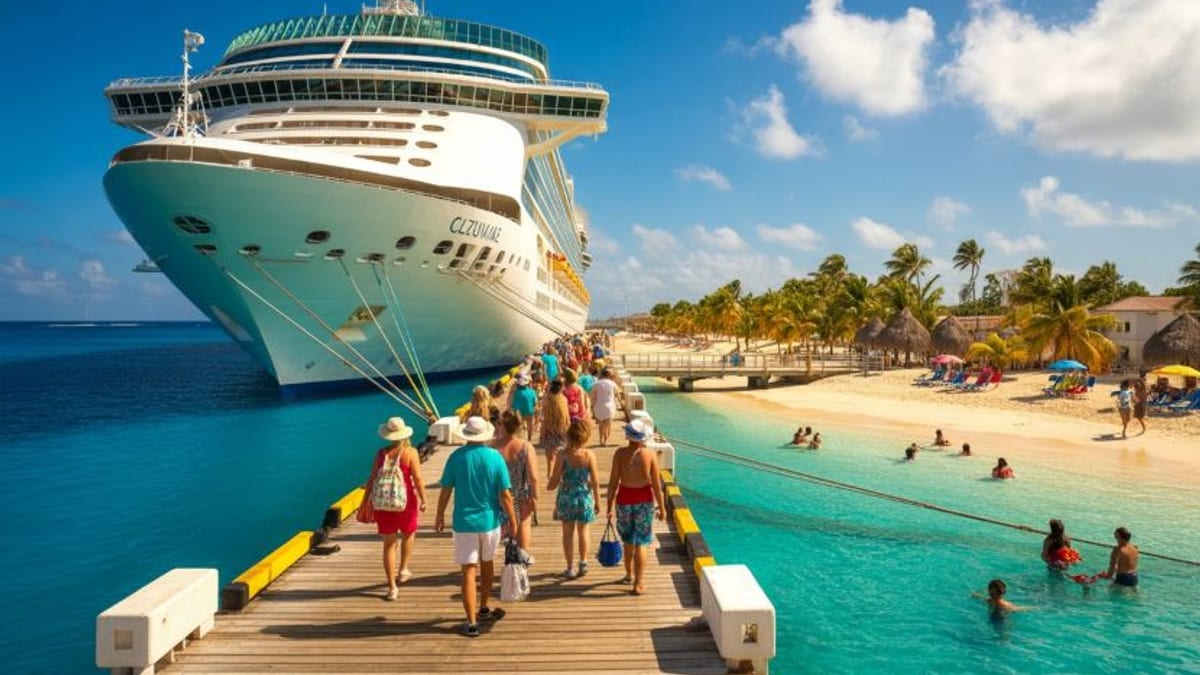
Record Visitor Numbers Reshape The Bahamian Economy
Publicly available figures from The Bahamas government and international institutions indicate that tourism is expanding at a pace that is reshaping the country’s economic outlook. Tourism and related services consistently account for more than two thirds of national output, and recent arrival data confirms that the sector has moved well beyond pre‑pandemic levels.
Budget and economic statements presented in Nassau for the 2025 and 2026 fiscal periods point to approximately 12.5 million total visitor arrivals in 2025, up more than 11 percent year on year. Earlier tourism reports highlighted 11.22 million visitors in 2024, already a historic high at the time. Cruise passengers make up the majority of arrivals, but stopover and other air visitors are also increasing, which is important because they typically spend more per trip than cruise passengers.
The scale of this recovery is also visible in financial and macroeconomic assessments from multilateral organizations. Analyses published in 2024 describe tourism receipts as a central pillar of foreign-exchange earnings for The Bahamas and note that the recent surge in arrivals has supported stronger growth and helped narrow fiscal deficits. These dynamics underline how closely the country’s broader economic performance is tied to the health of its visitor industry.
United States Remains Dominant Source Market
Across multiple data sets, the United States emerges as the overwhelmingly dominant source of visitors to The Bahamas. A recent assessment associated with the International Monetary Fund notes that more than 80 percent of stopover visitors originate in the United States, underscoring the depth of the bilateral tourism relationship. Trade and investment guides produced by U.S. agencies similarly describe the United States as The Bahamas’ principal commercial partner and primary tourism source.
Central Bank releases and tourism statistics for 2024 and 2025 show that demand from key source markets, led by the United States, has remained resilient even as global travel patterns have normalized. One mid‑year 2024 report highlighted a seven percent year‑on‑year increase in U.S. arrivals through the country’s main international gateway, suggesting that American travel to the archipelago is still growing from an already dominant base.
Marketing campaigns reinforce this focus. Tourism authorities launched a high‑visibility branding effort at New York’s Penn Station at the start of 2024, saturating one of the busiest transit hubs in the United States with imagery from The Bahamas during the peak winter booking window. Public communications described the initiative as aimed at strengthening the country’s position in the U.S. Northeast, identified as the number one source region for Bahamian tourism.
Airlines, Cruises and Infrastructure Expand Regional Connections
The rise in arrivals from the United States and other major markets has been supported by a gradual expansion of airlift and cruise capacity into the islands. Official tourism press materials in 2024 pointed to new or expanded services from several U.S. carriers, including added frequencies from major Florida hubs and new nonstop links from cities such as Orlando to Nassau and from Miami into the Out Islands.
Industry reports and tourism investment guides note that most of the large resort properties in Nassau, Paradise Island and the Out Islands source a significant share of their construction materials, equipment and furnishings from the United States. This supply-chain structure creates a feedback loop in which U.S. companies benefit from Bahamian tourism growth while facilitating the development of hotels, marinas and attractions that, in turn, draw more U.S. visitors.
Cruise tourism is also expanding. Recent government budget documents reference double‑digit growth in cruise arrivals between 2024 and 2025, aided by new private island projects and dedicated cruise facilities developed by U.S. lines. Florida‑Caribbean cruise industry analyses cited by Bahamian officials estimate that cruise tourism generated hundreds of millions of dollars in direct expenditures in the 2023–2024 cruise year, illustrating the scale of the sector’s contribution.
Rising Interest From Canada, Europe and Latin America
While the United States remains the primary driver of tourism growth, publicly available information indicates that other major markets are playing a growing role. Travel and tourism rankings and regional reports suggest that Canadian and European visitor flows to the wider Caribbean have risen alongside a rebound in long‑haul travel, and Bahamian tourism statements describe efforts to deepen air links and marketing in those markets.
Caribbean travel marketplace briefings in 2024 emphasized an interest in diversifying source markets, with particular reference to Canada, the United Kingdom and parts of continental Europe. Airline route announcements over the past two years have included seasonal and year‑round services connecting Nassau with Canadian cities and key European gateways via hub airports, improving one‑stop access from those regions.
Latin America is also cited in trade and tourism documents as a strategic growth area. Although the volume of visitors from South and Central America remains relatively modest compared with the United States, connections through Miami and other U.S. hubs have made multi‑destination itineraries that include The Bahamas more accessible. Tourism planners view this as a way to reduce dependence on any single market while still leveraging the country’s proximity to North America.
Focus on Sustainability and Managing Rapid Growth
The acceleration in visitor arrivals has prompted a parallel discussion about sustainability and long‑term planning. Ministry of Tourism communications in 2024 and 2025 highlighted initiatives aimed at promoting sustainable tourism practices, from efforts to protect marine ecosystems to programs that encourage community‑based enterprises in the Family Islands. Published coverage emphasizes that many of The Bahamas’ competitive advantages, including its beaches and coral reefs, are directly linked to environmental stewardship.
Economic reports and market overviews from international agencies point out that, while tourism has delivered strong growth and foreign‑exchange earnings, it also exposes the country to external shocks. Heavy reliance on U.S. travelers makes The Bahamas sensitive to swings in American consumer confidence, changes in airline capacity, and broader geopolitical or economic disruptions that affect travel.
Policy documents released in 2025 and 2026 outline plans to upgrade infrastructure, diversify tourism products, and spread visitor spending more evenly across the archipelago. These efforts, together with closer transport, trade and marketing links to the United States, Canada, Europe and Latin America, indicate that The Bahamas is attempting to convert a short‑term surge in arrivals into a more balanced and resilient phase of tourism‑led growth.