


More news on this day
Barcelona is consolidating its role as one of Europe’s most dynamic cruise and ferry gateways in 2026, with robust growth in international passenger traffic led by the United Kingdom and other key source markets, according to newly released data and forecasts.
Get the latest news straight to your inbox!
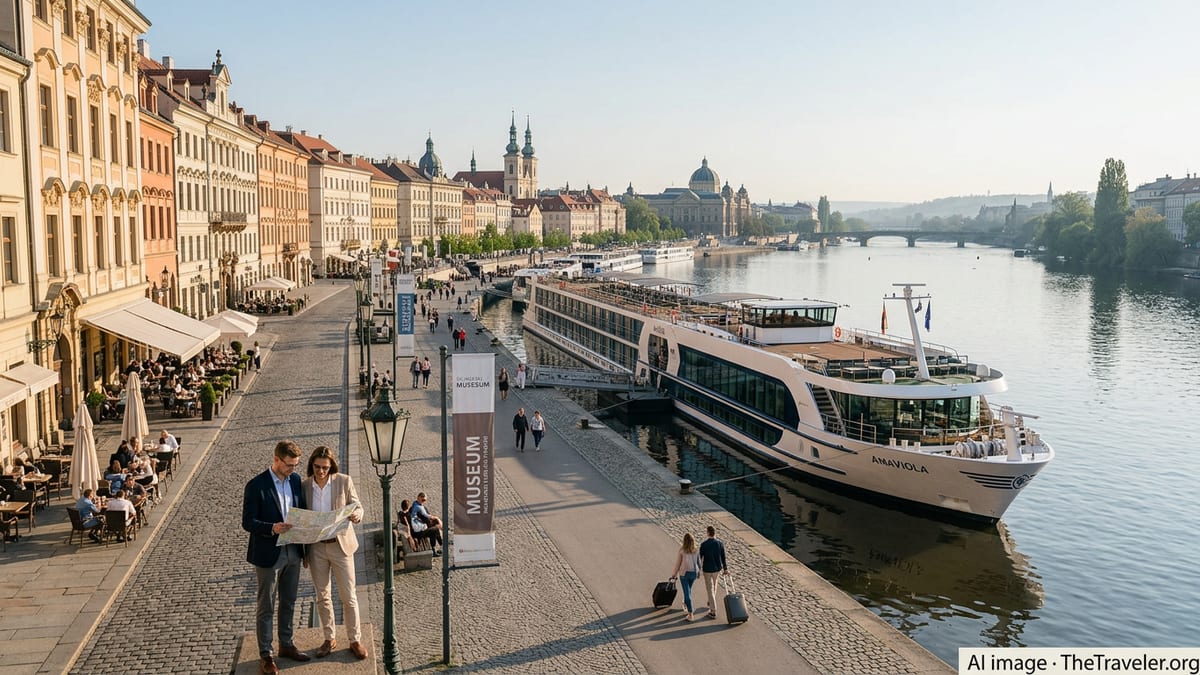
Barcelona cruise traffic accelerates into 2026
Port of Barcelona traffic summaries for early 2026 indicate that cruise activity is expanding on top of the strong rebound recorded in 2024 and 2025. Port statistics for the first quarter of 2026 show 290,545 cruise passengers, building on the 2.3 million cruise visitors reported for the full year 2025, when the port exceeded pre‑pandemic levels and retained its status as Europe’s leading embarkation point in the Mediterranean.
Annual data released by the Port of Barcelona for 2025 highlight a broader passenger base compared with 2019, with more homeport operations and larger vessels from the main global brands. Industry analyses of 2024 also rank Barcelona among the busiest cruise ports worldwide by passenger volume, underlining the city’s central role in European itineraries that connect Western Mediterranean, Atlantic and repositioning routes.
The port’s public cruise forecasts for 2026, which aggregate scheduled calls from major operators, point to another dense season extending from spring through late autumn. The pattern reinforces Barcelona’s function as both a turn‑around hub for week‑long Mediterranean cruises and a high‑capacity transit stop for longer voyages linking Northern Europe with Spain and the central Mediterranean.
Local tourism and economic data prepared by Barcelona’s city authorities for 2024 and 2025 further show that cruise passengers now account for a modest but highly visible share of total visitor arrivals. While representing less than a tenth of all tourists, cruise travelers contribute significantly to hotel demand before and after sailings, as well as to spending in central districts close to the port.
United Kingdom emerges as a key source market
Industry reports on the European cruise market describe the United Kingdom as one of the continent’s largest source markets for cruise passengers, second only to Germany in overall volume. The combination of a sizable domestic cruise customer base, strong air connectivity and established relationships with major cruise brands has positioned UK travelers as an important driver of Mediterranean itineraries embarking in Barcelona.
Air connectivity data for Barcelona in 2024 show frequent services to multiple UK airports, including London, Manchester, Birmingham and Edinburgh, which facilitates short city breaks combined with cruise departures. Airlines have continued to rebuild and increase capacity on these routes into 2025 and 2026, enabling cruise lines to package fly‑cruise products targeting British travelers seeking week‑long Western Mediterranean circuits.
Recent cruise line deployment patterns also highlight the weight of UK demand. Several leading brands with strong British customer bases are maintaining or increasing their Barcelona‑based capacity in the 2025–2026 seasons, assigning larger ships and more frequent departures. These deployments typically feature itineraries calling at Balearic, French and Italian ports, all accessible within a seven‑night loop from Barcelona, a format that has proved popular in the UK market.
According to European cruise industry economic studies, the UK’s role as a source market has a multiplier effect on ports such as Barcelona through pre‑ and post‑cruise stays, shore excursions and retail spending. Travel trade coverage indicates that British tour operators are leveraging Barcelona’s cultural appeal and transport connections to assemble air‑sea packages that combine urban tourism with cruising, reinforcing the city’s global visibility.
Short‑sea ferry links deepen regional connectivity
While cruise traffic draws much of the attention, Barcelona’s network of regular ferry links is also expanding in 2025 and 2026, strengthening its position as a maritime gateway for both tourists and residents. Scheduled services connect the city with the Balearic Islands, mainland Italy and Sardinia, providing alternatives to air travel and supporting multi‑destination itineraries that pair city stays with island or coastal holidays.
Ferry operators serving routes between Barcelona and destinations such as Palma de Mallorca, Mahón in Menorca and Italian ports have updated timetables and capacity for 2025 and 2026, according to publicly available booking information. Vessels on these routes often combine passenger cabins with vehicle decks, catering to holidaymakers traveling with cars or camper vans as well as foot passengers.
One of the most prominent long‑distance ferry corridors linking Spain and Italy passes through Barcelona, connecting it with Civitavecchia near Rome. Operator schedules for 2026 show continued overnight sailings on this route, using cruise‑ferry vessels that offer cabins, restaurants and onboard leisure spaces similar to small cruise ships. Additional seasonal services to Porto Torres in Sardinia add further options for travelers planning circular itineraries across the Western Mediterranean.
These ferry links, while distinct from the dedicated cruise industry, contribute to Barcelona’s maritime tourism profile by allowing flexible, open‑jaw travel and by distributing visitors more evenly through the year. Travel forums and consumer reports describe overnight crossings on the Barcelona routes as a practical choice for budget‑conscious travelers and those seeking to avoid flight connections, reinforcing the port’s role as a multimodal hub.
Balancing growth with sustainability and city management
The consolidation of Barcelona as a leading cruise and ferry port has renewed attention on how growth is managed in relation to the urban environment. Port and city planning documents emphasize the need to coordinate ship calls, terminal operations and ground transport to mitigate congestion, particularly during peak summer weekends when several large ships can be in port simultaneously.
Policies implemented in recent years have aimed to concentrate cruise operations at dedicated terminals farther from the historic center, while improving public transport and shuttle links to reduce the volume of private vehicles and taxis near major attractions. Observations from travelers in mid‑2026 describe busy but functional transfer arrangements between cruise terminals and key city sites, with emphasis on allowing passengers to reach central neighborhoods efficiently without over‑relying on road traffic.
On the environmental side, the Port of Barcelona has outlined investment plans for shore‑power infrastructure and cleaner fuels, aligning with European maritime decarbonization targets. Cruise industry reports indicate that newer vessels scheduled to call at Barcelona in 2026 and subsequent seasons incorporate advanced emissions‑control technologies and, in some cases, dual‑fuel or alternative‑fuel propulsion systems.
These measures, combined with active monitoring of passenger flows and collaboration with regional tourism authorities, are intended to sustain Barcelona’s attractiveness as a homeport and port of call while moderating the impact on local residents. Public summaries of port strategy suggest that maintaining a balance between economic benefits, environmental performance and quality of life will remain a core objective as cruise and ferry volumes continue to grow.
Outlook: diversified markets underpin future resilience
Looking ahead to the remainder of 2026 and the 2027 season, available forecasts and booking trends point to continued strength in cruise and ferry demand for Barcelona, with the United Kingdom and other major European markets such as Germany, France and Italy expected to remain central to passenger volumes. Analysts note that this diversified mix of source markets has supported the port’s resilience in recent years, enabling it to adapt to shifts in individual countries’ travel patterns.
Ongoing investments in terminal infrastructure, digital passenger‑flow management and improved rail and road access are designed to accommodate larger ships and greater throughput without proportionally increasing congestion. Port financial reports for 2025 show revenues exceeding 200 million euros and describe a new investment cycle focused partly on passenger facilities, signaling confidence in long‑term demand.
As cruise brands deploy their newest and most efficient ships on Western Mediterranean routes and ferry companies refine their schedules between Barcelona, the Balearic Islands and Italy, the city’s role as a strategic node in Europe’s maritime tourism network appears set to strengthen further. For travelers from the UK and other leading markets, that translates into a widening range of options to combine Barcelona’s urban appeal with sea‑based holidays across the wider region.