


Expedition cruising has gone from niche adventure to bucket-list staple, and few names are as synonymous with this style of travel as Lindblad Expeditions–National Geographic. But when you start comparing prices for Antarctica, the Arctic, or the Galapagos, Lindblad often appears at the upper end of the scale. How much more expensive is it really, and what do you get for the premium compared with other big expedition players like Hurtigruten, Quark Expeditions, Viking, or Aurora?
Get the latest updates straight to your inbox!
Where Lindblad Sits in the Expedition Cruise Market
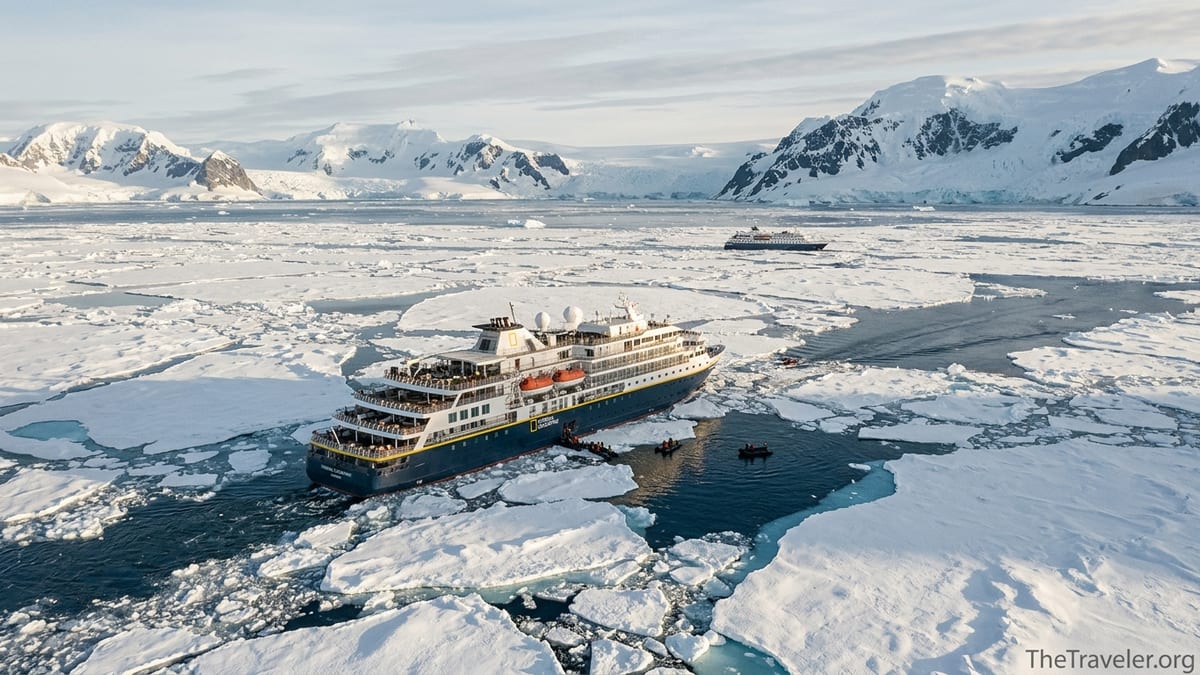
Lindblad Expeditions is widely viewed as a premium to upper-premium operator in the expedition segment. Its modern ice-strengthened ships such as National Geographic Endurance and National Geographic Resolution were purpose-built for polar travel and carry a relatively small number of guests for their size, typically in the 120 to 150 passenger range. Cabins skew larger than on many classic expedition ships and a significant share include balconies, which influences the overall price level.
On popular routes like the Antarctic Peninsula or Arctic Svalbard, Lindblad’s brochure prices are usually higher than those of mainstream expedition brands such as HX (Hurtigruten Expeditions) and often higher or on par with specialist polar operators like Quark Expeditions in similar cabin categories. Travel advisors who regularly quote multiple lines for the same dates frequently position Lindblad as among the top two or three most expensive options in any given season for the same region and duration.
This premium status is reinforced by Lindblad’s partnership with National Geographic, which brings photographers, naturalists, and guest scientists on board. The educational component is a core part of the brand identity, but it also means guests are paying for a highly staffed, deeply curated experience, not simply transportation to remote places.
In practical terms, if you collect quotes for a 10 to 12 day Antarctica sailing in high season, you will often find HX at the lower end, Quark and some boutique lines in the middle, and Lindblad sitting somewhere between the high-middle and top of the price spectrum, especially for balcony staterooms and suites.
Antarctica: Lindblad vs Hurtigruten and Quark on Real Itineraries
Antarctica is the clearest lens through which to compare Lindblad with other expedition companies, because itineraries and trip lengths are relatively similar across operators. Industry analysis of 2026 pricing for classic 10 to 14 day Antarctica Peninsula voyages puts the overall market average around the low to mid five figures per person for a shared cabin. Many travelers ultimately pay between roughly 9,000 and 20,000 US dollars per person depending on ship and season.
Within that context, budget-oriented expedition lines and aggressive promotions can sometimes bring Antarctica below 9,000 dollars for an inside or simple window cabin, especially on slightly older ships or with larger passenger loads. HX, for example, has run promotional fares under 10,000 dollars per person on its “Highlights of Antarctica” itineraries in shoulder periods, while travel agent reports and reviews describe Hurtigruten as a generally lower price point compared with Lindblad for comparable length voyages, particularly when factoring in frequent percentage discounts.
By contrast, Arctic and Antarctica specialists cite Quark Expeditions’ classic 10 to 12 day Antarctica Peninsula sailings in standard cabins as more commonly landing in the approximate 8,000 to 16,000 dollar range, depending on specific ship and departure date. Reported brochure prices for certain 10 day sail–fly combinations in 2026 climb into the high teens and low twenties per person in balcony and suite categories. Travelers posting recent trip reports with Quark for similar-length voyages mention paying in the mid-teens per person for upgraded suites, especially on new vessels.
In community discussions that directly compare HX, Quark and Lindblad on similar Antarctica dates, travelers often reference entry level pricing starting around 11,500 dollars per person for HX, around 16,500 dollars for Quark on some popular itineraries, and around 19,000 dollars per person for Lindblad in comparable timeframes and cabin types. Those figures shift with promotions and cabin category, but they illustrate a consistent pattern: Lindblad generally prices above HX and often above or in line with Quark once you account for like-for-like cabins and dates.
Galapagos & Arctic: How Lindblad Compares on Non-Polar Routes
Price differences are also evident in regions beyond Antarctica. In the Galapagos, where ship sizes and route options are tightly controlled, Lindblad positions its vessels in the first-class to luxury bracket. A typical 7 night Lindblad Galapagos itinerary in April 2026, for example, is publicly listed from roughly the low-to-mid five figures per person for an entry level cabin. That starting point is noticeably higher than some 16 to 32 passenger “first class” yachts that still deliver park-certified guiding but with fewer extra amenities.
Travelers researching Galapagos cruises in recent years commonly see three tiers emerge. At the lower end are small locally operated boats and a few larger but simpler expedition vessels, often starting in the mid four figures per person for shorter 4 or 5 night runs, but with more basic cabins and fewer inclusions. In the middle sit first-class expedition ships run by specialist operators, where a full 8 day loop can cost from the upper four figures to mid five figures per person. At the upper tier are luxury small ships and high-touch brands like Lindblad, where a week can cost well into the five figures, particularly in balcony cabins or suites.
In the Arctic, Lindblad again prices itself toward the top of the market. The company’s own Arctic cost guidance emphasizes that polar-class vessels with advanced safety features and upscale onboard facilities carry a higher price tag than older, simpler expedition ships. It notes that some lines, including Lindblad, now bundle gratuities into the overall fare, while other operators add a suggested tip, often in the range of roughly 15 dollars per day per guest. That structural difference means that, when comparing brochure prices, Lindblad may look more expensive at first glance, but part of that premium is offset by not having a daily service charge at the end of the trip.
Specialist Arctic competitors like Quark and Aurora Expeditions sometimes offer narrower price bands, with some itineraries starting closer to the upper four or low five figures per person in shared cabins during shoulder season. At the very top end of the market, new small luxury expedition ships from lines like Scenic or Seabourn can exceed even Lindblad’s rates for the same region, particularly in large suites, but those are typically marketed more as luxury cruises that happen to go to polar regions rather than purely expedition experiences.
What Your Fare Actually Buys: Inclusions vs A La Carte Costs
One reason Lindblad often appears expensive is that its fares tend to be comparatively inclusive. Polar travel guides highlight that Lindblad is among the lines that include gratuities for the crew and expedition team in the base expedition fee, while many other expedition companies leave these as a recommended extra, frequently calculated per guest per day. Over a two week polar voyage, that can amount to several hundred dollars per person of additional cost with more a la carte operators.
Lindblad also generally includes all standard daily excursions, landings by Zodiac, guided hikes, and onboard lectures in the core fare. On ships like National Geographic Endurance, the expedition equipment inventory is substantial: multiple Zodiacs, kayaks, sometimes cross-country skis or snowshoes, and specialized camera gear designed to enable everyone to get off the ship quickly and safely. Cruise industry reviews note that all landings and activities on these polar ships are included without extra per outing fees, since the entire voyage is built around being off the ship as much as conditions allow.
By comparison, some polar-focused competitors also include most landings and zodiac cruises in the fare but may charge extra for premium experiences like multi-day kayak programs, overnight camping on the ice, or mountaineering. On certain Quark voyages, for example, camping, advanced mountaineering, or an intensive sea kayaking package command additional per person supplements, while a basic paddle session might be charged as an optional extra. Budget-focused lines sometimes take the a la carte model further by adding higher fees for specialty gear rental, Wi-Fi, and certain beverages.
Travelers comparing total trip costs often find that when you add in gratuities, paid optional excursions, and onboard extras on another line, the gap between a seemingly lower advertised fare and Lindblad’s higher all-in price narrows, though Lindblad still tends to come out as the more expensive option overall. The key practical takeaway is that you should compare not only brochure fares but also what is included in that number on each line before concluding one operator is dramatically cheaper.
Ship Hardware, Staffing and the National Geographic Factor
Part of the Lindblad premium is tied to the hardware of its ships and the size and specialization of its onboard teams. Newbuild polar vessels like National Geographic Endurance and National Geographic Resolution are true expedition platforms with ice-strengthened hulls, advanced stabilizers, and a large fleet of expedition craft housed in internal garages. Industry coverage emphasizes features such as multiple zodiac loading points and ample deck space designed to get guests out into the environment quickly and safely. These are not repurposed cruise ships but purpose-built expedition tools.
On board, Lindblad maintains one of the higher guide-to-guest ratios in the segment, often with around a dozen or more expedition staff on a 120 to 150 passenger ship. This means small group landings, specialized topical lectures, and a better chance of having experts on hand in disciplines like marine biology, ornithology, glaciology, and geology. The National Geographic partnership adds professional photographers and sometimes working scientists who use the ship as a platform for ongoing projects, which further increases staffing levels compared with budget operators.
Other lines certainly operate sophisticated tonnage. Quark’s ultramodern ships, for instance, offer twin helicopter hangars on some vessels and extensive equipment for activities like paddling and camping, while HX has invested heavily in hybrid-powered ships with science centers onboard. However, some lower-cost itineraries still rely on older, simpler expedition ships with fewer balcony cabins, smaller common spaces, and slightly larger passenger loads per vessel, which does allow for lower per person pricing.
In practice, if you are choosing between a Lindblad voyage and a cheaper option, part of what you are paying for is new hardware, high staffing levels, and embedded National Geographic content. For some travelers, those elements significantly enhance the perceived value. For others who are primarily driven by seeing wildlife and setting foot on the ice, simpler hardware with a competent but smaller team can feel more cost effective.
When Paying Lindblad’s Premium Makes the Most Sense
Given the evident price premium, the key question is not simply whether Lindblad is more expensive, but when that extra spending makes sense. A common pattern among travelers who book Lindblad is that they are taking a once-in-a-lifetime polar trip and prioritize educational depth and comfort over shaving several thousand dollars off the fare. For a couple planning a 25,000 to 40,000 dollar Antarctica or Arctic adventure, the difference between a mid-market line and Lindblad may be a smaller percentage of their overall long-haul budget once flights, gear, insurance, and pre- and post-cruise stays are factored in.
Lindblad’s fully inclusive style is particularly attractive to travelers who dislike nickel-and-diming. The certainty of knowing gratuities, most activities, and often non-alcoholic drinks are already covered in the fare can be reassuring, especially for families or multi-generational groups. The National Geographic photography programs are another significant draw. Guests who care deeply about improving their photography or having structured opportunities to review work with experts often justify the premium purely on that basis.
There are also certain itineraries where Lindblad’s history and relationships confer real advantages. The company has been operating in Antarctica since the 1960s and was among the first to bring tourists to the Galapagos in the 1960s. That legacy and long-standing presence often translate into fine-tuned landing site choices, strong relationships with local communities and park authorities, and a level of logistical confidence that appeals to travelers who are risk-averse about operations in remote regions.
If you are happy in a basic window cabin, do not need a large spa or balcony, and are less concerned about having a National Geographic photographer on board, you may find that a respected mid-tier expedition line delivers a comparable core experience in terms of landings and wildlife at a noticeably lower price per person. In that sense, Lindblad’s premium is best justified when you plan to actively use the educational programming, appreciate the shipboard comforts, and value the slightly more curated experience.
Strategies for Keeping Costs Manageable With or Without Lindblad
Regardless of operator, there are ways to manage expedition cruise costs while still achieving your travel goals. For travelers set on Lindblad, the most effective levers are cabin category, timing, and itinerary length. Opting for an entry level outside cabin rather than a balcony can save several thousand dollars per person on a two-week polar voyage. Shoulder-season sailings at the very start or end of the operating window in Antarctica or the Arctic are also typically priced lower than peak holiday or mid-season departures.
Shorter itineraries are another way to experience a high-end operator without the very highest price tag. For example, choosing a 10 day Antarctica Peninsula itinerary instead of a 20 day voyage that adds South Georgia and the Falklands can roughly halve the cruise fare, even though per-day costs may remain high. In the Galapagos, opting for a 7 night loop rather than back-to-back itineraries can similarly reduce the bill while still providing a comprehensive experience of multiple islands and habitats.
If Lindblad’s pricing remains out of reach, HX, Quark, Aurora, and other operators can offer compelling alternatives. Travelers on discussion forums frequently report securing Antarctica voyages with HX in the low five figures per person, sometimes dipping into the upper four figures during heavy promotional periods or on last minute bookings. Quark guests have also reported significant savings by booking balcony or suite cabins during seasonal sales or through specialist agencies that have access to exclusive discounts.
Finally, remember to factor in less visible costs that apply regardless of cruise line: flights to gateway cities like Ushuaia, Buenos Aires, Reykjavik, or Quito; pre- and post-cruise hotels; specialist clothing; and comprehensive travel insurance that covers medical evacuation from remote regions. When you add these components, the cruise fare itself often represents only part of the total trip cost, so a seemingly modest percentage difference between operators can still translate into several thousand dollars at the end of the booking process.
The Takeaway
When you compare like-for-like itineraries, Lindblad Expeditions is generally more expensive than major competitors such as HX and often on par with or above Quark Expeditions and other specialist lines for similar polar voyages. The premium reflects a combination of new polar-class ships, high staffing levels, the National Geographic partnership, and a comparatively inclusive pricing model that bakes gratuities and most activities into the base fare.
For travelers who prize deep educational content, strong photography programs, modern hardware, and a largely all-inclusive onboard experience, Lindblad’s higher pricing can be a worthwhile investment, especially for once-in-a-lifetime journeys to Antarctica, the Arctic, or the Galapagos. For those whose main goal is simply to stand among penguins or zodiac through Arctic pack ice, reputable mid-tier operators can often deliver a very similar core experience for less, at the cost of some extras and brand prestige.
The practical way to decide is to collect real quotes on the exact dates and regions you care about from several lines, then compare not just fares, but the total trip cost once inclusions, gratuities, and optional activities are considered. Viewed through that lens, Lindblad remains a premium choice, but the gap is often smaller and more nuanced than a quick glance at brochure prices might suggest.
FAQ
Q1. Is Lindblad Expeditions always the most expensive option for Antarctica?
Lindblad is often among the higher priced operators for classic Antarctica itineraries, but it is not always the single most expensive. New luxury expedition lines with large suites and ultra-inclusive packages can sometimes exceed Lindblad’s fares, while Lindblad itself is usually priced above HX and often similar to or slightly above specialist polar operators like Quark for comparable cabins and dates.
Q2. How much more should I expect to pay for Lindblad compared with Hurtigruten?
Exact differences vary by departure and promotions, but it is common for Lindblad’s brochure fares for a 10 to 12 day Antarctica voyage to be several thousand dollars per person higher than HX in similar cabin categories. When you factor in that Lindblad includes gratuities and many activities in the base fare while some HX sailings add daily service charges and optional excursion fees, the real gap narrows but Lindblad still typically comes out more expensive.
Q3. Does Lindblad’s price include gratuities and excursions?
On most Lindblad polar and Galapagos voyages, gratuities for the crew and standard expedition team are included, as are daily landings, zodiac cruises, hikes, lectures, and use of expedition gear such as boots and lifejackets. Premium experiences like spa treatments, some alcoholic beverages, and specialty services cost extra, but you are unlikely to encounter separate charges for routine landings or mandatory tips at the end of the trip.
Q4. Are Quark Expeditions trips cheaper than Lindblad?
Quark offers a wide pricing range. Some classic Antarctica departures in standard cabins can undercut Lindblad, while high season, fly-cruise combinations, and premium ships can be similar in price or more expensive. Traveler reports commonly place Quark’s standard Antarctica fares between roughly the high four and mid-teens in thousands of US dollars per person, with Lindblad often starting higher in comparable seasons and cabin types.
Q5. Why are Lindblad’s Galapagos cruises so expensive compared with local boats?
Lindblad’s Galapagos ships are larger and more sophisticated than many locally operated vessels, with spacious cabins, advanced safety features, and elaborate educational programming in partnership with National Geographic. The company also includes a high level of guiding, lectures, and onboard amenities in the fare. Local first-class boats can be significantly cheaper but may offer smaller cabins, simpler facilities, and a less structured educational experience.
Q6. Is it worth paying Lindblad’s premium for a once-in-a-lifetime Antarctica trip?
Many travelers who value comfort, education, and photography support feel Lindblad’s premium is justified for a once-in-a-lifetime journey, especially if they plan to make full use of the lectures, science programs, and National Geographic photography guidance. If your main priority is simply reaching Antarctica at the lowest possible price with a solid but less elaborate onboard experience, a reputable mid-market operator may offer better value.
Q7. How can I reduce the cost of a Lindblad expedition?
You can usually save money by choosing an entry level outside cabin instead of a balcony or suite, sailing in shoulder season rather than peak holidays, and selecting a shorter itinerary. Working with a specialist travel advisor who tracks promotions can sometimes uncover added-value offers such as reduced solo supplements or small percentage discounts, but deep last-minute markdowns are less common at the very top end of the expedition market.
Q8. Are there hidden costs with cheaper expedition cruise lines?
Less expensive expedition operators sometimes rely more heavily on a la carte charges. You may encounter daily gratuities, optional fees for camping, extended kayaking programs, certain gear rentals, premium Wi-Fi, and alcoholic beverages that are not included in the base fare. It is important to ask for a detailed list of inclusions and typical onboard charges so you can compare the true total trip cost with Lindblad’s more bundled pricing.
Q9. Do Lindblad ships feel more luxurious than other expedition vessels?
Lindblad’s newest polar ships are not ultra-luxury in the sense of some big-ship cruise brands, but they are stylish, comfortable, and clearly more upscale than many classic expedition vessels. Guests will notice modern cabins, thoughtful public spaces, wellness areas, and high-quality food, all layered on top of advanced expedition hardware. Some luxury competitors may surpass Lindblad in sheer opulence, but Lindblad occupies a strong upper-premium niche.
Q10. If my budget is limited, which companies should I compare with Lindblad?
If Lindblad stretches your budget, it is worth comparing offers from HX, Quark Expeditions, Aurora Expeditions, and a selection of reputable smaller operators in your target region. Ask for quotes on the same dates and similar cabin types, then line up what is included in each fare. This approach will give you a realistic picture of how much more Lindblad costs for your specific trip and whether the added inclusions and brand features are worth the premium to you.