


Driving to Port Everglades can be the easiest way to start your cruise, but only if you know exactly where to park, what it will cost, and how to get you and your luggage to the right terminal. With two large parking garages, several gated surface lots, a dedicated shuttle for Terminal 29 and a growing number of off site park and cruise lots nearby, the choices can be confusing. This guide walks you through each option in plain language so you can pick the parking plan that fits your budget, schedule and comfort level.
Get the latest updates straight to your inbox!
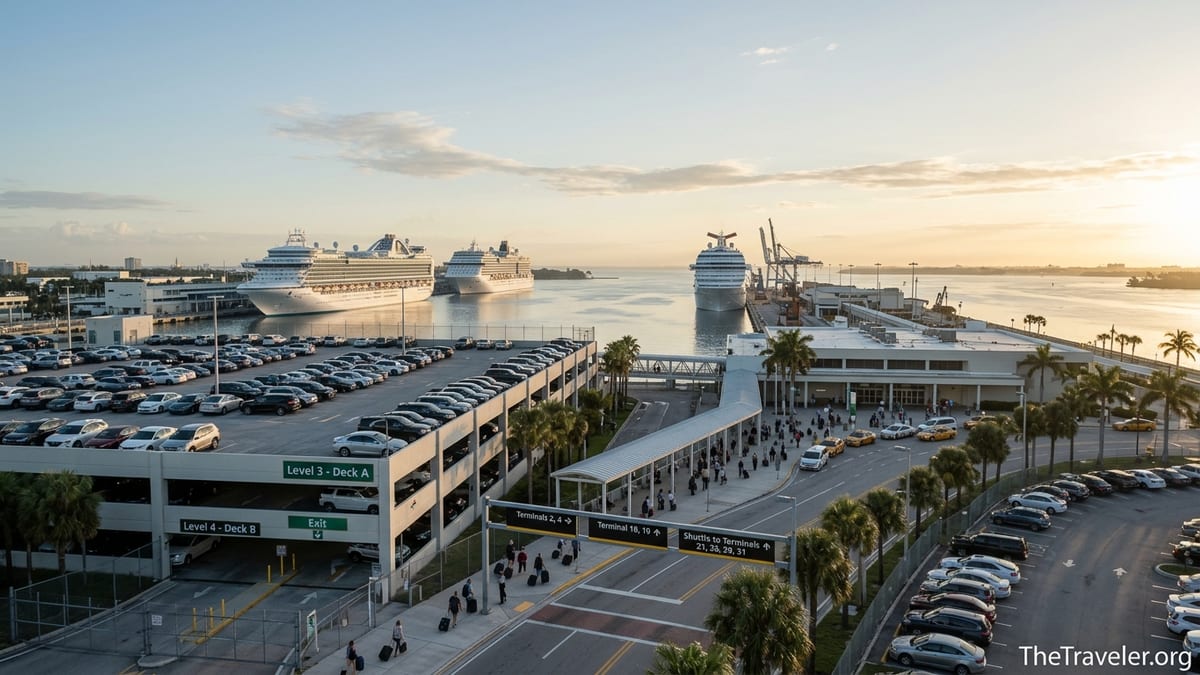
How Parking Works at Port Everglades
Port Everglades in Fort Lauderdale is one of the busiest cruise ports in the world, and its parking system is set up with cruise passengers in mind. The port operates more than 5,500 parking spaces spread across two main garages and several secured surface lots. These facilities sit within the port security perimeter, so you must pass through a gate with ID and an inspection checkpoint before you ever reach a parking area or cruise terminal.
The port divides its cruise terminals into two major areas: Northport and Midport. Most big ship sailings to the Caribbean and Bahamas depart from Midport, where you will find the Midport Garage and several surface lots. Terminals 18, 19, 21, 25, 26, 27, 28 and 29 are all in this general area, while Northport handles a smaller share of cruise traffic and more convention and cargo activity. When you enter, color coded wayfinding signs direct you first toward your terminal number and then, just before you reach it, toward the correct garage or lot for your ship.
Parking is first come, first served. There is no pre booking on the port’s own system for standard cruise parking, which means you pull a ticket when you enter the garage or lot and pay when you exit. During peak winter season, especially on Saturdays and Sundays when multiple mega ships turn around at once, it is common for the closer spaces to fill early in the morning. Arriving before 11 a.m. usually gives you the best shot at a convenient spot and a smoother drive through port traffic.
All official port run garages and lots are open 24 hours while ships are in port, and they are monitored by a combination of security staff, cameras and regular patrols. You keep your keys and self park, and height clearances in the garages mean that oversized vehicles are generally directed to surface lots instead. For most cruise passengers, the choice becomes whether to park in an on site garage within walking distance of the ship, or to save money with an off site lot that includes a shuttle.
On Site Garages and Surface Lots by Terminal
There are two primary multi level parking garages serving Port Everglades cruise guests: the Palm Garage and the Midport Garage. The Palm Garage sits closest to Terminals 2 and 4 and is the designated structure supporting Cruise Terminal 29 via shuttle. The Midport Garage, with about 2,000 spaces, serves a cluster of Midport terminals, including 19, 21, 23 and 24, 25, 26, 27, 28 and 29, plus several adjacent surface lots for overflow and oversized vehicles.
If you are sailing from one of the large Royal Caribbean ships that typically use Terminal 18, you will most likely park in the large surface lot directly across the access road. Drivers frequently pull up to the curb at Terminal 18 to drop off passengers and luggage, then circle back to the entrance for that surface lot and park within an easy walking distance of the ship, often just a few minutes on foot with no shuttle required. For Carnival, Princess, Holland America and other lines commonly using Terminals 19, 21, 25, 26 and 27, the Midport Garage is usually the most convenient option, connected by cross walks and short sidewalks with clear signage.
Terminal 29 is a special case. It is set slightly away from the main Midport cluster, and there is no parking deck attached directly to the building. Instead, terminal 29 passengers are directed to the Palm Garage, which offers nearly 2,000 covered spaces and a free port operated shuttle running between the garage and the terminal entry. You can still drop your luggage at Terminal 29 curbside before heading to the Palm Garage, but you will return to the ship area on the shuttle rather than on foot.
The port also operates several smaller, gated surface lots spread along Eller Drive and near specific terminals. These are most often used on heavy cruise days when the garages approach capacity, and for oversize vehicles that cannot clear garage height restrictions. On a typical seven night Caribbean sailing, a family might park a standard SUV in the Midport Garage for the week, while an RV or tall van will be directed to a nearby surface lot and may pay a premium or flat oversize rate compared with regular passenger vehicles.
Parking Rates, Payment Methods and Realistic Trip Budgets
Official Port Everglades parking uses a time based tariff that caps out at a flat daily rate for cruise passengers. As of mid 2026, published materials and the current tariff schedule indicate that once you exceed 12 hours in a calendar day you are charged a maximum cruise daily rate of about 20 dollars per vehicle for standard garage and surface lot parking. Short term visitors dropping off or picking up passengers pay smaller graduated amounts for the first few hours, such as 4 dollars for up to an hour, 8 dollars for up to five hours, and increasing in small increments until the daily cap is reached.
For cruise planning, it is easiest to budget using the flat daily figure rather than the hourly breakdown. A typical seven night cruise that spans eight parking days from check in morning to disembarkation morning would come to roughly 160 dollars in parking fees for a single vehicle in an on site garage, assuming no oversize surcharges. For a shorter three or four night sailing, you would be looking at about 60 to 80 dollars in total parking cost if you park at the port. These figures are per vehicle, so two cars traveling together will double the total even if you are sharing a cabin.
Payment is made when you exit the garage or lot, either at staffed booths or automated machines at the gate. The port accepts major credit and debit cards, and many booths also accept cash, but exact details can change with contractor arrangements so it is wise to have at least one working card ready. You pull a ticket when you enter, keep it safely in the car rather than in luggage, and insert or present it when you leave. Lost tickets are typically charged at the maximum daily rate for each day of your stay, which can add up quickly, so treating that small paper ticket like a boarding pass is smart.
If you are comparing costs with off site parking, remember to add in any shuttle fees, tips and extra time. For example, a family driving from Orlando for a seven night cruise might see a quote of about 8 dollars per day at an off site lot, compared with 20 dollars per day at the port. On paper that is a savings of roughly 96 dollars over eight days, but they will also need to factor in shuttle wait times, transfer logistics with kids and luggage, and the value of simply walking off the ship, wheeling bags across the street and driving away.
Luggage Drop Off, Check In and Smart Arrival Tactics
The easiest way to handle parking day at Port Everglades is to separate luggage drop off from the search for a parking spot. Most drivers pull up to the curb in front of their assigned terminal, unload large suitcases with the help of porters, and send the checked bags directly to the ship. Only carry ons and valuables stay with you in the car. Once luggage and non driving passengers are at the terminal entrance, the driver circles back to follow the parking signs for the appropriate garage or lot.
This strategy is especially helpful at Terminal 18 and the Midport Garage area, where traffic can back up at peak times. One common scenario: a family of four sailing on a large ship arrives around 10:30 a.m., pulls to the curb at Terminal 18, tips the porter after tags are checked, and the non driving adult takes the kids into the terminal security line. The driver then exits the traffic loop, follows the arrow for cruise parking, and parks in the surface lot across from Terminal 18. Ten minutes later, the driver walks back across the crosswalk with just a backpack, joins the family already partway through check in, and everyone boards together.
Arriving early in the day usually makes the parking and drop off process smoother. By late morning, especially on weekends, queues at security gates and curbside areas can lengthen as multiple ships process arriving passengers and disembarking guests compete for space. Planning to reach the port around your cruise line’s suggested arrival window and leaving a cushion of at least 30 to 45 minutes for parking and walking gives you breathing room. On disembarkation day, having your car in a nearby garage can make a big difference: instead of waiting in a long line for shuttles or rideshares, you retrieve your vehicle in minutes and are on the highway shortly after clearing customs.
If you are traveling with someone who has mobility concerns, the close in nature of port parking becomes an important factor. Dropping that person directly at the terminal with a wheelchair or walker, then using porters and nearby garages, usually provides a gentler experience than juggling off site shuttles and multiple transfers. The port has designated accessible parking spaces in its garages and lots; displaying a valid disabled parking permit will allow you to use them, but regular daily rates still apply.
Terminal 29 Shuttle: What to Expect
Because Terminal 29 is not attached to a garage, the port runs a dedicated free shuttle service linking the building with the Palm Garage. When you park for a sailing from Terminal 29, you will follow signs from the port entrance to the Palm Garage, pull a ticket as usual, and park in any open cruise level space. At ground level, signs and staff direct you to the shuttle pick up area, where small buses or vans rotate between the garage and the terminal throughout the day.
Shuttle frequency varies with ship schedules, but on a typical embarkation morning you can expect a vehicle every few minutes, especially when a large ship such as one sailing for Princess or another major line is turning around at Terminal 29. The ride itself is short, often just five to ten minutes including loading and unloading. Many travelers report that the wait for a shuttle is usually under 15 minutes, though on especially busy multi ship days, a full bus may pass and you might wait for the next one.
You are responsible for loading your own luggage into the shuttle, so the same drop off strategy applies here. A practical approach is to enter the port, drive first to Terminal 29 to unload checked bags and any non driving adults or children, then proceed to the Palm Garage alone. After parking, you board the shuttle with only a small carry on and ride back to the terminal, where your party is already moving through security and check in. On the return, you can walk out of the terminal doors, follow signs for shuttle pick up, and ride back to the garage to retrieve the car before circling back to pick up family and larger bags if needed.
Because the Terminal 29 shuttle is an extra transfer step, it adds a bit of time and complexity compared with walking from a garage to a terminal door. If your itinerary gives you the choice between a ship sailing from a walkable terminal such as 18, 25 or 26 and one from Terminal 29, and parking convenience is very important to you, that detail might factor into your decision. For most passengers, though, the shuttle is straightforward, well signed and free, and the overall benefit of on site, secured parking still outweighs the minor inconvenience of one extra ride.
Security, Safety and Accessibility Considerations
Port Everglades treats its parking garages and lots as part of the secure port environment. That means you pass through a controlled entry gate with security officers who may inspect vehicles and request identification for adults. Inside, official port lots are fenced or structured, with lighting, security cameras and regular patrols, particularly during busy cruise operations. While no parking arrangement can guarantee safety, the combination of controlled access and constant activity tends to deter casual theft and damage more effectively than unattended street or hotel lots.
In practical terms, this level of security means many cruise passengers feel comfortable leaving vehicles for a full week or longer with only standard precautions: no visible valuables, locked doors and a quick double check of windows before heading to the ship. It also means that if there is an issue, such as a dead battery on return, you can usually find port staff or security quickly and request assistance, or at least be in a location where roadside service can access you easily once cleared through the port gate.
Accessibility is another strength of on site parking. Both the Palm and Midport garages include marked accessible spaces on multiple levels, often close to elevators and pedestrian bridges or walkways. Surface lots typically reserve spots near crosswalks and terminal entrances. If you or a traveling companion uses a wheelchair, scooter or walker, stopping at the terminal first to unload and request assistance from porters or cruise line staff, then parking in a designated space, keeps walking distances manageable. Elevators, ramps and curb cuts are standard features around the main terminals.
Lighting and visibility are generally good in the garages and lots, which is helpful for early morning departures and late evening returns when some ships arrive ahead of dawn or after dusk. For added peace of mind, some travelers choose to photograph their parking spot and nearby level signs on their phone before heading to the ship. That small step not only makes it easier to find your car later, but also gives you a time stamped record of the vehicle’s condition when you left it.
Is Off Site Parking Worth It Near Port Everglades
Within a few miles of Port Everglades, several private companies and hotel based lots offer park and cruise packages that can significantly undercut the port’s official daily rate. It is common to see advertised prices in the general range of about 5 to 10 dollars per day for uncovered parking, with shuttle service to and from the terminals included. For an eight day trip, that can mean paying around 50 to 80 dollars instead of roughly 160 dollars at the port, a potential savings of 80 to 110 dollars for a single vehicle.
These off site facilities typically operate from commercial lots or repurposed airport parking structures in nearby Dania Beach or along State Road 84. You drive to the lot, check in at a small office or gate, park in a designated space and then board a shuttle van that cycles between the lot and the port. The ride usually takes 10 to 15 minutes depending on traffic and security gate queues. Many lots schedule their shuttles to match major embarkation windows, but waits can build if several full vans depart back to back or if returning passengers all arrive at once with luggage on disembarkation mornings.
Whether the savings are worth it depends on your priorities. If you are a couple on a tight budget driving down for a longer voyage, shaving more than 100 dollars off your parking bill might be attractive, particularly if you are comfortable adding 30 to 45 minutes each way for shuttles and check in. On the other hand, a family of five with small children, strollers and multiple checked bags may decide that the extra transfers and waiting are too stressful, and gladly pay the higher on site rate to shorten the journey. Travelers with mobility issues or tight flight connections after the cruise also tend to favor port parking despite the cost.
When considering an off site lot, look closely at recent traveler reviews, shuttle frequency, hours of operation and any additional fees, such as per person shuttle surcharges beyond a certain number of passengers. Some budget lots advertise a rock bottom daily price but then charge extra for more than two travelers, late night pick ups or oversized vehicles, which can erode the value. It is also wise to confirm how far in advance you need to arrive, what happens if your ship returns late, and whether the lot offers any support if your car has a mechanical issue when you get back.
Practical Tips for a Smooth Port Everglades Parking Experience
A little preparation goes a long way in making Port Everglades parking easy. Start by confirming your exact cruise terminal number a day or two before departure, either through your cruise line’s app or final documents, since ships can occasionally shift between terminals as schedules change. With that number in hand, review a current port map and note the recommended garage or lot, such as Midport Garage for many Midport terminals or the Palm Garage and shuttle for Terminal 29. This simple step reduces stress at the gate, where traffic is heavy and lane changes can be tricky.
On the morning of your cruise, pack the car so that checked luggage is grouped near the back or trunk, ready for quick unloading at the terminal curb. Keep your parking ticket, ship documents, passports and any medications in a separate small bag that stays with you. When you pull up to the terminal, confirm luggage tags are visible, hand bags to the porter, and snap a quick photo of each tagged bag for your own records. Then move the car promptly to avoid clogging the drop off lane, follow the parking signs and take a photo of your parking level and space number before heading to the ship.
On return, consider the timing of your disembarkation relative to your drive home or onward flight. If you have a long drive ahead, choosing self assist disembarkation (where you carry your own bags off early) and parking on site can put you on the highway much faster than relying on off site shuttles or shared transfers. Conversely, if you have a leisurely afternoon flight or a local hotel stay planned, the extra 30 minutes that off site parking may add to your morning might not matter, and the savings could fund a nicer pre cruise dinner in Fort Lauderdale instead.
Regardless of where you park, make a brief checklist for your vehicle before locking it: windows up, lights off, parking brake set if appropriate, valuables hidden or removed, and the steering wheel straight to keep the vehicle centered in the space. These small, habitual steps reduce the risk of returning to a dead battery, ticket or unwanted surprise after an otherwise relaxing vacation.
FAQ
Q1. How much does it cost to park at Port Everglades for a cruise
For most standard vehicles, expect to pay roughly 20 dollars per day in official port garages or surface lots, capped at a daily maximum after about 12 hours.
Q2. Can I walk from the parking garage to my cruise terminal
Yes, in many cases. From the Midport Garage you can walk to nearby terminals such as 19, 21, 25, 26 and 27, and Terminal 18 has a large surface lot an easy walk away.
Q3. Is there parking directly at Terminal 29
No. Terminal 29 is served by the Palm Garage, and the port provides a free shuttle between the garage and the terminal for cruise passengers.
Q4. Do I need a reservation to park at Port Everglades
For regular cruise parking in port operated garages and lots you do not reserve a space in advance. It is first come, first served on sailing days.
Q5. Are the port parking garages secure
They are within the secured port area, with controlled entry gates, lighting, cameras and patrols, but you should still lock your car and remove visible valuables.
Q6. What payment methods are accepted for parking
You pull a ticket when you enter and pay at exit, typically with major credit or debit cards at booths or automated machines. Cash may be accepted at some booths.
Q7. Is off site parking near Port Everglades a good idea
Off site lots can cost roughly half the port rate, but you trade savings for shuttle rides, extra time and more logistics, which some travelers find inconvenient.
Q8. Can oversized vehicles park at Port Everglades
Yes, but tall vehicles and RVs are usually directed to surface lots instead of garages and may pay higher or flat oversize rates. Check details before you arrive.
Q9. How early should I arrive at Port Everglades to park on embarkation day
Plan to arrive about 30 to 45 minutes before your assigned check in window, especially on busy weekends, to allow time for security, parking and walking or shuttles.
Q10. What is the best way to handle luggage when parking at the port
Drop passengers and checked bags at the terminal curb first, then the driver parks and walks or shuttles back carrying only a small bag with documents and valuables.