


Planning a South Florida cruise usually comes with one early decision: should you sail from Port Everglades in Fort Lauderdale or from PortMiami in downtown Miami? Both are busy, well run cruise hubs, but the experience on the ground can feel very different. The right choice can save you an extra hotel night, a long rideshare bill, or a stressful drive through unfamiliar traffic. This guide breaks down the practical differences so you can match the port to your flights, budget and vacation style.
Get the latest updates straight to your inbox!
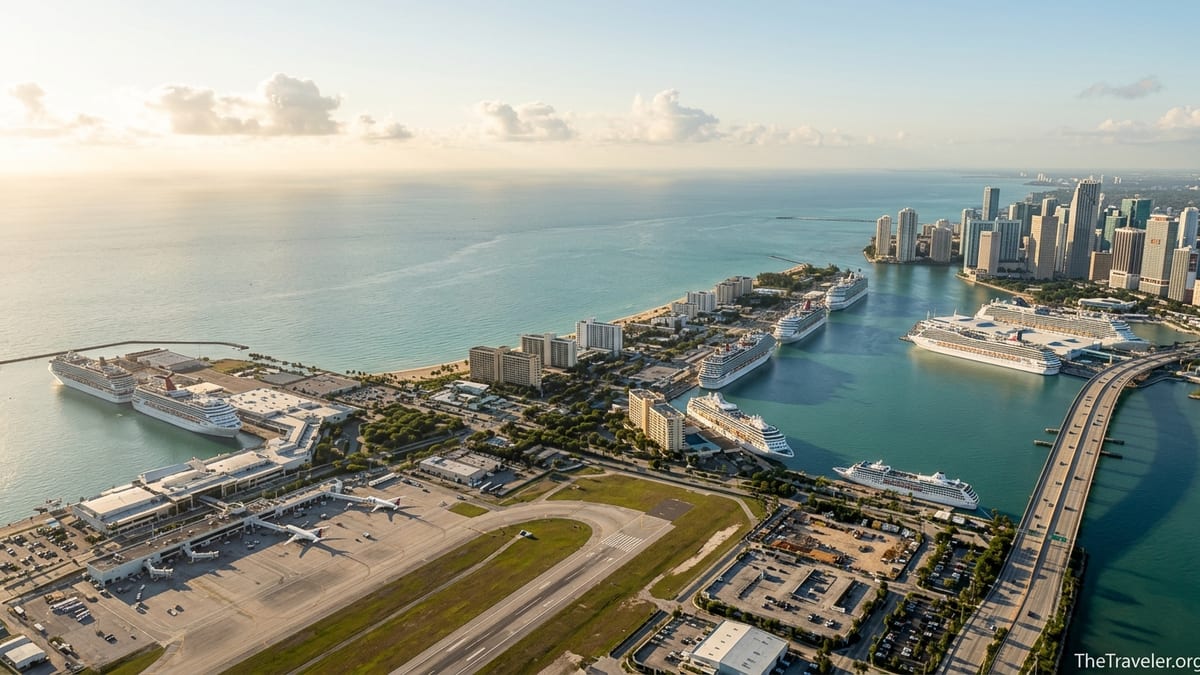
Big Picture: Two Major Cruise Gateways With Different Personalities
Port Everglades and PortMiami are among the busiest cruise ports in the world, handling millions of passengers a year on everything from quick Bahamas getaways to long Caribbean, transatlantic and world cruises. PortMiami, set on Dodge Island just off downtown Miami, often bills itself as the Cruise Capital of the World and is the home base for many of the largest new mega‑ships. Port Everglades, in Fort Lauderdale, sits just south of the city’s airport and stretches along a wide channel that also serves cargo and fuel traffic.
In practice, many travelers describe Port Everglades as calmer and more utilitarian, with an emphasis on function over flash. You will not see the Miami skyline or Biscayne Bay as you check in, but you will usually find straightforward access from nearby hotels and the airport. PortMiami feels more dramatic: you drive past the high‑rises of Brickell and downtown, cross the causeway or port tunnel, and sail out with views of South Beach and the city. If your trip is as much about the pre‑ and post‑cruise scene as the ship itself, that difference matters.
Most major lines sail from both ports at various times of the year, so the port is often determined by the exact ship and itinerary you pick. For example, Royal Caribbean, Carnival and Norwegian regularly operate from both Fort Lauderdale and Miami, while lines such as Princess and Holland America favor Port Everglades more heavily. Luxury and small‑ship brands divide their deployments between the two, often shifting seasonally. Because there is so much overlap, you can often compare specific ships and routes from each port before booking.
Instead of asking which port is objectively better, it is more useful to ask which port is better for the way you will actually travel: where you fly into, whether you will rent a car, how much time you want to spend in Miami or Fort Lauderdale, and how sensitive you are to traffic and parking costs.
Airport Access: FLL vs MIA and Transit Time to Each Port
Airport proximity is where Port Everglades usually wins. Fort Lauderdale–Hollywood International Airport (FLL) sits only about 3 to 4 miles from the Port Everglades entrance, with typical drive times around 10 to 20 minutes under normal traffic. On a smooth embarkation morning, it is common to land at FLL, pick up checked bags, and be outside the cruise terminal within an hour. Even in heavier traffic, most travelers report 30 minutes or less from airport curb to port security when using a taxi or rideshare.
PortMiami is about 8 to 10 miles from Miami International Airport (MIA), depending on the route, with usual drive times in the 15 to 25 minute range in light to moderate traffic. The dedicated port tunnel that connects the MacArthur Causeway directly to the terminals helps keep trucks and cruise traffic out of downtown streets, but congestion around the airport and on the expressways can still add time, particularly on weekday mornings and Sunday afternoons when several ships are in port.
If you are flying into the “other” airport, the equation changes. A rideshare from FLL to PortMiami typically runs around 35 to 60 minutes depending on traffic, and the reverse is similar for MIA to Port Everglades. Many cruisers report paying roughly the cost of a short‑haul domestic air ticket for a round‑trip rideshare between these airports and the opposite port once tips and surge pricing are factored in. Cruise lines and independent shuttle operators often sell shared transfers between FLL, MIA and both ports, which can be cost‑effective for solo travelers or couples but less attractive for families who can fill a standard rideshare.
In broad terms, if your flights are into FLL and you have a choice of ports, Port Everglades minimizes ground time and complexity. If your best or only nonstop flights land at MIA, PortMiami is more convenient. For travelers whose home airports have strong service to both cities, it can make sense to start by picking your ideal ship and itinerary, then choose the airport that best matches that port.
Hotels and Pre‑Cruise Stays: Quiet Convenience vs Urban Energy
Hotels cluster tightly around both ports, but the character of the pre‑cruise stay differs. Near Port Everglades, many cruisers stay in the 17th Street Causeway / Harbor Beach / airport corridor, a mostly mid‑rise area of chain hotels, shopping plazas and casual dining. Within a 10 to 15 minute ride of the port, you will find familiar brands like Hilton, Embassy Suites, Hyatt Place, Holiday Inn, Courtyard, and several limited‑service options. Many of these properties run complimentary or low‑cost shuttles to FLL and sometimes to Port Everglades on cruise days, though offerings change frequently and are worth confirming when you book.
For example, a couple flying into FLL on a Saturday might book a mid‑range suite hotel near 17th Street, walk to a nearby supermarket to pick up forgotten toiletries and sunscreen, have an early dinner at a casual restaurant, and take a 10‑minute rideshare to their ship the next morning. They trade nightlife and beach views for ease and predictability. Travelers wanting a bit more atmosphere sometimes choose Fort Lauderdale Beach or Las Olas Boulevard, both of which still sit within a 15 to 20 minute ride of the port in normal traffic.
PortMiami’s surrounding hotel scene feels more urban and diverse. You can stay in Downtown Miami or Brickell for quick access to the port and walkable restaurants, rooftop bars and shopping. Many high‑rise business hotels double as pre‑cruise bases, offering weekend deals when corporate demand is lower. South Beach, a 15 to 25 minute ride from the port, caters to travelers who want Art Deco architecture, oceanfront promenades and late‑night energy before or after their sailing. The price range can be wider: you can find budget motels on the mainland as well as luxury brands along the beach.
For a concrete example, a group of friends sailing from PortMiami on a three‑night Bahamas cruise might spend two nights in South Beach, splitting a room at a boutique property, walking to the beach and bars, then taking a short ride over the causeway to the ship. They pay more for lodging but fold a mini Miami city break into their cruise vacation. In contrast, a family of four focused on budget might choose a suburban Miami hotel near the airport, using a hotel‑to‑port shuttle or rideshare on embarkation day and skipping the nightlife entirely.
Cruise Lines, Itineraries and Ship Types at Each Port
From a cruise choice standpoint, there is substantial overlap between the two ports, but each has its own leanings. PortMiami often hosts some of the newest and largest ships for brands like Royal Caribbean, Carnival, Norwegian, MSC Cruises and Virgin Voyages, particularly on short Bahamas and Eastern Caribbean runs and marquee seven‑night itineraries. Many of those sailings are designed to dovetail with short city stays in Miami or South Beach.
Port Everglades is a major hub for longer and more varied itineraries, especially in winter. Holland America and Princess, for example, frequently use Fort Lauderdale as a base for longer Caribbean and Panama Canal cruises. Celebrity and Royal Caribbean homeport multiple ships there on seasonal schedules, including large vessels that appeal to families and multigenerational groups. Travelers looking for ten‑night or longer sailings, repositioning cruises or world‑cruise segments will often find more options departing Port Everglades, particularly outside peak holiday weeks.
Luxury and small‑ship lines, such as Silversea, Seabourn, Oceania and some expedition brands, have increased their presence in South Florida in recent years, splitting deployments between Miami and Fort Lauderdale depending on terminal arrangements and itineraries. For instance, a winter Caribbean voyage on a smaller luxury ship might depart from PortMiami one year and Port Everglades the next, even if the route is similar. That makes it important to verify the exact port and terminal on your cruise documents rather than assuming the city based on the line.
If you are flexible on brand and ship, you can sometimes use the port to shape your vacation. Travelers who want to pair a cruise with a longer stay in Miami or the Florida Keys might prioritize PortMiami sailings. Those combining a cruise with a week in Fort Lauderdale, Palm Beach County or a road trip to the Gulf Coast may find Port Everglades a more natural fit, with easier access to I‑595, I‑75 and Florida’s Turnpike.
Driving, Parking and Traffic: What It’s Really Like on Embarkation Day
For cruisers driving their own car, both ports offer on‑site garages and surface lots within walking distance of most terminals. At Port Everglades, the official tariff lists a tiered structure that reaches a maximum daily rate of about 20 dollars for standard vehicles, with large garages near the mid‑port and northport terminals and smaller lots by specific piers. Drivers typically pull a ticket at entry and pay at exit, and spaces are uncovered or partially covered depending on the structure. Many local travelers describe Port Everglades parking as straightforward: you follow simple signage, park in the garage closest to your terminal number, and walk or take a short shuttle to check‑in.
PortMiami’s on‑site parking is concentrated in large garages and surface lots adjacent to each cruise terminal. Daily rates tend to be somewhat higher than at Port Everglades, and individual terminals or joint ventures may set their own pricing for certain garages. Parking is extremely convenient for some ships, with dedicated structures directly across from the terminal doors, but congestion can build at peak drop‑off times as taxis, buses and rideshares jockey for space on the terminal access roads.
Off‑site parking is more developed in Fort Lauderdale, with multiple private lots and park‑and‑shuttle operators located several miles from the port. These lots often advertise per‑day rates significantly under the on‑site garages, which can add up to meaningful savings on a seven‑night or longer cruise. A typical pattern is for a local family to reserve a spot at a private lot, park their SUV for the week, and ride a shared shuttle to and from the terminal. In Miami, off‑site cruise parking does exist but is somewhat more scattered and can involve longer shuttle rides through city traffic.
Traffic is where personal tolerance levels matter. Approaches to Port Everglades rely heavily on Interstate 595 and U.S. 1, with port entrances clearly marked near the airport and convention center. On a typical Saturday or Sunday, most drivers experience moderate congestion near the checkpoints and terminals, but it seldom matches the intensity of downtown Miami. PortMiami, by contrast, sits at the end of causeways that also serve local beach traffic. While the port tunnel has reduced heavy truck and bus presence on downtown streets, it remains common to encounter slow‑moving lines of vehicles near the terminals during simultaneous ship turnarounds, especially on Sundays and holiday weeks.
Cost, Convenience and South Florida Side Trips
Cost comparisons between the two ports are highly individualized, but there are some recurring patterns. Travelers who can easily fly into FLL and are content with a functional pre‑cruise hotel often find that Port Everglades yields a lower overall bill: shorter rideshare or taxi transfers, mid‑range hotel rates in airport and 17th Street corridors, and slightly lower on‑site parking costs. A family of four driving from Central Florida, for instance, might spend the night at a modest Fort Lauderdale hotel with free breakfast and pool, park their car at a private lot for a week, and keep all their ground costs within a few hundred dollars.
PortMiami tends to make more sense when Miami itself is part of the trip. Travelers wanting to visit the Wynwood arts district, Little Havana, South Beach, or the nearby national parks may decide that the incremental cost of downtown or beachfront hotels is a worthwhile trade for being in the middle of the action. A couple celebrating an anniversary might splurge on two nights at a high‑rise Brickell hotel with bay views, dine at a well‑known Miami restaurant, and take a short taxi to their ship in the morning, accepting higher lodging and parking prices as part of the experience.
South Florida side trips can also tip the balance. Port Everglades sits close to the junction of I‑595, I‑95 and I‑75, making it a natural starting point for drives to Naples, the Gulf Coast, or the northern Everglades. Travelers planning to visit relatives in Boca Raton or West Palm Beach, or to spend time in the quieter beach towns of Broward and Palm Beach counties, often find Fort Lauderdale more geographically convenient. PortMiami, in turn, is better aligned with road trips down U.S. 1 through the Florida Keys or visits to Coral Gables, Coconut Grove and the southern Everglades.
Public transport options are modest but can matter to budget travelers. In Fort Lauderdale, local buses and occasional shuttles link FLL, Port Everglades and nearby hotels, though schedules can be limited and luggage handling can be awkward. In Miami, Metrorail and the downtown Metromover provide low‑cost ways to explore the city before or after a cruise if you are staying in the urban core, but there is no direct rail connection onto the port island itself, so you will still need a short taxi or rideshare for embarkation.
Which Port Is Better for Different Traveler Types?
For families and first‑time cruisers who value simplicity, Port Everglades often feels less intimidating. The airport is close, the hotel districts are compact, and the driving environment is more forgiving for visitors unused to dense urban traffic. Parents juggling strollers and suitcases may appreciate the shorter transfers and the relaxed pace of pre‑cruise neighborhoods. Older travelers who prefer quieter evenings and easy access to chain restaurants, pharmacies and supermarkets also tend to favor Fort Lauderdale.
Seasoned travelers, nightlife seekers and those who thrive on big‑city energy may gravitate toward PortMiami. If your idea of a perfect pre‑cruise day includes walking through an art district, sampling Cuban coffee on Calle Ocho, or people‑watching on Ocean Drive, it is hard to beat Miami’s variety. The views sailing in and out of PortMiami, with the skyline on one side and the barrier islands on the other, are often a highlight in their own right and can make a short cruise feel more like a full‑blown vacation.
Flyers from smaller markets often let air schedules decide for them. If you can get a nonstop into MIA but would need a connection to reach FLL, the reduced risk of delays and missed connections might outweigh the convenience of Port Everglades. Conversely, if low‑cost carriers serve FLL from your home city but have limited MIA service, flying into Fort Lauderdale and sailing from Port Everglades can save both money and stress. Some travelers split the difference by flying into one airport, spending time in both metro areas, and sailing from the port that best matches their itinerary home.
Travel style also matters on disembarkation day. If you prefer not to worry about long immigration lines or traffic delays before a flight, pairing Port Everglades with FLL allows many travelers to comfortably book late morning or midday departures. When sailing from PortMiami and flying out of MIA, most experts still recommend midday or afternoon flights to leave a margin for delays, particularly on Sundays when multiple ships clear customs at once.
The Takeaway
Choosing between Port Everglades and PortMiami is less about finding a universally better port and more about matching each port’s strengths to your specific trip. Port Everglades generally wins on sheer practicality: shorter transfers from FLL, easier driving and parking, and a calm pre‑cruise environment centered on convenience. PortMiami excels when you want Miami itself to be part of the experience, whether that means a South Beach weekend, a Brickell city stay or a road trip into the Keys.
If you are booking a cruise and have options from both ports, start by considering where you can get the best flights, how comfortable you are with big‑city driving, and whether a low‑key or high‑energy pre‑cruise stay fits your group. Families, cautious drivers and budget‑focused travelers often lean toward Port Everglades, while nightlife fans, food‑focused travelers and those eager to explore Miami’s neighborhoods frequently prefer PortMiami.
Ultimately, both ports are well equipped to move you efficiently from land to sea. Decide what matters most, run a quick price and time comparison for your own dates, and then commit fully to enjoying the ship and the region. With realistic expectations for traffic, parking and transfers, either Fort Lauderdale’s Port Everglades or Miami’s port can be the ideal starting point for your South Florida cruise adventure.
FAQ
Q1. Is Port Everglades or PortMiami closer to an airport?
Port Everglades is closer to its primary airport. It sits only a short drive from Fort Lauderdale–Hollywood International Airport, while PortMiami is a longer but still reasonable ride from Miami International Airport.
Q2. Which port is easier for first‑time cruisers?
Many first‑time cruisers find Port Everglades easier because airport transfers are short, hotel areas are compact, and driving and traffic tend to feel less intense than around downtown Miami.
Q3. Where will I find more cruise options overall?
Both ports have extensive sailings, but PortMiami often hosts more of the very largest, newest mega‑ships, while Port Everglades offers a strong mix of mainstream, premium and longer itineraries, especially in winter.
Q4. Which port usually has cheaper hotels nearby?
In general, mid‑range hotels around Fort Lauderdale’s airport and 17th Street corridor near Port Everglades run lower than comparable properties in downtown Miami or South Beach, though prices vary by date and demand.
Q5. Is parking cheaper at Port Everglades or PortMiami?
Official on‑site daily parking rates at Port Everglades are typically slightly lower, and there are multiple off‑site private lots. PortMiami’s on‑site garages tend to cost more per day, with more limited off‑site options.
Q6. Can I fly into one city and cruise from the other port?
Yes, many cruisers do this, using rideshares, taxis or shuttle services between FLL, MIA, Port Everglades and PortMiami. It adds time and cost, so it is most worthwhile when air savings are significant.
Q7. Which port is better if I want to explore Miami before my cruise?
PortMiami is better if you plan to explore Miami. Staying in Downtown, Brickell or South Beach lets you enjoy the city’s neighborhoods and then take a short ride to the port.
Q8. Which port should I choose for a quieter, low‑key stay?
For a quieter pre‑ or post‑cruise stay, Port Everglades paired with Fort Lauderdale offers calmer beach areas, suburban hotel zones and easier driving, with less focus on nightlife.
Q9. How far apart are Port Everglades and PortMiami?
The two ports are roughly 25 to 30 miles apart by road, usually 35 to 60 minutes in a car, depending on traffic. Many cruisers transfer between them when combining different ships or itineraries.
Q10. If prices and itineraries are similar, which port should I pick?
If everything else is equal, choose Port Everglades for maximum convenience and PortMiami if you want Miami’s skyline, neighborhoods and nightlife to be a bigger part of your trip.