


More news on this day
The Port of Galveston is moving ahead with technical studies tied to a possible fifth cruise terminal, signaling that one of North America’s busiest cruise hubs is seriously evaluating another round of expansion on its historic Gulf Coast waterfront.
Get the latest news straight to your inbox!
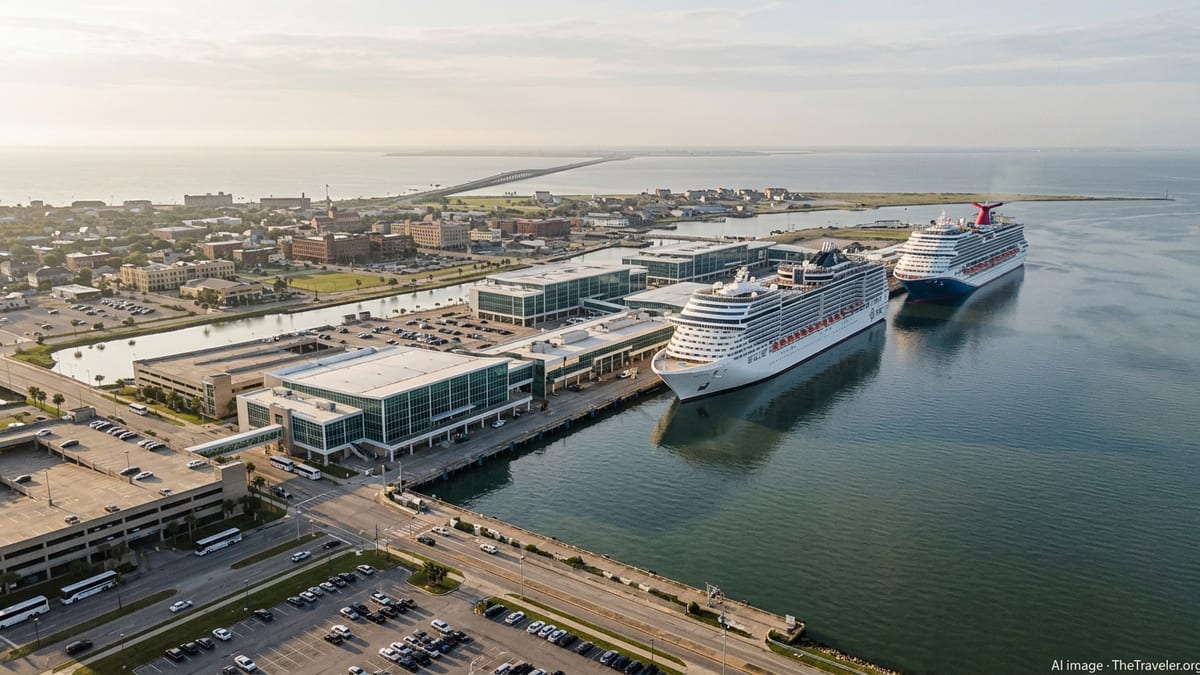
Master Plan Envisions New Cruise Facility at Pier 14
Publicly available planning documents and recent industry coverage indicate that the port’s updated long-range strategy calls for a fifth cruise facility, identified in materials as a new terminal and associated parking and berth near Pier 14. The project appears as part of the Port of Galveston’s 2045 master plan, which outlines how the city-owned port could accommodate sustained growth in the Western Caribbean cruise market over the next two decades.
The conceptual fifth terminal is currently framed as a mid-term project rather than a shovel-ready build. Planning presentations describe a phased approach to adding new berths, with a fifth cruise berth targeted late this decade and additional facilities contemplated further out. That sequencing suggests port leaders are attempting to balance near-term demand with infrastructure, financing and community impacts.
The master plan update follows several years of rapid expansion. Galveston has already grown from two cruise terminals to a complex that includes a Royal Caribbean facility at Terminal 10 and a new Terminal 16 development on the east end of the waterfront. According to publicly available financial reports, a fourth cruise complex is counted in the port’s 2025 outlook, underscoring how quickly cruise capacity has scaled up.
Mobility Study to Test Traffic and Access Impacts
Even as the fifth terminal remains in the planning stages, port records show that a key next step is focused on transportation. An agenda for a recent Galveston Wharves Board meeting details a proposed agreement with a consulting firm to conduct the first phase of a mobility study, with an amount not to exceed several hundred thousand dollars. The scope centers on analyzing how a new cruise terminal at Pier 14 would affect travel patterns on and around Harborside Drive and the downtown core.
The study is expected to evaluate cruise-day traffic surges, queuing needs for private vehicles, shuttles and rideshare services, and potential changes to freight movements. City and port discussions in recent years have highlighted concerns about congestion near existing terminals, particularly as larger ships and more frequent sailings bring added visitors through the island’s limited access corridors.
According to published coverage in cruise trade media, the mobility work is being launched as part of implementation of the port’s updated 20-year strategic framework. That framing links the analysis directly to long-term growth assumptions rather than to a one-off project, suggesting the findings could shape multiple future transportation investments beyond a single terminal.
Cruise Growth Pressures and Economic Payoff
The renewed focus on a potential fifth terminal comes as Galveston seeks to consolidate its role as the primary cruise gateway for Texas and a major embarkation point for the Western Caribbean. Master plan summaries and public presentations point to strong passenger growth projections, with expectations that annual cruise volumes could climb significantly over the next decade if capacity is available.
Earlier analyses prepared for the port have tied each new terminal to substantial increases in jobs, local spending and tax revenues on the island and across the state. A prior economic study cited by port leadership estimated that a recent terminal addition would generate millions of dollars a year in incremental state and local taxes, along with hundreds of direct and indirect jobs tied to ship provisioning, ground transportation and visitor services.
Those figures underpin the case for further expansion. As more cruise lines position newer and larger vessels in Galveston, industry observers note that additional berth capacity may be necessary to accommodate both year-round and seasonal deployments. The master plan’s reference to multiple future cruise berths reflects expectations that cruise tourism will remain a key pillar of the port’s business mix through at least the 2030s and 2040s.
Balancing Waterfront Development, Heritage and Community Concerns
The idea of a fifth cruise terminal is emerging alongside broader conversations about how Galveston’s working waterfront should evolve. Planning materials and local reports describe parallel initiatives to enhance public access along the harbor, including potential shoreline improvements and new boardwalk-style amenities near existing piers.
At the same time, the port and partner organizations are advancing heritage-focused projects, including the planned relocation of the historic battleship Texas to a berth near the cruise complex. Supporters see the battleship as a cultural anchor that could complement cruise-driven tourism, while some community voices are watching closely to ensure that industrial growth, historic preservation and neighborhood quality of life are balanced.
Traffic, air quality and visual impacts have all been recurring themes in public discussions around recent terminal projects. The decision to invest in a mobility study before committing to construction indicates that local leaders are aware of those concerns and may seek to address them through roadway changes, staging areas and updated parking strategies if the fifth-terminal concept advances.
Next Steps for a Still-Preliminary Project
For now, the proposed fifth cruise terminal remains in a conceptual phase, nested within a broader strategic roadmap rather than approved as a stand-alone capital project. Board agendas and public statements emphasize planning, modeling and community engagement, with timing and funding still to be refined based on study results and market conditions.
Key milestones in the months ahead are expected to include completion of the initial mobility assessment, continued refinement of the port’s 2045 master plan and additional opportunities for stakeholders to review and comment on proposed waterfront changes. Any eventual terminal construction would also need to navigate permitting, design and contracting processes that typically unfold over several years.
With cruise brands continuing to bet on Galveston as a homeport for new tonnage, the question for the island is not whether demand exists, but how and when to add capacity in a way that fits its compact geography and historic character. The fifth terminal concept, and the studies now beginning around it, will be a key test of how that balance is struck.