


More news on this day
Port Tampa Bay has kicked off work on a long-anticipated fourth cruise terminal, a project intended to ease pressure on its busy Channel District facilities and capture future growth in Florida’s booming cruise market.
Get the latest news straight to your inbox!
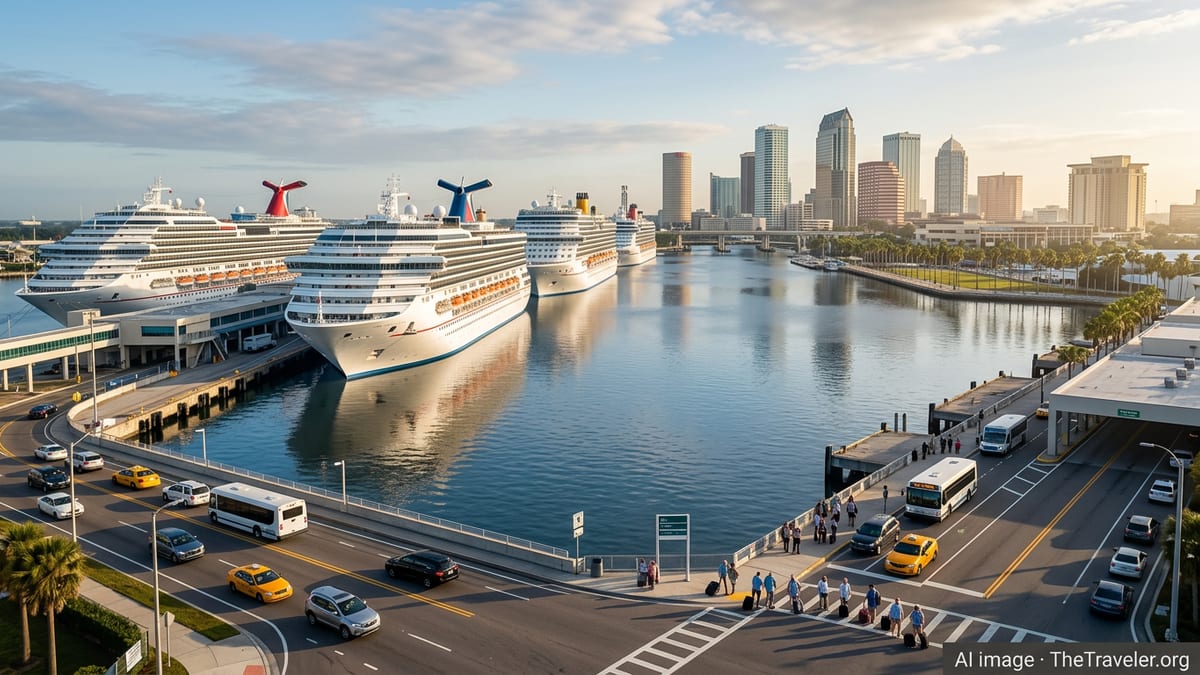
New terminal moves from planning to construction
According to publicly available planning and board documents, Port Tampa Bay has shifted its fourth cruise terminal from design and procurement into early construction activities. The move follows several years of studies and engineering work that evaluated how to expand cruise operations without disrupting the port’s existing terminals 2, 3 and 6, which are clustered in Tampa’s Channel District.
Previous strategic freight and capital plans for the region describe the fourth terminal as a key element in accommodating larger ships and more frequent sailings while maintaining smooth vessel movements and passenger processing. The port’s leadership has framed the project as an evolution of the current footprint, rather than a relocation, with construction sequenced so that ships can continue to sail from Tampa during the build-out.
The current phase of work typically includes site preparation, utility relocation and detailed structural and marine engineering, setting the stage for later phases that will add the passenger building, baggage handling areas and landside facilities. Timelines discussed in recent board materials point to a multi‑year build, with opening targeted in the second half of the decade.
Publicly available meeting summaries indicate that port commissioners have backed the project unanimously, citing the need to keep pace with changing cruise demand and ship deployments in the Gulf of Mexico and Caribbean.
Capacity pressures behind the expansion
Regional freight and port performance reports show that the port’s three existing cruise terminals have been operating near capacity, with steady growth in passenger movements in the years following the sector’s post‑pandemic restart. As cruise lines have rebalanced their fleets across Florida, Tampa has benefited from its position serving the Central and West Florida drive‑to market.
Planning documents highlight a structural challenge: around the world, cruise lines are deploying larger, more amenity‑rich ships, while Tampa is constrained to older, smaller vessels that can fit under the Sunshine Skyway Bridge at the entrance to the bay. That reality limits how much of the global cruise fleet can call at the port, even as demand from the regional market increases.
The fourth terminal is therefore designed less as a way to attract the very largest ships and more as a way to handle more sailings and improve turnaround efficiency for vessels that can already access the port. By spreading passenger volumes across four facilities instead of three, port planners expect to reduce bottlenecks on peak weekend turnaround days and improve traffic circulation in surrounding city streets.
Industry coverage also notes that Tampa competes with nearby Florida cruise ports that have continued to add terminals and handle record passenger volumes. In that context, added capacity at Port Tampa Bay is seen as a defensive and strategic investment in maintaining the region’s share of the market.
Design features and integration with downtown Tampa
Concept materials and capital program summaries describe the new cruise terminal as part of a broader “Metro Port” redevelopment vision integrating cruise, cargo, parking and mixed‑use elements along the Ybor Channel. The fourth terminal is expected to mirror newer facilities in other Florida ports, incorporating modern security screening lanes, expanded check‑in areas and updated baggage systems.
The project is also being planned with downtown connectivity in mind. The terminal site is situated near existing parking structures, the TECO Line Streetcar and pedestrian links into the Channel District and Water Street Tampa neighborhoods. Local planning reports indicate that the port is working to coordinate traffic flow, curb space and wayfinding so that cruise day surges do not overwhelm nearby streets or conflict with events at nearby entertainment venues.
Environmental and resiliency considerations have been part of the design process, with documents referencing flood elevation standards and storm preparedness measures that reflect updated building codes and sea level projections. The port’s recent capital work on other facilities has typically included hardened electrical systems and elevated critical infrastructure, and observers expect similar approaches at the new cruise complex.
Early renderings referenced in planning materials suggest a contemporary architectural style consistent with recent waterfront development in Tampa, though the final design may evolve as the project proceeds through permitting and procurement.
Economic stakes for Tampa’s tourism and maritime sector
Port Tampa Bay is recognized as one of Florida’s largest and most diversified seaports by cargo tonnage and acreage, serving as a key hub for petroleum, containers, bulk commodities and ship repair alongside its cruise business. Cruise operations, however, play a visible role in the region’s tourism economy, feeding passengers into Tampa’s hotels, restaurants, attractions and airport.
Statewide seaport mission plans and economic impact studies have pointed to cruise as a significant job creator in terminal operations, hospitality, ground transportation and tour services. By adding a fourth terminal, the port aims to support more year‑round sailings and attract new or expanded itineraries in the Western Caribbean and Gulf of Mexico that begin or end in Tampa.
The project also carries symbolic weight in the competitive landscape of Florida cruise ports. Facilities in Miami, Port Everglades and Port Canaveral have opened new terminals in recent years to host some of the world’s largest vessels and record passenger volumes. While Tampa’s physical constraints limit its ability to replicate that model, the new terminal is intended to signal that the city remains a viable and growing homeport, particularly for drive‑in guests from Central Florida and neighboring states.
Regional planning documents suggest that, combined with container terminal investments elsewhere in the port, the cruise expansion is part of a long‑term strategy to diversify revenue streams and ensure that Port Tampa Bay remains a central economic engine for West Central Florida.
Timeline, funding and competitive context
Board agenda records from early 2026 reference a projected opening timeline of roughly three years and several months from the start of the current project phase, placing the likely debut of the fourth terminal toward the end of the decade, subject to permitting, procurement and construction conditions. That schedule aligns with typical delivery windows for large port infrastructure projects involving both marine and landside components.
Public budget documents list design and early construction funding for the terminal within the port’s capital improvement program, alongside other ongoing investments. The work is expected to be financed through a mix of port revenues and borrowing, with potential access to state infrastructure programs that support seaport enhancements. No single funding source has been described as dominant in available materials, reflecting a diversified approach common among U.S. ports.
The expansion unfolds as private developers promote a separate proposal for a cruise facility closer to the Sunshine Skyway Bridge, intended to accommodate larger ships that cannot reach downtown Tampa. Coverage of that proposal has sparked debate over environmental, transportation and economic trade‑offs in the wider Tampa Bay region.
Against that backdrop, Port Tampa Bay’s decision to advance its own fourth terminal at the existing downtown complex is widely interpreted in industry reporting as an effort to reinforce its position as the primary homeport for the region. The project’s progress will be closely watched by cruise lines, local businesses and travelers looking for more options to sail from Florida’s Gulf Coast.