


More news on this day
A fresh wave of last minute cancellations at Portland International Airport has disrupted travel for scores of passengers, concentrating the impact on regional operator Republic Airways and major partners Delta Air Lines and American Airlines.
Get the latest news straight to your inbox!
Eleven Cancellations Ripple Across Key Domestic Routes
Tracking data and airport information show a cluster of 11 flight cancellations tied to Portland International Airport within a short operating window, creating a disproportionate shock for a relatively small regional hub. The affected flights were largely domestic connections that funnel travelers to and from major hubs, magnifying the disruption for passengers booked on onward connections.
The cancellations touch multiple partners in the U.S. airline network. Republic Airways, which operates regional services on behalf of larger brands, features prominently in the disrupted schedule, with several of its Portland linked services removed from departure and arrival boards. Delta branded flights, including Delta Connection services, and American Airlines operated routes also appear among the scrubbed departures.
While 11 flights may seem modest compared with disruptions in larger metropolitan hubs, the concentration of cancellations in a compact time frame has amplified the sense of chaos. For many travelers, a single missing regional leg can mean the collapse of an entire itinerary, forcing complex rebookings or overnight stays far from home.
The impact is particularly acute for passengers using Portland as a gateway to larger connecting cities. With limited frequency on some routes, a canceled flight can mean waiting until the next day for an alternative seat, or accepting lengthy detours through multiple hubs.
Regional Carriers Under Strain as Network Partners
The episode underscores how regional operators like Republic Airways sit at the heart of the U.S. airline system, even as they remain largely invisible to the traveling public. Many passengers holding tickets under the Delta or American Airlines brands discover only at the gate that the aircraft and crew are actually provided by a contracted regional partner.
Industry data and past disruption patterns suggest that regional segments can be among the first to be cut when schedules need rapid adjustment, whether because of staffing limits, aircraft availability, air traffic constraints or localized weather. Those early cancellations often cascade outward, ending in missed connections at major hubs and stranding travelers far from their original routes.
Recent operational challenges across the regional sector, including tight pilot availability and lean spare aircraft resources, have increased the vulnerability of these flights. When something goes wrong in one part of the network, regional routes such as those linking Portland with hub cities frequently absorb the shock, as carriers work to preserve long haul and hub to hub operations.
For Delta and American, the Portland cancellations add to broader questions about how mainline brands balance contractual obligations to regional partners with the need to protect their own premium and international schedules. Travelers whose journeys begin or end in secondary markets tend to feel the brunt when trade offs are made.
Passengers Face Long Lines, Confusion and Limited Options
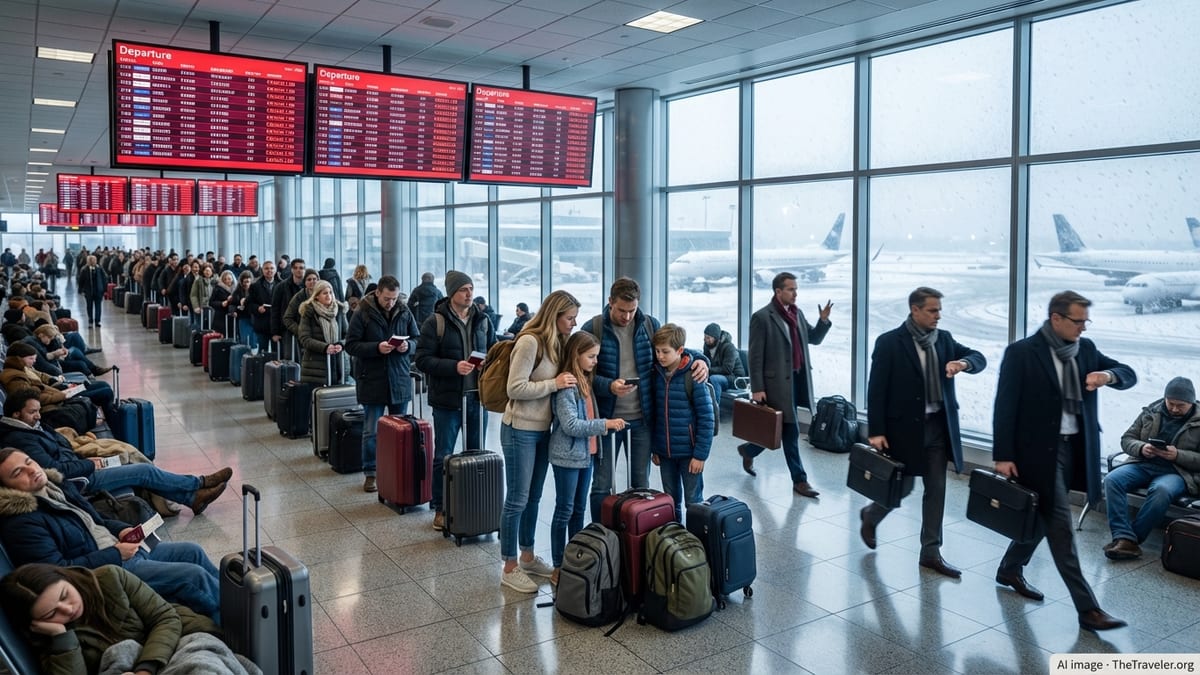
Reports from travelers indicate that the series of cancellations left check in counters and customer service desks at Portland International Airport backed up with long lines, as passengers scrambled to secure replacement flights. Same day alternatives on Delta and American were reported to be scarce on several routes, reflecting already tight summer capacity and high load factors.
With only a handful of daily frequencies to some destinations, travelers often found that their options involved either overnight delays or multi stop itineraries through distant hubs. Families and business travelers alike described piecing together connections across different airlines or rerouting through less direct cities simply to reach their destinations within 24 hours of their original plans.
Airport operations also felt the strain. As cancellations accumulated on departure boards, gate changes and reshuffled aircraft assignments created additional confusion. Passengers reported checking airline apps repeatedly as departure times shifted, only to have flights ultimately disappear from the schedule.
For those already in the air or en route to Portland when the disruption emerged, the cancellations meant arriving to find onward legs missing, with hotel arrangements and ground transportation suddenly in doubt. Such scenarios highlight how even a limited number of flight cuts can upend travel for far more people than the raw cancellation count suggests.
Airline Response and Accountability Under Scrutiny
The Portland disruptions arrive at a moment when airlines are under sustained public pressure to improve handling of delays and cancellations. Consumer advocates have pointed to recent episodes across the country as evidence that carriers continue to run schedules close to the limit of available staff and equipment, leaving little slack when conditions change.
Publicly available information shows that Delta and American, like their peers, have pledged to prioritize timely notice of disruptions and to provide rebooking assistance and refunds when flights are canceled. In practice, however, travelers often experience a patchwork of responses, with some receiving automatic rebookings while others queue at airport counters or spend hours on hold.
The Portland situation has renewed traveler complaints about transparency when regional operators are involved. Passengers holding major airline tickets sometimes learn only during a disruption that their flight is operated by a different company, which can complicate questions about responsibility for accommodations, vouchers or alternative routing.
As the summer travel season ramps up, the Portland cancellations are likely to feed into broader national conversations about airline accountability, Department of Transportation oversight and the resilience of the U.S. air travel system when unexpected problems arise.
What Travelers Can Do When a Meltdown Hits
The disruption at Portland International Airport offers a stark reminder that even a relatively small cluster of cancellations can create system level headaches for travelers. Aviation analysts frequently advise passengers to prepare contingency plans, especially when relying on regional connections that serve as the first or last leg of a longer journey.
When cancellations strike, experienced travelers recommend immediately checking airline apps for self service rebooking options while simultaneously queuing at customer service desks. In some cases, alternative routings through different hubs or even on partner airlines may appear in digital tools before they are offered in person.
Travel planning professionals also suggest building extra time into itineraries involving tight connections, particularly in peak seasons or when operating through busy hubs. Choosing earlier departures where possible can create more room to recover if a flight is canceled, while monitoring weather and air traffic news ahead of departure can provide early warning of potential trouble.
For passengers caught up in Portland’s latest wave of cancellations, the experience has been a costly lesson in the fragility of modern airline networks. As demand for air travel remains strong and operational buffers stay thin, episodes like this one may become a recurring test of traveler resilience and airline reliability alike.