


The Phlegraean Fields just west of Naples offer some of the most intriguing volcanic landscapes and Roman ruins in Italy, but most visitors only scratch the surface on a rushed day trip. If you are planning more time in the area, a key decision quickly appears: should you base yourself in lively Pozzuoli or quiet, coastal Baia? Both sit inside the same volcanic caldera, share the same Gulf of Pozzuoli views and are linked by the same local trains and buses, yet they deliver very different travel experiences. This guide walks you through the trade offs so you can decide which destination actually fits your style, budget and interests.
Get the latest updates straight to your inbox!
Understanding the Phlegraean Fields Context
The Phlegraean Fields are not a single site but a volcanic region stretching west of Naples, scattered with craters, fumaroles, thermal springs and dense layers of Roman history. Pozzuoli and Baia sit side by side inside this caldera, along with Bacoli and smaller communities. The same volcano that powers spa waters at places like the Stufe di Nerone and nearby Agnano also shaped the bays, raised terraces and submerged villas you see today. That shared geological story is why both towns feel unlike the Amalfi Coast or Sorrento, even though they are barely 40 minutes from central Naples by public transport.
In recent years Italian civil protection authorities have increased monitoring here, as uplift of the ground and swarms of small earthquakes have become more frequent, especially around Pozzuoli. You will see notice boards explaining evacuation routes, and locals can tell you which streets shook more during the 4.4 magnitude quake in May 2024. For short term visitors, current advice emphasizes preparedness rather than alarm; hotels and operators continue to run normally, but it is wise to know your accommodation’s emergency instructions, just as you might in Tokyo or Reykjavik.
Because both Pozzuoli and Baia lie inside the same “red zone” of highest volcanic risk, the safety context is similar. The practical difference for travelers is less about absolute danger and more about what you want to do with your days: archaeological sightseeing, sea based activities, local nightlife or quiet coastal walks. With that in mind, choosing the right base becomes a question of lifestyle fit rather than fear.
Atmosphere: Working Port City vs Sleepy Seaside Hamlet
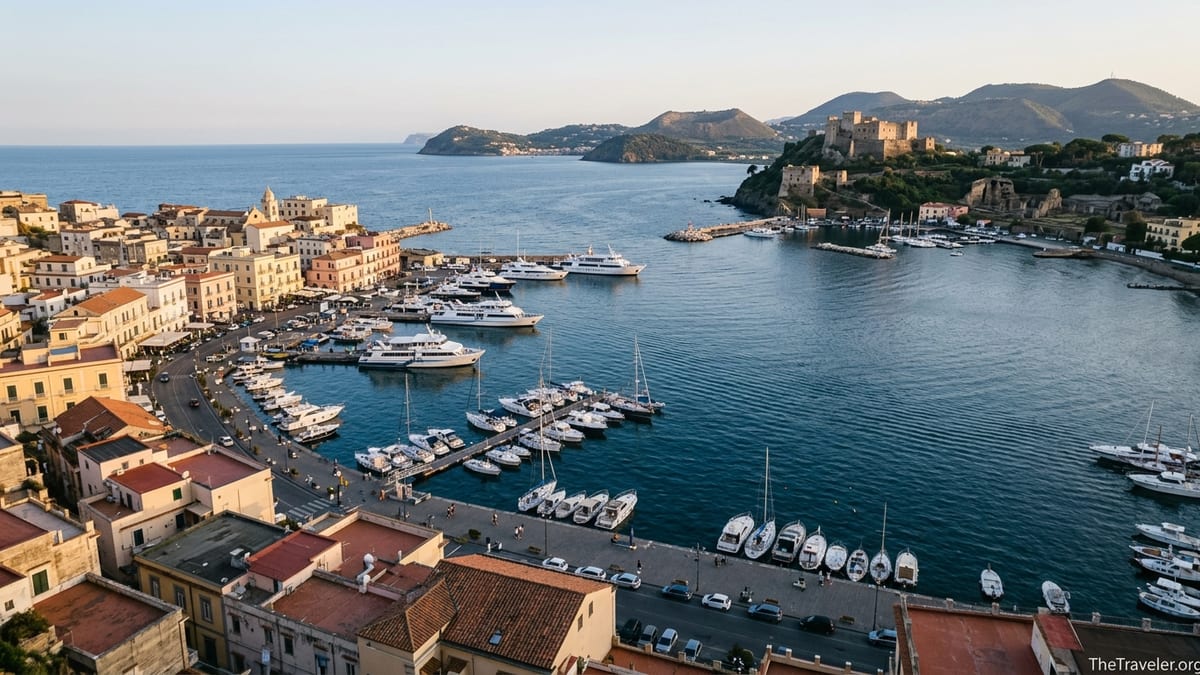
Pozzuoli feels like a compact, working coastal city. Ferries to Ischia and Procida depart from the port, commuters pour off the Cumana and Metro Line 2 trains in the morning, and the historic Rione Terra headland now hosts guided visits through layers of Roman and medieval remains. In the evening, the seafront lungomare around the marina fills with families strolling, teenagers licking gelato and locals queueing for pizza at busy spots near Piazza della Repubblica. If you like a sense of everyday life mixed with Roman ruins, Pozzuoli offers that in a way Baia does not.
Baia, by contrast, is closer to a village. It has a small marina, a cluster of restaurants and bars around the harbor, scattered houses climbing the hillside and a quieter rhythm overall. Outside summer weekends, you may find the waterfront pleasantly calm at sunset, with only a handful of visitors waiting for their glass bottom boat tour of the underwater park. After dinner, there is little in the way of nightlife beyond a few wine bars and hotel terraces. That slower pace appeals to travelers who want to wake to sea views and birdsong rather than scooters and ferry horns.
If you are imagining late night aperitivo culture, busy pizzerias and the possibility of hopping a morning hydrofoil to Ischia, Pozzuoli is the better fit. If you are more inspired by tranquil mornings, coastal walks toward Capo Miseno and lengthy archaeological explorations interrupted only by long lunches, Baia will likely match your expectations.
What You Will See: Sights in Pozzuoli vs Sights in Baia
Pozzuoli’s headline attractions are mostly on land. The Flavian Amphitheatre, one of Italy’s largest Roman arenas, lets you walk through atmospheric underground corridors and see the machinery pits that once lifted animals and gladiators into the arena. Nearby, the so called Temple of Serapis is actually the Macellum, a Roman market where marble columns still show rings left by marine mollusks during past episodes of ground sinking and rising. Add to this the resurrected Rione Terra district and the Solfatara crater area on the edge of town, and you can easily fill two full days without leaving Pozzuoli.
Realistically, many visitors combine Pozzuoli with side trips to Lake Averno, Cumae or the thermal spas around Agnano. You can reach these by local bus or taxi within 20 to 30 minutes. For example, a taxi from central Pozzuoli to the Stufe di Nerone thermal complex typically costs roughly the same as a short city ride in Naples and gives you access to volcanic mud, steam caves and outdoor pools fed by hot springs.
Baia, on the other hand, is all about imperial luxury. The hilltop Archaeological Park of Baia preserves the ruins of vast Roman thermal complexes and villas cascading down the slopes in terraces, with domed halls and mosaic fragments hinting at how lavish this resort once was. Below sea level lies the Underwater Archaeological Park of Baia, where bradyseism has slowly submerged entire districts. Here you can view submerged mosaics, columns and garden layouts from glass bottom boat tours or scuba and snorkel excursions, making Baia one of the most unusual archaeological experiences in Europe.
It is worth noting that the underwater park is divided into zones, and a basic entrance ticket to the protected area is modestly priced. The real cost depends on your chosen operator: a one hour glass bottom boat excursion might be priced in the range of a casual restaurant meal per person, while a two dive package with a local dive center will be considerably more, in line with typical guided scuba prices in the Mediterranean. For travelers interested in both architecture and the sea, Baia’s combination of hilltop ruins and submerged villas is hard to beat.
Practicalities: Transport, Costs and Convenience
From central Naples, Pozzuoli is easier and faster to reach. You can take Metro Line 2 from stations like Piazza Cavour or Montesanto to Pozzuoli Solfatara in roughly 35 minutes, or ride the Cumana railway from Montesanto to Pozzuoli. A single urban ticket usually costs only a few euros, comparable to metro rides in other Italian cities. Once in town, most key sights are within a 15 to 20 minute walk, though some, like the amphitheatre and Serapis market, sit on higher ground.
Baia is one step further. Many travelers ride the Cumana line past Pozzuoli to the stop at Baia or Fusaro and walk or take a short taxi ride to the marina and archaeological parks. Public buses from Pozzuoli also serve Baia and Bacoli, though frequencies can drop in the middle of the day or on Sundays. If you are hauling luggage, Pozzuoli is the more straightforward base because you have multiple stations and frequent trains; Baia tends to be more comfortable as a base if you are renting a car or are happy to rely on taxis when timetables thin out.
In terms of daily costs, both towns are generally more affordable than central Naples or the Amalfi Coast, especially in shoulder seasons. In Pozzuoli you might pay a mid range price for a double room in a family run hotel or guesthouse with a partial sea view, and find pizzas in the historic center in the same price bracket as classic pizzerias in Naples. In Baia, you will find a mix of modest B&Bs and a few higher priced hotels and boutique properties, often trading on sea views or spa facilities. Seafront dinners based on local fish, such as grilled pezzogna or fried paranza, can cost more than inland trattoria meals but still feel reasonable compared with more famous resort areas.
One important practical difference is ferry access. From Pozzuoli, regular ferries and hydrofoils run to Ischia and Procida, giving you easy options for day trips or onward travel. If you are planning to continue to Ischia without returning to Naples, staying in Pozzuoli and walking down to the port in the morning is more convenient than transferring from Baia with baggage.
Who Each Destination Fits Best
Consider Pozzuoli if you like the idea of a base with city energy but smaller scale than Naples. Couples who enjoy evening walks, aperitivo bars and a choice of restaurants will find more options here. So will solo travelers who prefer not to feel isolated at night and want quick access to trains back to Naples or south along the coast. For example, a traveler spending four nights might do one day exploring Pozzuoli itself, one day visiting Baia and Bacoli, one day taking a ferry to Procida and one day heading into Naples, all without changing hotels.
Baia suits travelers who organize their days around archaeology, the sea and relaxation. If your trip is centered on diving or snorkeling the underwater park, spending two or three nights in Baia lets you schedule early morning dives before the day trip boats arrive. History buffs who dream of quietly wandering huge thermal complexes without crowds will also appreciate staying up the hill, so they can visit first thing in the morning or late in the afternoon when group tours thin out.
Families might lean different ways depending on children’s ages and interests. Teenagers who enjoy lively streets, gelato runs and maybe a quick boat trip to the islands will probably be happier in Pozzuoli. Younger children fascinated by boats and shallow water might enjoy Baia’s harbor, short glass bottom boat rides and easily digestible ruins. In both cases, having your own car adds flexibility, but careful planning for parking is essential, especially in summer weekends when Neapolitans drive out for the sea.
If you are traveling without a car and dislike planning around timetables, Pozzuoli’s superior transport links make it the more forgiving option. If you are traveling specifically to experience the Phlegraean Fields beyond the clichés and are keen on multiple archaeological visits, splitting your stay across both towns can make sense: two nights in Pozzuoli for ferries, amphitheatre and city vibe, then two in Baia for hilltop ruins and underwater explorations.
Volcanic Landscape, Safety and Staying Informed
Regardless of whether you choose Pozzuoli or Baia, you will be staying inside an active volcanic complex. The Italian National Institute of Geophysics and Volcanology and Civil Protection maintain dense monitoring networks here, including GPS stations measuring ground uplift and instruments tracking gas emissions and seismic swarms. Alert levels for the Phlegraean Fields are communicated in a color system; in recent years the area has been kept under heightened observation due to bradyseism, the slow rising and sinking of the ground, and occasional moderate earthquakes that residents clearly feel.
For visitors, the implications are mostly practical. When you check into a hotel or guesthouse, look for posted emergency instructions, note the quickest route to open spaces or the waterfront and save local emergency numbers in your phone. In the unlikely event of a strong tremor during your stay, follow standard earthquake guidelines: protect yourself from falling objects, move away from facades and glass and follow directions from authorities. Many locals will treat small tremors as routine, but travelers unused to them may find reassurance in understanding the procedures in advance.
It is also wise to consider travel insurance that includes trip interruption coverage. If authorities were ever to raise the alert level significantly, tours could be rescheduled and accommodation plans changed. While there is no indication that short visits here are unsafe when official channels say otherwise, being flexible and informed lets you enjoy the unique volcanic scenery with peace of mind.
Finally, remember that the same geothermal forces that create risk also create much of the region’s appeal. Hot springs feed beloved spa complexes, volcanic soils nurture the vines that produce local Falanghina and Piedirosso wines, and ancient bradyseism has gifted the world a one of a kind underwater archaeological park. Respecting the landscape, listening to local advice and staying alert to official information is part of traveling responsibly in such a remarkable place.
The Takeaway
Choosing between Pozzuoli and Baia is less about right or wrong and more about matching your travel personality to each place’s strengths. Pozzuoli feels like a real small city with ferries, markets, nightlife and major Roman monuments, all well connected to Naples by train and metro. It is ideal if you value convenience, variety and a sense of urban life layered over ancient history. Baia, in contrast, is intimate and focused, a coastal enclave where the main draws are quiet Roman terraces, hillside views and the extraordinary submerged ruins just offshore.
If you only have one or two days, basing yourself in Pozzuoli and visiting Baia as a side trip will usually make logistics simpler. With three or more days, you might prefer a slower rhythm that includes at least one night in Baia, especially if you plan on diving or want to experience the archaeological sites outside the midday heat and tour bus window. Budget travelers, solo visitors and those relying entirely on public transport will generally be happiest in Pozzuoli, while dedicated archaeology and sea lovers often find Baia unforgettable despite the relative quiet after dark.
Whichever you choose, plan for a mix of land based archaeology and sea views, allow time for a long lunch of local seafood and wine, and keep one eye on the volcanic landscape that makes the Phlegraean Fields so distinctive. With realistic expectations about transport, safety and atmosphere, both Pozzuoli and Baia can become highlights of a wider trip to Campania rather than a hurried afternoon detour from Naples.
FAQ
Q1. Is it safe to stay overnight in Pozzuoli or Baia given the volcanic activity?
Authorities closely monitor the Phlegraean Fields and publish alert levels; when these remain at standard heightened monitoring, short tourist stays are considered acceptable. Still, you should read emergency instructions at your accommodation and follow any official guidance if seismic activity increases during your visit.
Q2. Which is easier to reach from central Naples, Pozzuoli or Baia?
Pozzuoli is easier: you can reach it directly by Metro Line 2 or the Cumana railway in about half an hour. To get to Baia you usually continue on the Cumana or take a bus or taxi from Pozzuoli, which adds another 15 to 30 minutes.
Q3. I do not drive. Should I base myself in Pozzuoli or Baia?
If you rely entirely on public transport, Pozzuoli is generally the better base. It has more frequent trains, easier connections to Naples and ferries to the islands. Baia is manageable without a car but requires more planning around train and bus schedules or using taxis.
Q4. Where should I stay if my main goal is diving or snorkeling the underwater ruins?
If underwater archaeology is your top priority, staying in Baia places you a short walk or taxi ride from the marina and dive centers. You can book early morning or late afternoon trips more conveniently than if you commuted from Pozzuoli or Naples each time.
Q5. Which town is better for nightlife and dining options?
Pozzuoli has more varied nightlife, with numerous pizzerias, wine bars and seafront spots around the port that stay lively into the evening, especially on weekends. Baia offers a smaller selection of restaurants and bars, and evenings tend to be quieter after dinner.
Q6. Can I visit both Pozzuoli and Baia in a single day trip from Naples?
Yes, it is realistic to visit both in one long day, for example starting with the Flavian Amphitheatre and Macellum in Pozzuoli, then continuing by train or bus to Baia for the hilltop archaeological park or an afternoon boat tour. You will only get an overview, though, so consider staying overnight if you want a deeper experience.
Q7. Are ferries to Ischia and Procida available from both Pozzuoli and Baia?
Regular ferries and hydrofoils depart from Pozzuoli’s port to Ischia and Procida, making island day trips or onward travel straightforward. Baia does not have the same scheduled island ferry services, so you would generally travel via Pozzuoli or Naples for those routes.
Q8. How expensive are tickets for the archaeological sites in Pozzuoli and Baia?
Entry fees for major archaeological sites in the Phlegraean Fields are usually modest by international standards, often similar to other Italian state run sites. Combined or cumulative tickets are sometimes available, and you should expect to spend more on guided tours or boat and dive services than on the basic park admissions themselves.
Q9. Which destination is better for families with children?
Both can work for families, but in different ways. Pozzuoli offers easier transport, more dining options and a busier evening atmosphere that older children and teenagers may enjoy. Baia’s smaller scale, harbor, short boat rides and concentrated archaeological sites can be easier for younger children with shorter attention spans.
Q10. Is it worth splitting my stay between Pozzuoli and Baia?
If you have at least three or four nights in the Phlegraean Fields, splitting your stay can be rewarding. A few nights in Pozzuoli give you convenient access to trains, ferries and city style amenities, while a night or two in Baia lets you slow down, explore the hilltop and underwater parks at quiet times and enjoy the coastal setting more fully.