


Travelers racing from Naples to Capri, the Amalfi Coast or Pompeii often glide straight past Pozzuoli without realizing what they are missing. This working port town on the Bay of Naples sits at the heart of the Campi Flegrei volcanic area and offers a rare mix of Roman history, steamy geothermal landscapes, island connections and an authentic southern Italian waterfront culture. Skipping it can mean overlooking one of Campania’s most intriguing and revealing coastal communities.
Get the latest updates straight to your inbox!
A Coastal Town Hiding in Plain Sight
Many visitors first glimpse Pozzuoli from the window of a Trenitalia Line 2 train as it rolls out of central Naples toward the western suburbs. The line terminates at Pozzuoli Solfatara station, around 45 minutes from Napoli Centrale, placing the town within straightforward reach for a day trip or even a half-day stop between Naples and the islands. Despite this, most guidebooks still devote only a few paragraphs to Pozzuoli, and many organized itineraries leave it out entirely.
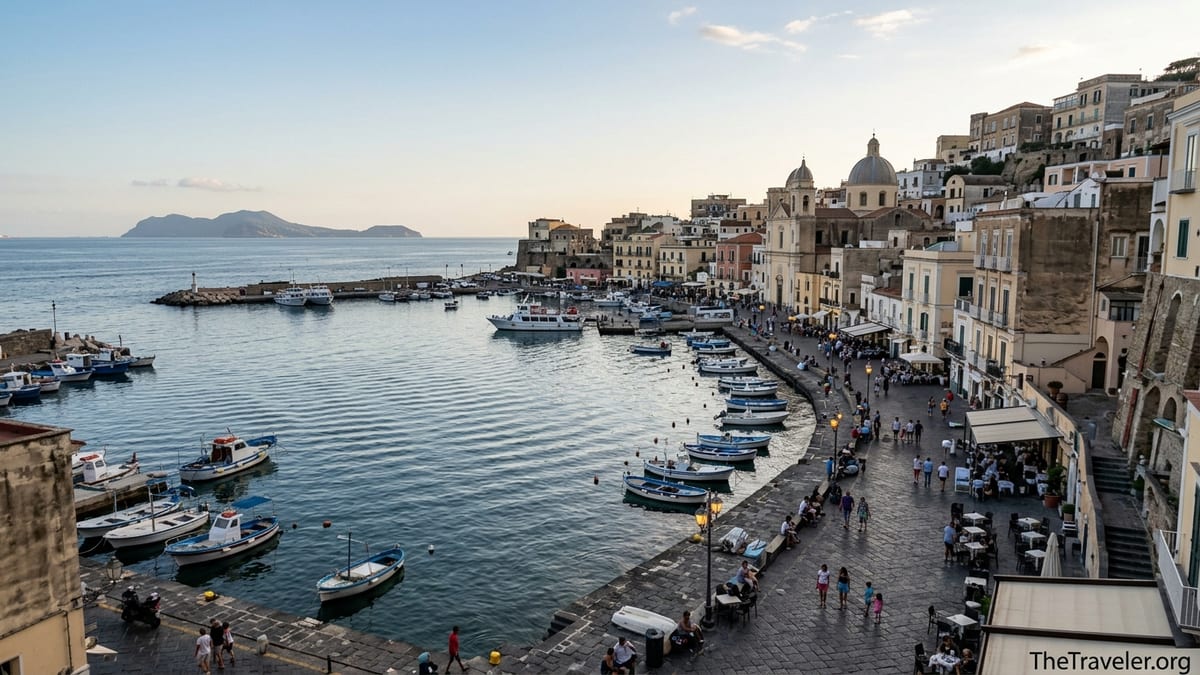
On the ground, Pozzuoli looks nothing like a sleepy satellite. Around the porto, ferries and hydrofoils shuttle residents and holidaymakers to Ischia and Procida, and fishing boats unload plastic crates brimming with anchovies, clams and small local shrimp. The seafront promenade along Lungomare Pertini and Via Napoli fills with families on evening passeggiata, teenagers clustered around gelato counters, and couples lingering over spritzes outside waterfront bars.
The mix of practical port life and relaxed seaside ritual is part of what makes Pozzuoli so compelling. You are never far from a reminder that this is a living, working town rather than a curated resort. Shop shutters clatter open at dawn; lines form at tiny bakeries selling still-warm taralli and sfogliatelle; delivery vans weave between parked scooters on the narrow streets around Piazza della Repubblica. All of this unfolds with a dramatic backdrop of the Bay of Naples, the islands and, on clear evenings, the outline of Capri far to the south.
Recent investment in the waterfront, including ongoing plans to upgrade Lungomare Pertini and create more pedestrian space between the historic darsena and the main promenade, is gradually reshaping the coastline. For visitors, that translates into longer car-free stretches for strolling, more outdoor tables right above the water, and clearer walking routes between the harbor, the amphitheater area and the Via Napoli waterfront.
Roman Pozzuoli: Amphitheaters, Markets and a Sunken Harbor
Long before it became a commuter town for Naples, Pozzuoli was one of the most important ports in the Roman world. You can see that past within a short walk of the modern center. The Flavian Amphitheater, a ten-minute stroll uphill from the harbor, is among Italy’s largest Roman arenas. Crowds here are a fraction of what you find at the Colosseum or even at the amphitheater in Pompeii, which means you can often wander through its arches, seating tiers and remarkably preserved underground passages almost alone.
Inside, the subterranean corridors where animals and gladiators once waited retain their original stonework and mechanisms. Information panels outline how trapdoors and lifts would have raised cages into the arena floor. Entry tickets are usually modestly priced compared with Rome’s major attractions, and the lack of queues makes it possible to drop in for an hour without elaborate advance planning. Travelers with children often find this more manageable than tackling larger, busier sites.
Back down toward the sea, the Macellum, traditionally called the Temple of Serapis, offers another distinctive window into Pozzuoli’s past. This ruined complex, just behind the harbor, was actually a Roman marketplace. Today, its marble columns are speckled with fossilized marine organisms several meters above ground level, physical evidence of the phenomenon that defines Pozzuoli: the ground here has repeatedly risen and fallen relative to sea level over centuries.
For a more unusual perspective, look toward the modern harbor and the slightly irregular line of the waterfront. Under the water lies part of the ancient Roman port, now submerged due to land subsidence. On particularly clear days, or on a harbor boat tour, you may glimpse the outlines of old structures beneath the surface. It is a reminder that in Pozzuoli, the line between land and sea has never been fixed.
Living on a Volcano: Campi Flegrei and Everyday Life
Pozzuoli is built inside the Campi Flegrei caldera, one of the most closely watched volcanic systems in Europe. Locals are well accustomed to the slow ground uplift and clusters of small earthquakes that scientists describe as bradyseism. In recent years, seismic swarms have occasionally produced magnitude 4-level tremors, noticeable enough to shake buildings and capture national headlines, but life in the town has continued with remarkable resilience.
The Italian Civil Protection Department and scientific institutes publish regular updates on Campi Flegrei, and local authorities conduct evacuation planning and information campaigns. Visitors may notice emergency route signage and public information posters, particularly near the port and main squares. For most travelers, these are background details rather than cause for alarm, but they add context to the surreal feel of walking through a beautiful coastal town that also happens to sit above a restless volcanic system.
Historically, travelers visited the nearby Solfatara crater to see fumaroles and bubbling mud pools. In recent years, access to the crater has been closed for safety reasons, and there is no confirmed reopening date. Instead, those interested in the geology tend to experience Campi Flegrei through panoramic viewpoints, interpretive signage, and visits to museums or guided tours originating in Naples that explain the volcanic landscape from safer vantage points.
Practical implications for visitors are usually limited to being aware that minor tremors can occur and following local instructions if authorities issue advisories. Hotels and guesthouses are familiar with answering questions about volcanic risk. Many visitors find that understanding this context deepens their appreciation of Pozzuoli’s landscapes, from the gently steaming shoreline at certain points to the odd tilt of ancient ruins that have ridden the caldera’s slow movements up and down.
Waterfront Culture: Lungomare, Aperitivi and Seafood
For most travelers, the strongest memories of Pozzuoli are tied to the waterfront. The stretch known as Lungomare Pertini curves west from the main port, while the Via Napoli seafront continues further along the bay. As evening approaches, the light softens over the islands, and streetlamps reflect in the water as locals drift down to the promenade. Children pedal small bikes along the wide pavements, neighbors stop to chat on benches, and groups gather in front of cafes to watch football on outdoor screens.
This is one of the easiest places near Naples to experience southern Italian aperitivo culture without the tourist mark-ups found in more famous resorts. A glass of local Falanghina or a classic spritz is typically modestly priced, often arriving with a small plate of taralli, olives or potato chips. On Via Napoli and the waterfront you will find a mix of contemporary spots with minimalist décor and long-standing family-run bars with worn marble counters and framed photos of the harbor on the walls.
Seafood is Pozzuoli’s calling card. Many restaurants buy directly from the nearby fish market, meaning menus change according to what came in that morning. In practice this can look like plates of steaming spaghetti alle vongole made with clams from the bay, fritto misto piled with tiny fish and calamari, or grilled pezzogna, a local sea bream, simply dressed with olive oil and lemon. Newer openings along the waterfront blend traditional recipes with more contemporary plating, while still relying on familiar ingredients such as anchovies, octopus and local cherry tomatoes.
Prices along the seafront are generally lower than in central Naples or on Capri, particularly for fresh fish. While high-end venues exist, it is possible to sit with a harbor view, order a pasta dish and a glass of wine, and keep the total close to what you might pay for a quick lunch in more famous coastal destinations. For many travelers, this combination of everyday pricing and dramatic sunset views is exactly what makes Pozzuoli feel like a discovery rather than a detour.
Gateway to the Islands and Coastal Day Trips
Geographically, Pozzuoli’s greatest advantage is its position in the middle of the gulf. From the port, regular ferries and hydrofoils connect to Ischia and Procida, offering an appealing alternative to the more crowded terminals in central Naples. Schedules vary by season, but in the warmer months it is common to find multiple departures spread through the day, making same-day round trips feasible even for travelers staying in Naples.
Using Pozzuoli as an embarkation point can simplify a multi-stop itinerary. Travelers might, for instance, take the metro-style Line 2 train from Naples to Pozzuoli in the morning, stroll the waterfront and ancient market area, then board an afternoon boat to Procida. After an evening wandering the pastel harbors of the island, they can return directly to Naples or spend the night and continue to Ischia the next day. This pattern avoids the most congested sections of central Naples and can break up travel days with rewarding intermediate stops.
For those using a rental car, Pozzuoli is also a useful base for exploring the surrounding Campi Flegrei coastline. Short drives link the town with Baia, known for its submerged Roman villas; Miseno, with its long sandy beach; and the headlands overlooking the smaller crater lakes inland. Parking rules can be complex along the waterfront, especially where limited traffic zones are in place, so drivers should pay close attention to local signage to avoid fines. Many visitors choose to leave the car in a paid lot slightly away from the harbor and explore the center on foot.
Even without island hopping, a full day in Pozzuoli itself can be easily filled: a morning exploring the Flavian Amphitheater and the Macellum, a long lunch by the sea, and an afternoon strolling between the port and Via Napoli, pausing for coffee at a bar with views of Ischia on the horizon. Compared with more famous coastal towns further south, this rhythm feels refreshingly unhurried.
Getting There, Getting Around and When to Go
From central Naples, Pozzuoli is most straightforwardly reached on Line 2 of the metropolitan railway system. Trains run along a cross-city route from stations such as Garibaldi and Montesanto to Pozzuoli Solfatara, with journey times typically under an hour even with intermediate stops. Tickets are priced similarly to other regional commuter services in the area, making this one of the more economical coastal excursions from Naples.
Alternatively, the Cumana railway line offers a scenic coastal route from the Montesanto station area of Naples, with trains passing Bagnoli and hugging the shoreline before arriving at Pozzuoli. For many visitors, the choice comes down to which station is closest to their accommodation and which schedule aligns best with their day. Either way, services are frequent during commuting hours, with slightly reduced frequencies in the late evening and on Sundays.
Once in Pozzuoli, the historic center, harbor and main archaeological sites are compact enough to explore on foot. Comfortable shoes are important: some streets climb steeply from the port toward the amphitheater, and pavements can be uneven. Taxis and local buses provide links to outlying neighborhoods and nearby towns in Campi Flegrei, though timetables may thin out late at night, so arranging return journeys in advance is wise if you are not staying in Pozzuoli itself.
In terms of timing, late spring and early autumn are often ideal: sea breezes keep temperatures pleasant, the waterfront is lively but not overcrowded, and island ferry services operate on generous schedules. July and August bring hotter weather and busier weekends, particularly when Neapolitans decamp to the coast. In winter, some seafront restaurants reduce opening hours, but the town’s role as a year-round community means there is still everyday life to observe, and cooler air can make uphill walks to viewpoints more comfortable.
Why Pozzuoli Belongs on a Campania Itinerary
When travelers plan time in Campania, they tend to group destinations by theme. History enthusiasts head for Pompeii, Herculaneum and Paestum; sun-seekers for the beaches of the Cilento and the Amalfi Coast; city lovers for Naples’ markets and museums; island fans for Capri and Ischia. Pozzuoli, quietly, touches on all these interests at once: it is an active port, a Roman city, a coastal resort for locals and a window into one of Europe’s most closely watched volcanic landscapes.
In practical terms, adding Pozzuoli does not require a major reshuffle of an itinerary. A single day diverted from central Naples can be enough to see the amphitheater, the Macellum and the waterfront, perhaps capped with a seafood dinner before catching a late train back. Travelers with more time might split their stay between Naples and Pozzuoli, using the latter as a base for island excursions and for exploring the broader Campi Flegrei area at a slower pace.
The rewards are tangible: smaller crowds at major Roman sites, seafront meals where the majority of diners speak Italian, and landscapes that constantly remind you of the deep geological forces at work beneath the bay. You might stand on the terrace of a bar on Via Napoli watching the sun sink behind Ischia, then wake the next morning to read about a minor seismic swarm that gently shook the area overnight. Few places in the region combine everyday life and natural drama quite so directly.
Choosing to skip Pozzuoli is easy if you rely on older, narrowly focused guidebooks. Choosing to include it is what can turn a standard Campania itinerary into something more layered, with a better sense of how the region’s past and present fit together. For travelers who value authenticity, complexity and a bit of surprise, Pozzuoli more than deserves a place alongside the better-known names on the map.
The Takeaway
Campania’s coastal highlights are often presented as a fixed list: Naples, Capri, the Amalfi Coast, maybe Sorrento and Ischia if time allows. Pozzuoli proves that the reality on the ground is richer than that. Here, a commuter rail ride from Naples delivers you into a town where Roman arenas, working fishing docks, volcanic landscapes and contemporary waterfront dining sit within a compact, walkable radius.
For travelers willing to slow down and look beyond the classic postcard stops, Pozzuoli offers a powerful reminder that some of the most memorable places on a trip are those where daily life hums along largely unchanged by tourism. Skipping it might save a few hours on an itinerary. Including it can add an entire new layer of understanding to the story of Campania’s coast.
FAQ
Q1. Is Pozzuoli safe to visit given its volcanic location?
Pozzuoli sits within the Campi Flegrei volcanic area, which is closely monitored by Italian authorities. Minor tremors and ground uplift are part of normal life here. Visitors should follow any local guidance, but under current conditions tourism, daily business and public transport all operate normally.
Q2. How long do I need to see the main sights in Pozzuoli?
A well-planned day is enough to visit the Flavian Amphitheater, the Macellum near the harbor and the waterfront. If you want to include a relaxed seafood meal, time for a sunset stroll and perhaps a short boat trip or an excursion to nearby Baia, consider staying one night.
Q3. What is the easiest way to get to Pozzuoli from central Naples?
The simplest option for most visitors is Line 2 of the metropolitan railway, which runs from central stations such as Garibaldi and Montesanto to Pozzuoli Solfatara. The Cumana railway from Montesanto is a scenic alternative along the coast. Both are budget-friendly and run frequently during the day.
Q4. Can I use Pozzuoli as a base for visiting Ischia and Procida?
Yes. Ferries and hydrofoils connect Pozzuoli’s port with both islands, particularly in the warmer months. Many travelers choose to spend a night or two in Pozzuoli, taking day trips to Procida or Ischia and returning in the evening to enjoy the town’s quieter waterfront atmosphere.
Q5. Are there still visits to the Solfatara crater?
At present, the Solfatara crater area remains closed to regular tourist visits for safety reasons, and there is no confirmed reopening date. Travelers interested in the volcanic landscape usually focus on panoramic viewpoints, guided explanations and the broader Campi Flegrei area instead.
Q6. What kind of accommodation can I expect in Pozzuoli?
Pozzuoli offers a mix of small hotels, guesthouses and self-catering apartments, many of them in historic buildings or modern blocks close to the waterfront. Rooms with sea views along the Lungomare or Via Napoli tend to be in higher demand, especially on summer weekends, so advance booking is sensible.
Q7. Is Pozzuoli suitable for families with children?
Yes. The compact center, traffic-calmed waterfront promenades and easily understood Roman sites make Pozzuoli manageable with children. Families often enjoy exploring the amphitheater’s tunnels, watching ferries at the harbor and having early dinners at casual seafront pizzerias and seafood trattorias.
Q8. How expensive are restaurants and cafes compared with places like Capri or Amalfi?
In general, prices for meals, coffee and drinks in Pozzuoli are lower than in the most famous coastal resorts. While upscale venues exist, it is common to find reasonably priced seafood pastas and house wines even at spots with sea views, making the town attractive for budget-conscious travelers.
Q9. Do I need a car to explore Pozzuoli and Campi Flegrei?
You can comfortably explore Pozzuoli itself on foot and reach it from Naples by train. A car is more useful if you plan to visit multiple nearby coastal towns and crater lakes in a single day, but parking and limited traffic zones near the waterfront require careful attention, so many visitors mix public transport with occasional taxis instead.
Q10. When is the best time of year to visit Pozzuoli?
Late spring and early autumn are often ideal, with warm but not oppressive temperatures and lively but manageable crowds. Summer offers long evenings and the busiest waterfront scene, though heat and holiday traffic can be intense. Winter brings a quieter atmosphere, cooler walks and a sense of everyday local life along the bay.