


I thought I understood tolls. I had an E‑ZPass on my windshield, a balance on my account, and a rough idea of what it cost to cross a bridge or two. Then a single weekend trip left me with a thick stack of envelopes, unexplained fees, and a crash course in how cashless tolling really works. My experience with E‑ZPass taught me that with tolls, what you do not know can get very expensive, very quickly.
Get the latest updates straight to your inbox!
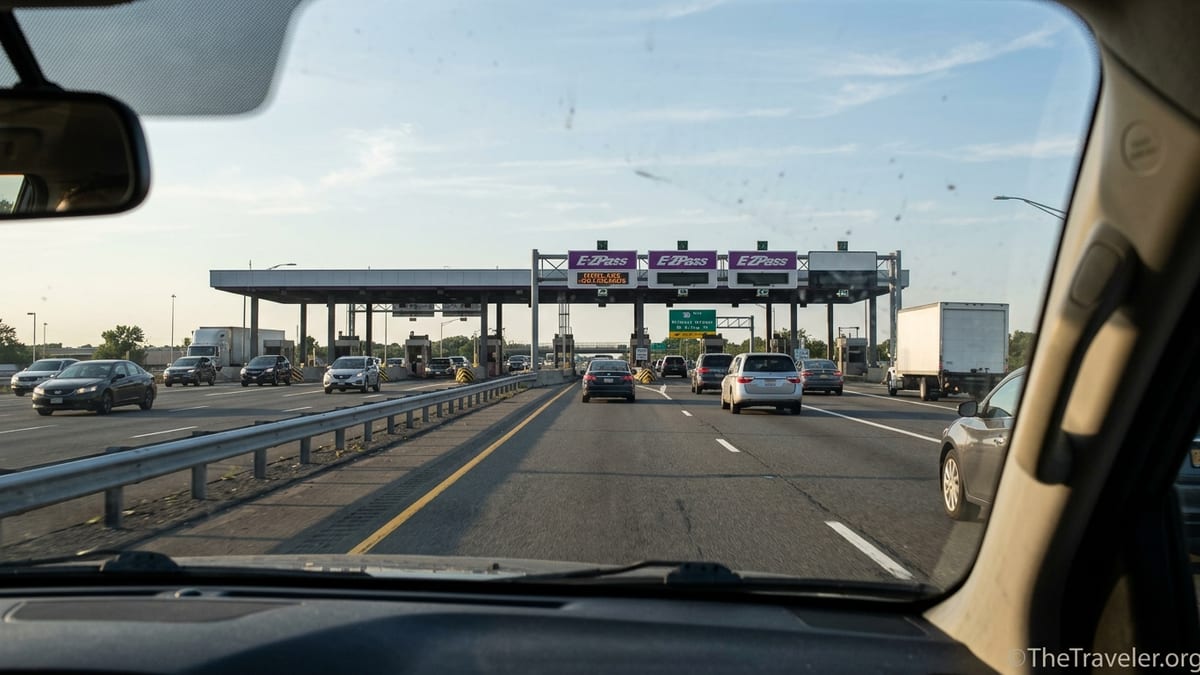
The Road Trip That Sent Me Back to Toll School
My lesson started with a simple plan: drive from northern New Jersey into New York City on a Friday, spend the weekend up the Hudson Valley, and come home Sunday night. I had my own E‑ZPass transponder from New Jersey, preloaded with about 40 dollars. I expected a couple of hits for bridges and some mileage on the New York State Thruway, maybe 25 dollars total. It felt routine, the kind of trip millions of drivers make every year.
On the way in, I used the George Washington Bridge at off‑peak times, sailed under the gantries on the Thruway, and crossed one of the smaller Hudson River bridges near Newburgh. No toll booths, no stopping, just the reassuring beep from the transponder as I passed under each reader. A week later, though, the beeps were followed by something less reassuring: three separate envelopes from different toll authorities and a surprise negative balance on my E‑ZPass account.
Some of the charges made sense. Others looked inflated. One Hudson River crossing that I thought would be around 2 dollars showed up closer to 4 dollars. A Thruway segment that should have been at the discounted E‑ZPass per‑mile rate appeared at the higher “Tolls by Mail” level. And one crossing, where my E‑ZPass apparently failed to read, came with an added administrative fee.
By the time I sorted it out, that modest weekend of driving had cost me almost double what I expected. The tolls themselves were only part of the story. What mattered more was which account the system recognized, whether the tag read properly, and how each authority treated my out‑of‑state E‑ZPass.
Cashless Tolls: Convenient, Until They Are Not
In New York, every major toll road, bridge, and tunnel has gone to cashless tolling. There are no booths and no way to hand someone cash. Instead, overhead gantries either read your E‑ZPass tag or photograph your license plate and bill you by mail. In theory, it is seamless. In practice, small technicalities change what you pay.
On my trip, that difference showed up clearly. When my tag was read correctly on the Thruway, I was charged the E‑ZPass rate, which is typically several cents per mile lower than the Tolls by Mail price. For a long run like New York City to Albany, that discount can shave several dollars off a one‑way trip for a passenger car. Over a year of commuting or regular travel, those differences easily climb into the hundreds of dollars.
Where things went sideways was one Hudson River crossing where my transponder did not register. Instead of the lower E‑ZPass toll, my plate was captured and billed at the higher “cash” equivalent rate, with a small admin fee added later when the initial bill went unpaid while I was out of town. What would have been a roughly 2 dollar crossing with a properly read New York issued tag ended up close to 5 dollars by the time the dust settled. Multiply that by frequent travel and the numbers get ugly.
This is the part many travelers underestimate. With cashless tolling, the physical toll booth reminder is gone. You do not see the price on a sign with a stack of one‑dollar bills in your hand. The cost quietly accrues in an account dashboard or in envelopes that might not reach you for weeks, especially if you have moved or you are using a rental car. Convenience masks the real price until much later.
The New Reality: Discounted Tags vs Plate Billing
One envelope from my trip forced me to confront a subtle but important point: not all E‑ZPass tags are treated equally, and when your tag is not recognized, you are automatically bumped into a more expensive category. Several New York agencies offer their best discounts only to tags issued by New York toll authorities. If you drive through with an out‑of‑state tag that fails to read or is not associated properly with your plate, the system simply bills you like a driver with no tag at all.
An example from New York City makes the difference look stark. On some crossings managed by city or state agencies, a passenger car with a New York issued, properly mounted E‑ZPass pays one of the lowest toll levels. If the system has to rely on your license plate instead, you can pay several dollars more each way. On certain bridges and tunnels, the spread between a discounted in‑state tag and a plate‑billed passenger car approaches or exceeds 3 dollars per trip.
My out‑of‑state tag created an additional twist. On at least one New York bridge, the reader did not pick up my transponder, but the system still recognized my plate and associated it with the E‑ZPass network. Instead of the lowest New York customer discount, I was effectively treated as a non‑New York E‑ZPass driver, which meant paying a higher rate than a local tag holder but still slightly less than full Tolls by Mail. The bill arrived without any clear explanation, just a higher toll amount than I anticipated.
For travelers crossing multiple states, this layering matters. A driver using a Pennsylvania or New Jersey E‑ZPass in New York may get the E‑ZPass rate in most cases, but they will not qualify for certain local resident or commuter plans that can cut tolls significantly on heavily used crossings. Over time, that can mean paying 30 to 40 percent more for the same drive than a local who signed up for a state‑specific discount plan.
When One Missed Toll Becomes a Stack of Fees
The most painful lesson from my weekend was how fast tolls transform into violations. On one segment, my account dipped just below zero after a series of charges posted out of order. By the time I noticed and added money, a small gap had already triggered a violation letter for a missed toll earlier that week. The original toll was only a few dollars. The administrative fee on top of it was several times that amount.
This is not unusual. Around the region, toll agencies and their private contractors routinely add administrative fees for processing plate images, sending mail, and chasing unpaid bills. A 3 dollar missed toll on a bridge or turnpike can quickly jump to 25 or 50 dollars once the first and second notices go out. If the bill is ignored for months or sent to an old address, those fees compound further, and some agencies eventually refer the balance to collections or suspend vehicle registrations.
In one widely discussed case highlighted by local media, a New Jersey visitor who missed a single toll on a Hudson River crossing ended up facing an eye‑watering bill once multiple notices and penalties stacked up. Stories like that are not outliers. Drivers across the E‑ZPass network report similar experiences: a forgotten update to their license plate, a failed transponder battery, or an expired credit card triggers a chain of fees that feels wildly out of proportion to the original charge.
In my situation, a phone call to customer service and proof that my account was otherwise in good standing got one administrative fee waived as a courtesy. The rest I had to swallow. It was a clear reminder that with tolls, vigilance is not optional. You cannot assume that a low balance, a misread tag, or an outdated plate number will sort itself out.
Rental Cars: The Toll Fee Trap I Never Saw Coming
If your own car and your own E‑ZPass can produce surprises, rental cars magnify the risk. A few months after that first lesson, I flew into Newark and rented a compact car for a business trip that involved several trips into Manhattan. At the counter, I was offered the rental company’s toll package for a daily fee plus the cost of tolls. Confident from my previous experience, I declined and planned to use my personal E‑ZPass instead.
I attached my transponder to the rental’s windshield and later added the temporary plate to my online E‑ZPass account. Every time I passed under a gantry on the New Jersey Turnpike or crossed into New York, I heard the familiar beep. The receipts from my trip showed mileage consistent with what I expected. Then, three weeks later, an email from the rental company landed in my inbox with an itemized list of toll‑related “processing fees.”
It turned out that on at least one crossing, the toll system billed the license plate directly instead of my tag. Because the plate belonged to the rental company, the invoice went to their billing partner first. The rental firm then passed the toll charge along to me, plus a separate administration fee for each invoice. In one case, I was effectively double‑billed: the toll appeared once on my E‑ZPass account and once through the rental car company’s billing partner, with a hefty service fee attached.
Other travelers report similar experiences with major rental brands. Even when drivers add a rental plate to their own toll account, some congestion charges and city tolls still flow through separate plate‑billing systems that feed back to the rental agency, not the traveler’s E‑ZPass. Some companies cap their daily toll service fees or reduce them on certain charges, but others impose fees that can easily exceed the toll itself. A 9 dollar city congestion charge can morph into a 20 or 30 dollar line item once processing fees are layered on.
What My E‑ZPass Lesson Taught Me About Planning Trips
After a few painful bills, I changed how I plan trips in toll‑heavy regions. The first change was simple: I now check toll rate charts before I drive. If I know I will cross a specific bridge or use a major tunnel, I look up the current E‑ZPass rate for a passenger car and the plate‑billed equivalent. The gap is often startling. On some New York City crossings, a properly recognized, locally issued E‑ZPass can be several dollars cheaper per direction than a plate‑billed trip or an out‑of‑state tag that does not qualify for special discounts.
On longer trips up the Thruway or similar toll roads, I estimate the total cost using approximate per‑mile rates and factor in the higher amount I would pay without a working transponder. Knowing that a hundred‑plus‑mile run might cost under 10 dollars with a discount plan but significantly more if everything shifts to plate billing helps me decide whether to adjust my route, travel time, or even my choice of airport.
The second habit I adopted was treating my toll account like a utility bill. I turned on balance alerts, set a replenishment threshold higher than the default, and check my trip history after every significant drive. If I see a charge listed as plate‑based instead of tag‑based, I follow up immediately, before late fees or violations appear. On at least two occasions since, catching a misread within days allowed me to call the relevant agency and have an admin fee waived in favor of simply paying the underlying toll.
Finally, I stopped assuming that one E‑ZPass tag works the same everywhere. In states where I drive often, I take the time to understand which agency issued my tag, what discounts it actually qualifies for, and whether specific bridges or tunnels restrict special rates to certain customer service centers. It is not about chasing every last cent of savings. It is about avoiding the situations where a simple oversight turns into a triple‑priced toll.
Practical Strategies to Avoid Toll Fee Shock
The core lesson from my E‑ZPass saga is that a bit of preparation can prevent most nasty surprises. The single most important step is to make sure your transponder and plate information are accurate and up to date. When you buy a new car or change license plates, update your E‑ZPass account right away. Many violation cases begin with a driver who kept the same tag but never updated the plate number, leaving the system to treat their car as a stranger every time it passes under a gantry.
Mounting your transponder correctly is almost as important. Toll agencies increasingly distinguish between tags that are read cleanly and those that cause extra processing. Some have even introduced new “mid‑tier” rates that apply when a tag is on the account but not positioned correctly, causing extra back‑end work. Misplacing the tag on your dashboard instead of following windshield instructions can mean paying more without ever realizing why.
For rental cars, I now make a different calculation. If I expect to hit only one or two toll points, I may accept the rental company’s package for convenience, knowing that the daily service fee will be limited. If I will be driving through multiple toll zones, especially in areas with city congestion pricing or bridge tolls in both directions, I do the math: will my own tag actually be recognized on those facilities, and can I avoid plate billing, or am I better off with a package that at least caps processing fees?
One more subtle strategy is to tidy up outstanding issues early. If you move states or know you once had an unpaid toll bill, contact the toll agency proactively. I have seen travelers turned away at rental counters, refused vehicle registration renewals, or confronted with collection notices years later from a few unresolved tolls that grew into much larger debts. A short phone call and a negotiated reduction in administrative fees is almost always cheaper than letting those notices gather dust.
The Takeaway
My experience with E‑ZPass did not turn me into a toll expert overnight, but it did teach me one powerful lesson: toll fees are not a fixed, simple cost. They are a moving target shaped by where your tag is from, how reliably it reads, whether your account is in good standing, and how often the system has to chase you by mail instead of quietly debiting your balance. The difference between understanding that system and ignoring it can easily mean hundreds of dollars over a year of travel.
For travelers, especially those weaving between states or relying on rental cars, toll literacy is now as essential as knowing airline baggage rules. Before you set out, know roughly what each major crossing will cost with and without a valid transponder. Keep your E‑ZPass details current, watch for plate‑billed gaps, and take rental car toll packages seriously enough to compare them with your own options.
In a world where toll plazas have vanished and gantries silently scan overhead, your best defense is attention. The tolls themselves are rarely the problem. It is the hidden layers of fees, penalties, and miscommunications that sting. My E‑ZPass wake‑up call was not cheap, but it was worth the education. Now, when I glide under those green and purple signs, I know what I am really paying for the privilege.
FAQ
Q1. Do I really need an E‑ZPass if I only drive through toll areas a few times a year?
For occasional travelers, an E‑ZPass is still useful because it usually provides lower toll rates than plate billing and helps you avoid surprise administrative fees. If you drive through a major toll region even a couple of times a year, the savings and reduced risk of violations often justify keeping an account with a modest balance.
Q2. Why did I get a toll bill in the mail even though I have an E‑ZPass?
This typically happens when your transponder was not read, your license plate is not correctly listed on your account, or your account balance was too low at the time of the trip. In those situations, the system falls back to photographing your plate and sending a bill to the registered owner, often at a higher rate than the normal E‑ZPass toll.
Q3. Are tolls always more expensive in a rental car?
Not always, but they can be. Rental companies often charge extra processing fees for each plate‑billed toll. If your own E‑ZPass tag is not recognized or certain charges bypass your tag, you may end up paying both the toll and a separate service fee. It is important to read the rental agreement and understand exactly how their toll program works before you leave the lot.
Q4. Is it better to get an E‑ZPass from the state where I live or from the state I visit most?
In general, it is best to get an E‑ZPass from the state where you drive most frequently, because many of the best discount plans are tied to local residents or locally issued tags. If you live near a border and regularly use toll facilities in two states, it can be worth comparing each state’s fees, discounts, and policies before choosing where to open your account.
Q5. What should I do if I discover a toll violation or large fee I did not expect?
Start by reviewing your toll account history and any paper bills to confirm the date, location, and type of charge. Then contact the toll authority’s customer service quickly. If your account was otherwise in good standing or the issue was clearly a misread or recent plate change, many agencies will reduce or waive at least part of the administrative fees if you pay the underlying toll promptly.
Q6. Can one missed toll really damage my credit or lead to collections?
A single unpaid toll does not immediately affect your credit, but if it goes unpaid for months and multiple notices are ignored, some agencies eventually send the debt to collections. At that point, depending on the agency’s policies and the collection firm’s reporting practices, your credit could be affected. Addressing toll notices early is the safest way to prevent that.
Q7. How can I tell if my E‑ZPass transponder is failing?
Warning signs include fewer audible beeps at gantries, unexpected plate‑billed charges in your account history, or letters referencing missed reads even though your tag is mounted. If you see these, contact your E‑ZPass issuer to test or replace the transponder. Many agencies replace older or faulty tags at no additional cost.
Q8. Are there ways to lower toll costs if I commute daily?
Yes. Many toll agencies offer commuter, resident, off‑peak, or green vehicle discount plans for drivers who use certain bridges, tunnels, or road segments frequently. These plans can significantly reduce the per‑trip cost, but they usually require an account in good standing and a transponder issued by that specific state or authority.
Q9. What happens if my E‑ZPass balance goes negative while I am driving?
If your balance drops below zero, some agencies will still record your trip and then attempt to collect payment by recharging your account or billing your plate. Others may immediately classify subsequent trips as violations and begin adding administrative fees. Setting automatic replenishment and balance alerts helps you avoid crossing toll points with an empty account.
Q10. Is it ever worth avoiding toll roads entirely?
Sometimes. If alternative routes add only a small amount of time and you would otherwise pay multiple high tolls in a short trip, it can be reasonable to choose the slower, free route. However, in many dense urban areas, toll roads and bridges save significant time and stress. The goal is not to avoid tolls at all costs, but to understand what you will pay and to avoid unnecessary penalties or inflated fees.