

More news on this day
A safety investigation into a recent fatal train crash has concluded that the collision could probably have been avoided if the driver had activated the train’s emergency brake system, renewing scrutiny of how frontline rail staff are trained and supported to use last-resort safety technology.
Get the latest news straight to your inbox!
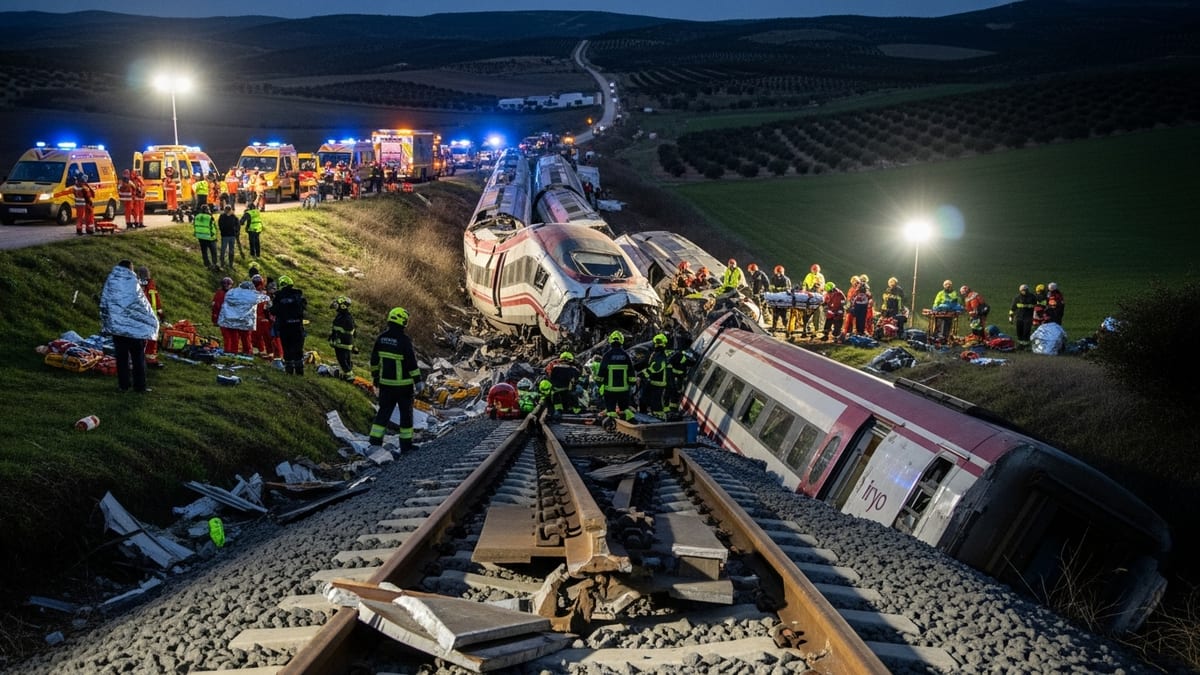
Investigators say unused emergency brake was key missed safeguard
According to publicly available investigation documents and media coverage, data from onboard recorders indicates the driver made a late service brake application as the train approached a point of danger but did not initially trigger the dedicated emergency braking mode. Analysts reconstructed the train’s speed profile and stopping distance and found that an emergency application at an earlier point in the run could have brought the train to a halt before impact.
The review concludes that once the driver realized the seriousness of the situation, there was insufficient distance left for the standard braking effort to prevent the collision. The emergency system, which rapidly vents pressure in the brake pipe to deliver maximum stopping power, remained unused during the critical early seconds when it would have had the greatest effect.
Modelling work undertaken as part of the inquiry suggests that even a few seconds’ difference in applying the emergency brake would have significantly reduced the impact speed or avoided the collision entirely. Investigators emphasize that the system performed as designed when tested after the crash, shifting attention to human factors and operational decision making in the cab.
The findings echo themes from previous rail accident reports in several countries, where specialists have noted that drivers sometimes hesitate to use the most powerful braking option because of concern about passenger injuries, equipment damage or perceived criticism if the situation later appears less serious than initially feared.
Human factors, training and cab design under renewed scrutiny
The investigation places considerable weight on the pressures facing a lone driver in a fast-developing emergency. Analysis of similar cases has shown that split-second judgments can be clouded by incomplete information, stress and the natural reluctance to make an irreversible action such as an emergency brake application when visibility is poor or signals are confusing.
Publicly available safety studies highlight that many drivers are trained to regard emergency braking as a measure of absolute last resort. That framing, some experts argue, may discourage decisive use in situations where early aggressive braking would offer the best chance of avoiding a crash. The latest report suggests operators reassess how they describe and rehearse emergency procedures so that drivers feel empowered to act quickly when confronted with uncertainty.
Cab layout and ergonomics are also under review. In several recent derailments and collisions, investigators have drawn attention to control desks where drivers must reach across or look away from the track to access critical controls, including brake handles and emergency buttons. In fast-changing situations, any need to shift body position or search for a control can translate into lost seconds that sharply reduce the chance of stopping in time.
Fatigue, workload and information overload are additional strands in the inquiry. The crash once again raises questions about whether a single driver can reliably monitor signals, speed limits, route changes and on-train systems without additional technological support or operational safeguards, particularly on routes with complex layouts or temporary speed restrictions.
Technology can intervene, but only if correctly configured and used
The report notes that emergency brake systems sit within a wider ecosystem of protective technologies, including automatic train protection and speed control software designed to intervene when drivers exceed limits or approach danger signals. In this crash, early indications suggest those systems either were not fitted on the route in question, were not fully operational, or were not configured to take control in time to prevent the collision.
International experience shows that where automatic systems supervise speed and enforce braking, they can prevent or mitigate many of the most serious accidents. However, gaps often remain at locations with temporary restrictions, complex junctions or legacy signalling. In such areas, the final line of defense can still be the driver’s decision to apply the emergency brake, underscoring why investigators describe its non-use in this case as a critical missed opportunity.
Rail safety specialists observing the inquiry point out that technology alone cannot eliminate risk if operational rules or maintenance practices undermine its effectiveness. Past investigations have found instances where safety devices were disabled, incorrectly wired or bypassed, reducing the likelihood that they would trigger an emergency brake application when needed most.
The latest findings are likely to feed into broader policy debates about how aggressively rail networks should expand automatic train control, what level of redundancy is appropriate for braking systems, and how to balance automation with the driver’s role as a safety decision maker.
Families demand accountability as network reviews safety culture
The conclusion that the disaster was probably avoidable has deepened anguish among families of those who died and were injured. Relatives have used public forums and statements to call for clear accountability, asking whether the driver received adequate training, whether managers fostered a culture that encouraged early use of emergency measures, and whether known infrastructure risks were properly addressed before the crash.
Rail unions and passenger advocacy groups are also drawing attention to wider systemic issues, including staffing levels, fatigue management and the pace of safety upgrades on heavily used routes. They argue that focusing solely on the actions of an individual driver risks overlooking structural shortcomings that can set the conditions for catastrophic error.
In response to the investigation’s early findings, the rail operator involved has indicated through public statements that it is reviewing its driver training programs, communication protocols and route risk assessments. Industry observers expect a series of internal audits and, potentially, regulatory inspections aimed at verifying whether emergency brake procedures are clearly documented, frequently practiced and fully supported by management.
For travelers, the crash and its aftermath serve as a reminder that while rail remains one of the safest modes of transport, its safety record depends on constant attention to training, technology and culture. The realization that a single unactivated handle or switch might have averted a deadly collision is likely to intensify calls for rail systems to ensure that every layer of protection, from the driver’s hand to the most advanced automatic control, is ready to act when seconds count.
Implications for future rail operations and passenger confidence
Safety agencies often describe serious rail accidents as turning points that accelerate long-discussed reforms. The determination that this crash could probably have been avoided if the emergency brake system had been used earlier is expected to shape future regulatory guidance, standards for driver training and the design of new cab layouts and onboard systems.
Experts anticipate recommendations that emphasize scenario-based training in simulators, allowing drivers to practice making rapid emergency brake applications in ambiguous situations without fear of disciplinary consequences. There may also be fresh scrutiny of how route information and temporary restrictions are communicated, so that drivers have clearer cues to act decisively when approaching high-risk locations.
For rail operators competing to attract travelers, rebuilding trust after a preventable fatal crash involves more than technical changes. Passengers typically have limited visibility into what happens in the cab or control room, so transparent reporting on safety improvements, regular public updates on implementation progress and visible investments in modern signalling and braking technology all play a role in restoring confidence.
As the investigation moves toward final conclusions, its central message is already clear: emergency brake systems are only as protective as the procedures, training and culture that govern their use. Ensuring that drivers can and will deploy them at the first sign of serious danger is now a priority for regulators and operators seeking to prevent future tragedies on the rail network.