


More news on this day
A U.S.-bound flight departing Japan was forced to divert after a passenger reportedly shouted profanity, injured himself and sparked a midair disturbance that led the crew to make an emergency landing, in the latest reminder of how rapidly disruptive behavior can reshape a long-haul journey.
Get the latest news straight to your inbox!
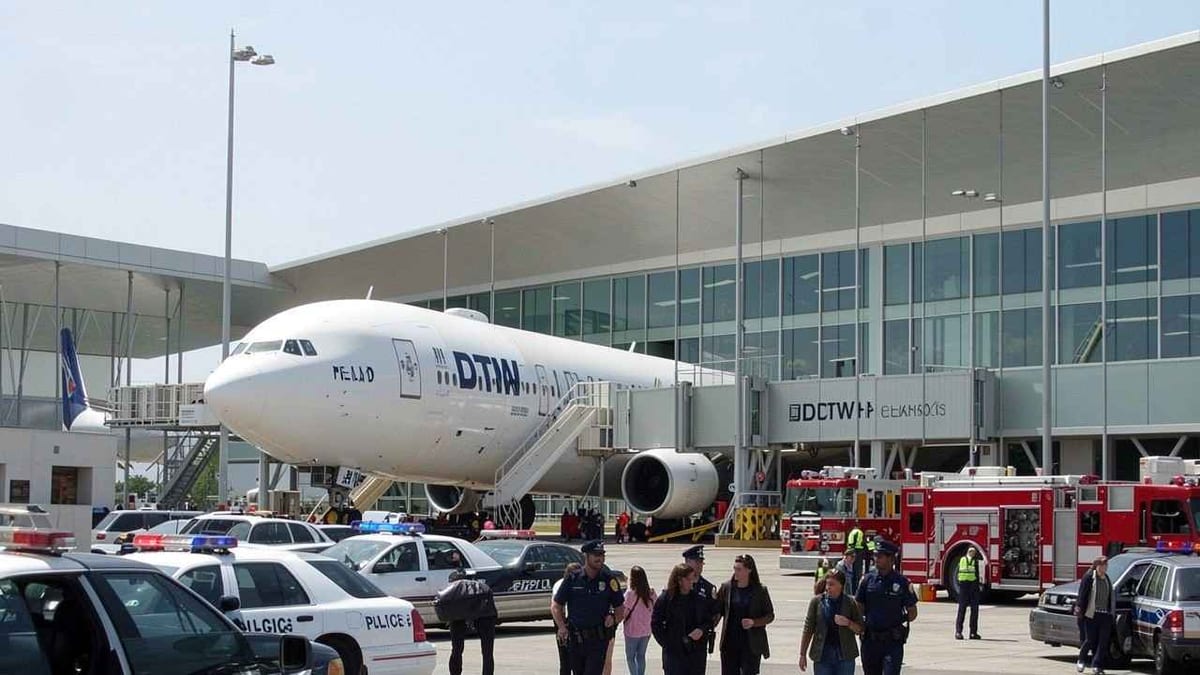
Incident on a Transpacific Route
Publicly available coverage indicates the disturbance unfolded on a Japan-origin flight heading to the United States, when a male passenger began yelling profanities and behaving erratically soon after the aircraft had settled into its cruise phase. Witness accounts described a sudden escalation from raised voices to a scene that alarmed surrounding travelers and prompted crew intervention.
Reports indicate the passenger appeared to injure himself during the episode, prompting concerns about possible self-harm as well as the safety of others on board. The combination of loud verbal outbursts, physical agitation and visible bleeding was significant enough that the flight crew treated the situation as a serious in-flight emergency rather than a minor case of noncompliance.
Tracking data cited in media coverage show that the aircraft diverted from its original transpacific route and headed to a major airport in Japan to complete an emergency landing. The diversion occurred partway across the Pacific corridor, adding hours to the journey for hundreds of travelers and triggering a cascade of operational and logistical challenges.
After the aircraft landed, the disruptive passenger was reportedly removed from the plane for medical evaluation. Law enforcement and airport medical teams in Japan typically respond to such diversions, but as of the latest reports no detailed public summary of any potential charges or long-term medical findings had been released.
Profanity, Self-Harm and Air Rage Dynamics
The episode has drawn attention to the intersection between air rage, mental health and substance use in the confined environment of a jet cabin. Recent high-profile cases on transpacific routes, including incidents on All Nippon Airways and American Airlines services, have involved intoxicated or distressed passengers whose verbal abuse and physical actions created safety concerns for crew and travelers alike.
In this latest case, reports referencing profanity-laced shouting and possible self-harm fall into patterns that regulators and airlines increasingly track under the broad category of unruly or disruptive passengers. Behavior that might once have been treated as a private crisis now carries significant operational consequences when it occurs at altitude, where there is little room to separate individuals or pause the situation until emotions cool.
Aviation safety specialists frequently note that the risk profile changes when self-harm or threats against others are involved, even if no weapon is present. Flight attendants must simultaneously de-escalate the person in crisis, protect nearby travelers, and maintain communication with pilots who may be evaluating whether to divert. The cumulative effect of shouting, movement around the cabin and visible injury can heighten fear among passengers already sensitive to turbulence or flying.
Analysts also highlight the difficulty of assessing intent in real time. A person who appears to be harming himself might later describe the incident as a panic episode or medical event, yet crew members must err on the side of caution. This reality has led to more diversions in ambiguous situations, as airlines prioritize a conservative approach to any sign that a person on board could be a danger to himself or others.
Operational Impact of Emergency Diversions
Emergency diversions for unruly passengers have become an increasingly visible feature of long-haul travel, particularly on transpacific and transatlantic routes where flights operate far from alternate airports for extended periods. In this case, the decision to return to or divert within Japan resulted in significant additional flight time, fuel burn and scheduling disruption for the carrier.
Industry coverage of similar events shows that a single diversion can cost an airline hundreds of thousands of dollars when additional fuel, landing and handling fees, crew duty-time limits, and rebooking or accommodation for passengers are factored in. In some recent incidents on U.S.-bound flights from Asia, carriers have later examined options for civil action against disruptive passengers to recover at least a portion of these expenses.
For travelers, the operational impact is felt in missed connections, overnight stays, and uncertainty about when the journey will resume. Passengers on board diverted flights commonly describe hours spent on the ground while medical assessments, law enforcement procedures and aircraft safety checks are completed. In some cases, the original aircraft cannot continue, forcing a complete replan of the flight and additional delays.
Airport authorities in Japan and the United States have also had to account for these diversions in their contingency planning. When a long-haul widebody arrives unexpectedly, ground handlers, medical staff and immigration officials must coordinate rapidly to receive an aircraft full of international travelers whose documentation and onward plans may not match that airport’s usual arrival patterns.
Regulatory Context and Carrier Responses
Globally, regulators have increasingly emphasized “zero tolerance” approaches to unruly passengers. In the United States, Federal Aviation Administration data in recent years have tracked thousands of annual reports of disruptive behavior, including verbal abuse, noncompliance with crew instructions and physical altercations. Japanese authorities and carriers have echoed similar messaging, particularly on busy transpacific routes linking Tokyo with North American hubs.
Following a series of prominent air rage cases, including diversions associated with intoxicated passengers and assaults on crew, airlines have moved to strengthen training for cabin staff on de-escalation, mental health awareness and coordinated response with cockpit crews. Many carriers now encourage firm early intervention, including reseating, refusal of further alcohol and, when necessary, physical restraint using approved equipment.
A number of recent incidents have also led to criminal charges once diverted flights reached the ground, particularly when injuries to crew or passengers were documented. While outcomes vary by jurisdiction and circumstance, publicly available legal filings show that charges can include assault aboard an aircraft or interference with flight crew, both of which carry potential prison sentences and substantial fines.
In parallel, airline industry groups have advocated tougher cross-border enforcement so that passengers cannot avoid accountability simply by originating in one country and diverting to another. The Japan-to-United States corridor is one of several long-haul markets where regulators and carriers are experimenting with information-sharing frameworks to ensure that serious in-flight misconduct follows passengers across borders.
What Travelers Should Know
For travelers planning long-haul trips between Japan and the United States, the incident underscores several practical realities. Even when a disturbance involves a single passenger, the operational response can affect every person on board, altering arrival times by many hours and in some cases changing the arrival city entirely. Diversions can also complicate visas, onward connections and baggage handling.
Passenger rights in such situations depend heavily on jurisdiction and the airline’s own policies. In many reported cases of diversions triggered by unruly behavior, carriers have treated the event as a safety necessity rather than a service failure, which can limit compensation for delays. Travel advisors often recommend comprehensive insurance and flexible booking arrangements on ultra-long-haul routes where weather, technical issues or onboard incidents may disrupt plans.
Mental health advocates point out that some disruptive episodes stem from untreated anxiety, panic or other conditions exacerbated by flying. Travelers who know they are prone to severe anxiety or distress at altitude may wish to consult medical professionals in advance of long flights, consider non-alcoholic coping strategies, and alert crew early if they begin to feel overwhelmed, before behavior escalates.
At the same time, frequent flyers and aviation analysts stress that serious in-flight disturbances remain relatively rare compared with the millions of passengers who traverse the Japan–United States corridor each year without incident. For most travelers, this latest diversion serves primarily as a reminder of why crew instructions are taken seriously, why flight attendants are trained extensively in crisis management, and how a single individual’s actions can reshape the experience of an entire aircraft.