


More news on this day
After multiple peak seasons marked by congestion on the access road and crowded departure halls, Puerto Vallarta’s Licenciado Gustavo Díaz Ordaz International Airport is entering 2026 in a notably stronger position, just as Mexico’s wider tourism industry posts record international arrivals and looks toward another year of growth.
Get the latest news straight to your inbox!
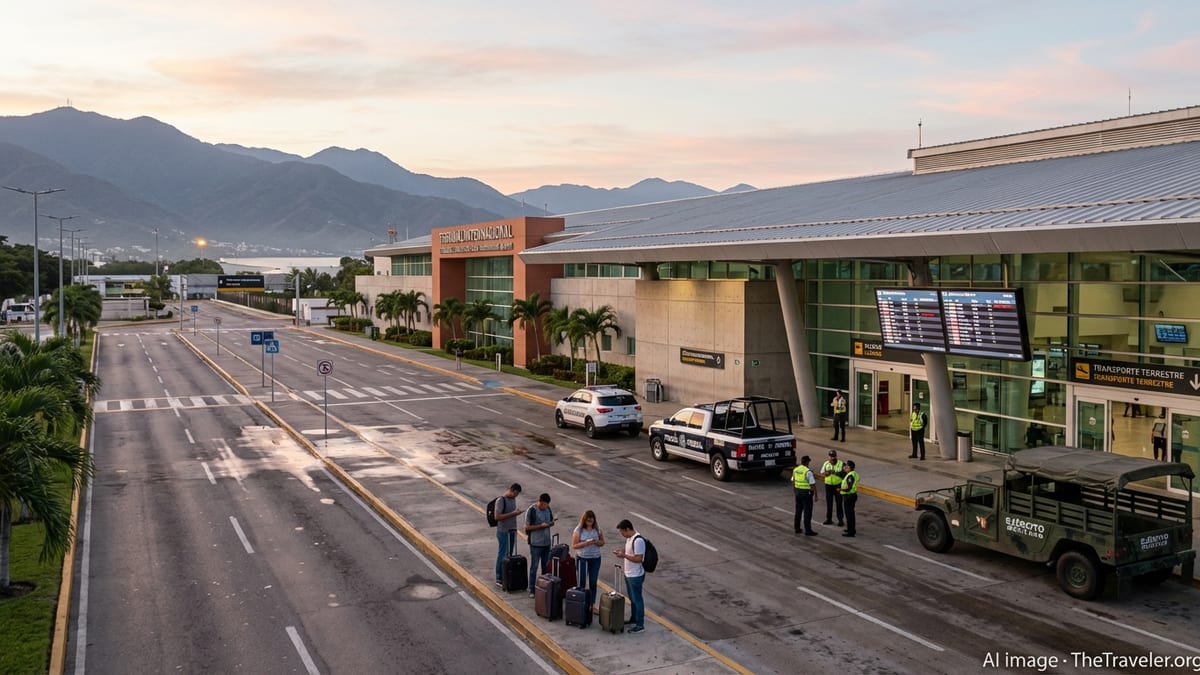
From seasonal chokepoint to stabilizing gateway
Puerto Vallarta’s airport has been one of Mexico’s most seasonally stressed gateways, reflecting the resort city’s reliance on winter visitors from the United States and Canada. Publicly available airport statistics show that passenger volumes have climbed steadily since the pandemic-era trough, rising from roughly 4.1 million travelers in 2021 to nearly 6.9 million in 2025, according to data compiled from Grupo Aeroportuario del Pacífico reports and national airport rankings.
The surge in demand, combined with limited road access and terminal capacity, produced visible bottlenecks in recent high seasons. During the winters of 2023 and 2024, travelers shared images and accounts of long queues at security and arrival halls, as well as slow-moving traffic on the single main approach road to the terminal. Informal accounts from early 2026 still described heavy traffic at peak times, but also noted that operations were largely on schedule, pointing to a system that remained strained but more predictable.
By mid-2025, growth at Puerto Vallarta had moderated from the sharp post-pandemic rebound to low single-digit annual increases, in line with figures released by the airport’s operator for its broader network. That cooling has given infrastructure and staffing a chance to catch up, reducing the extreme mismatch between demand and capacity that characterized the most challenging months.
Infrastructure upgrades and operational tweaks ease pressure
The fading of the airport traffic crisis is not solely the result of slower growth. Over the past two years, the facility has been undergoing a program of improvements intended to increase capacity and smooth passenger flow. According to published coverage of the operator’s capital plans, Puerto Vallarta is among the Pacific coast airports targeted for expanded terminal space, additional gates and modernized security checkpoints, building on earlier runway and apron works.
On the ground, small but visible operational changes have also contributed to a more orderly experience. Ride-hailing pick-up zones and traditional taxi stands have been reorganized to reduce curbside congestion, while airlines have adjusted check-in opening times during peak departure banks. Travelers in early 2026 reported that the longest waits were now often in road traffic leading to the airport rather than at the check-in desks themselves, suggesting that terminal bottlenecks were easing even as the surrounding urban road network remains tight.
Local tourism operators have responded by adjusting transfer schedules, advising visitors to leave hotels earlier on high-demand days and to factor city events into their plans. Marathon routes, cruise-ship changeover days and holiday weekends have all been highlighted in local advisories as potential stress points. Despite those spikes, recent seasons have passed without the sustained, all-day gridlock that previously characterized the worst days at the airport entrance.
Mexico’s tourism rebound sets the backdrop
The more manageable situation at Puerto Vallarta comes as Mexico as a whole consolidates its position as one of the world’s busiest tourism destinations. An Organisation for Economic Co-operation and Development review of tourism trends published in 2026 notes that Mexico received around 45 million international tourists in 2024, broadly matching pre-pandemic levels and representing a strong increase on 2023. Growth continued into 2025, with inbound arrivals expanding by just over 6 percent, pushing the country to new record volumes.
Figures from Mexico’s Tourism Ministry and supporting data platforms point in the same direction. Official compilations of sector statistics show that international air and land arrivals continued to rise through 2024 and 2025, while the country’s tourism GDP share stabilized near 8 percent. Independent analyses from hotel and real estate consultancies describe Mexico and other northern Latin American markets as stand-out post-pandemic performers, benefiting from strong demand from North American travelers and competitive air connectivity.
This macro-level recovery has put added pressure on resort-area airports such as Cancún, Los Cabos and Puerto Vallarta, where growth in international leisure travel has outpaced infrastructure built for earlier demand profiles. In that context, stabilization at Puerto Vallarta’s airport is notable, suggesting that targeted investments can help an already busy mid-size facility cope with rising national and global volumes.
International markets drive demand into 2026
Puerto Vallarta’s air traffic profile is heavily weighted toward international visitors. Statistics compiled from airport data show that the majority of its passengers travel on routes to and from the United States and Canada, with Canadian airlines in particular operating a dense network of seasonal services during the northern winter. One major Canadian carrier, for example, connects Puerto Vallarta to more than ten cities across the country at the height of the season, underscoring the destination’s importance for sun-seeking travelers.
National-level data from tourism and central bank sources highlight the resilience of these North American origin markets. Across Mexico, air arrivals from the United States and Canada rebounded quickly after travel restrictions eased, and by 2024 were exceeding 2019 levels. As a result, coastal destinations geared toward these visitors have seen hotel occupancy and average daily rates trend upward, even as some long-haul markets from Europe and Asia recovered more gradually.
The outlook for 2026 remains broadly positive. Forecasts referenced in recent tourism outlook publications anticipate that Mexico will retain its status among the world’s leading destinations, supported by stable demand from the United States and Canada and by incremental growth from South American and European markets. For Puerto Vallarta, that suggests continued high load factors on winter flights, but with a lower risk of the abrupt surges and cancellations that contributed to operational volatility earlier in the decade.
What calmer operations mean for travelers and the region
The easing of the airport traffic crunch has tangible implications for visitors planning trips in 2026. While travelers are still advised to allow ample time for road transfers and check-in during peak hours, most recent accounts describe a busy but functioning airport rather than a system on the brink. For many tourists, that translates into shorter lines, more predictable departure times and a smoother start or end to their vacation.
For Puerto Vallarta’s tourism economy, more reliable airport operations are equally significant. The city’s hotels, restaurants and tour providers depend on seamless air connectivity to maintain year-round employment and investment. When congestion at the airport access road or inside the terminal threatens flight punctuality, it can ripple through airline scheduling decisions and the willingness of carriers to add new routes or capacity.
As Mexico’s tourism growth shifts from rapid recovery to steadier expansion, destinations like Puerto Vallarta are moving into a new phase: one focused less on regaining lost traffic and more on managing sustained volumes without eroding traveler experience. The gradual fading of the airport traffic crisis at one of the Pacific coast’s busiest gateways illustrates how operational adjustments, targeted infrastructure upgrades and a more balanced growth curve can work together to keep a booming tourism sector moving.
Grupo Aeroportuario del Pacífico passenger traffic reports
OECD Tourism Trends and Policies 2026: Mexico chapter
Mexico Tourism Ministry Datatur statistical compendium
Licenciado Gustavo Díaz Ordaz International Airport overview