


Puri, on the coast of Odisha in eastern India, is one of the subcontinent’s most important pilgrimage cities and a classic Bay of Bengal beach escape. For many Indian travelers it is inseparable from the towering Jagannath Temple and the dramatic Rath Yatra chariot festival, yet Puri is also a laid-back seaside town with a growing focus on cleaner beaches, heritage crafts and wetlands eco-tourism. For international visitors willing to navigate some cultural complexities, it offers the rare chance to see living temple traditions and everyday coastal life side by side.
Get the latest updates straight to your inbox!
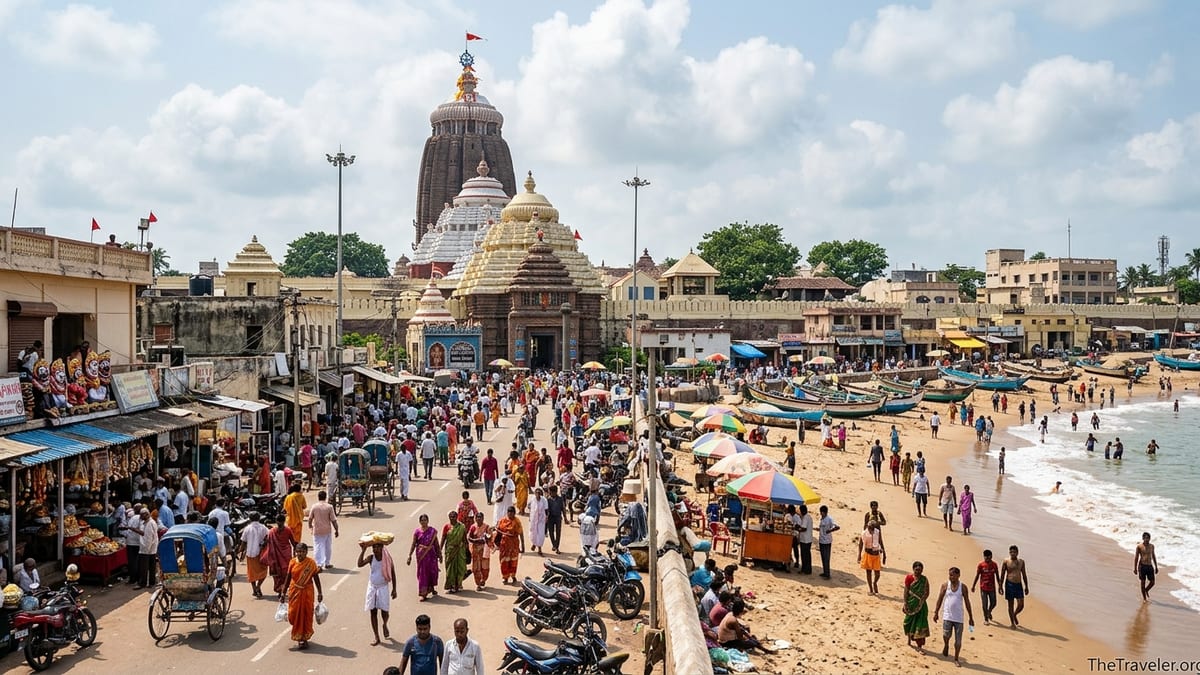
Where Puri Is, Who It Suits and How Long to Stay
Puri lies on the Bay of Bengal about 60 kilometers south of Bhubaneswar, the capital of Odisha. It is the coastal corner of the “Golden Triangle” of Odisha travel, with Bhubaneswar’s historic temples inland and the Konark Sun Temple roughly midway along the coastal highway that links the two. Trains from across India terminate at Puri Junction, a few minutes from the sea, while the nearest airport is Bhubaneswar’s Biju Patnaik International Airport, usually a 1.5 to 2 hour drive away depending on traffic.
Puri draws two overlapping but distinct audiences. For Hindu pilgrims, especially from Odisha, West Bengal, Andhra Pradesh and the Hindi heartland, Puri is one of the four cardinal “Char Dham” pilgrimage sites. Darshan of Lord Jagannath is a spiritual milestone, and many families plan their trip around temple rituals and prasadam from the temple kitchens. At the same time Puri’s long stretch of sand, modest waves and improving facilities attract beachgoers, especially domestic holidaymakers from nearby states who want somewhere more traditional and less nightclub-focused than Goa.
In terms of trip length, pilgrims focused almost entirely on the Jagannath Temple and a quick look at the sea can manage in two days and one night, arriving by an overnight train and leaving the following evening. Travelers who want to combine temple visits with time on the beach and an excursion to Konark or Chilika Lake typically need three full days. A four day stay allows a more relaxed pace, including Raghurajpur heritage village and multiple sunsets on the beach. Puri can be rewarding even for a first-time visitor to India, but it is a better fit for travelers who already have some experience with Indian cities and crowds, as the temple area in particular can feel intense.
For international visitors, the city’s infrastructure is improving but still feels very local. There are modern hotels on the Marine Drive road, reliable app-based taxi services from Bhubaneswar, and a growing number of cafes that understand basic expectations around hygiene and filtered water. At the same time, English is not universal, traffic is chaotic near the temple, and expectations around modest dress and behavior are stricter than in many Indian beach towns. With planning, it is suitable for international visitors, but those looking for Western-style nightlife or alcohol-focused beach culture will not find it here.
Jagannath Temple: Significance, Entry Rules and Respectful Visits
Shree Jagannath Temple dominates Puri’s skyline and identity. The present structure dates from the 12th century and enshrines Jagannath, considered a form of Krishna, along with his brother Balabhadra and sister Subhadra. For many Hindus the temple is both a powerful Vaishnava shrine and a symbol of Odia cultural pride. Its kitchens are among the largest in any Hindu temple, preparing rice-based mahaprasad in clay pots stacked over wood fires, which is then shared among pilgrims and sold in dedicated stalls outside the temple complex.
Entry rules are a crucial part of trip planning. The temple administration and on-site signage specify that only Hindus are allowed inside the main temple premises. Reports from both official references and recent visitors confirm that this is interpreted to include people who identify as Hindu by faith, regardless of passport, and to exclude visitors who openly identify with other religions. There is also a history of security staff turning away those they suspect are non-Hindu, so international visitors, even if of Indian origin, should be prepared to answer questions and may be asked for proof of identity.
For non-Hindu or non-Indian visitors, this restriction means that you will not be able to enter the sanctum or inner courtyards. However, you can still walk the broad Grand Road, locally called Bada Danda, that leads up to the Lion Gate and observe the flow of pilgrims, offerings and processions from outside. Several rooftop viewpoints in nearby buildings have historically allowed views of the temple’s spire for a modest donation, and newer heritage-corridor landscaping around the temple makes the outer streets more walkable than before. When choosing a guide, it is wise to ask clearly what you will and will not be able to see so expectations are realistic.
There is an evolving dress code. Local media coverage in early 2024 and traveler reports describe a stricter enforcement of modest dress, with security discouraging torn jeans, shorts above the knee, sleeveless tops and very fitted Western clothing. Men are safest in long trousers or traditional dhoti and a simple shirt, and women in saris or salwar kameez with shoulders covered. All leather belts, wallets and bags should be minimized, and shoes must be left at a stall outside the temple. Photography is strictly prohibited inside. Around the gates it is considered respectful not to push into queues, to avoid loud phone conversations and to decline offers of “VIP darshan” that promise faster access in exchange for cash.
Understanding Rath Yatra 2027: Faith, Crowds and Logistics
Rath Yatra in Puri is one of India’s most dramatic religious festivals, when the deities of Jagannath, Balabhadra and Subhadra leave the main temple in gigantic wooden chariots and travel down the Grand Road to the Gundicha Temple. The ritual expresses the idea of the god coming out of his sanctum to meet devotees who might never otherwise enter the temple, and it has deep emotional significance for Odias and Vaishnavas across India. The journey of about three kilometers is accompanied by drumming, chanting and a heaving tide of humanity pulling the ropes of the chariots.
For the year 2027, regional news coverage and festival calendars currently agree that the main Rath Yatra day in Puri will fall on 5 July 2027, based on the Odia lunar month of Ashadha. Subsequent key days such as Bahuda Yatra, Suna Besha and Niladri Bije unfold over roughly the following week and a half. Final confirmation always comes from the temple administration closer to the time, but hotel and transport planning in Puri has already begun around these dates, and authorities are working on expanded crowd-control infrastructure along the main festival route.
Crowd conditions during Rath Yatra are unlike anything at other times of year. Estimates vary, but it is reasonable to expect several hundred thousand participants along the Grand Road on the main day, with intense congestion near the chariots and in all streets feeding into the temple area. Accommodation demand spikes sharply: by the time dates are widely publicized, many seafront hotels and mid-range options in the temple district are already sold out or quoting festival rates significantly higher than in January or February. Some visitors choose to stay in Bhubaneswar or other towns and travel in very early in the morning by car or special trains organized around the festival.
During the festival, there are real practical constraints. Streets around the temple and the Grand Road become no-vehicle zones for much of the day, security checkpoints multiply, and it can be difficult to get a taxi or autorickshaw anywhere near the core area. Mobile networks can become overloaded for a few hours on the main day. For most travelers who are not specifically drawn by religious significance or large crowds, it may be wiser to visit Puri either a week before the festival begins or after the deities return to the main temple, when the city has resumed a semblance of normality but the atmosphere is still charged with post-festival energy.
Beaches of Puri: Puri Beach, Golden Beach and Quieter Shores
Puri’s beachfront arcs along the Bay of Bengal, but it helps to understand the differences between the main stretches of sand. The central Puri Beach, near Swargadwar, is the traditional bathing and strolling area. It is busiest around sunrise, when pilgrims come to take a dip before visiting the temple, and at sunset, when families crowd the sand, snack vendors appear and pony rides and small amusement stalls do brisk business. The beach here can feel chaotic and is sometimes littered, though the municipality carries out regular cleaning and the atmosphere is undeniably lively.
Golden Beach, a demarcated zone on the same shoreline, has been awarded Blue Flag status, which recognizes its cleanliness, lifeguard presence and certain environmental standards. Access points are controlled, plastic use is restricted and the sand is cleaned more consistently than on the public stretches. Lifeguards keep an eye on bathers and may whistle people out of deeper water when the surf is strong. For travelers who care about swimming in comparatively cleaner surroundings or who are visiting with children, this designated area is often the best choice, even if there is sometimes a small entry fee or time-limited access.
Beyond these central sections, quieter coastal areas spread out along the Marine Drive road towards the fishing villages and in the opposite direction towards less developed stretches. Here the beach can feel more open, with fewer vendors, but there are also fewer immediate facilities and lifeguard posts. Sea conditions along the Bay of Bengal can be deceptively rough, with strong currents, so even in these calmer-looking places, knee- to waist-deep paddling is safer than full swimming, and it is wise to follow local advice before entering the water. Many upmarket and mid-range hotels along Marine Drive have direct or easy beach access, making early-morning walks along quieter sand one of the best experiences in Puri.
Accommodation across these zones varies in price and character. Around Swargadwar and the old Puri Beach front, guesthouses and older hotels offer budget and mid-range rooms, often with simple facilities and a lively street scene below. Marine Drive, especially closer to the Blue Flag Golden Beach zone, has newer hotels with more predictable standards, pools and on-site restaurants, priced higher but still generally below what similar properties in Goa or Mumbai’s coastal suburbs might charge. In between are narrow lanes of homestays and small lodges, some family-run and oriented to repeat domestic visitors. Choosing between them often comes down to whether you prefer direct proximity to the busiest parts of the beach or a short walk in exchange for more quiet.
Everyday Culture: Swargadwar, Markets, Crafts and Cuisine
Swargadwar, literally “gateway to heaven,” is both a cremation ground and a sacred stretch of sand where many Hindus believe that immersion of ashes brings spiritual merit. For visitors, it is important to approach this area with sensitivity. Photography of funeral pyres or grieving families is considered deeply disrespectful, and this is not a place to treat as a spectacle. Passing along the road near Swargadwar, you may see processions carrying bodies wrapped in cloth to the sea, priests offering prayers, and small shrines that blend seamlessly into the public space of the beachfront.
Just inland from the sea lie Puri’s markets, where pilgrimage and daily life intersect. Around the Grand Road and near the temple, rows of stalls sell garlands, brass lamps, conch shells, small wooden images of Jagannath and packets of khaja and other sweets associated with the temple. Farther from the immediate temple zone, local markets sell fish, vegetables, betel leaves and daily provisions, offering a more grounded glimpse of life in a coastal Odia town. For many visitors, interacting respectfully with stallholders, watching them prepare offerings and snacks, and learning a few words of Odia can be as memorable as visiting the major monuments.
Nearby Raghurajpur heritage village, about an hour’s drive from Puri depending on traffic, is renowned for its patachitra painting tradition and other crafts. Here many families maintain workshops in their homes, painting scenes from Hindu epics and Jagannath legends on cloth or palm leaves. Visiting typically involves walking through narrow village lanes, stepping into open-fronted studios and talking directly with artists. Prices range from very modest for small pieces to higher sums for intricate work, and buying directly supports the continuity of these traditions. Engaging a local guide from Puri or hiring a cab for a half-day visit can make the logistics straightforward.
Food in Puri reflects both its coastal location and temple-centered identity. Odia cuisine highlights simple, flavorful dishes such as dalma (lentils cooked with vegetables), a variety of rice preparations, fish curries and prawn masala. Many visitors seek out mahaprasad from the Jagannath Temple, which can be purchased from authorized outlets outside the temple even if you do not go inside, and then eaten in a quiet corner or back at your hotel. Along the beach road, small eateries grill fresh fish and crabs in the evenings, while restaurants near the newer hotels serve thali meals, dosa, North Indian curries and occasionally basic continental options. For food hygiene, it is safer to choose busy, established places, drink filtered or bottled water, and favor cooked dishes over raw salads.
Sample Itineraries for Two, Three and Four Days
A two day visit to Puri for a first-timer might begin by arriving from Bhubaneswar by midday and checking into a hotel near the beach. After a late lunch, an afternoon walk along Puri Beach and a first look at the waves help you adjust to the pace of the town. As sunset approaches, you can stroll towards Swargadwar, keeping a respectful distance from any funeral activity and ending the evening with seafood or a vegetarian thali at a restaurant recommended by your hotel. The next morning, you rise early to visit the temple area, allowing several hours for security checks, queues, darshan if you are eligible to enter, and a slow exploration of the streets around the Lion Gate. After lunch and some rest, a second beach session or a short taxi ride along Marine Drive to Golden Beach provides a more relaxed close to the day before an evening departure.
With three days, you can add a day trip to Konark and Chandrabhaga Beach. One efficient pattern is to devote the first morning to the temple district, then spend the late afternoon at Golden Beach. On the second day, hire a taxi or join a small-group tour to Konark Sun Temple, leaving after breakfast. The drive takes about 1.5 hours along the coastal highway. You can spend two to three hours exploring the temple complex and museum, have lunch at a nearby restaurant and then stop at Chandrabhaga Beach on the way back for a shorter, quieter beach experience in the late afternoon. The third day can be lighter: a late start, a visit to local markets and souvenir shopping, and perhaps a sunset walk in one of the quieter stretches of beach beyond the main Puri waterfront.
A four day itinerary allows a slower rhythm and more excursions. After the initial day split between beach and temple, you might dedicate your second full day to Raghurajpur, leaving Puri mid-morning, spending several hours meeting artists and returning by late afternoon. The third day could combine Konark and Chandrabhaga as described above. On the fourth day, you can take an excursion to a Chilika Lake access point, such as Satapada, to see dolphins and birdlife by boat, or simply enjoy a final unstructured day in Puri, revisiting favorite food spots and beaches. Each day should factor in at least an hour of potential congestion and delays in the temple area, especially during festival seasons or weekends.
For all itineraries it helps to plan temple visits for early morning or late evening, when the heat is lower and crowds sometimes ease, and to keep the afternoons for sea breezes or air-conditioned museum and hotel time. During the humid pre-monsoon months you may want to schedule indoor rests in the early afternoon and push more activity into the early morning and late evening. Talking through your plans with your hotel concierge or a vetted local guide on arrival can yield up-to-date information on opening times, special rituals and days when particular areas may be more crowded.
Konark Sun Temple and Nearby Excursions
The Konark Sun Temple, about 35 kilometers from Puri by road, is one of India’s most acclaimed World Heritage Sites. Built in the 13th century, it was designed as a colossal stone chariot for the sun god Surya, with intricately carved wheels and horses. The main sanctum has long since collapsed, but the remaining structures and sculptures, many depicting celestial musicians, dancers and mythological scenes, still convey remarkable grandeur. Entry for Indian citizens and for foreign visitors is managed by the Archaeological Survey of India with tickets checked at the main gate, and there is a small museum nearby with artifacts and explanatory displays.
Recent information from regional travel operators and ASI-focused guides suggests that tickets for Konark can be bought on-site or via official digital platforms, often with a small discount for cashless payments. Foreigner tickets are typically priced higher than those for Indian citizens, but still reasonable in global terms. Once inside, many visitors hire a licensed guide near the entrance for detailed commentary on the temple’s symbolism and history. There is also an evening sound and light show in the complex that narrates the story of Konark with lighting effects, which can be a compelling way to experience the monument after dark if your schedule allows you to stay into the evening.
Combining Konark with Chandrabhaga Beach is straightforward. From Puri, taxis and private cars usually take the marine drive towards Konark, passing casuarina groves and glimpses of the sea. Chandrabhaga lies a short drive beyond the Sun Temple, and it offers a broad expanse of sand with fewer commercial activities than central Puri. Some travelers choose to take a quick dip, walk along the shore or simply sit under the trees with tea from a roadside stall before returning to Puri. For this full-day circuit, independent travelers with a hired car enjoy flexibility, while those without can book day tours from Puri or Bhubaneswar that package transport, guiding and scheduled stops.
Other popular excursions from Puri include Chilika Lake and Raghurajpur, both feasible as half-day or full-day trips. Chilika, one of Asia’s largest brackish-water lakes, is accessible via Satapada, roughly an hour and a half away by car from Puri, where boat cooperatives and tourism operators offer rides to see migratory birds and, with luck, Irrawaddy dolphins. Here a local guide can help negotiate boat prices and timings and explain seasonal variations in wildlife sightings. Raghurajpur is closer and can be explored independently by hiring a taxi, though visitors interested in specific art forms may benefit from a guide who already knows particular families and workshops.
Accommodation, Getting There and Practical Logistics
Puri’s accommodation naturally clusters around three areas: the beachfront, the temple district and quieter zones a little set back from the busiest streets. Beachfront hotels along Puri Beach and Marine Drive command higher prices for sea views and direct access. These range from long-established Indian hotel brands with pools and buffet breakfasts to simple guesthouses above shops. They are convenient for families wanting frequent beach time, but the constant honking, music and crowds along the main road can make them noisy, especially on weekends and holidays.
Near the temple district, small hotels and lodges cater primarily to pilgrims. Room rates can be lower than on the seafront outside peak seasons, but facilities also tend to be more basic, and streets can be very crowded at dawn and dusk when devotees stream in and out of the temple. For some visitors, staying in this area offers a powerful immersion in the rhythms of Puri’s spiritual life, waking to bells and chants. For others, especially families with young children or travelers sensitive to noise and congestion, it can be overwhelming. A compromise is to choose accommodation in slightly quieter lanes a few blocks away from both the temple and the main beach, where auto-rickshaw rides or short walks connect you to both.
Reaching Puri usually begins with Bhubaneswar. Biju Patnaik International Airport receives domestic flights from major Indian cities and a limited number of international services. From the airport or city, travelers continue to Puri by train, bus or taxi. Trains from Bhubaneswar to Puri run frequently, with journey times typically under 2 hours; seats in air-conditioned chair cars or second class are inexpensive by international standards and can be booked on Indian Railways platforms or through travel agents. Taxis from Bhubaneswar airport to Puri typically quote fixed rates, which hotels can confirm when arranging pickups. Buses also connect the two, offering a low-cost but less comfortable option than private cars.
Inside Puri, cycle-rickshaws, auto-rickshaws and app-based cabs serve most needs. The central town is compact enough that many visitors walk between the beach and temple, though the heat and humidity in the warmer months make shade and hydration important. During major festivals and some public holidays, certain streets may be closed to vehicles or subject to traffic diversions, so it is wise to allow extra travel time and to pay attention to notices from local authorities and hotel staff.
Climate, Seasons, Budgets and Staying Safe
Puri’s climate is tropical, with high humidity for much of the year. March to June can be very hot, with daytime temperatures often well above 35 degrees Celsius and strong sun on the beach. The southwest monsoon typically reaches Odisha in June, bringing heavy rain through September and occasional low-pressure systems in the Bay of Bengal that can intensify into cyclones. National and state disaster management agencies have improved early-warning systems and evacuation planning, but for travelers it is still prudent to monitor weather forecasts closely in the late monsoon and post-monsoon months of October and November, when some of the region’s strongest cyclones have historically made landfall.
The most comfortable months to visit, particularly for international travelers, are generally November to February. During this period, days are warm but not oppressive, nights are cooler and humidity is more manageable. Sea conditions are also often friendlier for paddling, though currents can still be strong. Major festivals, including the winter tourism season around Christmas and New Year, see higher hotel tariffs and busier streets, so early bookings help secure quieter rooms and better rates.
Daily budgets in Puri can vary widely depending on accommodation choices. A budget traveler staying in a simple guesthouse, eating at local vegetarian restaurants and using shared transport might manage on a modest sum per day, while someone staying in a mid-range seafront hotel with air conditioning and frequent taxi use will spend significantly more. Attraction tickets such as Konark Sun Temple are inexpensive compared with Western sites, even for foreign visitors, so the main costs are lodging and transport. Because prices fluctuate seasonally and between properties, it is best to use current hotel search tools and to confirm major expenses before travel rather than relying on older guidebook figures.
Health and safety considerations center on food hygiene, crowded spaces and the sea. Sticking to restaurants with good turnover, insisting on safe drinking water, and avoiding ice of uncertain origin are sensible measures. During temple visits and festivals, pickpocketing can occur in dense crowds, so carrying only essential valuables and using money belts or interior pockets is wise. On the beach, following lifeguard instructions where present, avoiding swimming after dark or under the influence of alcohol, and watching children closely near the waterline help prevent accidents. While Odisha remains generally hospitable to visitors, women traveling alone or in small groups may feel more comfortable returning to their hotels by 9 or 10 pm in quieter areas.
How Puri Compares and Who Will Appreciate It Most
Compared with India’s other coastal destinations, Puri occupies a distinct niche. It lacks the party culture, international nightlife and abundance of Western cafes that characterize parts of Goa, and it is less developed and more introspective than Kerala’s resort-lined stretches around Kovalam or Varkala. Instead, it offers a deeply Indian experience of the sea, where families bathe fully clothed in the surf, pilgrims carry offerings past beach toy sellers, and the day still bends around temple rituals and train schedules rather than sunset cocktails.
Travelers who will find Puri most rewarding tend to be those interested in the intersection of religion and everyday life, who are comfortable navigating some ambiguity around rules and who do not mind compromising on certain comforts in return for authenticity. Devotees and cultural travelers may spend hours simply watching the flow of people along the Grand Road or talking with artisans in Raghurajpur. Birdwatchers and nature lovers can add Chilika Lake to the mix. On the other hand, if your priority is quiet, undeveloped beaches with minimal human presence, or polished international-resort facilities with extensive bar menus and spa offerings, other parts of India’s coast may suit you better.
For many visitors, especially from elsewhere in India, Puri becomes a place they return to repeatedly at different stages of life: first as children playing in the waves under the watchful eye of grandparents, later as pilgrims seeking darshan, and perhaps eventually as travelers curious about the crafts, wetlands and festivals that sustain Odisha’s coastal culture. For international travelers ready to engage respectfully with local customs and the temple’s entry rules, Puri offers a vivid, layered experience of coastal eastern India that extends far beyond its famous spire and chariots.